The primary difference between Zealandia and Otari-Wilton’s Bush lies in their ecological focus and access model. Zealandia is a paid, predator-fenced ecosanctuary dedicated to restoring native fauna like Kiwi and Tuatara, offering guided commercial tours. In contrast, Otari-Wilton’s Bush is a free public reserve and the only botanic garden in New Zealand dedicated solely to native plants, focusing on flora conservation and ancient forest preservation.
Wellington, New Zealand, is globally renowned as a biophilic city where the separation between urban infrastructure and wild nature is increasingly thin. For eco-tourists and regenerative travelers, the capital offers two crown jewels in its green belt: Zealandia Te Māra a Tāne and Otari-Wilton’s Bush. While both locations offer immersion into New Zealand’s unique biodiversity, they serve different conservation purposes and offer distinct visitor experiences.
Choosing between Zealandia vs Otari-Wilton’s Bush often comes down to what you wish to prioritize: rare wildlife encounters in a controlled environment or a deep dive into ancient botany in an open wilderness. This comprehensive guide analyzes both destinations to help you plan your itinerary, focusing on accessibility, regenerative impact, and visitor value.
The Core Comparison: Fauna vs. Flora
When analyzing the Zealandia vs Otari-Wilton’s Bush debate, it is essential to understand the “why” behind each location. Both are critical to Wellington’s ecological restoration, yet they operate on different models.
Zealandia is the world’s first fully-fenced urban ecosanctuary. Its 500-year vision is to restore a Wellington valley’s forest and freshwater ecosystems to their pre-human state. The 8.6-kilometer predator-proof fence is the defining feature, keeping out introduced mammalian pests (rats, stoats, possums) that decimated New Zealand’s flightless birds. Consequently, Zealandia is the premier destination for wildlife spotting.
Otari-Wilton’s Bush, conversely, is an open reserve. While it benefits from the “halo effect” of birdlife spilling over from Zealandia, its primary mission is botanical. It is a New Zealand Garden of National Significance and retains 100 hectares of original native forest. If your interest lies in botany, ancient trees, and hiking without the structure of a ticketed venue, Otari is the superior choice.
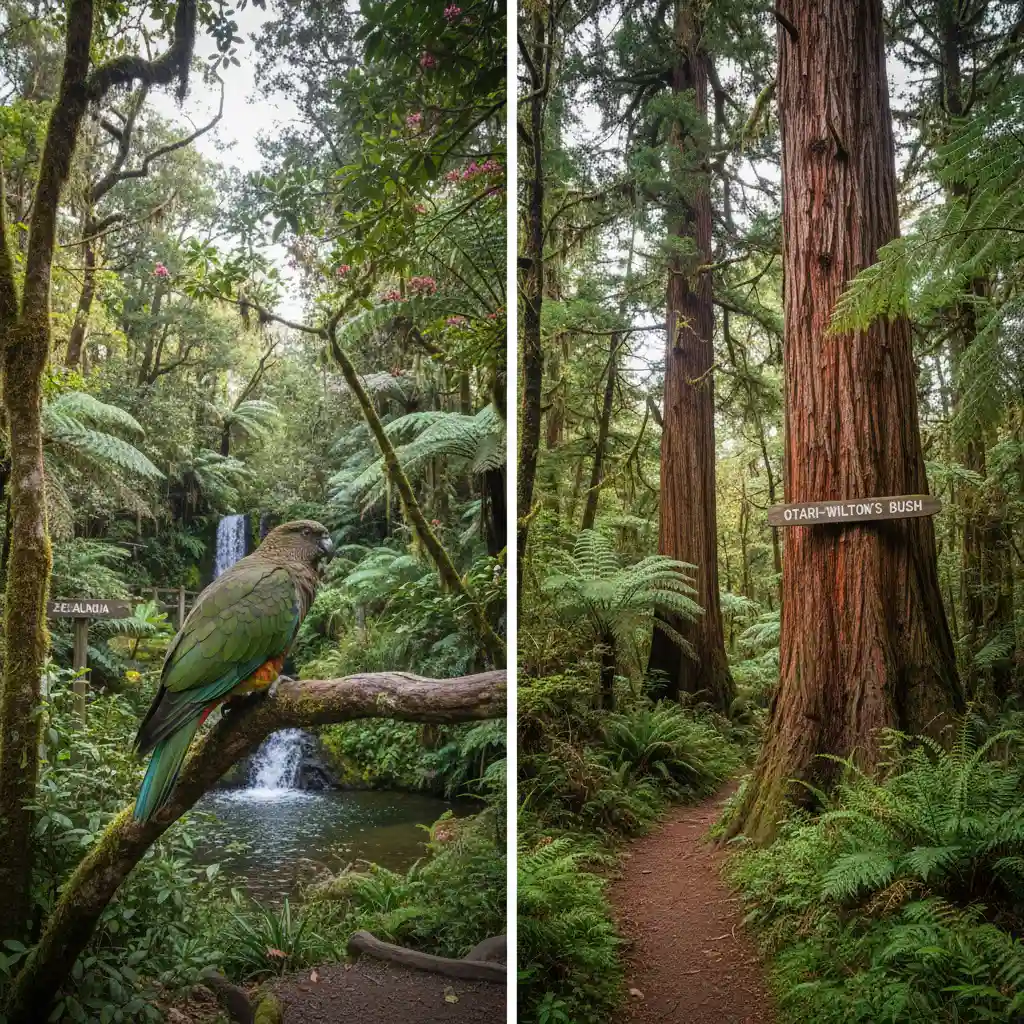
Zealandia Ecosanctuary: The Ark of Wellington
Zealandia acts as a commercial flagship for regenerative tourism in New Zealand. Every ticket purchased contributes directly to the maintenance of the fence and the scientific research required to reintroduce species that have been absent from the mainland for over a century.
Zealandia Day Walks: General Admission
During the day, Zealandia is a cacophony of bird calls. It is one of the few places on the mainland where you are almost guaranteed to see the Tīeke (Saddleback), Hīhī (Stitchbird), and the prehistoric Tuatara basking in the sun. The sanctuary creates a safe haven, meaning the animals are less skittish than in the wild.
General admission allows you to roam at your own pace. The lower valley tracks are broad and easy to navigate, winding past the heritage reservoir. For the fitness-minded, the upper tracks offer steep climbs up to the fence line, providing panoramic views of the harbor and the wind turbines.
Zealandia Night Tours: The Premium Experience
For many international visitors, the Night Tour is a non-negotiable bucket-list item. This guided experience is strictly controlled to minimize disturbance to the wildlife. It is your best opportunity to see the Little Spotted Kiwi (Kiwi Pukupuku) foraging in the wild. Unlike a zoo, these are wild animals, but the success rate of sightings on these tours is exceptionally high.
The night tour also highlights the glowing bio-luminescence of glowworms along the banks of the sanctuary’s streams and the distinct calls of the Ruru (Morepork owl). From a commercial perspective, if you have limited time and want a high-impact wildlife encounter, the Night Tour offers value that is hard to replicate elsewhere.
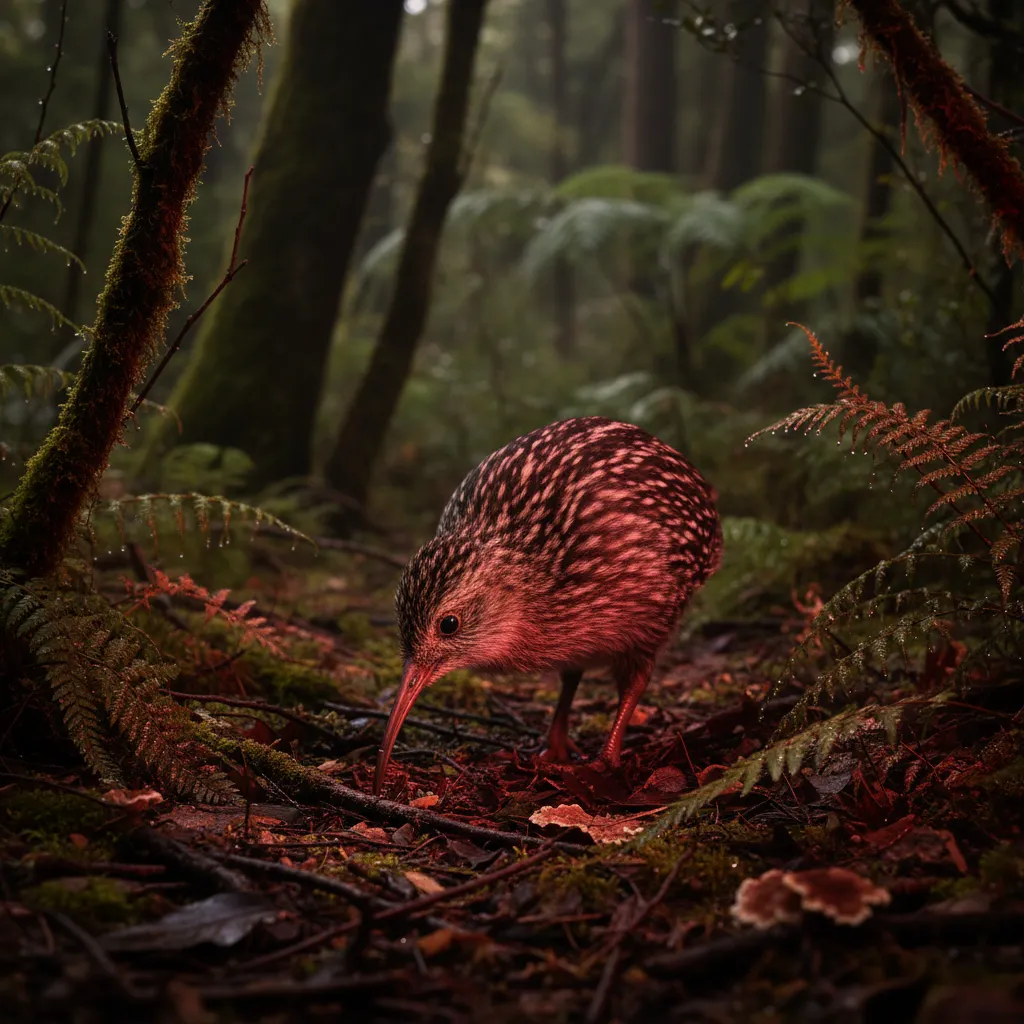
Otari-Wilton’s Bush: The Native Plant Museum
Otari-Wilton’s Bush offers a different kind of magic. As the only public botanic garden in New Zealand dedicated solely to native plants, it serves as a “living museum.” The reserve contains approximately 1,200 species of botanical hybrids and cultivars, alongside a preserved remnant of the original podocarp-northern rātā broadleaf forest that once covered the Wellington peninsula.
The Canopy Walkway and Collections
A highlight of Otari is the Canopy Walkway. This elevated bridge connects the two main ridges of the reserve, allowing visitors to walk among the treetops. It provides a unique perspective on the epiphytes (perching plants) and high-nesting birds like the Kererū (wood pigeon) that might be missed from the ground.
The Ancient Rimu
Deep within the reserve stands an 800-year-old Rimu tree. Visiting this giant requires a hike, but it offers a spiritual connection to the land’s history before human settlement. Unlike the curated paths of Zealandia, the trails here can feel more rugged and secluded. For those seeking solitude and a break from the crowds, Otari-Wilton’s Bush is the preferred destination.
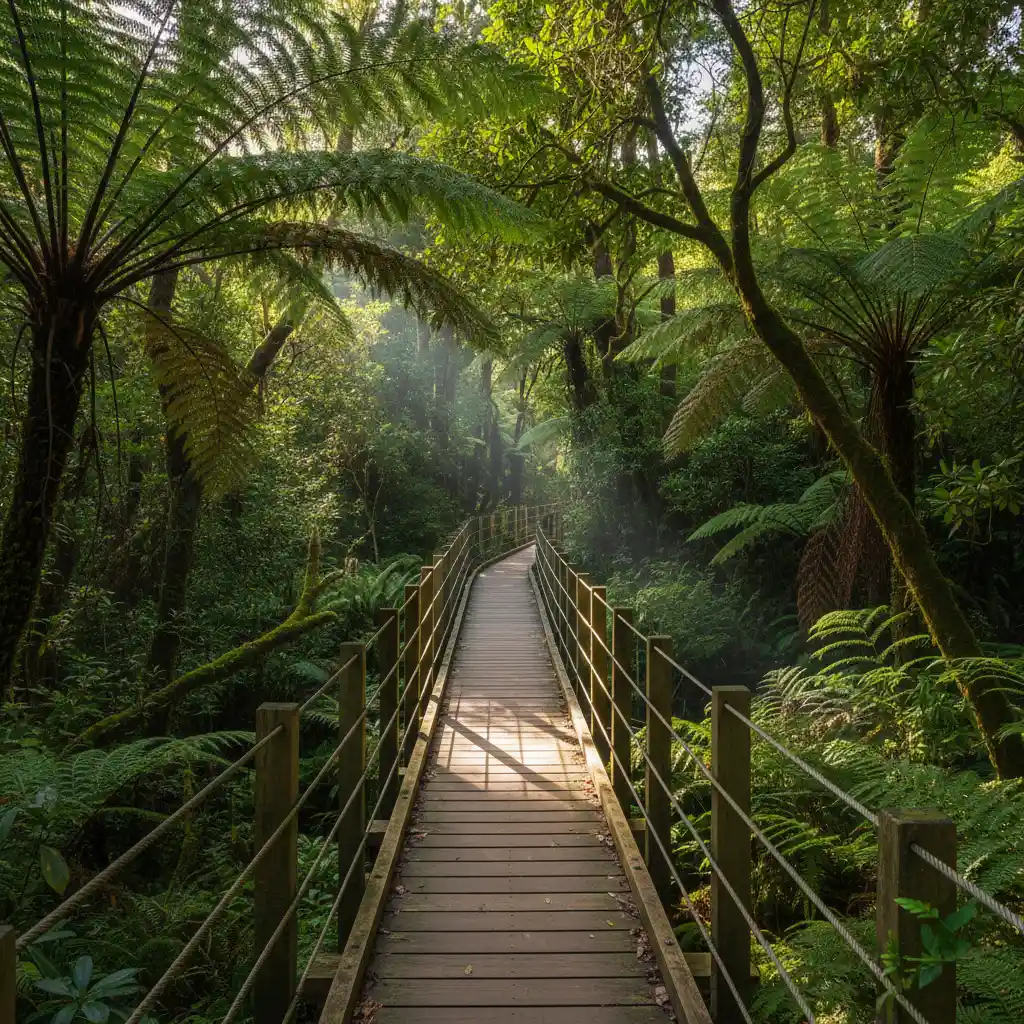
Accessible Trails for Wheelchairs and Strollers
In the context of accessible nature, Wellington strives to be inclusive. However, the topography of the region (steep hills and gullies) presents challenges. Here is how the two locations compare regarding accessibility infrastructure.
Is Zealandia Wheelchair Friendly?
Yes, to a significant extent. Zealandia has invested heavily in accessibility. The Visitor Centre is fully accessible, and they offer electric shuttles (Zealandia electric boats and minibuses, depending on availability) to help visitors traverse the valley floor. The lower valley tracks are wide, paved or hard-packed gravel, and relatively flat, making them suitable for wheelchairs and strollers. They also provide free wheelchair hire. However, the upper tracks are steep and not suitable for mobility-impaired visitors.
Accessibility at Otari-Wilton’s Bush
Otari-Wilton’s Bush has a specific “Accessible Loop.” The path from the main car park to the Information Centre and across the Canopy Walkway is wheelchair accessible. There is also a sealed track leading down to the picnic area. However, beyond the central hub, the tracks quickly become steep, narrow, and root-bound, making them unsuitable for wheels. The Troup Picnic Area is a fantastic, accessible spot for families to enjoy nature without embarking on a strenuous hike.
Public Transport to Wellington’s Green Spaces
Wellington’s compact nature makes reaching these green spaces relatively easy, reducing the carbon footprint of your travel—a key tenet of regenerative tourism.
Getting to Zealandia
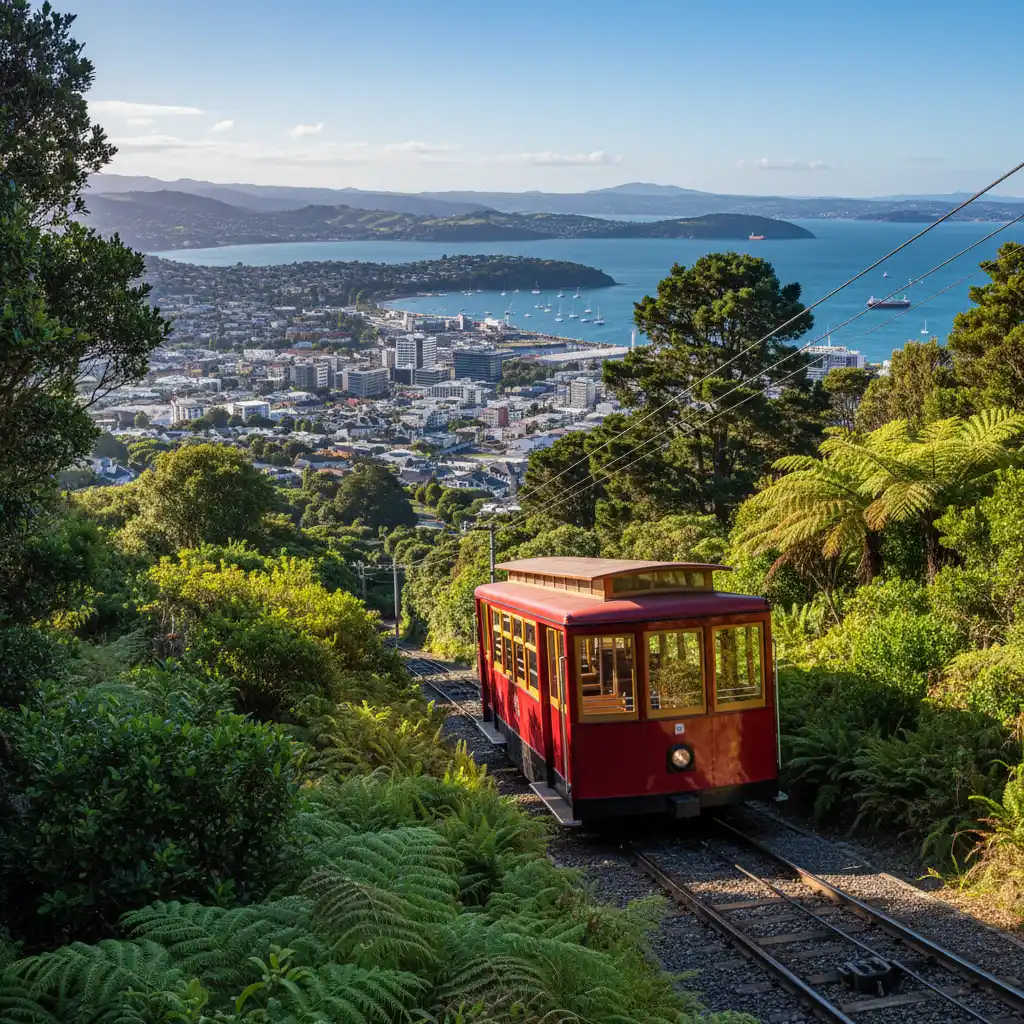
The most iconic way to reach Zealandia is via the Wellington Cable Car followed by the free Zealandia shuttle. You take the Cable Car from Lambton Quay to the Kelburn terminus. From there, the electric Zealandia shuttle picks up passengers and drives them directly to the sanctuary entrance. Alternatively, the Metlink Bus Route 2 passes near the sanctuary, though it requires a short walk.
Getting to Otari-Wilton’s Bush
Otari-Wilton’s Bush is serviced by the Number 14 Bus (Wilton). This bus departs from Lambton Quay in the CBD and stops directly outside the main entrance of the reserve on Wilton Road. The journey takes approximately 15-20 minutes. There is also ample free parking at the main entrance if you are driving, which is a distinct advantage over the sometimes crowded parking at Zealandia.
The Verdict: Which Should You Visit?
If your schedule allows, the ideal itinerary includes both. However, if you must choose:
- Choose Zealandia if: You are willing to pay for a world-class conservation experience, you want to see Tuatara and rare birds guaranteed, you require extensive accessibility support, or you want a guided night tour to see Kiwi.
- Choose Otari-Wilton’s Bush if: You are a botany enthusiast, you are traveling on a budget (free entry), you prefer solitude and unguided exploration, or you want to see an 800-year-old tree and diverse plant collections.
Both locations exemplify Wellington’s commitment to preserving its natural heritage. By visiting either, you are supporting the ethos of a capital city that prioritizes the environment alongside urban development.
Frequently Asked Questions
Is Zealandia worth the entry fee?
Yes, for most visitors, Zealandia is worth the cost. The entry fee directly funds the maintenance of the predator-proof fence and conservation research. The guarantee of seeing rare species like the Takahē, Tuatara, and Kākā in a wild setting offers a value that free parks cannot match.
Can you see Kiwi at Otari-Wilton’s Bush?
It is highly unlikely to see Kiwi at Otari-Wilton’s Bush. While birdlife from Zealandia does spill over into Otari (the “halo effect”), Kiwi are nocturnal and ground-dwelling. They are heavily protected within Zealandia’s fence. For a Kiwi sighting, a Zealandia Night Tour is the recommended option.
How much time should I spend at Zealandia?
Plan to spend at least 2 to 3 hours at Zealandia. This allows enough time to visit the exhibition center, walk the lower valley tracks, listen to a ranger talk, and spot the Tuatara. If you plan to hike to the upper fence line, allocate 4 hours.
Are dogs allowed in Otari-Wilton’s Bush?
Yes, dogs are allowed in Otari-Wilton’s Bush, but they must be kept on a leash at all times to protect the native wildlife and plant beds. In contrast, dogs are strictly prohibited inside Zealandia to protect the endangered species.
What is the best time of year to visit Wellington’s nature reserves?
Spring (September to November) is the best time to visit. In Otari-Wilton’s Bush, the native flowers are in bloom. In Zealandia, bird activity is at its peak as it is breeding season, making for louder calls and more frequent sightings.
Is there food available at Zealandia and Otari-Wilton’s Bush?
Zealandia has a fully equipped cafe (Rātā Cafe) serving meals and coffee. Otari-Wilton’s Bush does not have a cafe on-site, though there is a barbecue area and plenty of picnic spots. Visitors to Otari should bring their own food and water.