The 2024 New Zealand self-containment rules mandate that to be certified as self-contained for freedom camping, a vehicle must feature a permanently fixed toilet. Under the Self-Contained Motor Vehicles Legislation Act, portable toilets are no longer accepted for new certifications. Vehicles must display a ‘Green Warrant’ to legally camp on public land restricted to self-contained vehicles.
New Zealand’s approach to freedom camping has undergone a radical transformation. The era of converting a station wagon with a portable chemical toilet tucked under the bed is effectively over. The government has tightened regulations to protect the pristine environment and manage the pressures of tourism on local infrastructure. Whether you are a local vehicle owner or an international tourist planning a road trip, understanding these regulations is critical to avoiding heavy fines and ensuring a stress-free journey.
What Are the New Self-Containment Rules in NZ for 2024?
The primary shift in 2024 revolves around the Self-Contained Motor Vehicles Legislation Act 2023. The objective is to ensure that freedom campers are truly self-sufficient and do not leave waste behind in public spaces. Previously, the definition of “self-contained” was looser, allowing vehicles with portable toilets (often unused) to qualify for certification. This loophole has been closed.
To be considered self-contained in 2024, a vehicle must be able to support its occupants for at least three days without requiring external services. This includes capacity for fresh water, wastewater, and refuse. However, the most significant change is the hardware requirement: the toilet.
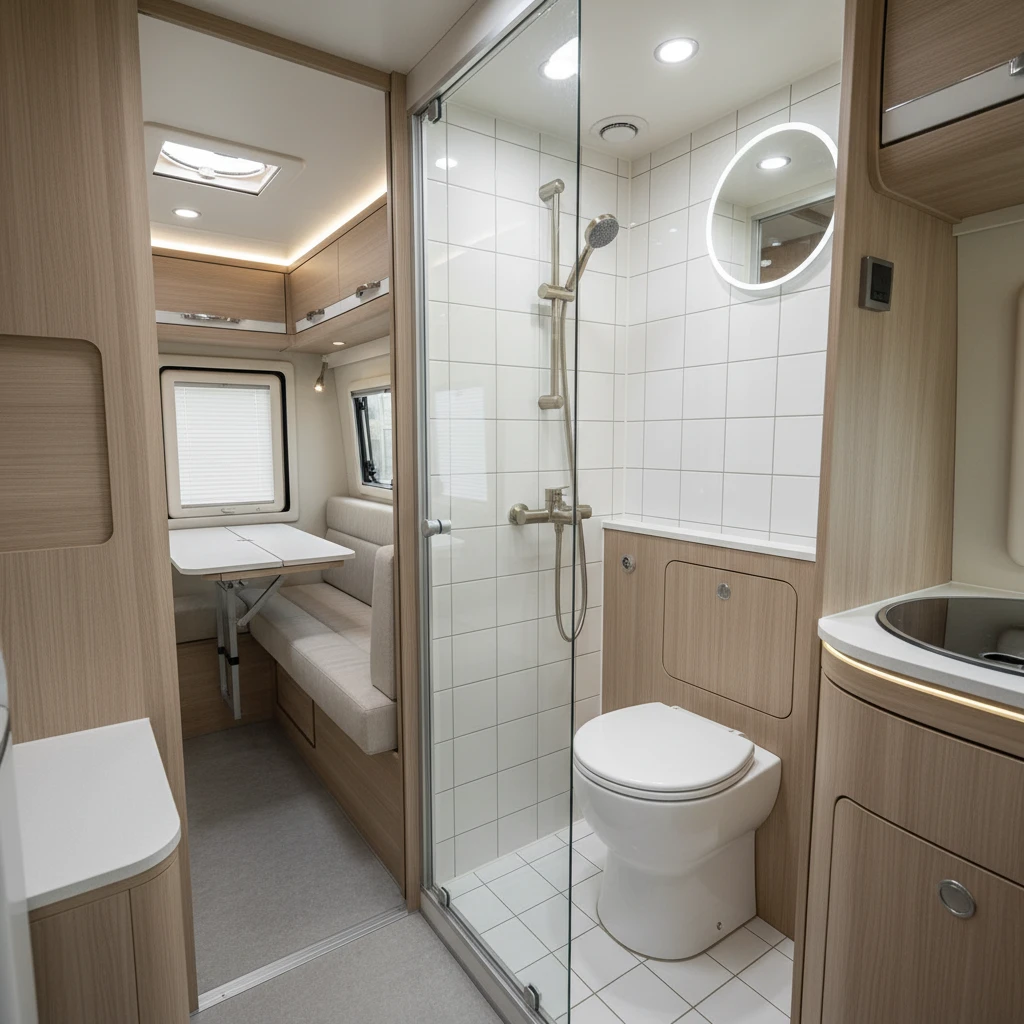
Fixed Toilet Requirements: The Technical Specifications
The definition of a “fixed toilet” is specific and non-negotiable under the new Green Warrant standards. It is not enough to simply bolt a portable unit to the floor. The regulations specify that the toilet must be permanently fixed to the vehicle structure. Here are the critical criteria:
- Permanence: The toilet must be permanently attached to the vehicle. It cannot be removed without tools or significant dismantling.
- Usability: The toilet must be usable within the vehicle at all times, even when the bed is fully made up. This prevents the common issue in smaller vans where the toilet was inaccessible at night.
- Discharge: It must empty into a wastewater holding tank or a cassette system that is appropriate for the vehicle’s size.
- Venting: The waste tank needs to be vented to the exterior of the vehicle to manage odors and gases safely.
This requirement effectively disqualifies most small passenger cars, station wagons, and smaller minivans (like the Toyota Estima or Honda Odyssey) from being certified as self-contained, unless they undergo significant and often cost-prohibitive modifications.
Green vs. Blue Warrant: Understanding the Certification Changes
If you are travelling in New Zealand, you will see two types of self-containment stickers: Blue and Green. Understanding the difference is vital for legal camping.
The Blue Warrant (Legacy)
The Blue Warrant represents the old standard (NZS 5465:2001). Under this standard, portable toilets were permitted.
- Validity: If a vehicle was certified with a Blue Warrant before June 7, 2023, that certification remains valid until it expires or until June 7, 2025 (whichever comes first).
- Rental Vehicles: Rental companies have a stricter deadline. By December 7, 2024, rental vehicles must largely comply with the new Green Warrant standards to be certified as self-contained.
The Green Warrant (New Standard)
The Green Warrant signifies compliance with the new legislation, specifically the fixed toilet requirement.
- Issuing Authority: Certifications are now overseen by the Plumbers, Gasfitters and Drainlayers Board (PGDB), adding a layer of professional oversight to the process.
- Requirement: Any vehicle certified after June 7, 2023, must meet the Green Warrant standards to be considered self-contained under the new Act.
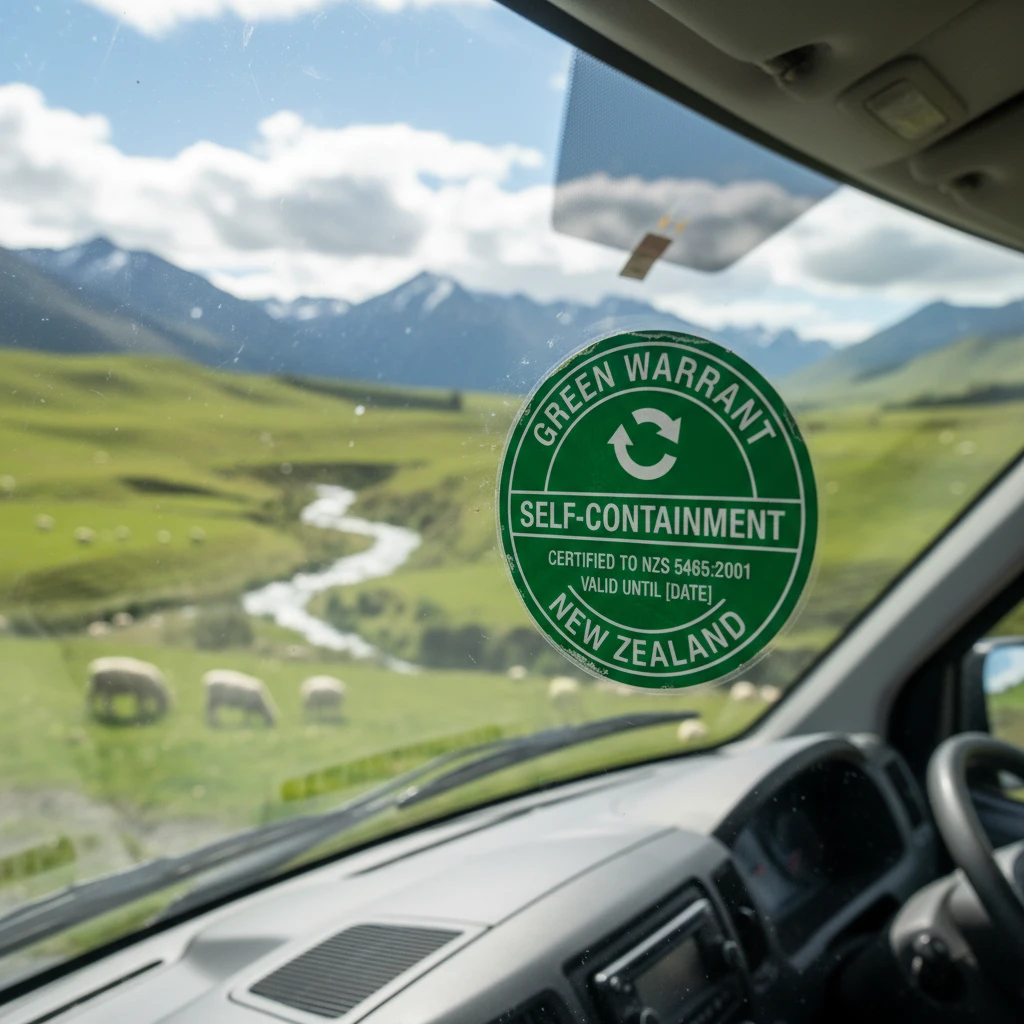
The Transition Timeline: When Do Rules Apply?
The transition from the old system to the new system is staggered. It is crucial to know where you stand depending on whether you own a vehicle or are renting one.
- 7 June 2023: The new Act came into force. From this date, vehicles could still use existing Blue Warrants, but new certifications began shifting toward the new criteria.
- 7 December 2024: This is a critical date for the rental fleet. Rental vehicles claiming to be self-contained generally need to meet the new standards.
- 7 June 2025: The final cutoff. All Blue Warrants effectively expire for the purpose of the new legislation. After this date, only vehicles with a Green Warrant (and the associated fixed toilet) will be recognized as self-contained for freedom camping on restricted land.
Fines for Non-Compliance and Enforcement
To back up the new rules, the New Zealand government has significantly increased the penalties for breaking freedom camping laws. The “she’ll be right” attitude will no longer suffice.
Infringement Fees
The default infringement fee for freedom camping in a restricted area without a valid self-containment certificate has increased from $200 to $400. However, fines can go much higher depending on the specific offence:
- $400: Camping in a restricted area without a valid self-contained vehicle.
- $600: Displaying a fraudulent warrant or claiming a vehicle is self-contained when it is not.
- Up to $1000: For serious breaches, including dumping waste illegally or failing to leave an area when directed by an enforcement officer.
Local councils have hired more enforcement officers, and a national register of self-contained vehicles allows officers to instantly check the validity of a warrant sticker against the vehicle’s registration plate.
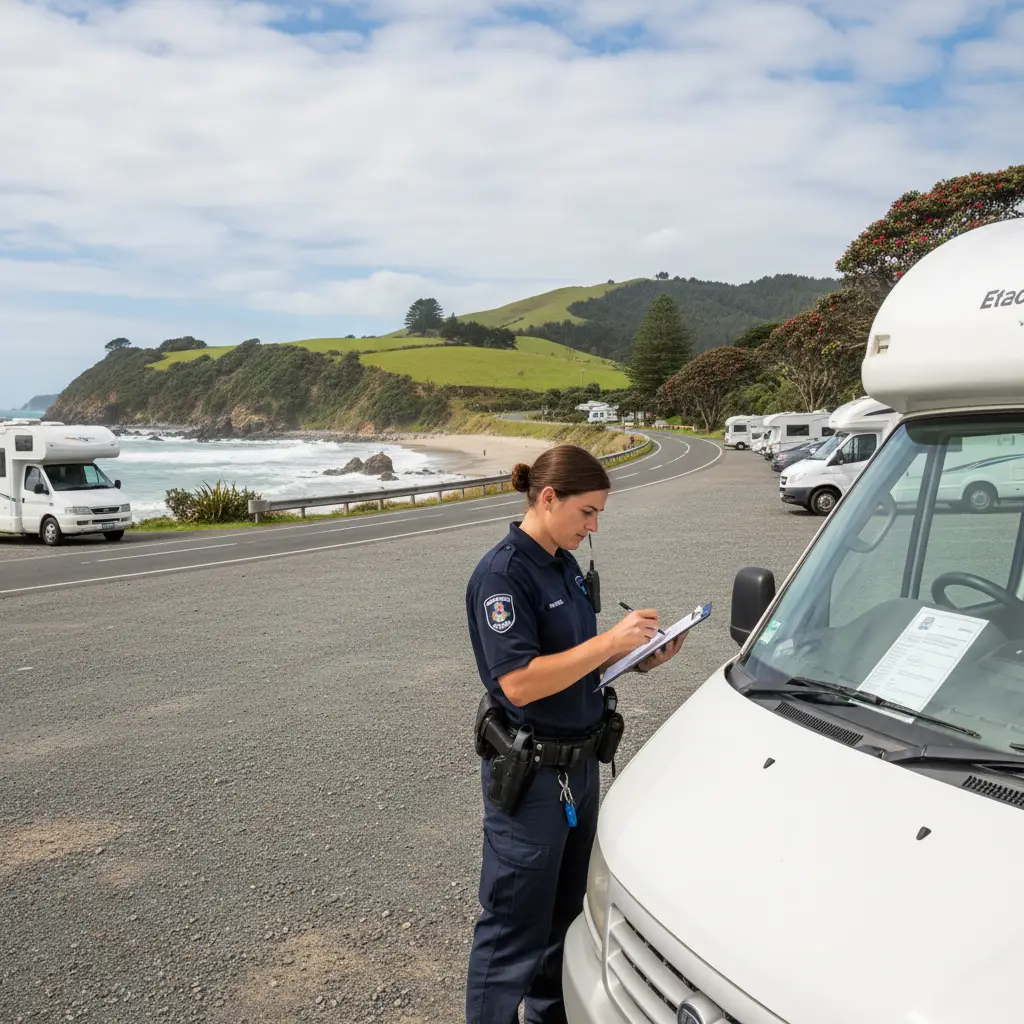
Renting Compliant Vehicles: A Guide for Tourists
For international visitors, the landscape of renting a campervan has changed. In the past, budget travelers often rented small minivans with a portable toilet to access freedom camping spots. This option is rapidly disappearing for restricted camping zones.
What to Look For When Renting
When booking a vehicle for a trip in late 2024 or 2025, you must ask the rental company specifically about the certification status.
- Confirm the Toilet Type: Ask explicitly if the vehicle has a permanently fixed toilet. If they say it has a portable toilet, you cannot legally park in “Self-Contained Only” zones after the transition dates.
- Check the Sticker: Upon pickup, look for the Green Warrant card on the windscreen.
- Budget Implications: Vehicles with fixed toilets are generally larger (e.g., Mercedes Sprinter, Ford Transit, or larger Toyota Hiace models) and more expensive to rent than the smaller “sleeper vans.” You may need to adjust your budget accordingly.
Can I Still Rent a Non-Self-Contained Vehicle?
Yes, you can. However, you will be restricted to staying in designated commercial campgrounds, holiday parks, and Department of Conservation (DOC) campsites that provide toilet facilities. You cannot freedom camp in areas restricted to self-contained vehicles.
Where Can You Camp Under the New Rules?
The rules do not ban freedom camping entirely; they simply regulate where certain vehicles can park. Land managed by local councils and the DOC is often categorized into prohibited, restricted, and permitted areas.
- Prohibited Areas: No camping allowed at all.
- Restricted Areas: Camping is allowed only for certified self-contained vehicles (Green Warrant).
- Permitted Areas: Camping is allowed for all vehicles (very rare for non-self-contained).
If your vehicle is not self-contained, you must use Holiday Parks or DOC campsites with facilities. These are widely available throughout New Zealand and offer amenities like hot showers, kitchens, and power, which can enhance your travel experience.

How to Certify Your Own Vehicle
For those building their own campervan or converting a van, the process has become more rigorous. You can no longer just ask a “knowledgeable person” to sign off on your setup.
You must use a verification officer appointed by the PGDB. The inspection will check:
- Water Supply: 12L of fresh water and 12L of gray water capacity per person for 3 days.
- Sink: A sealed sink connected to the wastewater tank.
- Toilet: The fixed toilet installation, including its stability and venting.
- Waste Hose: A hose for emptying the tank (must be 3m long for campers, shorter for some portable tanks if applicable, but fixed tanks usually require specific evacuation setups).
- Rubbish: A sealable rubbish bin.
The cost of certification has also increased to cover the levy paid to the regulator and the time of the professional certifier. Expect to pay between $150 and $300 for the certification process.
Can I still use a portable toilet for freedom camping in NZ?
No, not if you want to be certified as self-contained under the new 2024 regulations. To obtain a Green Warrant and camp in restricted areas, your vehicle must have a permanently fixed toilet. You can still use a portable toilet in a non-certified vehicle, but you must stay in campgrounds with facilities, not freedom camping spots.
How much is the fine for freedom camping illegally in NZ?
The standard infringement fee is $400 for camping in a restricted area without a valid self-contained vehicle. Fines can range up to $1000 for severe breaches, such as illegally dumping waste.
What is the difference between a Green and Blue warrant?
A Blue warrant certifies a vehicle under the old standard (allowing portable toilets) and is being phased out. A Green warrant certifies a vehicle under the new legislation, requiring a permanently fixed toilet. By June 7, 2025, only Green warrants will be valid for restricted freedom camping.
Do rental campervans need to be self-contained?
Rental vans do not have to be self-contained, but if they are not, they cannot be used for freedom camping in restricted areas. Most tourists prefer self-contained rentals to access more free camping spots. Rental companies must meet the new Green Warrant standards by December 7, 2024, to market their vehicles as self-contained.
Can I convert my Toyota Estima to be self-contained in 2024?
It is very difficult. Because the new rules require a permanently fixed toilet that is usable while the bed is made up, small minivans like the Toyota Estima usually lack the interior space to meet these technical requirements.
Where can I find a self-containment officer?
You can find a list of appointed certification officers on the Plumbers, Gasfitters and Drainlayers Board (PGDB) website. They are the regulatory body overseeing the new self-containment verification process.