The best time for Aurora Australis in New Zealand is during the southern hemisphere winter, specifically from March to September, when nights are longest. Optimal viewing occurs between midnight and 2:00 AM during a new moon phase to minimize light pollution. Currently, approaching the solar maximum means 2024 and 2025 offer exceptional visibility.
New Zealand’s winter skies offer a celestial theater unlike anywhere else on Earth. As the temperatures drop and the nights lengthen, the country becomes a premier destination for astrotourism, combining the ethereal glow of the Aurora Australis (Southern Lights) with the cultural profundity of Matariki (the Māori New Year). For eco-conscious travelers and photographers, understanding the rhythms of the solar cycle and the local geography is essential to witnessing this natural phenomenon.
When is the Best Time for Aurora Australis NZ?
While the Aurora Australis can technically occur at any time of year, the best time for Aurora Australis NZ is dictated by darkness. Unlike the Northern Lights, which are often associated with freezing Arctic conditions, the Southern Lights can be viewed in relatively milder climates, provided the sky is dark enough.
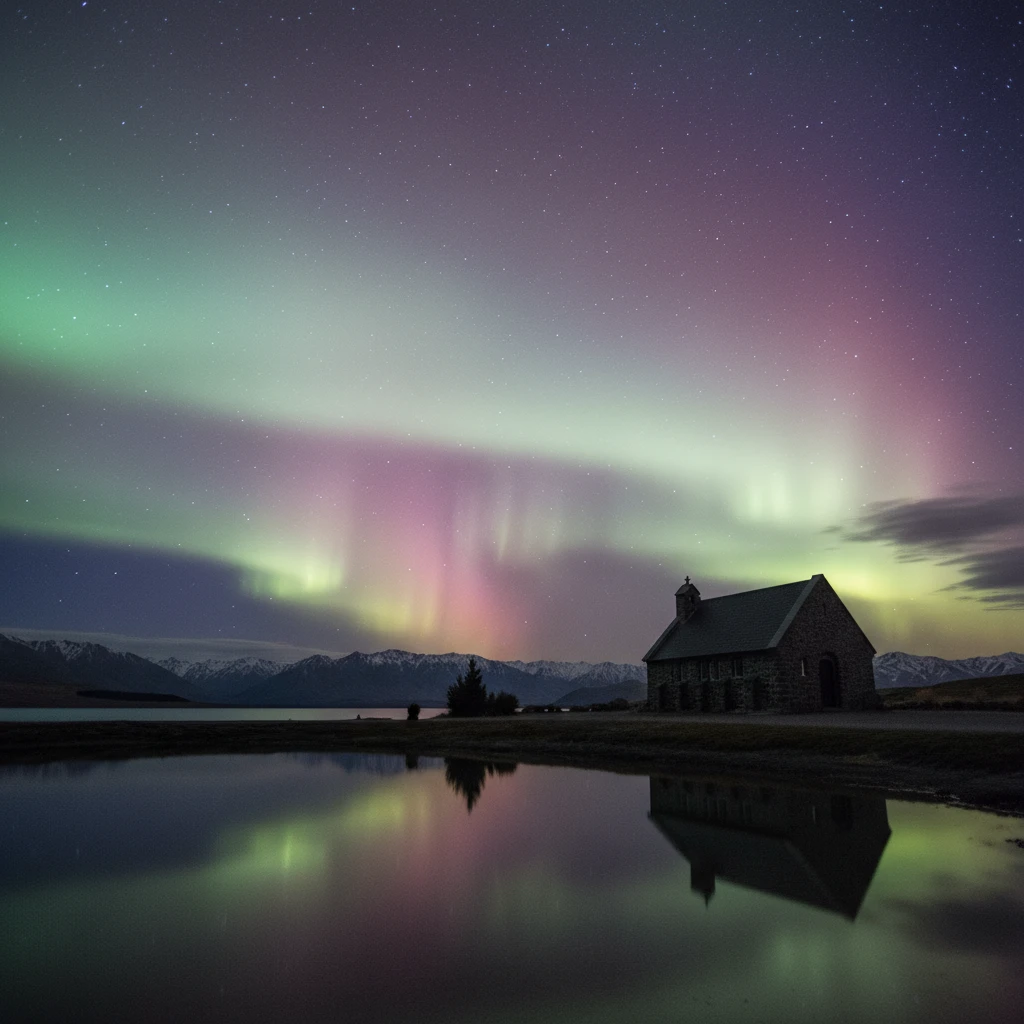
The Winter Window: March to September
The core season for aurora hunting in New Zealand spans the autumn and winter equinoxes. During this period, the South Island experiences significantly longer nights, providing a wider window of opportunity for viewing. In June and July, darkness can last up to 14 hours, maximizing your chances of catching a geomagnetic storm.
The Solar Cycle Factor
We are currently in a period known as the “Solar Maximum” of Solar Cycle 25. This is a phase of high solar activity where sunspots and coronal mass ejections (CMEs) are frequent. This increased activity sends charged particles toward Earth’s atmosphere, interacting with gases to create the vibrant greens, pinks, and purples of the aurora. Experts predict this peak activity will continue through 2025, making this winter one of the most historically significant times to plan a trip.
Moon Phases Matter
Even a strong geomagnetic storm can be washed out by a bright full moon. For the best experience, plan your travel around the New Moon phase. The week leading up to and following the new moon ensures the sky is pitch black, allowing the fainter pillars of light to be visible to the naked eye.
Forecasting the Aurora: Apps & Alerts
Chasing the lights requires more than just luck; it requires data. Modern technology allows regenerative travelers to plan their movements efficiently, reducing unnecessary carbon emissions from driving aimlessly.
Understanding the Kp Index
The Kp index measures geomagnetic activity on a scale from 0 to 9. For the Aurora Australis to be visible on the South Island of New Zealand, you typically need a Kp index of 5 or higher. However, with a clear horizon looking south, a Kp of 4 can often yield photographic success.
Essential Apps for the Aurora Hunter
- Aurora Australis Forecast & Alerts: This is a staple for local chasers, providing real-time data on solar wind speed and density.
- Glendale App: A favorite among serious astrophotographers, offering detailed graphs and prediction models specifically for the Southern Hemisphere.
- SpaceWeatherLive: Offers comprehensive data on solar flares and geomagnetic storms globally.
Pro Tip: Join local Facebook groups such as “Aurora Australis New Zealand.” The community is active and often posts “alerts” when the lights are visible in real-time, which is often more reliable than automated algorithms.
Best Locations: Stewart Island to The Catlins
To see the lights, you must go south and find dark skies. New Zealand is a world leader in Dark Sky preservation, offering sanctuaries that protect the night environment from light pollution.
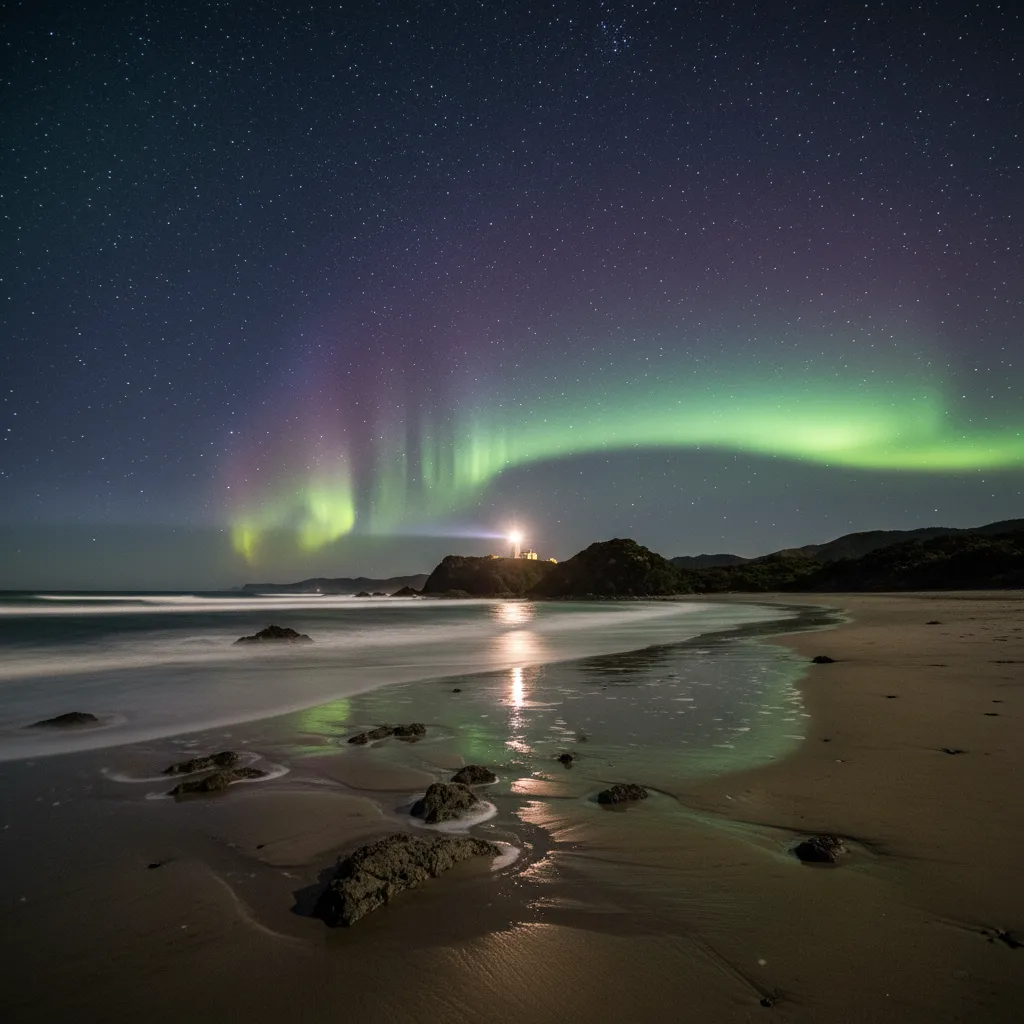
Rakiura / Stewart Island
Rakiura literally translates to “The Land of Glowing Skies.” It is an International Dark Sky Sanctuary and the southernmost populated island in New Zealand. Being further south than the mainland, it offers the highest probability of viewing the aurora. The lack of light pollution here is absolute, offering a pristine connection to the cosmos.
The Catlins
Located on the southeastern coast of the South Island, The Catlins is a rugged, sparsely populated region perfect for aurora photography. Locations like Nugget Point Lighthouse and Curio Bay offer dramatic foregrounds. The coastal geography allows for an unobstructed view south toward Antarctica.
Aoraki Mackenzie International Dark Sky Reserve
While slightly further north, this 4,300 square kilometer reserve is the gold standard for astrotourism. Centered around Lake Tekapo and Mt. Cook, the dry alpine air ensures high transparency. While you need a stronger storm to see the aurora here compared to Stewart Island, the framing of the lights against the Southern Alps is unmatched.
Cultural Significance of Matariki (Māori New Year)
In New Zealand, the winter sky holds deep cultural resonance beyond the aurora. The rise of the star cluster Matariki (the Pleiades) in mid-winter marks the Māori New Year. This usually occurs in late June or early July.
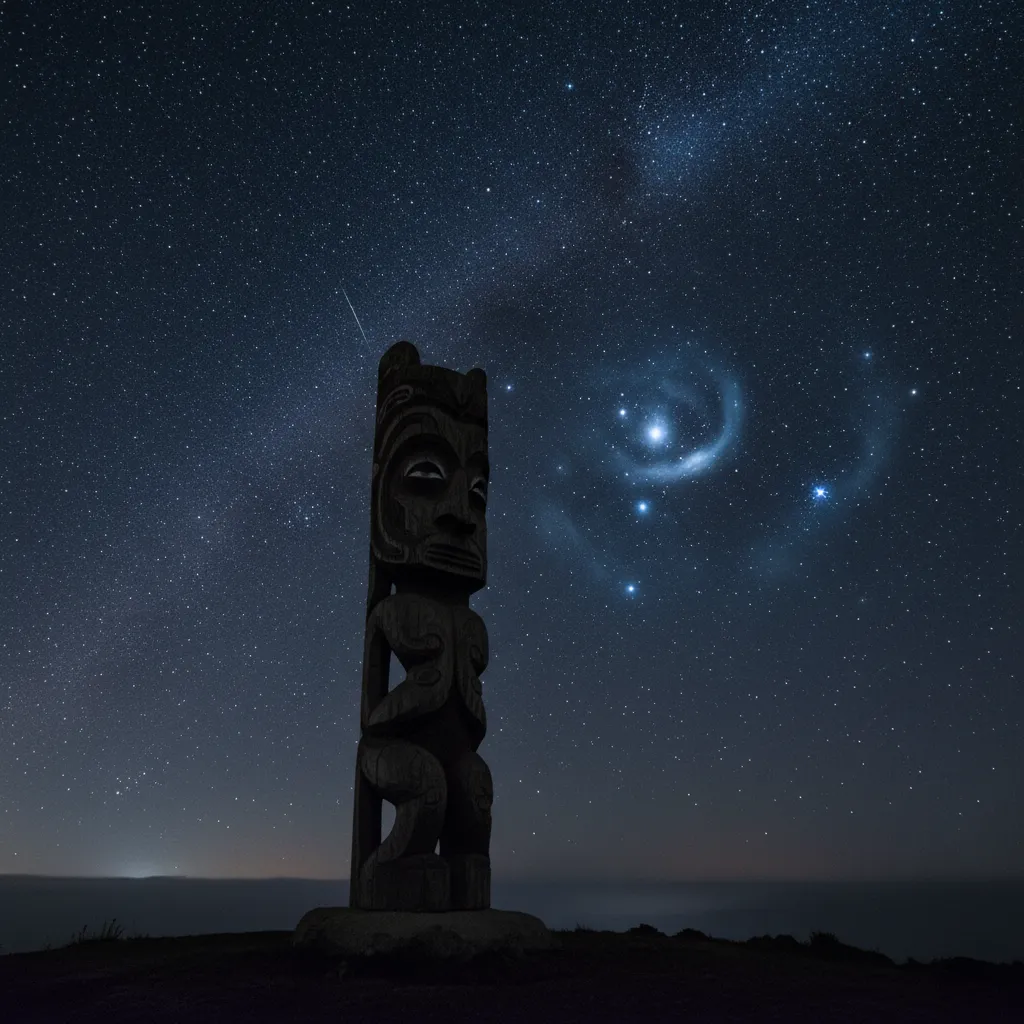
A Time for Reflection and Renewal
Matariki is a time to remember those who have passed (associated with the star Pōhutukawa), celebrate the present, and plan for the future. Historically, the brightness of the stars predicted the success of the coming harvest. When you view the Aurora Australis during the season of Matariki, you are witnessing a convergence of physical science and indigenous spirituality.
Regenerative Travel and the Sky
Embracing the spirit of Matariki means traveling with respect. Visitors are encouraged to practice Tiaki (guardianship). This involves respecting the silence of the night, minimizing light pollution (use red torches), and leaving viewing locations exactly as you found them. The night sky is considered a taonga (treasure) that must be protected.
Winter Road Safety for Night Driving
Chasing the aurora often involves driving late at night on remote, unlit roads in freezing conditions. Safety is paramount.
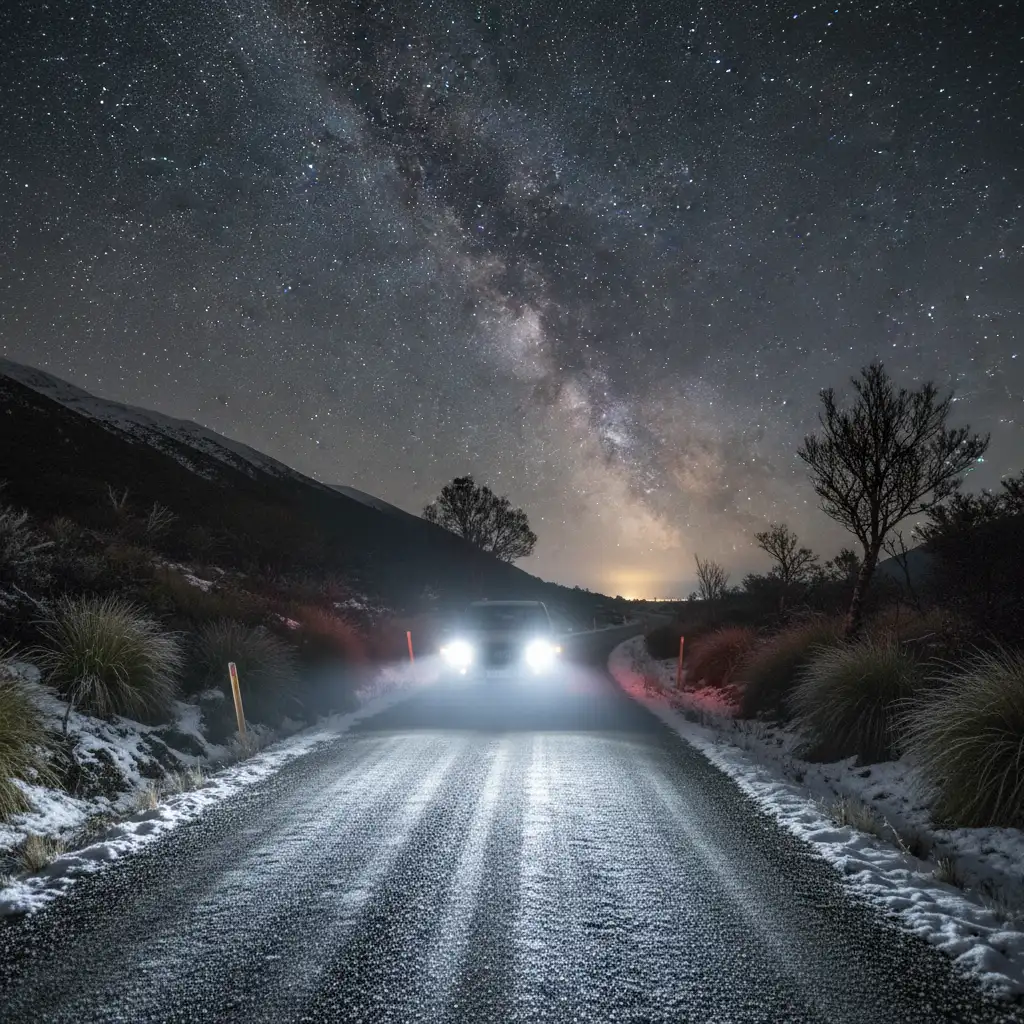
Black Ice and Frost
The best time for aurora viewing coincides with the iciest road conditions. “Black ice” is a thin coating of glazed ice on the road surface that is visually transparent. It is most common on bridges and in shaded areas. Slow down significantly, even if the road looks clear.
Wildlife Hazards
New Zealand’s nocturnal wildlife, particularly possums and wandering stock (sheep or cattle), can be hazards on rural roads. Driving at reduced speeds gives you more reaction time.
Preparation Checklist
- Vehicle: Ensure your rental car has snow chains and you know how to fit them. Check tire tread and battery health.
- Supplies: Carry warm blankets, a torch, water, and snacks. Cell phone coverage is spotty in The Catlins and Stewart Island, so download offline maps.
- Fatigue: Aurora hunting disrupts sleep patterns. Do not drive if you are exhausted; pull over in a safe, designated area to rest.
People Also Ask
What month is best for Southern Lights in New Zealand?
The peak months are June, July, and August due to the long duration of darkness, though strong activity is common from March through September.
Can you see the Aurora Australis with the naked eye?
Yes, during strong geomagnetic storms (Kp 5+), the aurora appears as dancing white or grey pillars to the naked eye. Colors are usually only visible in very intense storms or through long-exposure photography.
Where is the best place to see the Aurora Australis in NZ?
Stewart Island (Rakiura) offers the best chance due to its southern latitude, followed closely by The Catlins, Invercargill, and the Mackenzie Dark Sky Reserve (Tekapo/Mt Cook).
Is 2024 a good year for Aurora Australis?
Yes, 2024 and 2025 are considered prime years as the sun reaches the peak of its 11-year solar cycle (Solar Maximum), resulting in more frequent and intense solar storms.
What time of night is best for Aurora viewing?
The darkest part of the night, typically between 12:00 AM and 2:00 AM, offers the best contrast, though auroras can appear anytime after sunset if the activity is high.
Do I need a special camera to photograph the Southern Lights?
While a DSLR or Mirrorless camera with a tripod is best, modern smartphones with “Night Mode” or long-exposure settings can now capture impressive images of the aurora.