Dark sky reserves in New Zealand are specific protected areas, such as the Aoraki Mackenzie International Dark Sky Reserve and the Rakiura Stewart Island Dark Sky Sanctuary, recognized for possessing exceptional quality of starry nights. These zones strictly regulate artificial light pollution to preserve celestial visibility, protect nocturnal wildlife, and offer world-class astrotourism experiences.
New Zealand has established itself as a premier destination for astronomers, photographers, and nature enthusiasts seeking connection with the cosmos. In an era where artificial light pollution obscures the Milky Way for nearly 80% of the global population, Aotearoa (New Zealand) offers a rare refuge. The country’s commitment to conserving the night sky is not merely about tourism; it is deeply rooted in kaitiakitanga (guardianship) and the preservation of natural heritage. From the snow-capped peaks of the Southern Alps to the rugged coastlines of remote islands, the dark sky reserves in New Zealand provide a window into the universe that is rapidly disappearing elsewhere on Earth.
The Rise of Astrotourism in New Zealand
Astrotourism has evolved from a niche hobby for amateur astronomers into a significant sector of New Zealand’s regenerative tourism economy. This shift is driven by a global desire to disconnect from urban environments and reconnect with the natural world. In New Zealand, the government and local communities have recognized that the night sky is a natural resource as valuable as the fjords or the rainforests.
The movement gained critical momentum in 2012 when the Aoraki Mackenzie region was designated as an International Dark Sky Reserve. Since then, the nation has pursued a goal to become a “Dark Sky Nation,” a world-first initiative aiming to protect the night sky across the entire country. This ambition aligns perfectly with New Zealand’s “100% Pure” brand, extending conservation efforts from the land and sea into the atmosphere.
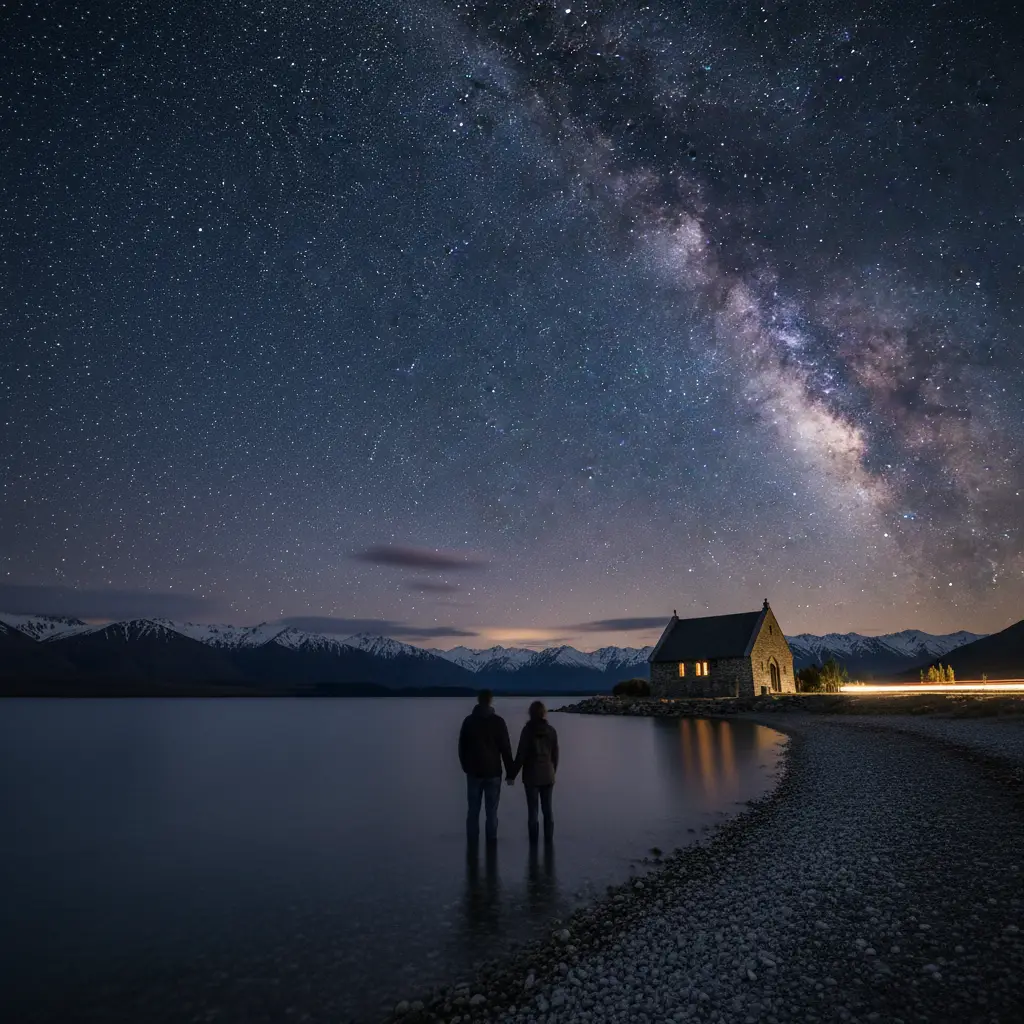
Why New Zealand dominates the Dark Sky map
Several geographical and demographic factors make New Zealand uniquely suited for astrotourism:
- Low Population Density: With only 5 million people spread across a landmass similar in size to the UK or Japan, vast swathes of the country are devoid of city lights.
- Geographical Isolation: Being surrounded by the vast Pacific and Southern Oceans means there is no light pollution bleeding in from neighboring countries.
- Southern Hemisphere Advantage: The center of the Milky Way galaxy passes directly overhead in the Southern Hemisphere winter, providing a brighter and more spectacular galactic core than what is visible in the North.
Major Dark Sky Reserves and Sanctuaries
When planning an itinerary focused on dark sky reserves New Zealand, it is crucial to understand the specific locations that hold international accreditation. These sites have gone through rigorous testing by the International Dark-Sky Association (IDA) to prove their skies are among the darkest on the planet.
Aoraki Mackenzie International Dark Sky Reserve
This is the crown jewel of New Zealand’s astrotourism. Encompassing 4,300 square kilometers across the South Island’s Mackenzie Basin, it includes Aoraki/Mt Cook National Park and the townships of Lake Tekapo, Twizel, and Mt Cook Village. It is the largest Dark Sky Reserve in the Southern Hemisphere and one of only a handful of “Gold Status” reserves globally.
Visitors here can visit the Mt John Observatory, operated by the University of Canterbury, which is the country’s premier astronomical research center. The local ordinances strictly control outdoor lighting—using fully shielded, orange-spectrum sodium lights—to ensure the sky remains pristine.
Rakiura Stewart Island Dark Sky Sanctuary
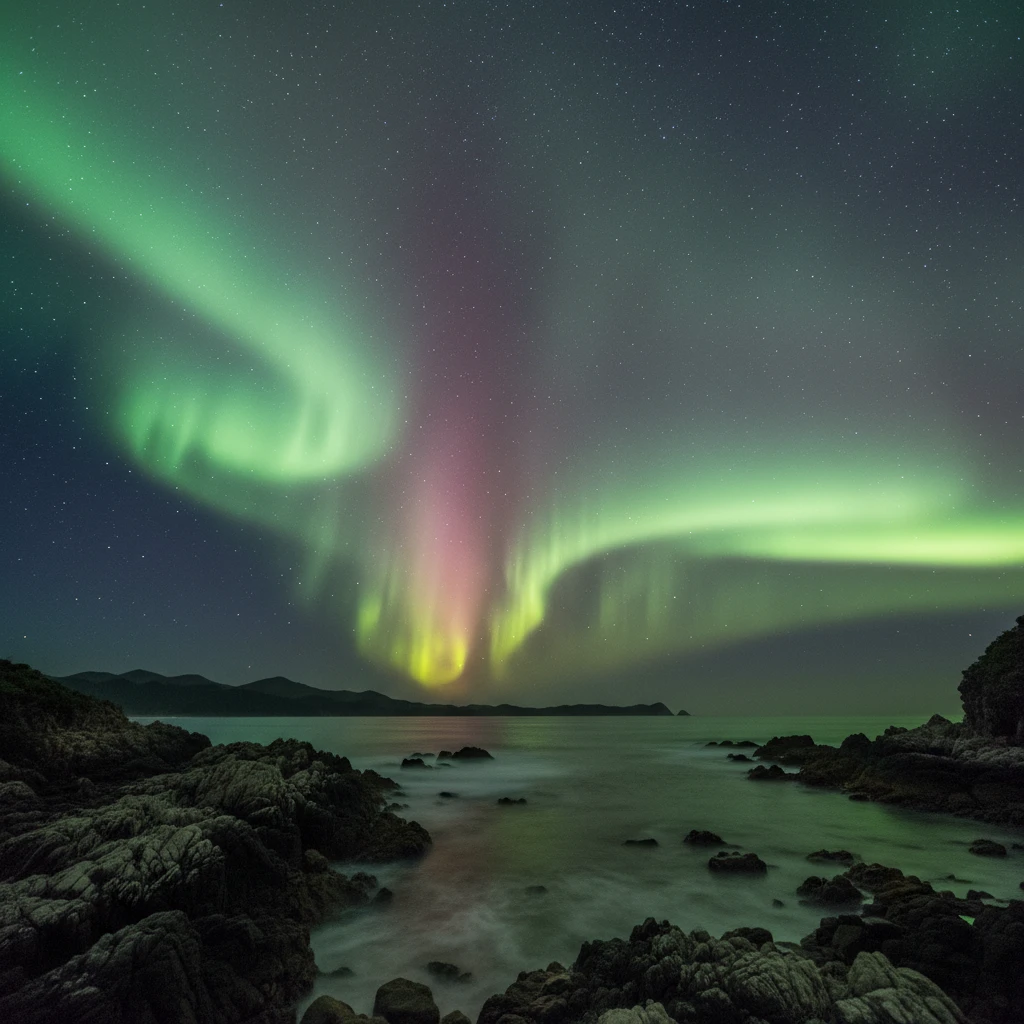
Located at the bottom of the world, Stewart Island (Rakiura) was designated a Dark Sky Sanctuary in 2019. A “Sanctuary” differs from a “Reserve” in that it is typically more remote and focuses on preserving the fragility of the site rather than just public outreach. With 85% of the island protected as a National Park and a tiny population, Rakiura offers a raw, wild stargazing experience. It is also one of the best places to view the Aurora Australis (Southern Lights).
Aotea Great Barrier Island Dark Sky Sanctuary
Situated off the coast of Auckland, Great Barrier Island was the first island in the world to receive Sanctuary status. Despite being relatively close to New Zealand’s largest city, the lack of mains electricity on the island (residents use solar and generator power) means light pollution is virtually non-existent. The island focuses heavily on “dark sky ambassadors”—locals trained to guide visitors through the constellations.
Understanding Light Pollution Zones
To truly appreciate the value of a dark sky reserve, one must understand what is being avoided. Light pollution is the excessive or misdirected use of artificial light. It is categorized into skyglow (the brightness of the night sky over inhabited areas), glare (excessive brightness that causes visual discomfort), and light trespass (light falling where it is not intended).
The Bortle Scale Explained
Astronomers use the Bortle Scale to measure the brightness of the night sky. It ranges from Class 1 (excellent dark-sky site) to Class 9 (inner-city sky).
- Class 9 (Inner City): The sky is brightly lit; only the moon and a few planets are visible.
- Class 5 (Suburban Sky): The Milky Way is very weak or invisible near the horizon.
- Class 2 (Typical Dark Sky Site): The Milky Way is highly structured and casts shadows.
- Class 1 (Excellent Dark Sky Site): The Milky Way is so bright it casts obvious shadows on the ground; Scorpio and Sagittarius are dazzling.
Most of New Zealand’s accredited reserves boast Bortle Class 1 or 2 skies, offering a level of clarity that many visitors from Europe, Asia, or North America may have never experienced in their lifetimes.
Māori Astronomy: Tātai Arorangi
Astrotourism in New Zealand is not solely scientific; it is deeply cultural. For Māori, the indigenous people of New Zealand, the night sky was critical for navigation, agriculture, and timekeeping. This knowledge system is known as Tātai Arorangi.
The most famous example is Matariki (the Pleiades star cluster). The rising of Matariki in mid-winter marks the Māori New Year. Historically, the brightness and clarity of these stars predicted the success of the coming harvest. Modern astrotourism tours often integrate these legends, explaining how Polynesian voyagers used the stars to navigate the vast Pacific Ocean to discover New Zealand centuries before European arrival.
Photography Gear Basics for Astro-Tourists
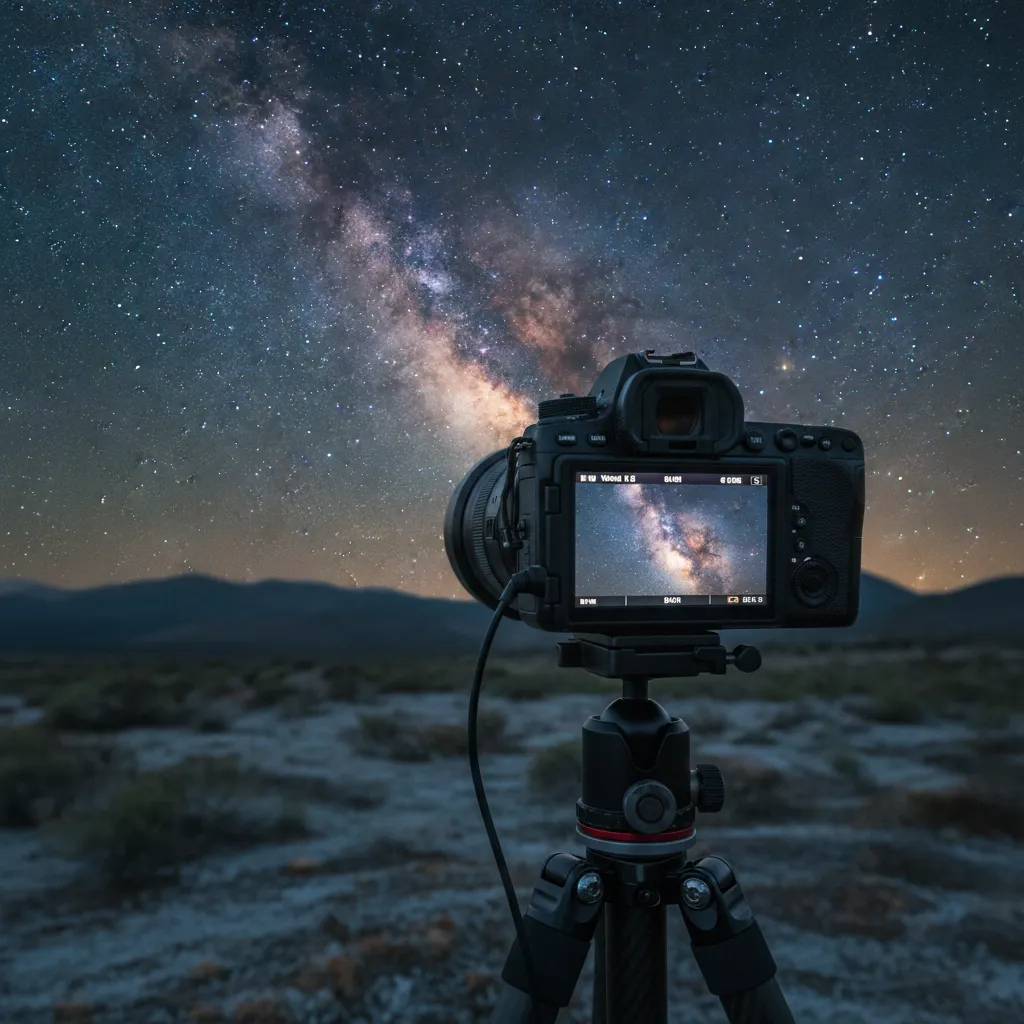
Capturing the majesty of the Milky Way is a primary goal for many visitors. While smartphone cameras are improving, a dedicated setup is required for high-quality astrophotography. Here is the essential gear and settings required to photograph the dark sky reserves in New Zealand.
Essential Hardware
- Full-Frame Camera: A full-frame sensor performs significantly better in low light than a crop sensor (APS-C) because the larger pixels capture more light with less digital noise.
- Fast Wide-Angle Lens: You need a lens with a wide field of view (14mm to 24mm) to capture the landscape and the sky. Crucially, it must have a “fast” aperture, ideally f/2.8 or wider (lower number), to let in maximum light.
- Sturdy Tripod: This is non-negotiable. Exposures will last between 15 to 30 seconds. Any movement will blur the stars.
- Intervalometer or Remote Shutter: To prevent camera shake when pressing the button.
The “500 Rule” for Sharp Stars
To prevent stars from turning into trails due to the Earth’s rotation, photographers use the 500 Rule. Divide 500 by the focal length of your lens to determine the maximum exposure time in seconds.
Example: If you are using a 20mm lens, 500 / 20 = 25 seconds. You can keep your shutter open for 25 seconds before star trails become noticeable.
Regenerative Travel and Conservation
Visiting dark sky reserves in New Zealand falls under the umbrella of regenerative travel—tourism that leaves a place better than you found it. By supporting these reserves, tourists provide an economic incentive for communities to maintain strict lighting ordinances.
Artificial light at night (ALAN) is a pollutant that disrupts ecosystems. It affects the circadian rhythms of humans and animals alike. In New Zealand, many native birds, such as the Hutton’s shearwater and the Westland petrel, are easily disoriented by bright lights, leading to “fallout” where birds crash-land and cannot take off again. Dark Sky Sanctuaries provide a safe corridor for these species.
When visiting, tourists are encouraged to:
- Use red-light torches (red light does not ruin night vision or disturb wildlife as much as white light).
- Close curtains in accommodation at night to prevent light spill.
- Choose certified eco-operators who contribute a portion of fees to conservation trusts.
Frequently Asked Questions
What is the best time of year to see the Milky Way in New Zealand?
The best time to view the core of the Milky Way in New Zealand is during the winter months, from March to September. During this time, the galactic center is high in the sky, providing the most dramatic views. Winter also brings longer nights, though it is significantly colder.
Can you see the Southern Lights (Aurora Australis) from New Zealand?
Yes, but it is not guaranteed. The best chances are in the lower South Island, particularly from Stewart Island, The Catlins, and the Mackenzie Basin. The aurora is most active during periods of high solar activity, and visibility depends on clear, dark skies.
Do I need a guided tour to experience the dark sky reserves?
While you can simply look up and enjoy the stars from anywhere in these reserves, a guided tour is highly recommended. Tours often provide access to high-powered telescopes, private observatory locations, and expert guides who can explain the celestial objects and Māori astronomy.
What is the difference between a Dark Sky Reserve and a Sanctuary?
A Dark Sky Reserve consists of a core area meeting minimum criteria for sky quality and a peripheral area that supports the core. A Dark Sky Sanctuary is typically a more remote, often geographically isolated location with the most pristine skies, where the focus is on protecting the site’s fragility.
Is Queenstown a good place for stargazing?
While Queenstown has beautiful scenery, the town itself generates significant light pollution. However, you do not need to travel far from Queenstown to find dark skies. A short drive to Glenorchy or the Gibbston Valley will provide much better visibility.
Are there any dark sky locations in the North Island?
Yes. Apart from the Aotea Great Barrier Island Sanctuary, the Wairarapa region is currently working towards becoming a Dark Sky Reserve. Additionally, the Wai-iti Recreational Reserve in Nelson is an accredited Dark Sky Park.