Contrary to popular belief, the Hoiho (Yellow-eyed penguin) does not follow large-scale seasonal migration patterns like Antarctic species. They are sedentary, remaining in New Zealand’s coastal waters year-round. Their movement is characterized by daily foraging trips within the continental shelf and juvenile dispersal, meaning they can be viewed in their specific breeding habitats across the South Island throughout the year.
Understanding Hoiho Behavior: Migration vs. Residency
For independent travelers and eco-tourists planning a trip to New Zealand, understanding the biological rhythms of the Megadyptes antipodes is crucial for a successful sighting. A common misconception among visitors is that all penguins migrate thousands of kilometers to follow food sources or escape winter ice. The Hoiho, however, is unique.
Because they do not migrate, the “hoiho migration patterns” are actually better described as foraging radii and dispersal patterns. These birds are faithful to their nesting sites, often returning to within meters of where they were born to breed. This sedentary nature is a double-edged sword: it makes them reliably viewable for tourists year-round, but it also means they cannot easily escape local environmental degradation or warming oceans.
The Daily Commute: Pelagic Foraging
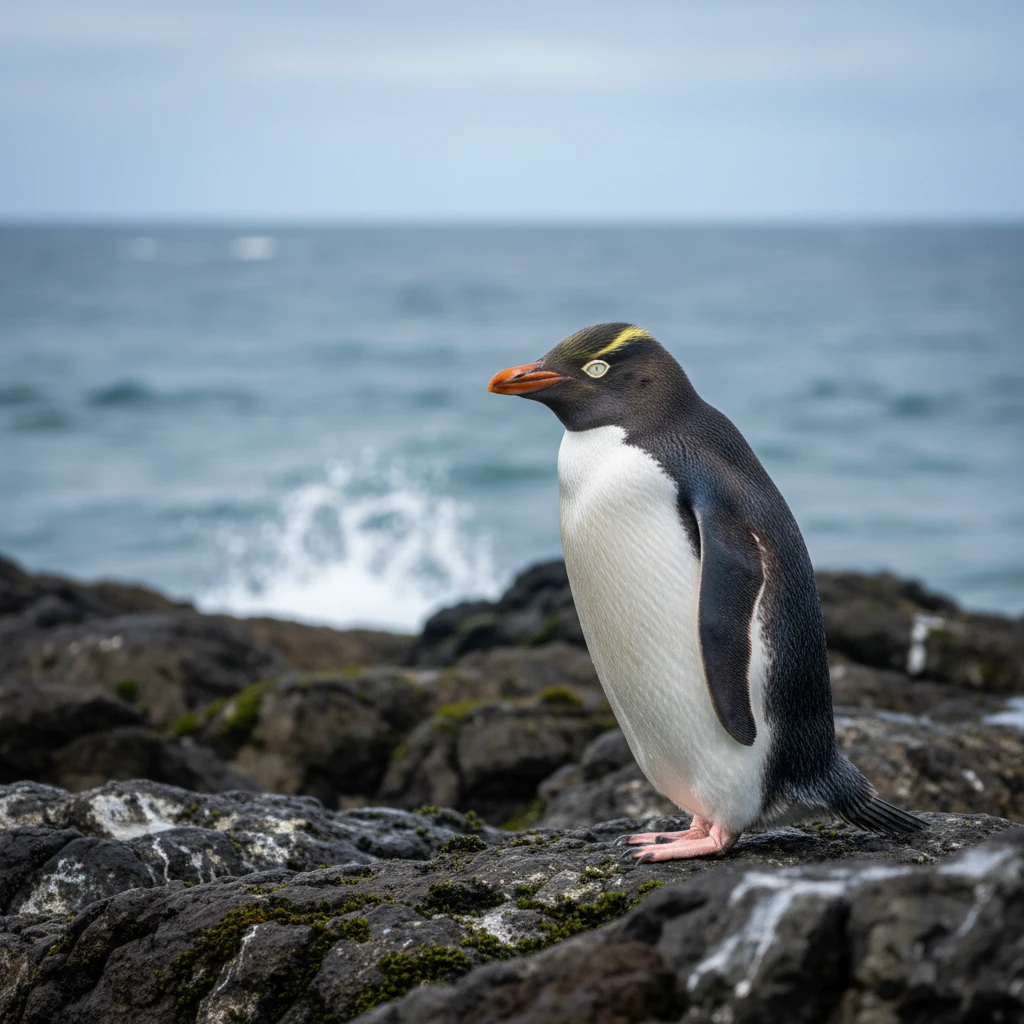
Instead of seasonal migration, the Hoiho engages in a grueling daily commute. During the breeding season, adults will leave their nests before dawn, entering the water to hunt for opalfish, blue cod, and sprats. They travel anywhere from 10 to 50 kilometers offshore, diving to depths of up to 160 meters. They return to the shore in the late afternoon or evening to feed their chicks. This daily cycle is the primary “pattern” travelers must understand to time their visits correctly.
Juvenile Dispersal
The only time these penguins exhibit significant movement away from their home range is during the juvenile stage. Fledglings, upon leaving the nest, may travel northwards up the coast of the South Island, sometimes as far as the Cook Strait. However, once they reach sexual maturity, they almost invariably return to the Otago or Southland coasts to breed. This biological fidelity to location is why specific spots on the Otago Peninsula and the Catlins remain the global strongholds for the species.
Prime Viewing Locations: Otago Peninsula vs. The Catlins
New Zealand’s South Island offers two distinct regions for viewing the Hoiho. Choosing between the Otago Peninsula (near Dunedin) and the Catlins (further south) depends on your travel style, fitness level, and desire for infrastructure versus wild isolation.
The Otago Peninsula: Accessibility and Infrastructure
The Otago Peninsula is arguably the wildlife capital of New Zealand. Protruding into the Pacific Ocean from Dunedin, it provides nutrient-rich waters that support a high density of marine life.
Sandfly Bay: This is a Department of Conservation (DOC) managed site. It requires a steep descent down a massive sand dune. It is a “wild” viewing experience. While you may spot penguins here, the real challenge is the return hike up the dune. Hides are provided, and it is imperative to use them. The beach is vast, and penguins often cross the sand to reach nests in the scrub.
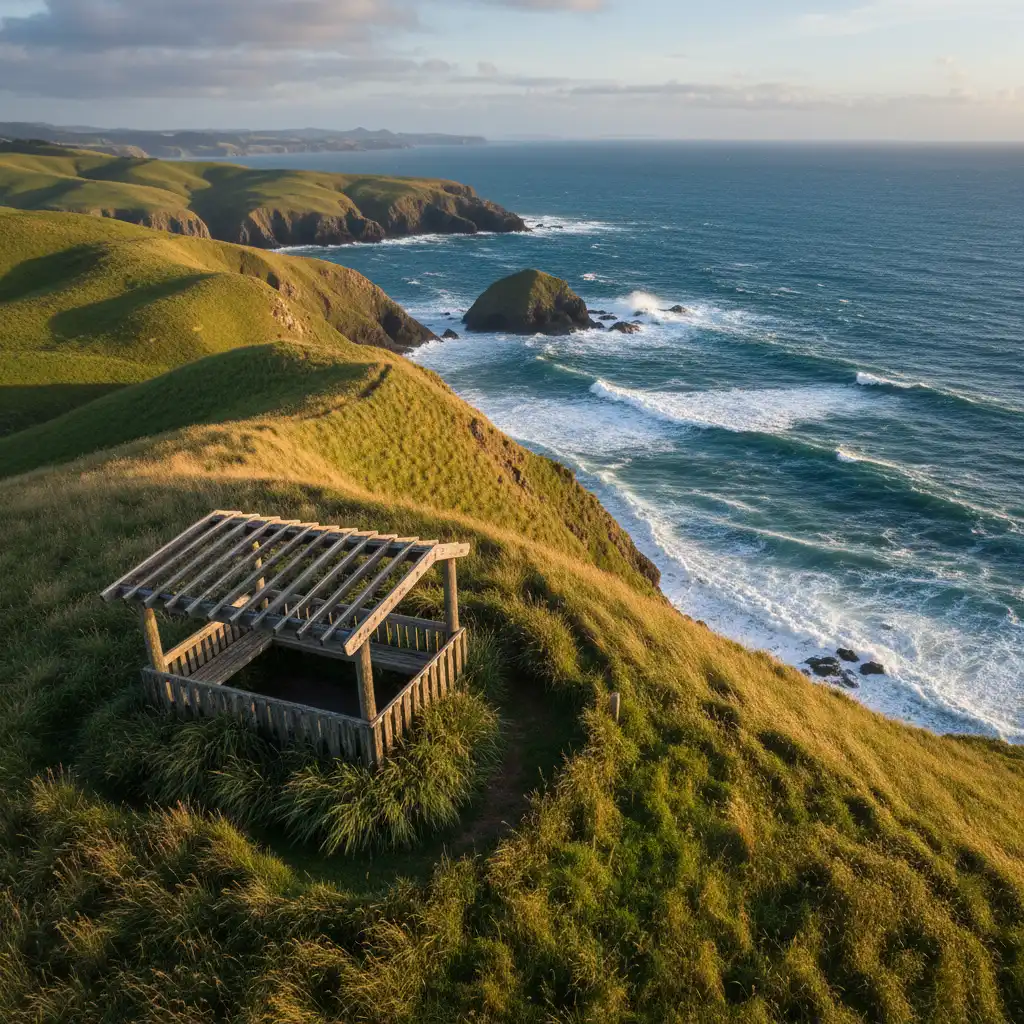
Penguin Place: For those who want a guaranteed sighting without disturbing the birds, this private conservation reserve is the gold standard. Unlike public beaches where tourists often accidentally encroach on the birds, Penguin Place uses a system of trenches and camouflage hides. This allows visitors to view the penguins at close range (optically) while remaining completely invisible to the birds. The funds from tours go directly into rehabilitation and predator trapping.
The Catlins: Rugged and Remote
The Catlins offers a more raw, windswept experience. The locations here are further apart and generally less crowded than Dunedin.
Curio Bay: Famous for its Jurassic-era petrified forest, Curio Bay is also a nesting site for Hoiho. Viewing here is strictly managed during peak times to prevent people from blocking the penguins’ path from the water to the forest. The juxtaposition of ancient fossilized trees and living rare penguins makes this a unique photographic location.
Nugget Point (Roaring Bay): Located near the iconic lighthouse, Roaring Bay has a dedicated hide. The penguins here nest in the coastal vegetation. You will be viewing from a height, looking down onto the beach. Binoculars are essential here, as the distance is greater than at other sites, but the panoramic views are unmatched.
The Golden Hour: Best Time of Day and Season for Sightings
Timing is everything. Because the Hoiho does not migrate, you can technically see them year-round, but their daily and seasonal behaviors dictate your success rate.
The Daily Window: 3:00 PM to Dusk
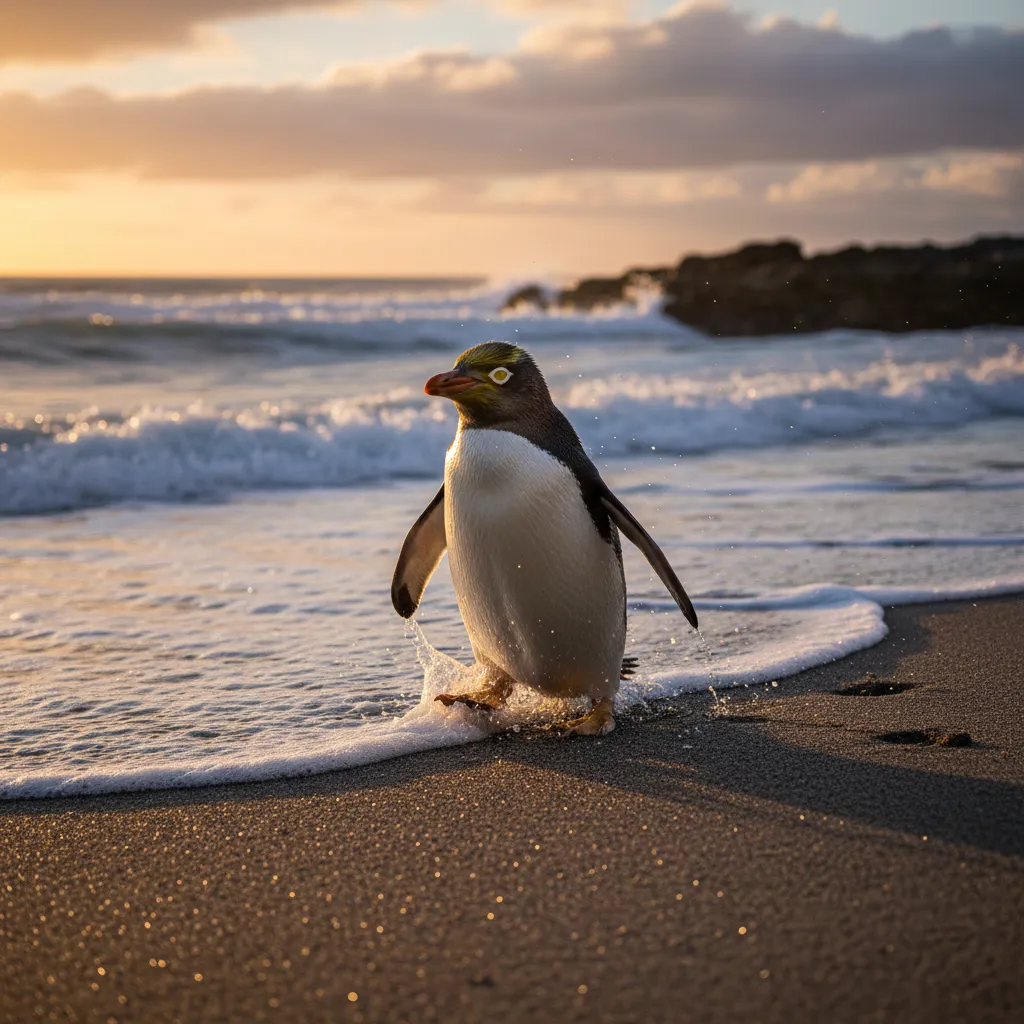
Hoiho are visual hunters; they do not hunt at night. Consequently, they spend the daylight hours at sea. If you visit a viewing hide at 11:00 AM, you are unlikely to see anything other than empty nests (unless it is molting season). The prime viewing window begins in the late afternoon, usually from 3:00 PM onwards, peaking just before dusk. This is when the adults return from the ocean to feed their chicks or rest.
Seasonal Variations
- Breeding Season (August – March): This is the most active time. Parents are constantly coming and going to feed chicks. Sightings are frequent in the late afternoon.
- Molting Season (February – April): This is a critical and sensitive time. Penguins must stay on land for 3-4 weeks to replace their feathers. They are not waterproof during this time and cannot eat. They stand still, look “scruffy,” and are extremely vulnerable to stress. If you see a molting penguin, it is vital to keep an extreme distance. They are not resting; they are enduring a physically taxing biological process.
- Winter (May – July): Adults are present but spend less time on land. They may come ashore to roost for the night but are not tied to the nest for chick-rearing.
Responsible Eco-Tourism: How to Watch Without Disturbing
The Hoiho is one of the most solitary penguin species in the world. Unlike the colonial Snares or Gentoo penguins, the Yellow-eyed penguin prefers privacy. They are easily stressed by human presence, which can cause them to delay landing (leading to starvation) or abandon their nests.
The 50-Meter Rule
Always maintain a minimum distance of 50 meters (165 feet). If a penguin stops and looks at you, you are too close. If the penguin turns around and heads back to the water, you have effectively prevented it from feeding its chick for the night. This is a critical failure in responsible eco-tourism.
Hide and Seek
Always use provided hides or vegetation. If you are on an open beach like Sandfly Bay, crouch down. A standing human silhouette is threatening; a crouching form is less so. Never block the path between the ocean and the dunes. Penguins take the path of least resistance; if you block it, they will not pass.
No Flash Photography
As viewing often happens at dusk, low light is a challenge. However, flash photography is strictly prohibited. The sudden burst of light can temporarily blind the birds and cause panic. Use a camera with high ISO capabilities or simply put the camera away and enjoy the moment.
Conservation Status: Why Every Sighting is Rare
The Hoiho is classified as “Nationally Endangered.” The population has suffered dramatic declines in recent years due to a “perfect storm” of threats. Understanding these threats adds weight and significance to every sighting.
Current Threats
Disease: Avian diphtheria (diphtheritic stomatitis) and malaria have ravaged populations, particularly chicks. In some years, mortality rates for chicks have been devastatingly high.
Predation: Introduced mammalian predators (stoats, ferrets, cats, and dogs) are lethal to flightless birds. While New Zealand has aggressive trapping programs, these predators remain a constant threat.
Marine Changes: Rising sea temperatures affect the availability of prey species. When the water warms, the fish move deeper or further out, forcing the penguins to expend more energy for less food.

How Tourists Can Help
Beyond following the viewing guidelines, tourists can support the Hoiho by donating to the Yellow-eyed Penguin Trust or choosing commercial operators (like Penguin Place or Elm Wildlife Tours) that contribute a percentage of their revenue directly to conservation efforts. Your choice of tour operator matters—look for the “Qualmark” seal or specific conservation pledges.
People Also Ask
Do yellow-eyed penguins migrate?
No, yellow-eyed penguins (Hoiho) are non-migratory. They are sedentary birds that remain in New Zealand waters year-round, generally staying within 50km of their nesting sites to forage.
Where is the best place to see hoiho?
The best places to see Hoiho are the Otago Peninsula (specifically Sandfly Bay and Penguin Place) and the Catlins coast (Curio Bay and Nugget Point) in the South Island of New Zealand.
What time of day do yellow-eyed penguins come out?
Yellow-eyed penguins are best viewed in the late afternoon, typically from 3:00 PM until dusk, as they return from a day of foraging at sea to head to their nests.
Why are yellow-eyed penguins endangered?
They face threats from introduced predators (stoats, dogs), avian diseases like diphtheria, habitat loss, and warming oceans which reduce the availability of their food sources.
How many yellow-eyed penguins are left?
Estimates vary annually due to disease outbreaks, but the population is critically low, with often fewer than 3,000 to 4,000 individuals remaining in the wild, making them one of the rarest penguins in the world.
Can you see penguins in Dunedin for free?
Yes, you can see penguins for free at Sandfly Bay and Allans Beach on the Otago Peninsula, provided you follow Department of Conservation guidelines and maintain a 50m distance.