Kea behavior and intelligence are characterized by neophilia—an intense love of novelty—and advanced problem-solving skills comparable to primates. As the world’s only alpine parrot, kea utilize complex tool use, social teamwork, and investigative play to survive harsh New Zealand environments, often manifesting as destructive curiosity toward human objects like cars and camping gear.
Known affectionately as the “Clown of the Alps,” the Kea (Nestor notabilis) is an evolutionary marvel unique to the South Island of New Zealand. While tourists often seek them out for photo opportunities, understanding the depth of kea behavior and intelligence is vital for both the safety of your property and the conservation of this endangered species. Their reputation for mischief is well-earned, but it stems from a cognitive capacity that rivals crows and chimpanzees.
The Science Behind Kea Intelligence
To truly appreciate the kea, one must look past the destroyed windshield wipers and see the cognitive powerhouse underneath the olive-green plumage. Researchers worldwide have flocked to New Zealand to study kea behavior and intelligence, uncovering abilities that challenge our understanding of avian cognition.
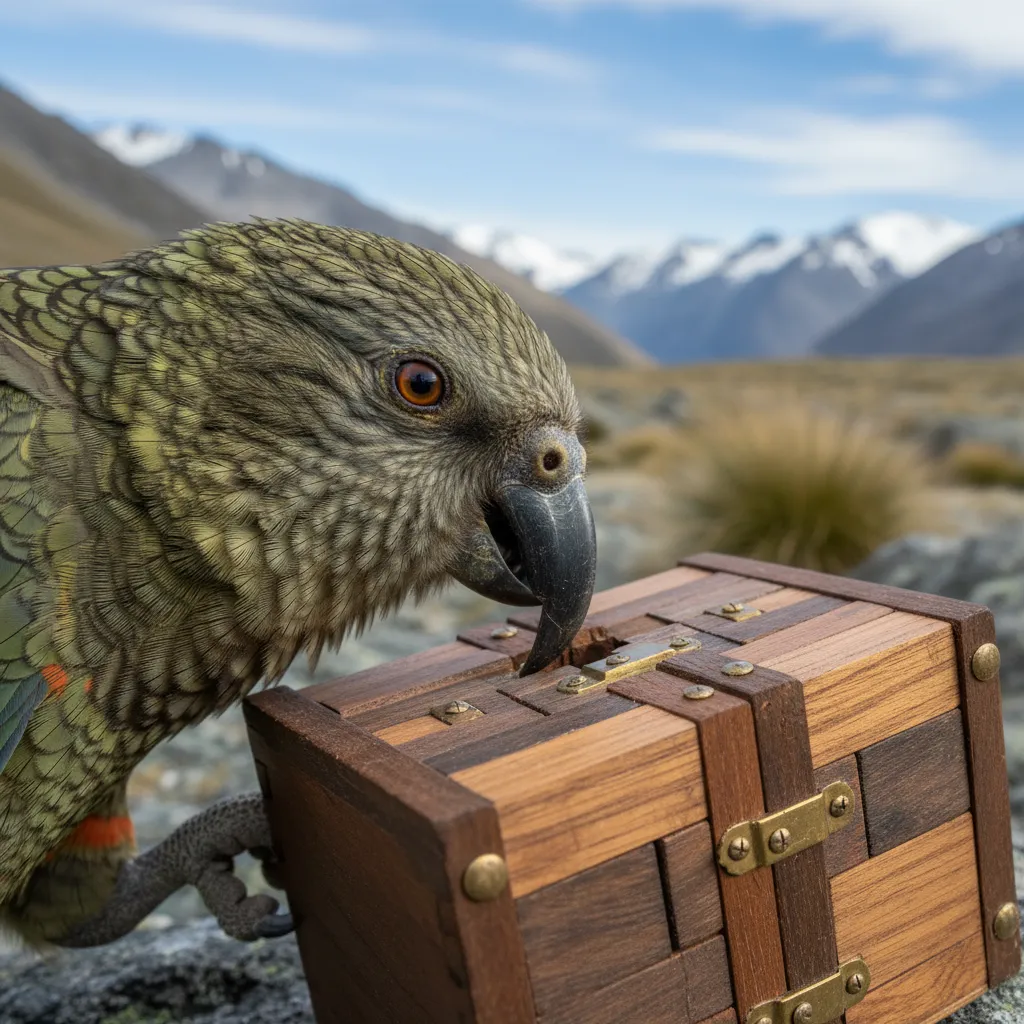
Problem Solving and Tool Use
Kea are among the few animal species capable of using tools. Unlike some birds that use tools instinctively, kea demonstrate flexible tool use. This means they can assess a new problem and determine the correct tool to solve it, even if they have never encountered the specific situation before. In controlled experiments, kea have been observed using sticks to disable traps or reach food, and they can even work in teams to achieve a goal that a single bird cannot accomplish alone.
Neophilia: The Drive for Discovery
The core of kea behavior is neophilia, the love of the new. In the harsh alpine environment of the Southern Alps, food sources can be scarce and seasonal. Evolution has favored birds that are willing to investigate anything unfamiliar to see if it is edible or useful. This trait is what drives them to investigate your hiking boots, your car antenna, and your brightly colored backpack. They learn through tactile exploration, which unfortunately for humans, involves a beak designed to crush roots and tear meat.
Why Do Kea Attack Cars? Curiosity Explained
One of the most common questions from travelers in New Zealand is: “Why do kea destroy cars?” The answer lies in the intersection of their tactile nature and the materials used in modern vehicles.
The Texture Attraction
Kea are fascinated by soft, pliable materials. Rubber seals around car windows, windshield wiper blades, and soft plastic molding offer a sensory feedback that kea find irresistible. It is not an act of malice; it is a form of play and investigation. To a kea, stripping the rubber seal off a car door is a stimulating puzzle that provides physical and mental enrichment.
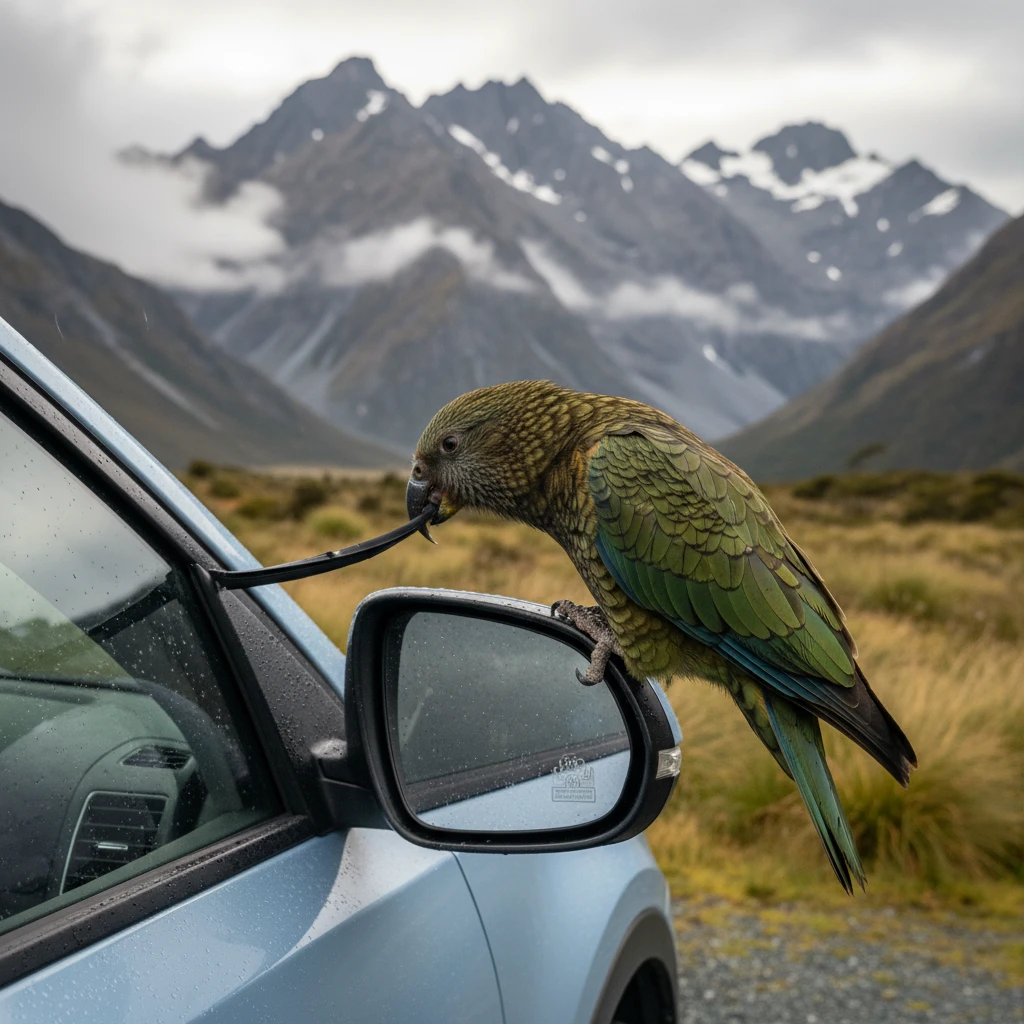
Social Learning in Parking Lots
Kea are highly social learners. If one kea discovers that pulling a wiper blade is fun, others will watch and replicate the behavior. Parking lots in areas like Arthur’s Pass or the Homer Tunnel become “playgrounds” where juvenile kea practice their foraging skills on tourist vehicles. The presence of humans often exacerbates this, as the birds associate the arrival of cars with potential interaction or food.
Safe Interaction Rules: The “Do Not Feed” Mandate
Interacting with kea is a highlight of any South Island trip, but it must be done on the bird’s terms. The golden rule of kea interaction is simple but critical: Never feed the kea.
Why is Feeding Kea Dangerous?
Feeding kea is illegal and harmful for several reasons:
- Dietary Health: Human food (bread, chips, fruit) is not suitable for kea. It can cause malnutrition and obesity, weakening the birds and making them susceptible to disease.
- Behavioral Changes: When kea are fed, they lose their natural fear of humans and their drive to forage naturally. This leads to “begging” behaviors, where birds harass people for food, increasing the likelihood of conflict.
- The 1080 Trap: Conservation efforts in New Zealand often involve the use of 1080 poison to control stoats and possums (predators that eat kea eggs). These poison baits are often cereal-based. If kea learn to eat human food that looks like cereal or pellets, they are significantly more likely to consume poison bait intended for pests.
How to Interact Responsibly
If a kea approaches you, enjoy the encounter but keep your hands to yourself. Do not encourage them to climb on you. While it makes for a great photo, a kea’s beak is powerful enough to break a finger, and their claws are sharp. Maintain a respectful distance and observe their natural antics without interfering.

Protecting Your Gear from Kea Beaks
For independent travelers and campers, kea can pose a genuine threat to equipment. Their intelligence allows them to unzip zippers, open clips, and tear through ripstop nylon.
Camping Strategies
If you are camping in alpine areas, never leave your gear unattended outside your tent. Boots left outside are likely to be flown away or shredded. Even inside a tent, food should be stored securely. Kea have been known to tear holes in tents to get to food they can smell inside.
- Lock Zippers: Use small carabiners or twists of wire to lock your tent zippers together. Kea can easily manipulate a standard zipper pull.
- Stow Boots: Keep boots inside the tent or in a vehicle.
- Cover Cars: If parking for an extended period in high-risk areas, some locals use heavy canvas covers for their cars, though this is impractical for most tourists. The best defense is vigilance.
Best Spots to Observe Kea in the Wild
To witness kea behavior and intelligence firsthand, you need to head to the high country. Here are the top locations for reliable sightings.
Arthur’s Pass National Park
This is arguably the kea capital of the world. The village of Arthur’s Pass and the lookout at the Otira Viaduct are hotspots. The birds here are very habituated to humans, offering excellent viewing opportunities. However, be extra vigilant with your vehicle here.
Fiordland and the Homer Tunnel
The road to Milford Sound passes through prime kea habitat. The area waiting for the traffic lights at the Homer Tunnel is famous for kea encounters. While waiting for the light to change, kea will often land on cars. This is a unique experience, but ensure your windows are up!
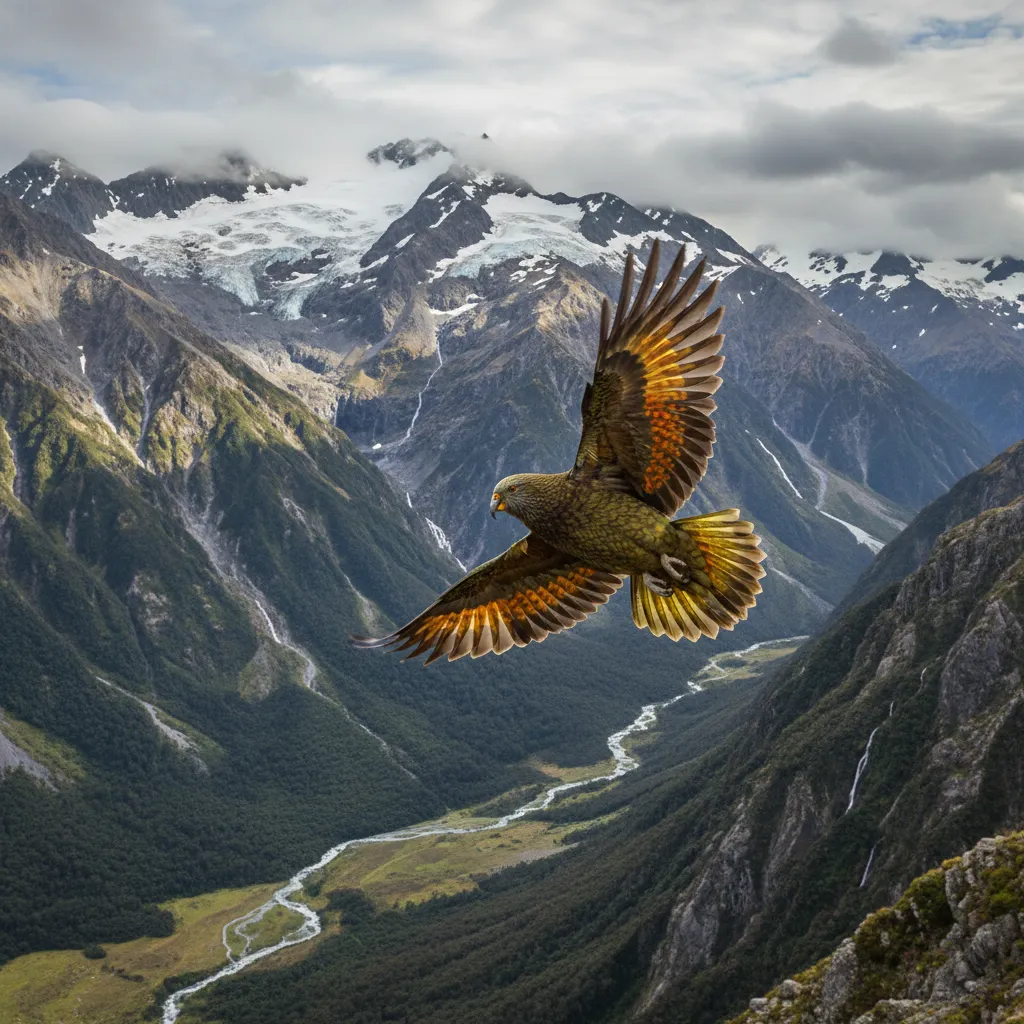
Mount Cook Village
The Aoraki/Mount Cook National Park is another stronghold. Kea are frequently seen around the village and on the Mueller Hut track. The high alpine environment here showcases their natural foraging behaviors against a backdrop of glaciers.
Conservation Status: Loving Them from a Distance
Despite their bold personalities, kea are an endangered species. Estimates suggest there are only between 3,000 and 7,000 individuals left in the wild. Their decline is largely due to introduced predators like stoats and possums that raid their ground-based nests.
By understanding kea behavior and intelligence, tourists can become allies in their conservation. Respecting the “no feed” rules, driving carefully in alpine areas to avoid collisions, and supporting local predator control initiatives are ways to ensure the “Clown of the Alps” continues to entertain and perplex us for generations to come.
Are Kea birds dangerous to humans?
Generally, no. Kea are not aggressive toward humans in a predatory sense. However, they can inflict painful bites with their powerful beaks if provoked or if they mistake a finger for food. They are wild animals and should be treated with respect and distance.
What is special about the Kea bird?
The Kea is the world’s only alpine parrot. It is renowned for its high intelligence, neophilia (love of new things), and ability to solve complex puzzles. They are also one of the few bird species that engage in play for social bonding and learning.
Do Kea eat sheep?
Historically, kea have been observed attacking sheep to feed on the fat around the kidneys, a behavior that led to bounties being placed on them in the past. While this behavior is rare today, it is a demonstration of their opportunistic omnivorous diet.
How smart is a Kea compared to a dog?
In terms of problem-solving and tool use, kea are often considered smarter than dogs. Their cognitive abilities are frequently compared to those of primates and corvids (crows and ravens), capable of planning and multi-step logical deduction.
Can you keep a Kea as a pet?
No, it is illegal to keep a kea as a pet. They are a strictly protected species in New Zealand. Furthermore, their high intelligence, destructive tendencies, and loud calls would make them extremely difficult and unhappy domestic companions.
Why do Kea have orange under their wings?
The bright orange-red feathers under a kea’s wings are likely used for social signaling. While they are camouflaged olive-green when on the ground, the flash of orange during flight or display helps birds communicate with each other and identify members of their flock.