Forest bathing in New Zealand, or Shinrin-yoku, is the practice of immersing oneself in the country’s ancient podocarp and beech forests to absorb the atmosphere through the senses. By slowly navigating these unique ecosystems, practitioners inhale phytoncides—wood essential oils—which significantly lower cortisol levels, boost immune function, and promote profound mental clarity.
New Zealand offers a distinct advantage for this eco-therapy due to its geographic isolation, resulting in some of the purest air quality on Earth and prehistoric flora that exists nowhere else. Unlike a hike, the goal is not physical exertion but rather a deep, restorative connection with the whenua (land).
What is Forest Bathing (Shinrin-yoku)?
Originating in Japan in the 1980s as a response to tech-boom burnout, Shinrin-yoku literally translates to “taking in the forest atmosphere” or “forest bathing.” It is not exercise, hiking, or jogging. It is simply being in nature, connecting with it through our senses of sight, hearing, taste, smell, and touch. In the context of New Zealand eco-tourism, this practice takes on a deeper dimension due to the cultural significance of the forest to the Māori people, who view the forest (Tāne Mahuta) as a living ancestor.
When you engage in forest bathing in New Zealand, you are stepping into a “green cathedral.” The canopy acts as a filter, softening the light and dampening sound, creating an environment perfectly suited for recalibrating the human nervous system. The practice encourages you to slow down—often covering less than a kilometer in two hours—to notice the fractal patterns in fern fronds, the texture of moss on a fallen log, or the complex melody of the Tūī bird.

The Science: Why NZ Forests Heal
The benefits of forest bathing are backed by decades of research. Trees and plants emit antimicrobial organic compounds called phytoncides to protect themselves from rotting and insects. When humans inhale these compounds, our bodies respond by increasing the number and activity of a type of white blood cell called Natural Killer (NK) cells. These cells are vital for killing tumor- and virus-infected cells.
Physiological Benefits
- Cortisol Reduction: Studies show that time spent in forest environments significantly lowers concentrations of cortisol, the primary stress hormone, compared to urban environments.
- Parasympathetic Nervous System Activation: The forest environment stimulates the “rest and digest” system, lowering blood pressure and heart rate.
- Improved Sleep: Exposure to natural light patterns and the reduction of stress hormones contributes to better sleep cycles.
New Zealand’s forests are particularly potent for this. The high density of evergreen broadleaf trees and ancient conifers (Podocarps) like Rimu, Totara, and Kauri ensures a year-round abundance of these beneficial compounds. Furthermore, the high negative ion count found near New Zealand’s many waterfalls and turbulent streams acts as a natural mood elevator.
Best Ancient Podocarp Forests for Immersion
New Zealand is home to some of the oldest forests in the world, remnants of the supercontinent Gondwana. Finding the right location is crucial for a successful forest bathing experience. You need a location with biodiversity, minimal noise pollution, and accessible tracks.
1. Waipoua Forest, Northland
Home to Tāne Mahuta, the Lord of the Forest, this is perhaps the most spiritual location for forest bathing in New Zealand. These giant Kauri trees create a sense of awe that naturally induces a meditative state. The sheer scale of the trees forces a perspective shift, helping personal worries feel smaller.
2. Whirinaki Te Pua-a-Tāne Conservation Park
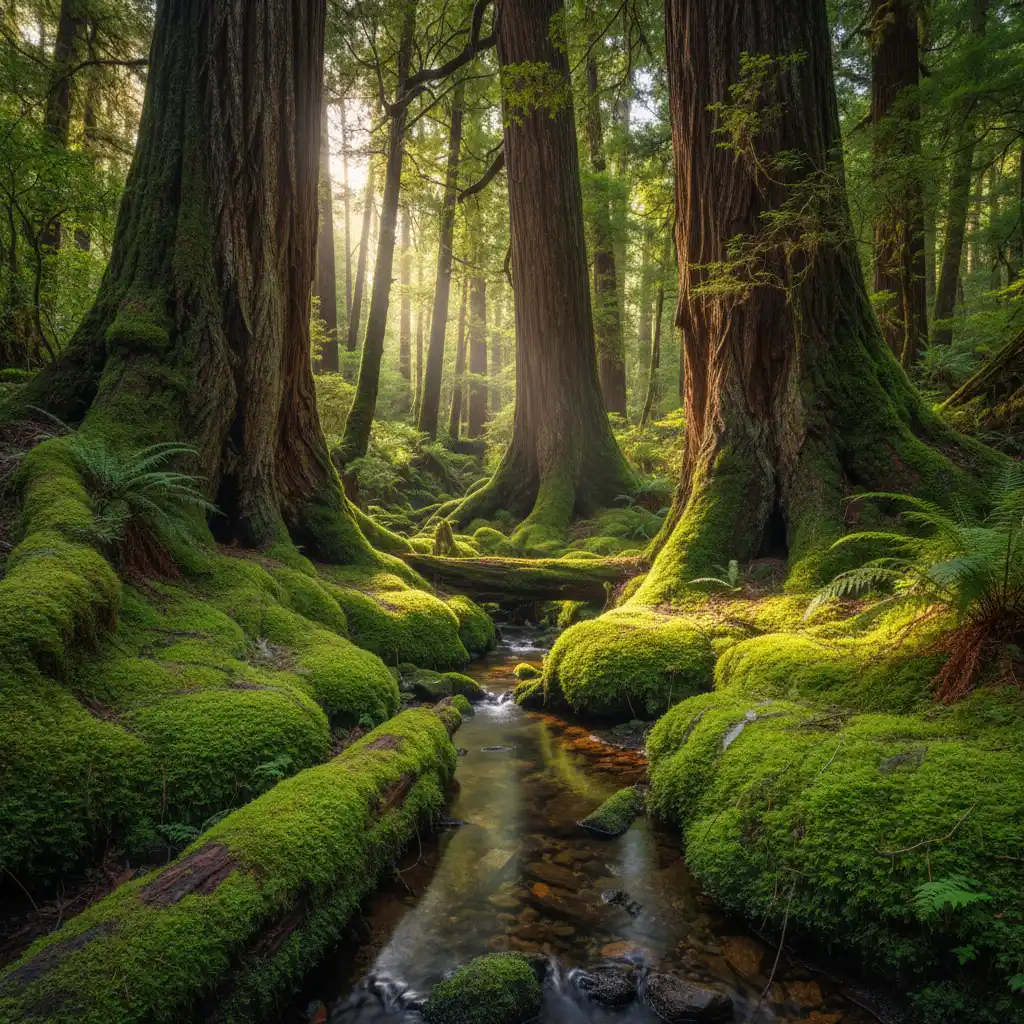
Located in the Bay of Plenty, Whirinaki is often cited by botanists as one of the world’s best examples of a prehistoric rainforest. The density of the podocarps here—Rimu, Mataī, Miro, and Kahikatea—creates a rich, oxygenated atmosphere ideal for deep breathing exercises. The moss-covered floor absorbs sound, creating a profound silence.
3. Ulva Island, Stewart Island (Rakiura)
For a complete sensory immersion, Ulva Island is unmatched. As a predator-free sanctuary, the birdlife here is deafening in the most beautiful way. The soundscape (biophony) of Saddlebacks, Yellowheads, and Kākā provides a natural focus point for auditory mindfulness. The air here, coming straight off the Southern Ocean, is some of the cleanest on the planet.
4. Waitakere Ranges, Auckland
For those near the main urban center, the Waitakere Ranges offer accessible wilderness. The Arataki Visitor Centre area provides gateways into lush bush where the regeneration of native flora offers a metaphor for personal rejuvenation.
Guided Therapy Walks vs. Solo Practice
While one can certainly walk into the woods alone, there is a distinct difference between a solo walk and a structured forest therapy session.
The Role of a Certified Guide
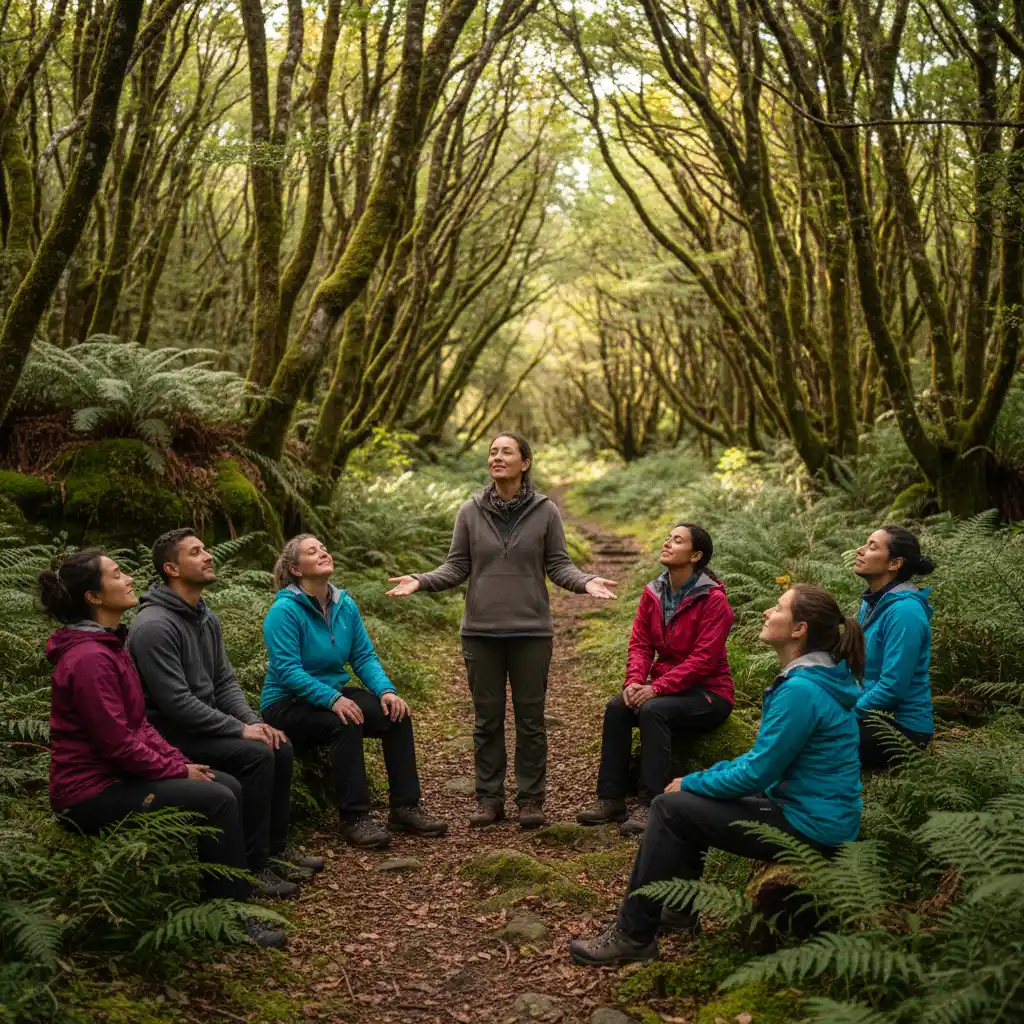
Certified Forest Therapy Guides in New Zealand are trained to facilitate the experience. They do not “lead” a hike in the traditional sense; rather, they open doors. A guide will offer “invitations”—prompts designed to slow you down and awaken your senses. For example, they might invite you to spend 20 minutes observing the motion of a single fern frond.
Guides also ensure safety and handle logistics, allowing you to fully surrender to the experience without worrying about navigation or time. In New Zealand, guides often incorporate Māori Tikanga (customs), such as acknowledging the local Iwi (tribe) and the spirit of the forest, adding a rich cultural layer to the therapy.
Self-Guided Immersion
If you prefer solitude, self-guided forest bathing is entirely possible. The key is intention. Leave your phone behind (or turn it off completely). Set a threshold before you enter the forest—physically pause before stepping onto the trail to acknowledge you are entering a different space. Move slowly. If you find yourself hiking for cardio, stop. Resume only when your breath has slowed.
Mindfulness Techniques for the NZ Bush
To maximize the benefits of forest bathing in New Zealand, try these specific techniques adapted for the local environment.
The Macro and Micro Vision
New Zealand’s bush is dense. Alternate your vision between the towering canopy of a Kahikatea tree (Macro) and the intricate patterns of lichen on the bark (Micro). This switching of focus helps break the cycle of ruminative thought patterns.
Auditory Mapping
Find a comfortable spot to sit. Close your eyes. Instead of identifying the sounds (e.g., “that is a bird”), try to visualize the geometry of the sound. Where is it coming from? How far away is it? In NZ forests, listen for the ‘whoosh’ of the Kererū’s wings or the bell-like notes of the Korimako. This places you firmly in the present moment.
Tactile Connection
The texture of New Zealand flora is unique. The Silver Fern (Ponga) has a rough, woody trunk, while the Horopito leaves have a waxy feel. Gently touching these textures (where safe and permitted) bridges the gap between observer and participant.
Conservation and The Tiaki Promise
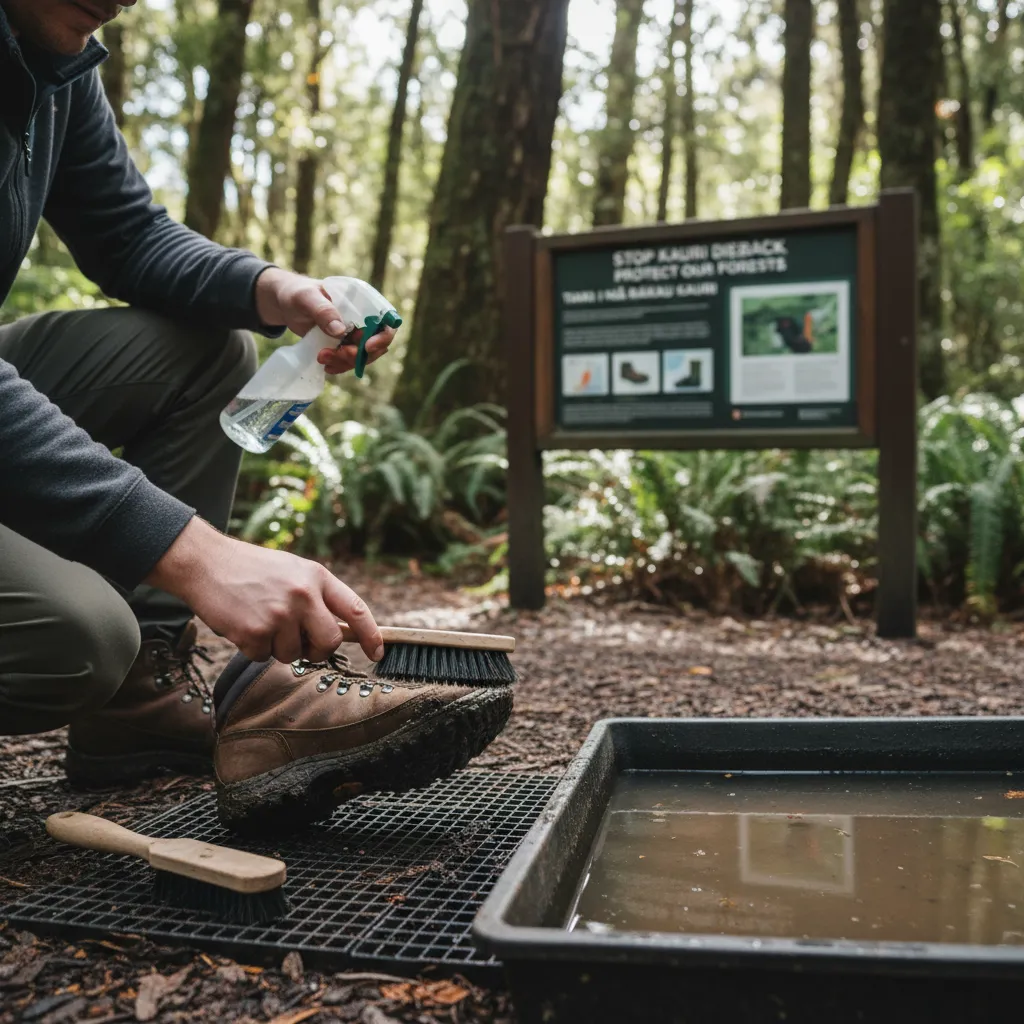
Forest bathing in New Zealand is inextricably linked to conservation. The ecosystem is fragile. Kauri Dieback disease is a microscopic pathogen that kills the giants of the forest. It is spread through soil movement.
Essential Rules for Eco-Conscious Bathers:
- Scrub Your Shoes: You must use the cleaning stations at the entrance and exit of tracks. This is non-negotiable to protect the Kauri trees.
- Stay on the Track: While traditional forest bathing might encourage wandering, in NZ, you must stay on marked paths to protect delicate root systems and prevent disease spread.
- The Tiaki Promise: This is a commitment to care for New Zealand. It involves guarding nature, keeping NZ clean, and showing respect. By practicing forest bathing, you are partaking in the appreciation of nature; ensure your footprint is invisible.
Practical Tips for Your Experience
Weather Preparation: New Zealand weather is changeable. Even in summer, the forest canopy can be cool. Dress in layers. Merino wool is excellent as it regulates temperature and remains warm even if damp.
Best Time of Year: While forest bathing can be done year-round, Spring (September-November) offers the most vibrant bird activity and new growth. Autumn (March-May) provides more stable weather and cooler temperatures ideal for remaining still.
Hydration: Bring water, but avoid food that has strong odors or crinkly wrappers that disturb the peace. A tea ceremony is often the conclusion of a guided walk; you can replicate this by bringing a thermos of herbal tea to enjoy at the end of your session.
People Also Ask
What is the Māori connection to forest bathing?
For Māori, the forest is the realm of Tāne Mahuta (God of the Forest). Being in the forest is not just physical but spiritual, involving a connection to Wairua (spirit) and Mauri (life force). Respecting the forest is respecting an ancestor.
Where can I go forest bathing in Auckland?
The Waitakere Ranges, specifically tracks around the Arataki Visitor Centre, are ideal. The Auckland Domain also offers pockets of mature trees for a quick urban escape, though the Ranges offer a deeper immersion.
Do I need a guide for forest bathing in New Zealand?
No, you do not need a guide, but a certified guide can help deepen the practice, especially for beginners. They also ensure you follow strict conservation protocols regarding Kauri Dieback disease.
Is forest bathing scientifically proven?
Yes. Extensive research, primarily from Japan and South Korea, demonstrates that forest bathing lowers blood pressure, reduces cortisol levels, improves heart rate variability, and boosts Natural Killer (NK) cell activity.
What trees are best for forest bathing in NZ?
Ancient Podocarps like Kauri, Rimu, and Totara are excellent due to their size and the atmosphere they create. Beech forests (Tawhai) are also popular for their open canopies and dappled light.
How long should a forest bathing session last?
A typical session lasts between 2 to 3 hours. This allows enough time for the mind to settle and the senses to fully awaken, though even 20 minutes can have positive physiological effects.