The best easy nature walks in NZ for toddlers are characterized by flat gradients, well-maintained boardwalks or paved surfaces, and short loop durations under 60 minutes. Top stroller-friendly locations include the Redwoods Treewalk in Rotorua, Lake Matheson in Westland, and the accessible sections of the Hooker Valley Track, all offering high-quality Department of Conservation (DOC) facilities.
Introduction to Accessible Eco-Tourism in New Zealand
New Zealand is renowned for its rugged wilderness, but for parents traveling with young children, accessibility is the gateway to these experiences. Finding easy nature walks NZ for toddlers involves more than just locating a trail; it requires identifying paths that accommodate strollers, offer engaging sensory experiences for little ones, and provide essential amenities like changing tables and safe parking.
The concept of regenerative travel encourages visitors to leave a positive impact on the destinations they visit. By choosing established, well-maintained tracks, families minimize environmental disturbance while instilling a love for the outdoors in the next generation. This guide focuses on the highest-rated accessible tracks across the North and South Islands, specifically curated for ease of use with strollers and toddlers.
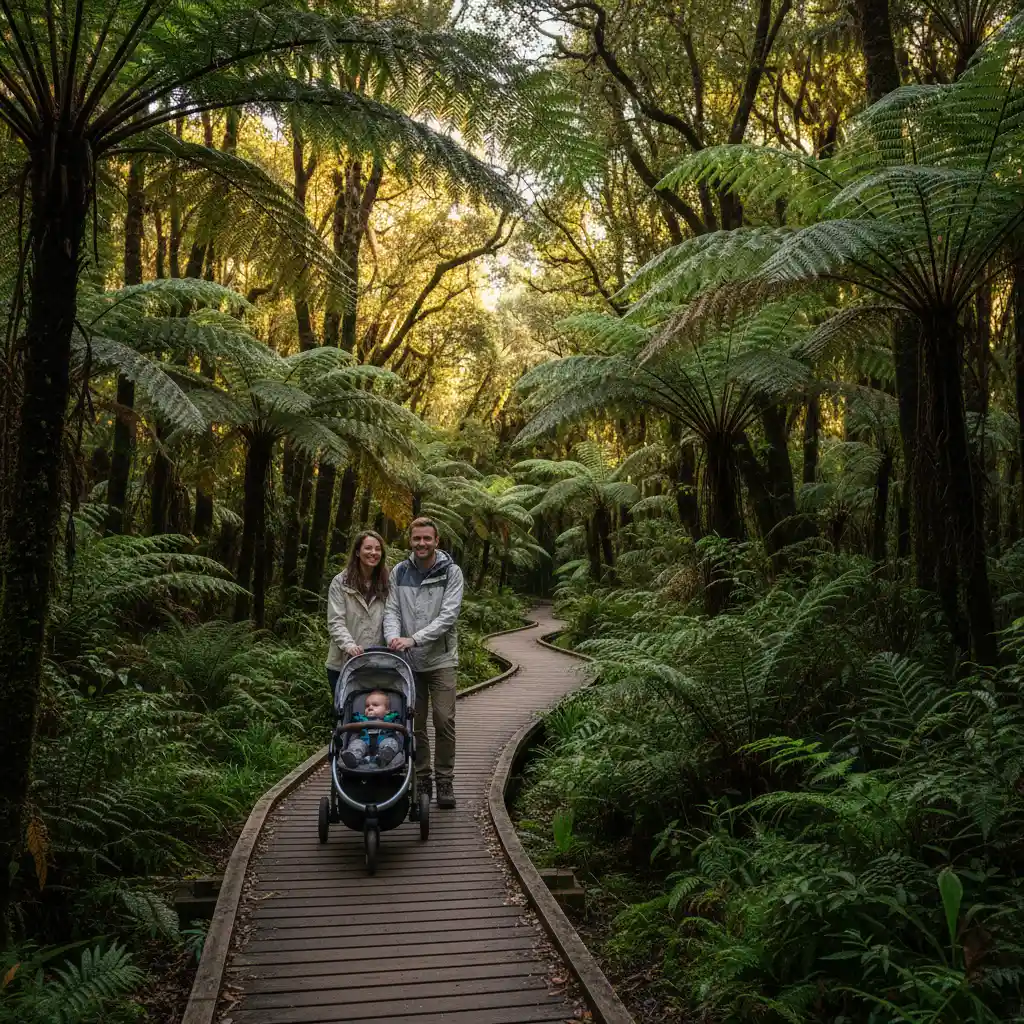
North Island Short Loops with Facilities
The North Island offers a subtropical climate and dense rainforests that are surprisingly accessible. The following tracks have been selected based on their surface quality (paved or boardwalk), gradient (flat), and proximity to townships for quick exits if needed.
The Redwoods (Whakarewarewa Forest), Rotorua
Track Name: Waitawa Walk
Duration: 30-45 minutes
Surface: Compacted gravel and boardwalk
Rotorua’s Whakarewarewa Forest is a premier destination for families. The Waitawa Walk is specifically designed for those with limited mobility and strollers. The towering Californian Redwoods provide a majestic canopy that captivates toddlers, while the flat surface ensures a smooth ride. The visitor center at the entrance provides excellent bathroom facilities and coffee, making it a stress-free outing.
Cornwall Park, Auckland
Track Name: The Twin Oak Drive Loop
Duration: Flexible (various loops)
Surface: Paved asphalt
While technically an urban park, Cornwall Park offers a genuine nature experience with grazing sheep and cattle, which are a massive hit with toddlers. The paths are fully paved, wide enough for double strollers, and surrounded by ancient trees. The park features a bistro and a cafe, both equipped with high chairs and changing facilities.
Karangahake Gorge, Coromandel
Track Name: Rail Tunnel Loop (partial)
Duration: 45 minutes return
Surface: Gravel and bridges
For a more adventurous feel that remains safe, the Karangahake Gorge offers a flat track along the river. The highlight for toddlers is the 1-kilometer rail tunnel (bring a torch!). While the full loop has some stairs, the walk from the carpark through the tunnel and back is entirely flat and stroller-accessible. The sensory experience of the river noise and the echoey tunnel makes this a memorable walk.
Dawson Falls, Egmont National Park
Track Name: Wilkies Pools Loop (to the bridge)
Duration: 20 minutes to bridge
Surface: High-quality boardwalk
Located on the slopes of Mount Taranaki, this track wanders through a goblin forest of twisted kamahi trees covered in moss. The boardwalk is pristine and leads to a suspension bridge. While the steps up to the pools themselves are not stroller-friendly, the walk to the bridge offers incredible views and immersion in nature without the physical strain.
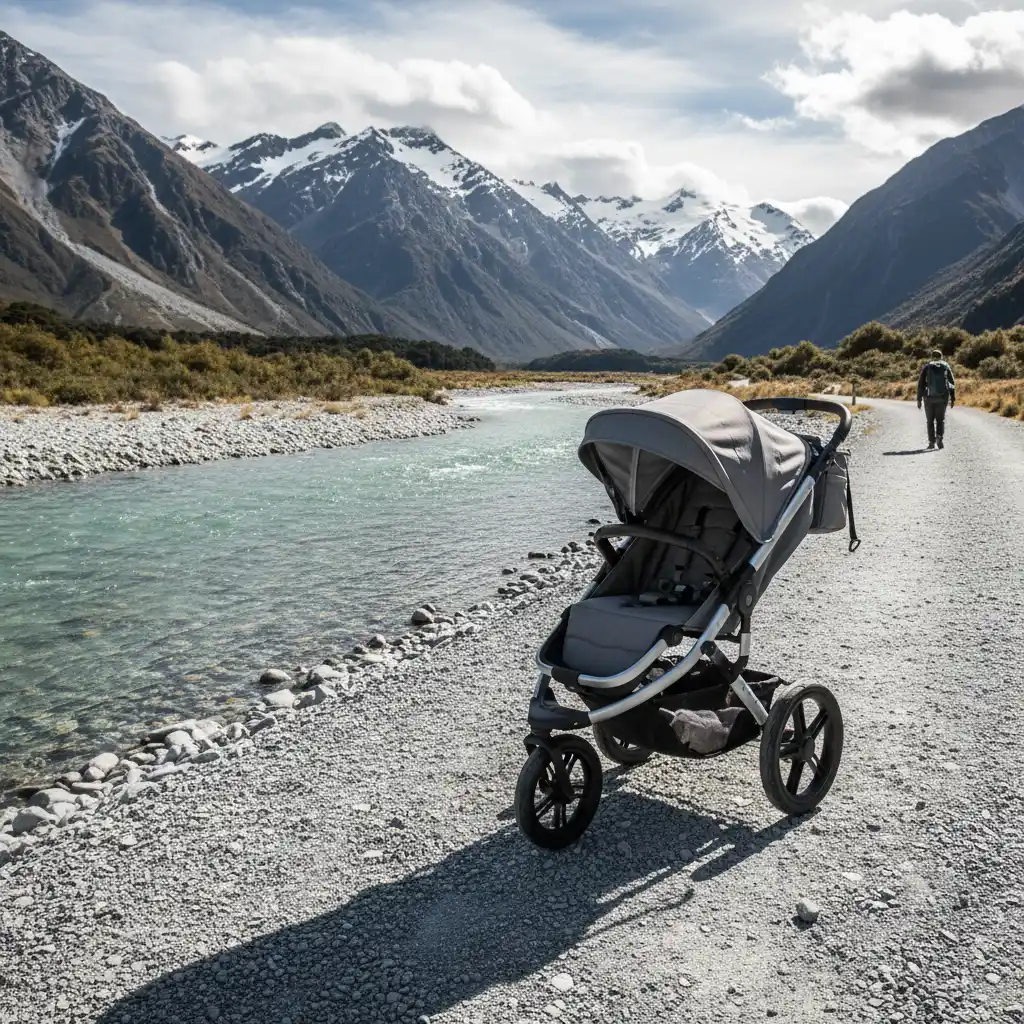
South Island Accessible Tracks (DOC Rated)
The South Island’s dramatic landscapes are often associated with steep alpine hiking, but the Department of Conservation (DOC) has invested heavily in making some of the most scenic spots accessible to everyone.
Lake Matheson, West Coast
Track Name: Jetty Viewpoint Walk
Duration: 40 minutes return
Surface: Wide gravel and boardwalk
Famous for its mirror reflections of Aoraki/Mount Cook, Lake Matheson is an essential stop. The walk to the Jetty Viewpoint is specifically graded for wheelchairs and strollers. The path meanders through ancient rimu and kahikatea forest. The cafe at the entrance is award-winning and provides full family amenities.
Hooker Valley Track, Aoraki/Mount Cook
Track Name: First Swing Bridge Return
Duration: 30 minutes return
Surface: Gravel
While the full 3-hour Hooker Valley track might be too long for a toddler’s patience, the section leading to the Mueller Lake lookout and the first swing bridge is achievable. The path is wide and well-formed. Seeing the glaciers and hearing the distant rumble of avalanches provides a safe but thrilling introduction to alpine environments.
Punakaiki Pancake Rocks, West Coast
Track Name: Pancake Rocks and Blowholes Walk
Duration: 20 minutes loop
Surface: Paved
This is one of the most accessible coastal walks in the country. The entire loop is paved and offers protective barriers, making it safe for toddlers who want to walk. The blowholes are a spectacular sight, though parents should be mindful of the noise which can sometimes startle younger children.
Abel Tasman National Park
Track Name: Wainui Falls Track (First section)
Duration: Varied
Surface: Compact earth
The Abel Tasman is famous for its golden sands. While beach walking with a stroller is difficult, the tracks leading into the bush from the carparks at Totaranui or Wainui are often hard-packed earth. The native bush here is vibrant with birdlife, including Fantails (Piwakawaka) which often flutter near walkers, delighting toddlers.

Bathroom & Changing Table Locations Guide
When planning easy nature walks NZ for toddlers, the proximity of facilities is often the deciding factor. The Department of Conservation categorizes tracks to help parents plan.
Understanding DOC Facility Ratings
Short Walks / Easy Access Walks: These categories almost always feature a toilet at the trailhead. However, “toilet” can range from a full flush facility with changing tables to a long-drop (composting toilet).
- Serviced Sites: Locations like Lake Matheson and The Redwoods feature serviced visitor centers. These are the gold standard for parents, offering heated bathrooms, changing tables, and rubbish disposal.
- Standard Sites: Locations like Dawson Falls may have flush toilets but lack specific changing tables. A portable changing mat is essential here.
- Basic Sites: Remote short walks often have long-drop toilets. Bring your own hand sanitizer and toilet paper as a backup.
Strategic Pit Stops
For the North Island, the i-SITE visitor centers in major towns (Rotorua, Taupo, New Plymouth) are the best hubs for changing diapers before heading to a track. In the South Island, DOC visitor centers in Wanaka, Queenstown, and Franz Josef provide excellent facilities.
What to Pack for a Toddler Bush Walk
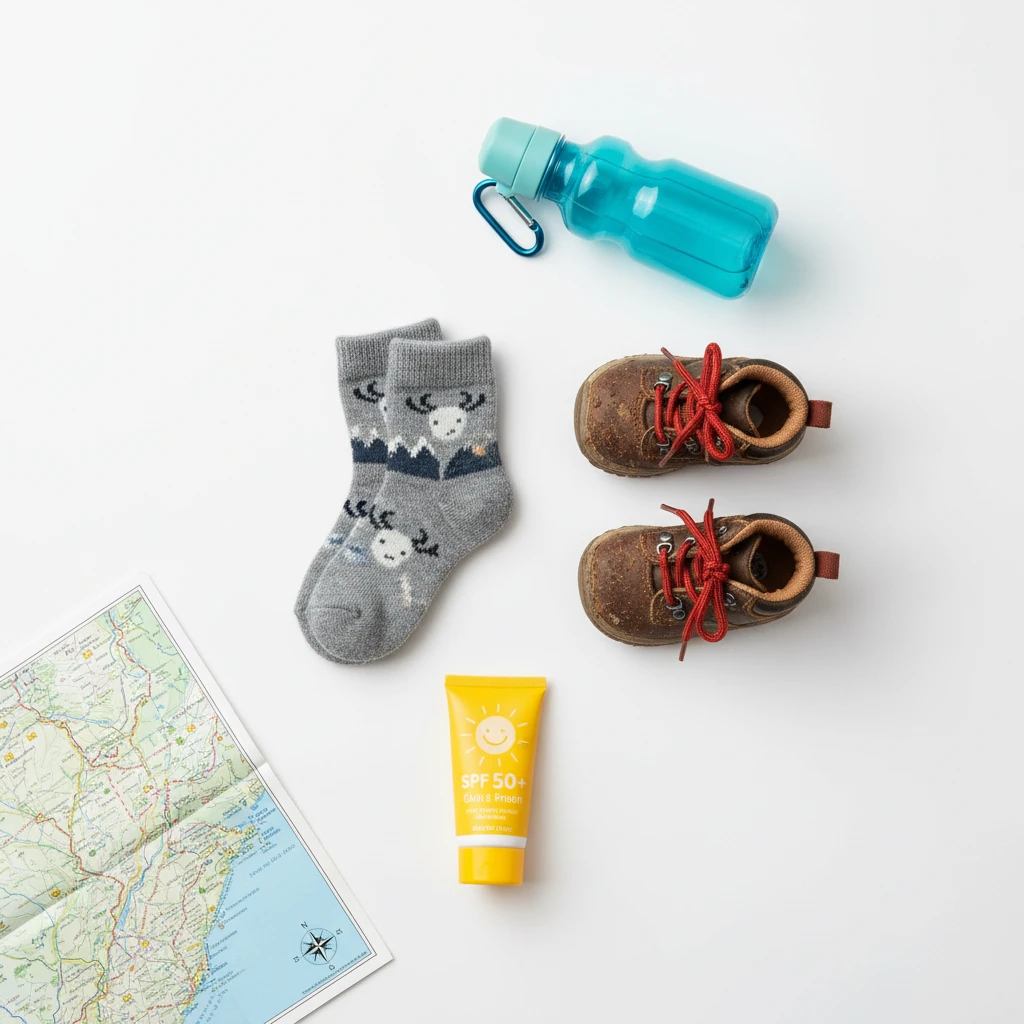
New Zealand’s weather is notoriously changeable. “Four seasons in one day” is not a cliché; it is a reality. To ensure a successful outing, your packing list must prioritize warmth and dryness.
The Essential Gear List
- Rain Cover for Stroller: Even on a sunny day, a sudden shower is possible. A high-quality, wind-proof rain cover creates a warm micro-climate inside the stroller.
- Merino Wool Layers: Avoid cotton. Merino wool regulates temperature, keeping toddlers warm even if they get damp. It is also breathable, preventing overheating during the walk.
- Structured Carrier: If your toddler refuses the stroller or the track gets muddy, a structured soft-structured carrier (SSC) is a lifesaver.
- Sandfly Repellent: In the South Island (especially the West Coast and Fiordland), sandflies are prevalent. Use a natural, DEET-free repellent suitable for young children.
- Hydration and Snacks: High-energy snacks are vital. Toddlers burn significant energy regulating their temperature outdoors.
Regenerative Travel & The Tiaki Promise
Traveling with toddlers is the perfect opportunity to introduce the Tiaki Promise—a commitment to care for New Zealand. Even young children can learn to respect nature.
Teaching Moments on the Track
Stay on the Path: Explain to toddlers that we stay on the boardwalk to protect the “sleeping plants” underneath. This protects the delicate root systems of Kauri and other native trees susceptible to dieback disease.
Pack In, Pack Out: New Zealand has very few public rubbish bins in nature reserves to encourage self-responsibility. Carry a dedicated “rubbish wet bag” for snack wrappers and dirty diapers, and take them with you when you leave.
Wildlife Respect: Teach toddlers to observe birds like the Weka or Kea from a distance and never feed them. Human food harms native birds and alters their natural behavior.
People Also Ask
What are the best stroller friendly walks in Queenstown?
The Queenstown Gardens loop is the most accessible, offering paved paths and lake views. The Frankton Arm Walkway is another excellent choice, providing a flat, wide gravel path that traces the lake edge for several kilometers with stunning mountain backdrops.
Do I need a permit for nature walks in New Zealand?
Generally, no. Most short walks and day tracks managed by the Department of Conservation (DOC) are free and do not require permits. However, fees apply for overnight stays in huts or campsites, and some private tracks may charge entry.
Are there dangerous animals in New Zealand bush?
New Zealand is unique because it has no snakes, bears, or large predators. The bush is incredibly safe for toddlers. The main nuisances are sandflies (biting insects) and wasps during late summer. Always keep an eye out for wasp nests in beech forests.
Is tap water safe to drink in New Zealand parks?
Water at visitor centers and urban parks is usually safe. However, water from huts, tanks, or streams on the tracks should always be boiled or treated before drinking to prevent Giardia, especially for young children with developing immune systems.
What is the best time of year for hiking with toddlers in NZ?
Late summer and early autumn (February to April) offer the most stable weather. The temperatures are milder, and the rainfall is generally lower than in spring. This period allows for comfortable walking without the intense heat of mid-summer.
Can I take a stroller on the Great Walks?
Generally, no. The Great Walks are multi-day hiking tracks with rough terrain, stairs, and narrow sections not suitable for strollers. However, small sections of some Great Walks, like the start of the Abel Tasman or the Kepler Track (from the control gates), are accessible for short distances.