The best solar power bank for New Zealand camping combines a minimum capacity of 20,000mAh with rugged IP67 water resistance to handle unpredictable alpine weather. While integrated solar panels offer emergency trickle charging, top-rated models must feature USB-C Power Delivery (PD) for rapid mains charging before heading off-grid.
New Zealand’s landscape offers some of the most breathtaking off-grid experiences in the world, from the Great Walks in Fiordland to remote beaches in the Coromandel. However, the isolation that makes these spots so appealing also presents a significant challenge: keeping essential navigation and communication devices charged. In the realm of eco-tourism and independent travel, reliable power is not just a luxury; it is a safety necessity.
This comprehensive guide dives deep into the reality of solar charging technology within the unique climatic context of Aotearoa, analyzing capacity needs, cold-weather performance, and the top-rated models currently available on the market.
Does Solar Charging Actually Work in New Zealand?
When browsing solar power bank nz reviews, a common theme arises: disappointment regarding charging speed. It is crucial to manage expectations before purchasing a solar-equipped unit. New Zealand has high UV levels, which is beneficial, but the surface area of a small solar panel mounted on a power bank is physically limited.
Most portable power banks feature a monocrystalline solar panel roughly the size of a smartphone. Under optimal conditions—direct mid-day sun in Nelson or the Bay of Plenty—this panel might generate 200mAh to 300mAh per hour. Considering a standard smartphone battery is around 3,000mAh to 4,000mAh, it could take over a week of pure sunlight to fully charge a depleted 20,000mAh bank using solar alone.
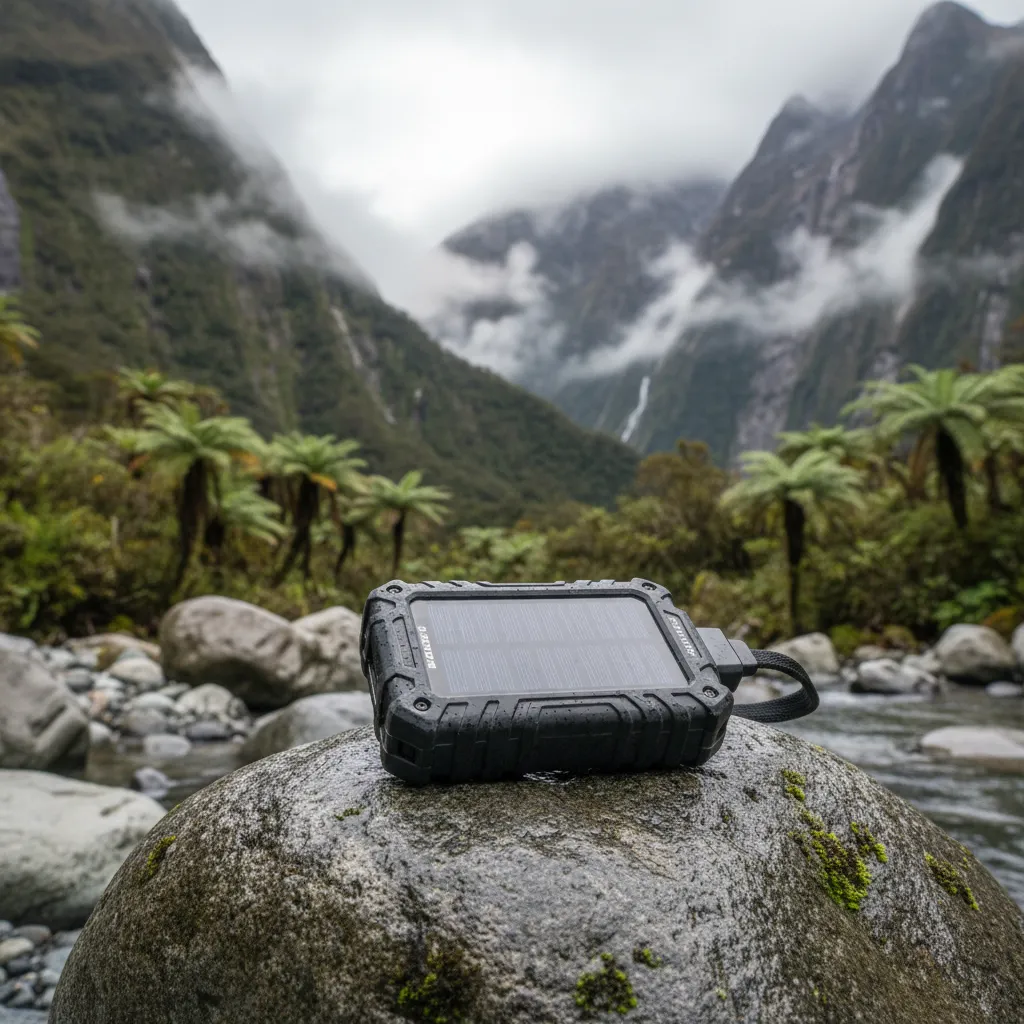
What is the primary use case for solar panels on power banks?
The solar panel should be viewed as an emergency backup or a way to maintain battery levels, rather than a primary charging source. For multi-day tramps on the Kepler or Routeburn tracks, the solar feature is excellent for “trickle charging” while you hike—clip it to your pack to offset the natural discharge of the battery or to gain a few percentage points for an emergency call. For primary power, you must rely on the energy stored via wall charging before you leave home.
Capacity Needs for Cameras, Phones, and Drones
Selecting the right capacity (measured in milliamp-hours, or mAh) is a balancing act between weight and power. In the Kiwi outdoors, where every gram counts, you do not want to carry excess lithium you won’t use. Conversely, running out of power during a storm in the Tararuas is dangerous.
How much capacity do I need for a weekend trip?
For a standard weekend camping trip (2-3 days), a 10,000mAh to 15,000mAh power bank is generally sufficient for a single user. This will provide approximately:
- 2.5 to 3 full charges for a modern smartphone (iPhone 14/15 or Samsung Galaxy S series).
- 4 to 5 charges for a GoPro or action camera.
- 1.5 charges for a handheld GPS unit.
What is required for content creators and extended expeditions?
If you are documenting your travels for a blog or social media, or if you are undertaking a Great Walk spanning 4+ days, you should target the 20,000mAh to 26,800mAh range. This is the upper limit allowed on most airlines (under 100Wh) without special permission.
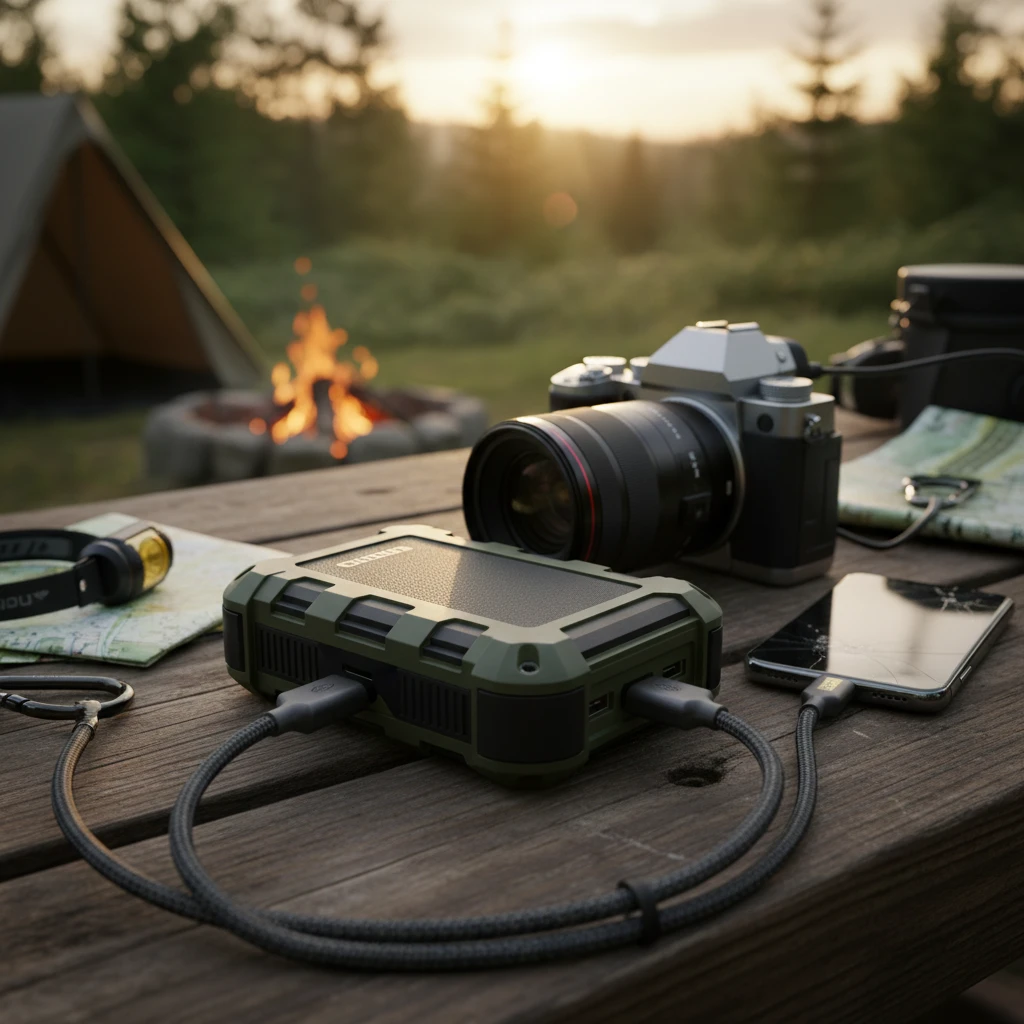
For photographers using mirrorless cameras (Sony Alpha, Canon R series) or drones (DJI Mini/Air), look for power banks that support Power Delivery (PD) over USB-C. These devices require higher voltage outputs (9V, 12V, or even 20V) to charge efficiently. A standard 5V/2A USB port will not charge a drone battery or a laptop.
Cold Weather Battery Performance in NZ
New Zealand’s weather is notoriously changeable. “Four seasons in one day” is not just a saying; it is a meteorological reality. From the humid rainforests of the West Coast to the sub-zero temperatures of the Tongariro Crossing, your electronics face harsh environments.
How does cold weather affect power banks?
Lithium-ion batteries rely on chemical reactions to generate electricity. As temperatures drop, these reactions slow down. In freezing conditions, a power bank can appear to lose capacity rapidly or shut down entirely even if it has charge remaining. This is a critical consideration for winter camping or alpine climbing in NZ.
Pro Tip: When sleeping in a hut or tent during winter, keep your power bank inside your sleeping bag. Your body heat will keep the battery chemistry active, ensuring you have full power available in the morning.
What IP rating is necessary for NZ conditions?
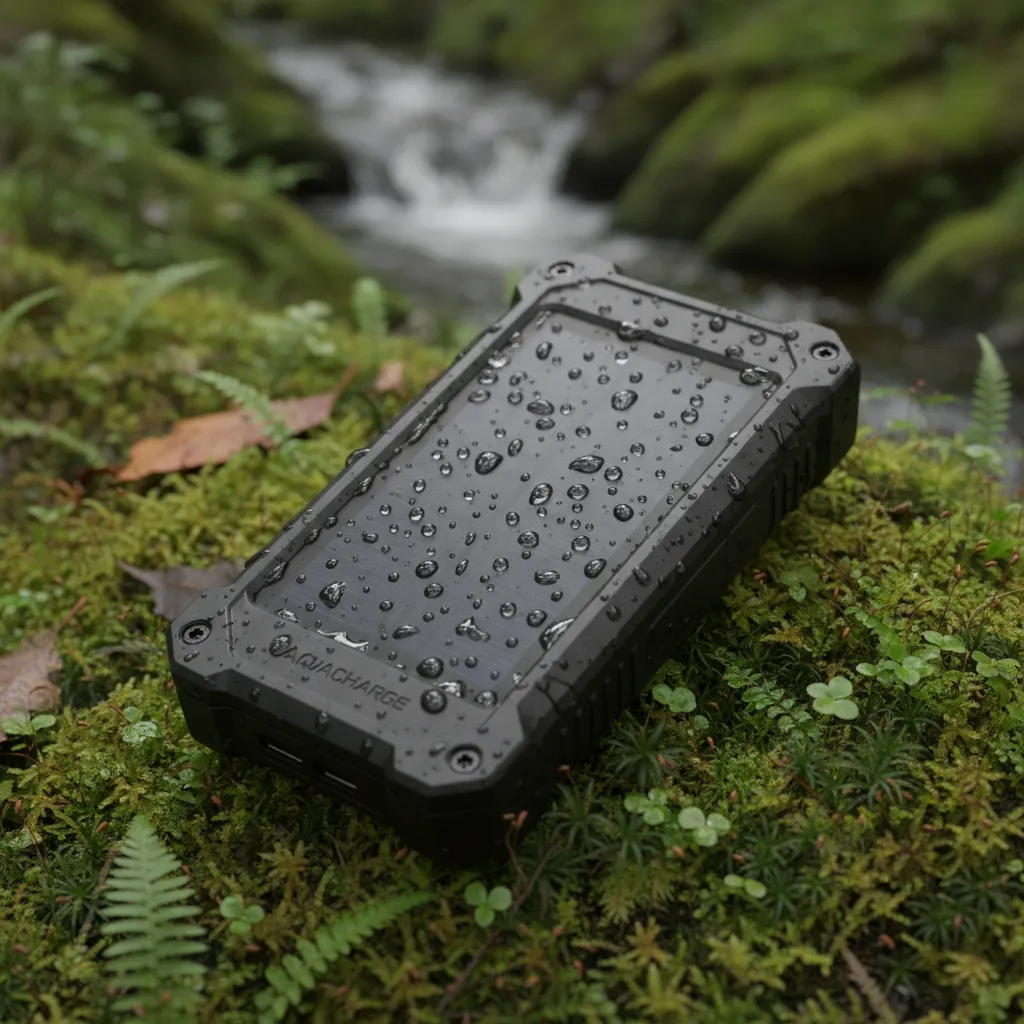
Look for devices with an Ingress Protection (IP) rating of at least IP65 or IP67.
- First Digit (Dust): 6 means it is dust-tight. Essential for beach camping or dusty gravel roads.
- Second Digit (Water): 5 means protection against water jets (rain), while 7 means it can be submerged in 1 meter of water for 30 minutes. Given the frequency of river crossings and sudden downpours in NZ, IP67 is the gold standard for outdoor gear.

Top Rated Models: Analyzing the Market
While specific stock varies between retailers like Torpedo7, Macpac, and JB Hi-Fi, several brands consistently dominate the solar power bank nz reviews for their reliability and build quality. Avoid cheap, unbranded generic knock-offs found at gas stations; their capacity claims are often exaggerated, and their safety circuitry is inferior.
1. The Heavy-Duty Choice: Goal Zero Venture Series
Goal Zero is widely regarded as the leader in portable solar power. Their Venture series (specifically the Venture 35 and 75) is engineered for rugged abuse. They feature rubberized sleeves and high IP ratings.
- Pros: Extremely durable, high-speed USB-C PD input/output, reliable capacity ratings.
- Cons: Expensive compared to competitors; the integrated solar capability is often sold separately as a fold-out panel (Nomad series) rather than built-in, which is actually more efficient but bulkier.
2. The Eco-Conscious Choice: BioLite Charge PD
BioLite focuses on efficiency and slim designs. While their power banks often lack built-in panels, they are designed to pair seamlessly with BioLite’s solar panels. For the eco-tourist, their commitment to sustainable energy solutions is a major selling point.
- Pros: Lightweight, slim form factor, excellent cold-weather performance.
- Cons: Less ruggedized armor than the Goal Zero.
3. The All-Rounder: Anker PowerCore Solar
Anker is a global giant in charging technology. Their solar-equipped models offer a great balance of price and performance. They usually include a built-in flashlight and decent shock protection.
- Pros: Best value for money, reliable Anker safety features (surge protection), widely available.
- Cons: Solar charging speed is slow (typical of the form factor), heavy.
4. The Budget Friendly: Goodmans / Rugged Retailer Brands
Often found in mainstream NZ retailers, these are entry-level rugged banks. They are suitable for festivals (like Rhythm and Vines) or car camping but may not be reliable enough for deep backcountry alpine trips.
- Pros: Cheap, accessible.
- Cons: Often lie about true mAh capacity, lower lifespan, slower charging ports.
Critical Buying Factors for the NZ Market
When you are standing in the store or browsing online, check these three specifications immediately:
Input Wattage (Recharging Speed)
A 20,000mAh battery holds a lot of energy. If the power bank only supports 10W input (Micro-USB), it can take 10-12 hours to recharge from a wall outlet. Look for 18W or 30W USB-C PD Input. This reduces recharge time to 3-4 hours—critical when you have a short stopover at a powered campsite or café.
Weight vs. Capacity Ratio
If you are trekking the Te Araroa trail, weight is everything. High-quality lithium-polymer cells offer better density. A good 20,000mAh bank should weigh between 350g and 450g. Anything significantly heavier suggests older battery technology; anything significantly lighter suggests the capacity rating is fake.
Pass-Through Charging
This feature allows you to charge the power bank (via solar or wall) while the power bank is simultaneously charging your phone. This is vital for solar setups, allowing you to capture sun during the day while keeping your devices topped up.
Final Verdict
For the New Zealand outdoor enthusiast, the “best” solar power bank is one that doesn’t rely solely on solar. Treat the solar panel as an emergency backup for the worst-case scenario. Invest your money in a high-capacity (20,000mAh), waterproof (IP67), and shockproof unit from a reputable brand like Goal Zero or Anker. Ensure it has USB-C Power Delivery to handle the rapid charging needs of modern cameras and phones. In the remote corners of NZ, reliable power is the bridge between a great adventure and a safety compromise.
People Also Ask
How long does it take to charge a solar power bank in the sun?
It takes a very long time. A standard 20,000mAh power bank with a small built-in solar panel can take anywhere from 40 to 80 hours of direct sunlight to charge from 0% to 100%. This equates to over a week of daily sun exposure. They are designed for emergency top-ups, not primary charging.
Can I take a 20000mAh power bank on a plane in NZ?
Yes. In New Zealand, you can carry power banks in your carry-on luggage only. You cannot put them in checked baggage due to fire risk. The limit is generally 100Wh. A 20,000mAh power bank is approximately 74Wh (assuming 3.7V), which is well within the safety limits for Air New Zealand and Jetstar.
Are solar power banks worth it for hiking?
They are worth it if you view them as a rugged battery pack with an emergency backup feature. If you are buying one expecting to never plug it into a wall, they are not worth it. For hiking, a separate fold-out solar panel attached to a standard power bank is much more efficient than a bank with a tiny integrated panel.
What is the best power bank for cold weather?
Nitecore and BioLite make power banks specifically designed for cold weather, often using carbon fiber housing or specialized insulation. However, keeping any standard lithium-polymer power bank close to your body heat is the most effective way to preserve performance in freezing temperatures.
Do solar power banks work on cloudy days in NZ?
Solar panels can generate small amounts of power on cloudy days, but the efficiency drops by 80-90% compared to direct sunlight. Given that the panel on a power bank is already small, charging on a cloudy day in NZ is negligible and will likely not increase the battery percentage significantly.
What is the difference between Li-ion and Li-polymer power banks?
Li-polymer (Lithium-polymer) batteries are generally safer, more lightweight, and can be molded into thinner shapes compared to traditional cylindrical Li-ion (Lithium-ion) batteries. For hiking and camping, Li-polymer is preferred due to the weight savings and slightly better durability against physical impact.