A camera rain cover is a specialized waterproof shield designed to encase DSLR or mirrorless camera bodies and lenses, allowing full functionality during precipitation. Essential for New Zealand’s unpredictable climate, these covers prevent water ingress and electronic failure while shooting in conditions ranging from Fiordland’s waterfalls to the West Coast’s heavy alpine rainfall.
Why New Zealand Weather Demands Superior Gear Protection
New Zealand is a bucket-list destination for landscape photographers worldwide, renowned for its dramatic fjords, rugged coastlines, and lush rainforests. However, the very weather systems that sculpt these breathtaking landscapes pose a significant threat to photography equipment. The phrase “four seasons in one day” is not merely a colloquialism in Aotearoa; it is a meteorological reality.
Standard weather-sealing on professional cameras is often insufficient for the sustained deluges found in regions like the West Coast of the South Island or the persistent mists of the Te Urewera rainforests. While a few drops of rain might not harm a high-end body, the hydrostatic pressure from heavy rainfall or the corrosive nature of coastal sea spray can bypass rubber gaskets, leading to catastrophic electronic failure. This is where the concept of “gear inadequacy” becomes a critical risk factor for eco-tourists and independent travelers.
To capture the moody, atmospheric shots that define New Zealand photography without destroying thousands of dollars worth of equipment, external protection is mandatory. A dedicated camera rain cover nz photographers trust is more than an accessory; it is an insurance policy against the elements.
Rain Covers and Dry Bags: The First Line of Defense
When addressing gear inadequacy in wet environments, the solution is a layered approach involving active protection (rain covers) and passive protection (dry bags).
Active Protection: The Camera Rain Cover
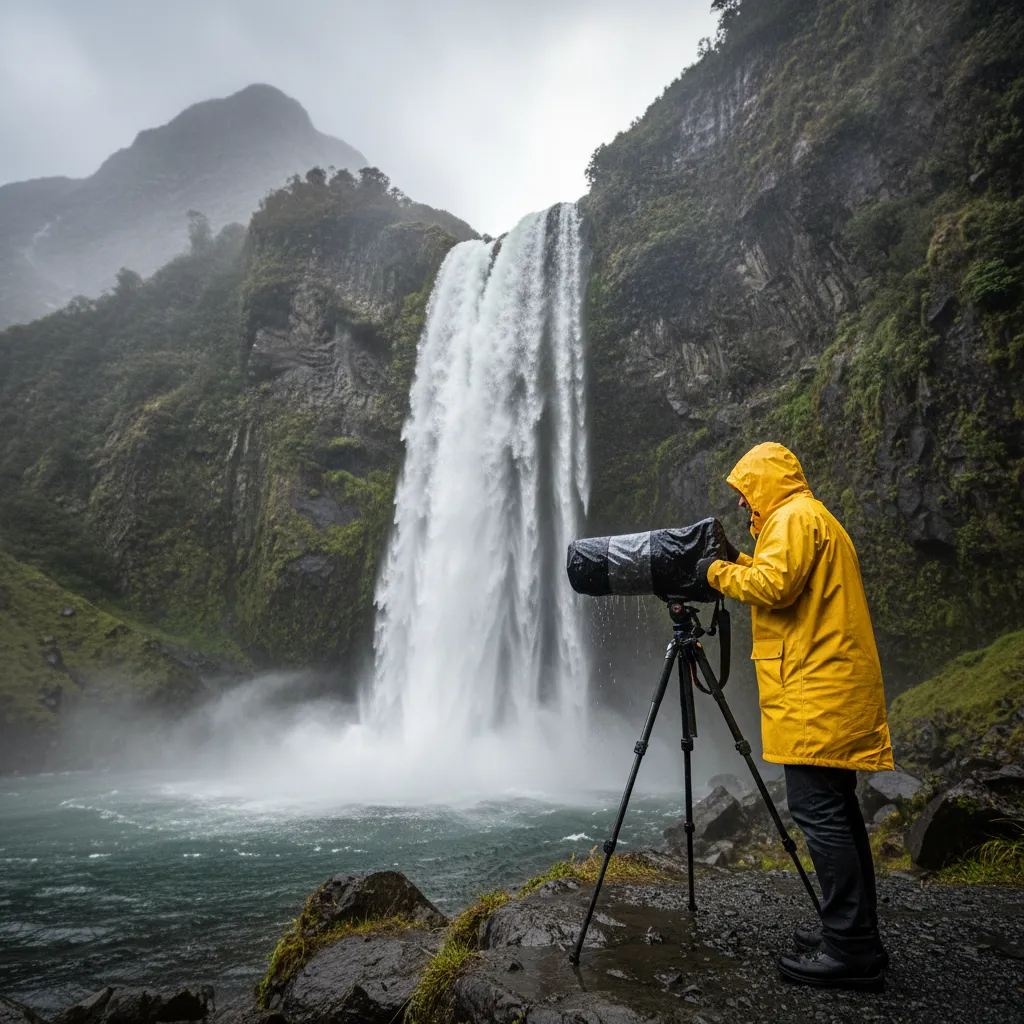
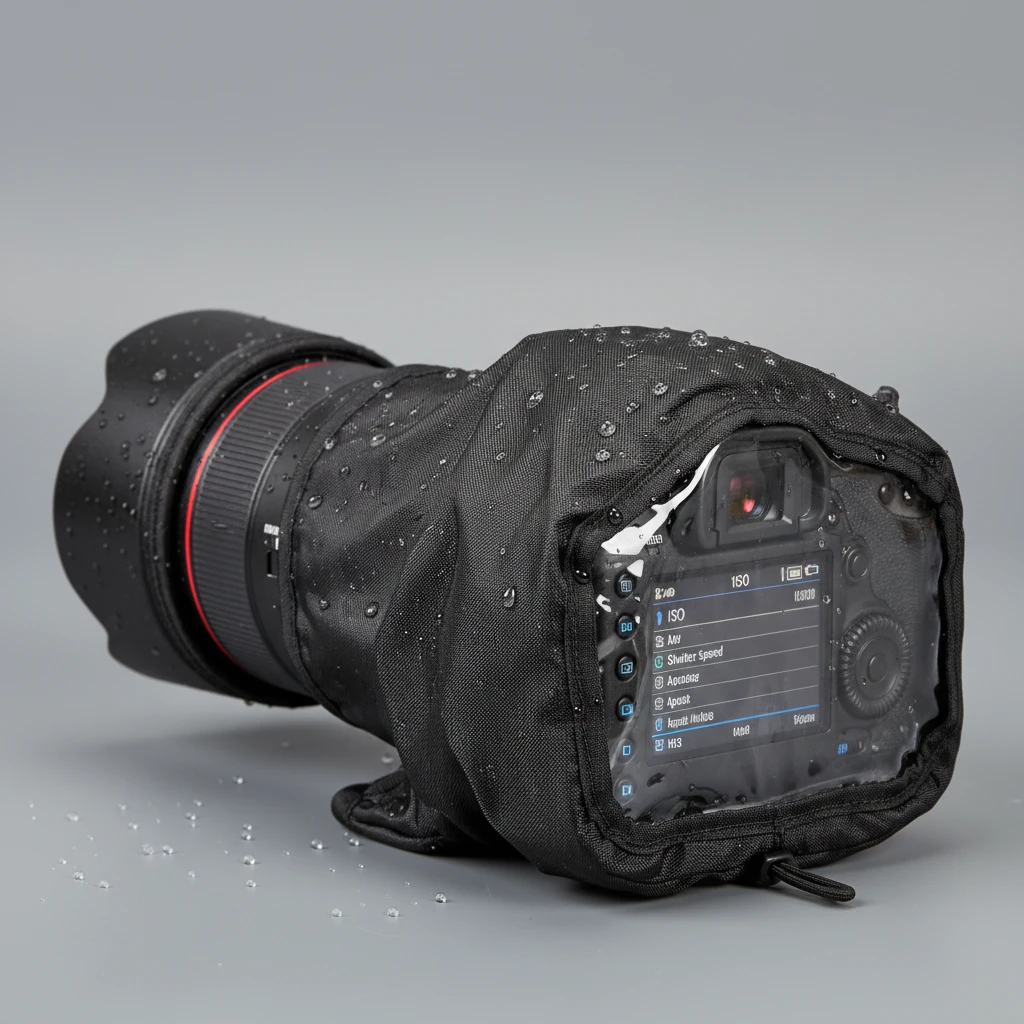
A camera rain cover allows you to continue shooting when the weather turns. Unlike a plastic bag, which is a makeshift solution that often obscures the viewfinder and makes changing settings impossible, a purpose-built rain cover is designed for ergonomics. It typically features:
- Cinchable Sleeves: These tighten around your arms, allowing you to access camera controls without letting water in.
- Clear Rear Panel: A transparent window made of TPU (Thermoplastic Polyurethane) allows you to view the LCD screen and use the viewfinder.
- Lens Hood Seal: A velcro or drawstring mechanism that seals the cover to the end of the lens hood, ensuring no water creeps back toward the front element.
Passive Protection: The Dry Bag
For independent travelers exploring the Abel Tasman via kayak or hiking the Great Walks, a camera rain cover is not enough during transit. This is where dry bags become essential. A roll-top dry bag (ranging from 5L to 20L) provides a waterproof sanctuary for your gear when it is not in use.
In New Zealand’s river valleys, river crossings are common. If you slip, a standard camera backpack will soak through instantly. A dry bag liner inside your pack ensures that even if you are submerged, your gear remains bone dry. Look for heavy-duty PVC or lightweight siliconized Cordura bags depending on your weight requirements.
Types of Camera Rain Covers Available in NZ
The market for a camera rain cover nz offers varies based on the level of protection required and the type of lens being used.
Disposable Polyethylene Covers
These are lightweight, crinkly plastic covers often sold in packs of two. They are inexpensive and great for emergency backup. However, they lack durability. In the high winds of Wellington or the Southern Alps, these covers can flap aggressively, causing vibration and noise, and are prone to tearing on sharp rocks or branches.
High-End Nylon/Gore-Tex Covers
For the serious enthusiast or professional, reusable covers made from ripstop nylon or waterproof breathable fabrics are the standard. Brands available in New Zealand photography retailers often feature seam-sealed construction. These covers are quieter, more durable, and offer better access to controls. They often include a dedicated zipper at the bottom to allow mounting to a tripod without breaking the waterproof seal.
Stabilization Solutions: Tripods for Windy Conditions
Rain in New Zealand rarely falls vertically; it is usually accompanied by wind. This introduces a secondary inadequacy: stability. A lightweight travel tripod that performs well in a studio will suffer from micro-vibrations or even tip over in exposed NZ locations like Nugget Point or the Tongariro Crossing.
Material Matters: Carbon Fiber vs. Aluminum
Carbon fiber is preferred not only for its weight-to-strength ratio but also for its vibration-dampening qualities. In high winds, carbon fiber absorbs the buffeting better than aluminum, which tends to resonate. Furthermore, aluminum can become painfully cold to handle in New Zealand’s winter conditions, whereas carbon fiber remains thermally neutral.
Ballast and Footing
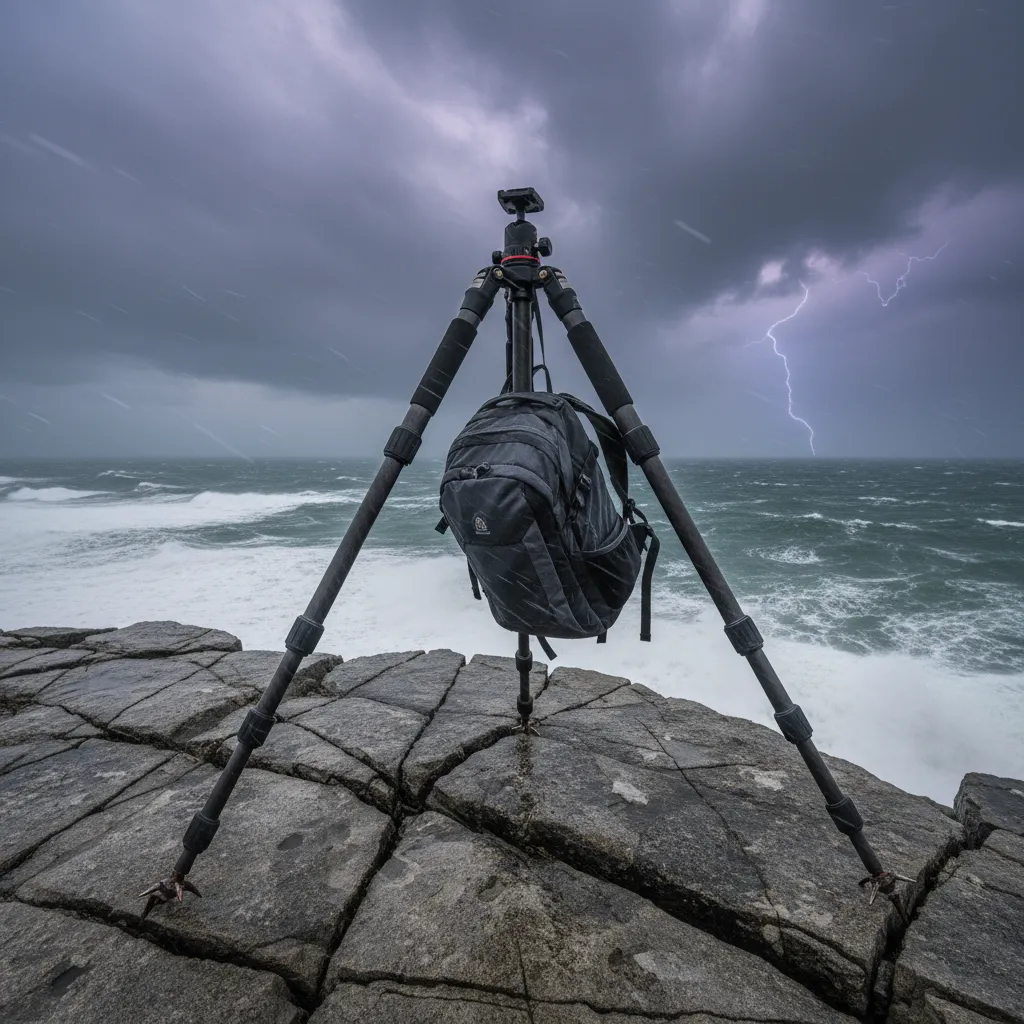
To counteract the wind, your tripod must be weighed down. Most professional tripods feature a hook at the base of the center column. Hanging your camera bag (inside its rain cover) from this hook lowers the center of gravity, significantly improving stability. However, ensure the bag touches the ground lightly; if it swings freely in the wind, it will introduce more vibration than it prevents.
Additionally, swap standard rubber feet for spikes when shooting on the soft, mossy ground of NZ beech forests or the loose scree of alpine slopes to ensure a solid anchor.
Memory Card Storage and Data Protection
One often overlooked aspect of gear inadequacy is data storage. New Zealand’s humidity, particularly in the North Island and coastal areas, can affect electronics. More importantly, physical damage from water is a real threat to SD and CFexpress cards if not stored correctly.
Loose memory cards in a pocket are a recipe for disaster. Photographers should utilize a hard-shell, weather-sealed memory card case. These cases feature a rubber gasket that creates a watertight seal when closed. If you drop your card case into a puddle or a stream, your images remain safe. This is critical for eco-tourists who may be on the road for weeks without cloud backup access.
Lens Cleaning Kits for Sea Spray and Mist
Even with the best camera rain cover nz has to offer, the front element of your lens is vulnerable. This is especially true when shooting near the ocean or waterfalls. Sea spray is particularly insidious; as the water evaporates, it leaves behind salt crystals that degrade image sharpness and can scratch lens coatings if wiped improperly.
The Cleaning Protocol
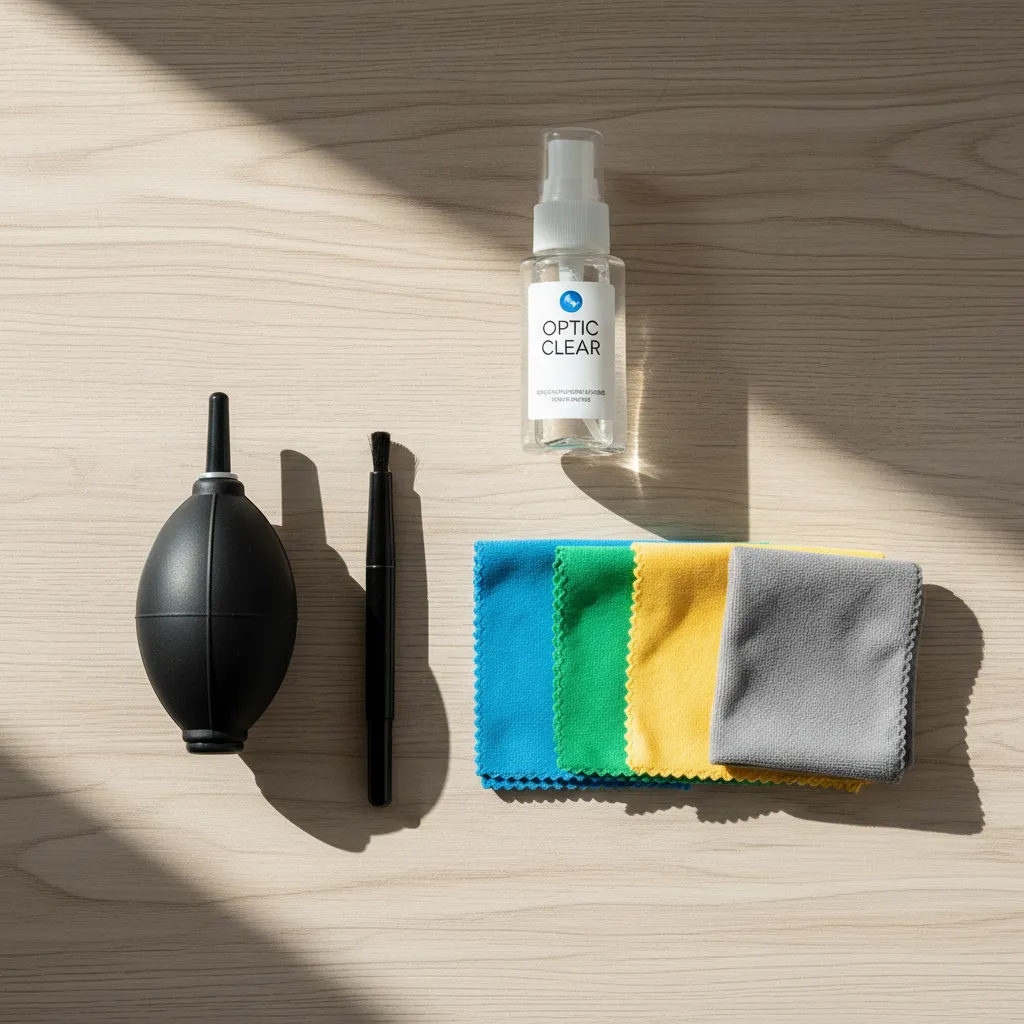
Using a t-shirt to wipe a lens is a cardinal sin, especially with salt spray. The salt acts as an abrasive. The solution is a dedicated wet-weather cleaning kit containing:
- Rocket Blower: Use this first to blast away large droplets and loose particles.
- Lens Pen/Brush: Remove dust that is stuck to the glass.
- Microfiber Cloths (Multiple): Carry at least five. Once a cloth is damp with saltwater, it is useless until washed. Rotate them frequently.
- Lens Cleaning Fluid: A non-alcoholic solution helps dissolve salt deposits without damaging the lens coating.
For waterfall photography, keep a highly absorbent “shammy” style cloth handy to wipe the lens body and hood, keeping the optical microfiber cloths strictly for the glass.
Buying Guide: Features to Look For
When shopping for a camera rain cover in the New Zealand market, prioritize the following features to ensure it meets the demands of local conditions:
- Size Compatibility: Ensure the cover is long enough for your longest telephoto lens. A 70-200mm lens requires a different sleeve length than a 400mm prime.
- Eyepiece Access: Some premium covers allow you to attach the cover via the camera’s viewfinder eye-cup. This provides the most secure anchor point and prevents the plastic from sliding over the viewfinder.
- Hand Access: Look for covers with dual side sleeves. This allows you to use both hands—one for the shutter/back button focus and one for the lens zoom/focus rings—while keeping your hands dry.
- Tripod Opening: A zippered opening at the bottom is non-negotiable for landscape photography. It must be sealable when shooting handheld.
Frequently Asked Questions
Is a plastic bag good enough for camera rain protection?
For light drizzle or emergencies, a plastic bag can work temporarily. However, for New Zealand’s heavy rain, it is inadequate. It lacks a proper seal around the lens hood, makes accessing buttons difficult, and can trap condensation. A dedicated rain cover is a necessary investment for safety.
Are weather-sealed cameras enough for NZ rain?
“Weather-sealed” is a marketing term, not an IP rating. While high-end bodies can withstand mist and light rain, they are not waterproof. Sustained exposure to the heavy downpours common in NZ (especially in Fiordland) can penetrate seals. A rain cover provides the necessary barrier to guarantee safety.
How do I dry my camera if it gets wet?
If your camera gets wet, remove the battery and memory card immediately. Dry the exterior with a towel. Do not turn it on. Place the camera in a sealed container with silica gel packets or a dehumidifier to draw out moisture. Avoid using a hair dryer, as the heat can damage seals.
What is the best rain cover for hiking in NZ?
For hiking, look for a lightweight, packable rain cover made of ripstop nylon. Brands like Peak Design or Think Tank offer covers that pack down small but offer robust protection. Ensure it is compatible with the Capture Clip if you carry your camera on your backpack strap.
Can I use a rain cover on a tripod?
Yes, most high-quality rain covers feature a double zipper or velcro opening at the bottom specifically designed to allow the camera’s tripod plate to connect to the tripod head while keeping the rest of the camera covered.
Do I need a UV filter for rain protection?
Yes, a clear UV or protection filter is highly recommended. It completes the weather sealing on many lenses (especially those where the front element moves) and allows you to wipe water off the glass without touching the expensive front element of the lens itself.