New Zealand astrotourism centers on exploring the country’s International Dark Sky Reserves and Sanctuaries, such as Aoraki Mackenzie and Great Barrier Island. This guide provides essential strategies for experiencing world-class stargazing, observing the Aurora Australis, participating in observatory tours, and understanding the cultural significance of Māori astronomy in the Southern Hemisphere.
Introduction to New Zealand’s Dark Skies
New Zealand is widely recognized as one of the premier destinations globally for astrotourism. Isolated in the South Pacific, far from the light pollution of major continental landmasses, the country offers a pristine window into the cosmos that is becoming increasingly rare in the modern world. For the avid astronomer or the casual stargazer, a New Zealand astrotourism guide is not just a list of locations; it is a roadmap to experiencing the universe as it appeared to our ancestors.
The quality of the night sky in New Zealand is measured not just by the absence of artificial light, but by the unique celestial features visible only from the Southern Hemisphere. Visitors can observe the Magellanic Clouds—dwarf satellite galaxies to the Milky Way—and the iconic Southern Cross (Crux), which features prominently on the national flag. The commitment to preserving these views is enshrined in local law and community efforts, resulting in a network of accredited Dark Sky Sanctuaries, Reserves, and Parks.
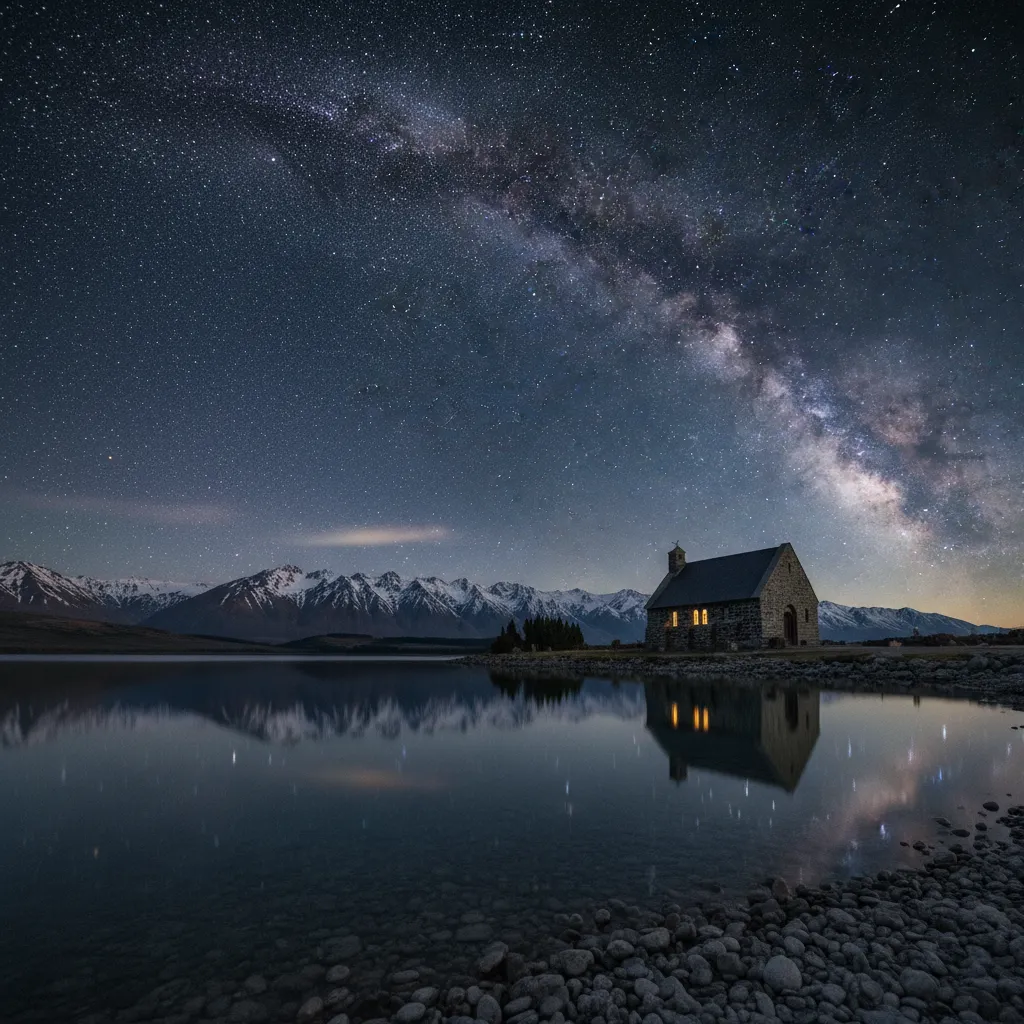
Mapping the International Dark Sky Reserves
To truly utilize a New Zealand astrotourism guide, one must understand the geography of darkness. The International Dark-Sky Association (IDA) has designated several specific regions in New Zealand that offer exceptional quality of starry nights and a nocturnal environment that is specifically protected for its scientific, natural, educational, and cultural heritage.
Aoraki Mackenzie International Dark Sky Reserve
The crown jewel of New Zealand astrotourism is the Aoraki Mackenzie International Dark Sky Reserve. Located in the South Island’s Mackenzie Basin, it was the first reserve of its kind in the Southern Hemisphere and remains one of the largest in the world. Encompassing Aoraki/Mt Cook National Park and the Mackenzie Basin, this area is strictly regulated to control light pollution.
Key locations within this reserve include the Mt John Observatory near Lake Tekapo. Here, visitors can join guided tours operated by Dark Sky Project, utilizing powerful optical telescopes to view globular clusters, nebulae, and planets. The village of Tekapo itself utilizes shielded sodium streetlights to ensure the sky remains pitch black just minutes from accommodation centers.
Wairarapa Dark Sky Reserve
While the South Island is famous for its skies, the North Island holds its own with the Wairarapa Dark Sky Reserve. Situated just an hour’s drive from the capital city of Wellington, this reserve covers the South Wairarapa and Carterton districts. It is a testament to the fact that dark skies can exist near populated areas with proper light management. The region is accessible and offers a warmer climate for stargazing compared to the alpine environments of the south. Star Safari in the Wairarapa Valley provides accessible educational tours that focus on the intersection of science and space.
Aotea / Great Barrier Island Dark Sky Sanctuary
For those seeking a more rugged and isolated experience, Aotea (Great Barrier Island) is an International Dark Sky Sanctuary. A sanctuary differs from a reserve in that it is typically more remote and possesses an even more fragile nocturnal environment. Located off the coast of Auckland, the island is off-the-grid, relying heavily on solar power, which naturally limits light pollution. The island offers a raw, unadulterated connection to the cosmos, where the Milky Way casts a shadow on the ground.
Rakiura / Stewart Island Dark Sky Sanctuary
At the southernmost tip of New Zealand lies Rakiura, or Stewart Island. As another Dark Sky Sanctuary, its name translates from Māori as “The Land of Glowing Skies,” a reference to the Aurora Australis which is frequently visible here due to the high southern latitude. With a tiny population and 85% of the island designated as a National Park, the light pollution is virtually non-existent (Bortle Scale Class 1).

Best Times to Visit: Stargazing vs. Aurora Australis
Timing is critical when planning an itinerary based on a New Zealand astrotourism guide. The best time for general stargazing does not always align with the best time for viewing the Aurora, and understanding these nuances can make or break your trip.
When is the best time for Stargazing?
Technically, stargazing is a year-round activity in New Zealand. However, the winter months (June to August) offer the longest nights and the clearest, crispest air. The galactic core of the Milky Way is most visible directly overhead during the winter, providing the most dramatic photographic opportunities. The trade-off is the temperature; alpine regions like the Mackenzie Basin can drop well below freezing.
Summer (December to February) offers warmer nights, making the experience more comfortable for families or those sensitive to cold. However, the nights are short, with true astronomical darkness only lasting for a few hours in the middle of the night.
Chasing the Aurora Australis
The Southern Lights, or Aurora Australis, are an elusive phenomenon. Unlike the Aurora Borealis in the north, which has a defined “season,” the Southern Lights can occur year-round but are most commonly observed between March and September (Autumn to Spring). This period coincides with longer nights, increasing the statistical probability of spotting the lights during active solar storms.
To see the Aurora, you need to be as far south as possible (Stewart Island, The Catlins, or Lake Tekapo), have a clear view of the southern horizon, and a high Kp-index (a measure of geomagnetic activity). Travelers should download aurora forecasting apps to monitor real-time data.
Planning Your Trip: Road Trips, Accommodation, and Gear
A successful dark sky trip requires logistical preparation. Unlike standard tourism, astrotourism dictates that you organize your schedule around the phases of the moon and the weather.
The Starlight Highway
State Highway 8, passing through the Mackenzie Basin, is often dubbed the “Starlight Highway.” A popular route involves driving from Christchurch to Lake Tekapo, continuing to Mt Cook Village, and then south to Queenstown. This route keeps you within the Dark Sky Reserve for several nights, maximizing your chances of a clear sky.
Astrotourism-Focused Accommodation
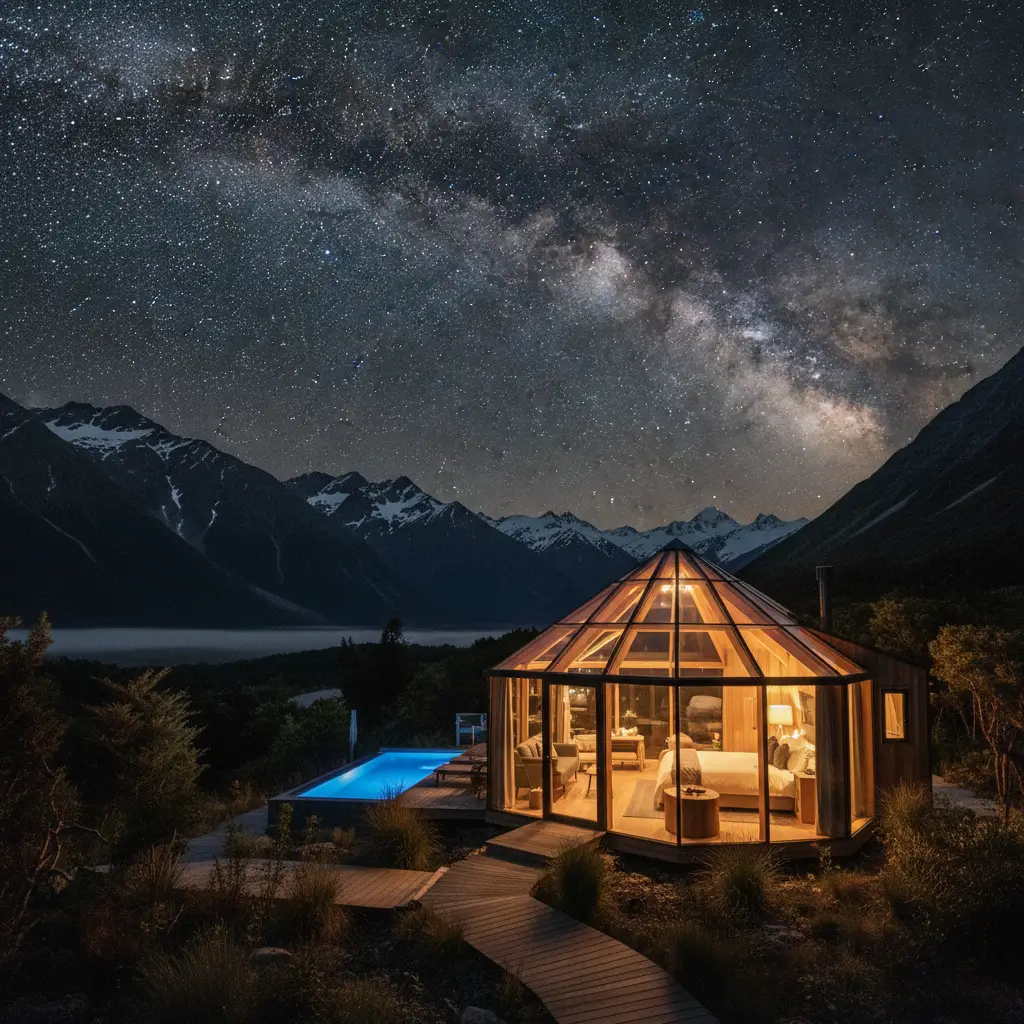
Accommodation providers have adapted to the niche market of New Zealand astrotourism. In the Mackenzie region, you can find:
- Glass-Roofed Pods: Luxury cabins designed with skylights specifically for watching the stars from bed.
- Observatory Lodges: Places like Mt Cook Lakeside Retreat offer private observatories and wine cellars for an exclusive experience.
- Glamping: High-end tents in remote locations that allow you to step outside directly into the dark sky environment.
Essential Gear for the Dark Sky Traveler
Even if you are not a professional photographer, specific gear is required for comfort and enjoyment:
- Red Light Torch: White light destroys night vision, which takes 20 minutes to adapt. Always use a red light when moving around dark sky sites.
- Thermal Layers: Merino wool base layers, down jackets, and windbreakers are non-negotiable, even in summer, as clear nights are often cold nights.
- Binoculars: While telescopes are great, a good pair of 10×50 binoculars can reveal incredible detail in the Milky Way and are portable for hikers.
Cultural Significance: Matariki and Māori Astronomy
A comprehensive New Zealand astrotourism guide must acknowledge the indigenous perspective. For Māori, the indigenous people of New Zealand, the night sky is not just a scientific curiosity but a cultural repository of history, navigation, and agriculture known as Tātai Arorangi.
What is Matariki?
Matariki is the Māori name for the star cluster known as the Pleiades. The rising of Matariki in mid-winter (typically late June or early July) marks the Māori New Year. It is a time for remembrance, celebrating the present, and looking to the future. In recent years, Matariki has become a public holiday in New Zealand, sparking a resurgence in traditional astronomical knowledge.
Many astrotourism operators now include Māori narratives in their tours. Visitors learn how stars were used to navigate the vast Pacific Ocean to discover Aotearoa (New Zealand) and how the visibility of certain stars predicted the success of the coming harvest. This cultural layer adds profound depth to the visual experience of the stars.

Astrophotography Essentials
Capturing the New Zealand night sky is a primary goal for many visitors. Because the sky is so dark, you can capture the Milky Way with relatively modest equipment compared to light-polluted cities.
Recommended Settings
To photograph the core of the Milky Way in a Dark Sky Reserve:
- Tripod: Essential. Handheld shots will be blurry.
- Lens: A wide-angle lens (14mm to 24mm) with a fast aperture (f/2.8 or lower) is ideal.
- Shutter Speed: 15 to 25 seconds. Longer than this will cause the stars to trail due to the earth’s rotation (unless that is the desired effect).
- ISO: Start at ISO 1600 or 3200 and adjust based on noise levels.
- Focus: Set your lens to manual focus and focus on a bright star using the live view zoom function.
People Also Ask
What is the best month for stargazing in New Zealand?
The best months for stargazing are generally during the winter, from June to August. These months provide the longest hours of darkness and the clearest air, although they are also the coldest. The galactic core of the Milky Way is most visible during this time.
Where is the darkest place in New Zealand?
The darkest accessible places are the International Dark Sky Sanctuaries: Great Barrier Island (Aotea) and Stewart Island (Rakiura). Both have minimal light pollution and offer Bortle Class 1 skies, which are the darkest possible skies on Earth.
Can you see the Aurora Australis in New Zealand?
Yes, you can see the Aurora Australis (Southern Lights) in New Zealand, particularly from the lower South Island. Locations like Stewart Island, The Catlins, Lake Tekapo, and Queenstown offer the best chances, especially during solar maximums and winter months.
Do I need to book a tour to see the stars in New Zealand?
No, you do not strictly need a tour; the skies in reserves are visible to the naked eye from anywhere. However, booking a tour with operators like Dark Sky Project allows access to high-powered telescopes and expert guides who can explain what you are seeing, significantly enhancing the experience.
What is the difference between a Dark Sky Reserve and a Sanctuary?
A Dark Sky Reserve is a dark “core” zone surrounded by a populated periphery where light policy is enacted to protect the core. A Dark Sky Sanctuary is typically situated in a very remote location with few (if any) nearby threats to the quality of its dark night skies, making it more fragile and isolated.
How does the Moon affect stargazing trips?
The Moon is the biggest source of natural light pollution. For the best deep-sky viewing (Milky Way, nebulae), you should plan your trip during the New Moon phase or when the moon sets early in the evening. A Full Moon will wash out the fainter stars.