Freedom camping in the Mackenzie Basin is strictly regulated and generally restricted to certified self-contained vehicles within designated areas, most notably along the Lake Pukaki shoreline. Campers must adhere to Mackenzie District Council bylaws, which typically limit stays to a maximum of three nights to protect the fragile alpine ecosystem and maintain the region’s pristine status.
The Mackenzie Basin is widely regarded as the heart of New Zealand’s South Island alpine scenery. Characterized by turquoise glacial lakes, golden tussock lands, and the towering presence of Aoraki/Mt Cook, it is a bucket-list destination for eco-tourists and independent travelers alike. However, due to its popularity, the region faces significant pressure from tourism. Consequently, local authorities have implemented strict freedom camping bylaws to preserve the environment. Navigating these rules while seeking the ultimate wilderness experience requires knowledge, preparation, and respect for the land.
What are the Freedom Camping Rules in Mackenzie Basin?
Before parking your vehicle for the night, it is imperative to understand the legal landscape. The Mackenzie District Council (MDC) enforces the Freedom Camping Act 2011 rigorously. The primary rule is simple: if you are not in a certified self-contained vehicle, you cannot freedom camp. You must use a commercial holiday park or a designated Department of Conservation (DOC) campsite with facilities.
The Self-Contained Certification Standard
New Zealand has recently tightened regulations regarding self-containment. A vehicle is considered self-contained only if it can meet the ablutionary and sanitary needs of the occupants for a minimum of three days without requiring external services. This means your vehicle must have:
- A fixed toilet (portable toilets are increasingly being phased out of the definition for green warrant certification).
- Fresh water supply and a wastewater (greywater) tank.
- A rubbish bin with a lid.
Failure to display a current self-containment warrant (the blue or green sticker) can result in an instant infringement fine of NZD $400 or more. Rangers patrol the Mackenzie Basin daily, including early mornings and late evenings.
Lake Pukaki: The Crown Jewel of Freedom Camping
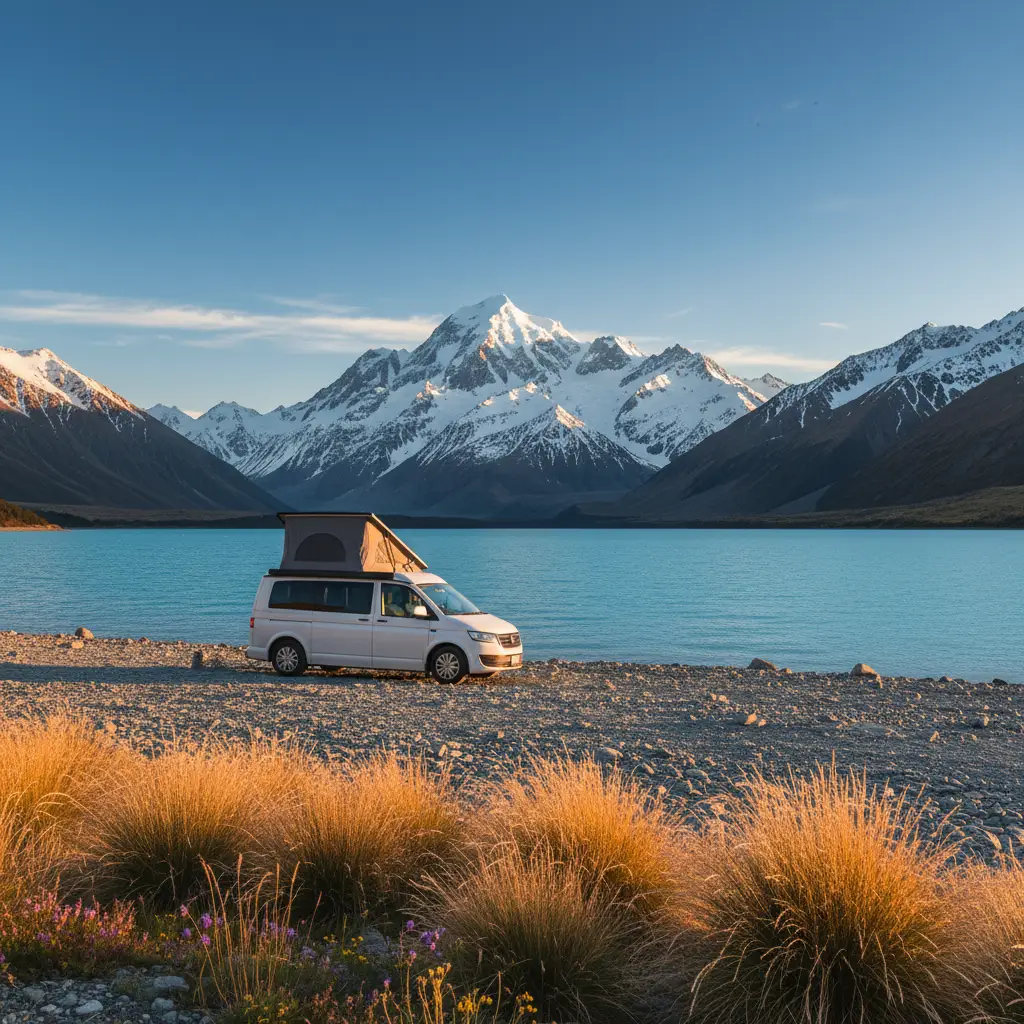
When travelers search for “freedom camping mackenzie basin,” they are almost invariably picturing Lake Pukaki. The intense turquoise blue of the water, created by glacial flour (finely ground rock particles), set against the backdrop of New Zealand’s highest peak, makes this one of the most scenic camping locations in the world.
Designated Areas at Lake Pukaki
Freedom camping is not permitted on just any part of the lake’s edge. You must stick to designated zones. The most popular and accessible area is the Lake Pukaki Overnight Campervan Parking area on the southern shore, near the visitor center, and various spots along Hayman Road (East side of the lake).
The Pines (Hayman Road): Located roughly 15 minutes drive from the township of Twizel, The Pines offers spectacular morning views. It is a large area, but it fills up quickly in summer (December to February). The ground is uneven and stony, so leveling blocks for your vehicle are highly recommended.
Key Restrictions for Pukaki
- Maximum Stay: Usually limited to 3 consecutive nights in any 4-week period.
- Waste Disposal: There are no dump stations at the freedom camping sites themselves. You must drive to Twizel or Tekapo to empty your tanks. Never discharge greywater onto the ground.
- Fires: Open fires are strictly prohibited year-round. The Mackenzie Basin is a high-fire-risk zone due to dry tussock and high winds.
Alternative Low-Cost DOC Sites
If the designated freedom camping spots are full, or if you prefer a location with a toilet block and slightly more organization, the Department of Conservation (DOC) manages several low-cost campsites in the region. While not technically “free,” the fees are nominal (often around $10-$15 per adult) and support conservation efforts.
Lake Poaka Campsite
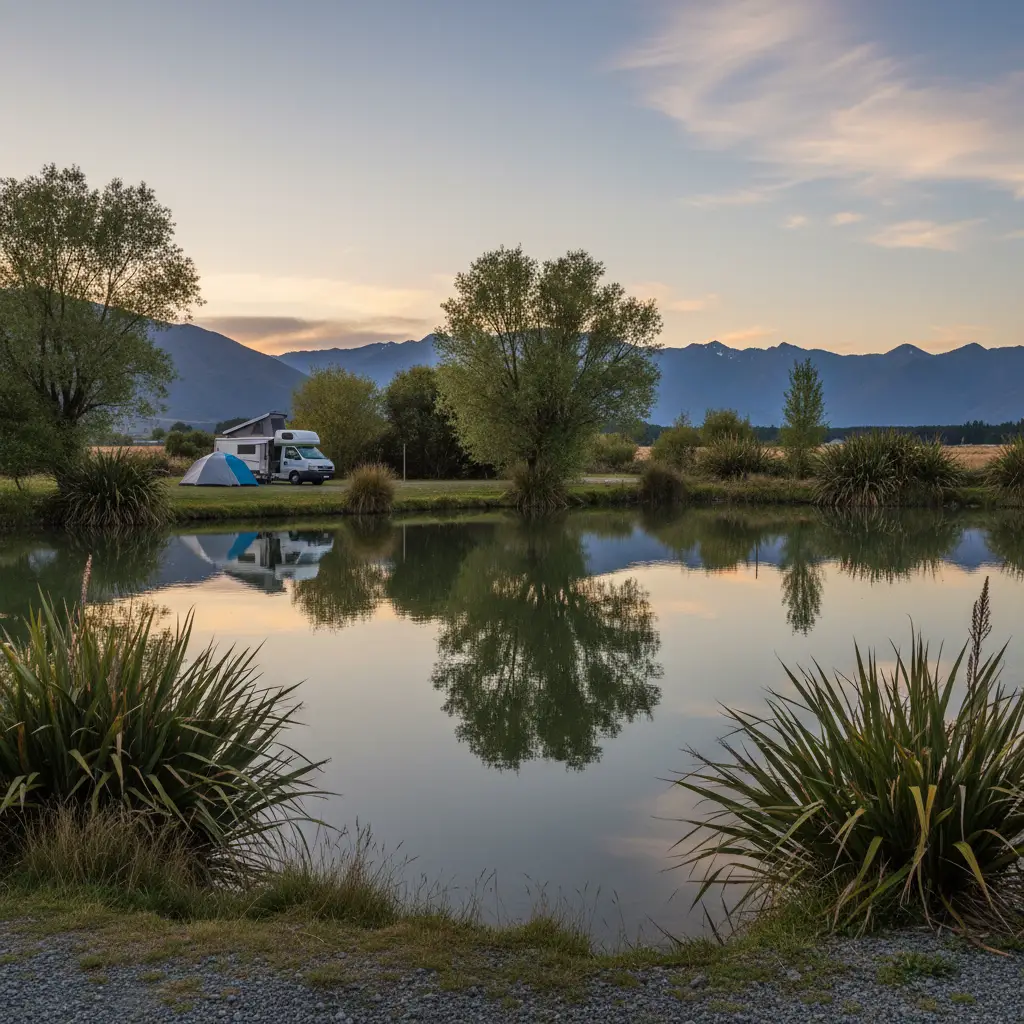
Located near the Pukaki-Twizel canal, Lake Poaka is a hidden gem. It is less exposed to the wind than the main shores of Lake Pukaki and offers a serene setting among the trees. This is a standard campsite, meaning it has basic toilets but no powered sites. It is an excellent alternative when the wind on Pukaki becomes dangerous for high-sided vehicles.
Ahuriri Bridge Campsite
Situated further south near Omarama, the Ahuriri Bridge campsite is located on the banks of the Ahuriri River. This is a vast, open space popular with anglers and eco-tourists. It is a “Standard” DOC site. The wide-open valley offers incredible stargazing opportunities, as it sits deep within the Aoraki Mackenzie International Dark Sky Reserve.
Round Bush Campsite (Lake Ohau)
For those willing to venture slightly off the main State Highway 8, Lake Ohau provides a quieter, more secluded experience. Round Bush is a basic campsite on the lakefront. The views here are softer and more alpine-forest focused compared to the stark grandeur of Pukaki.
Winter Camping Restrictions and Safety
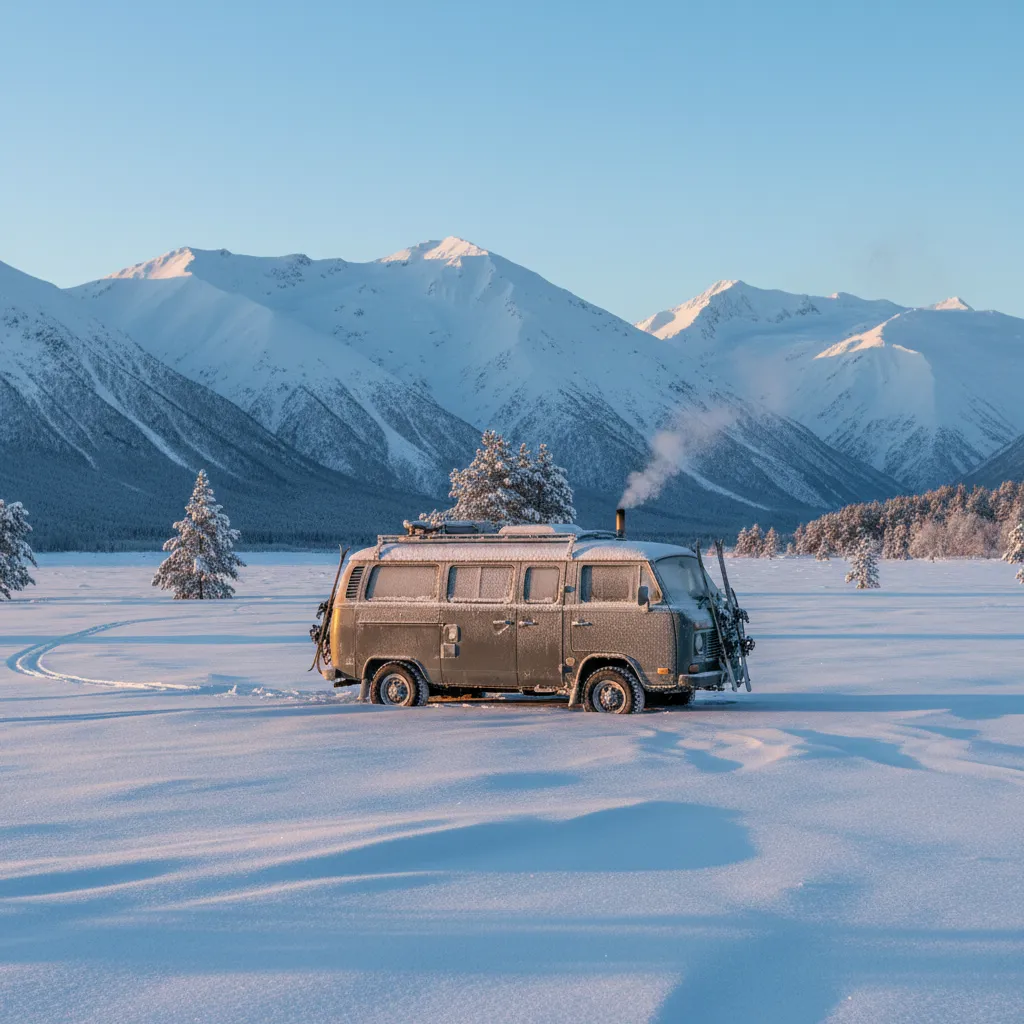
Camping in the Mackenzie Basin during winter (June to August) is not for the faint-hearted. Temperatures frequently drop below -5°C (23°F) and can reach as low as -20°C in extreme conditions. While freedom camping is generally still permitted in winter, additional risks and restrictions apply.
Seasonal Closures
Some access roads to camping spots, particularly those on unsealed gravel roads, may be closed due to snow or ice. The Mackenzie District Council may close the Lake Pukaki shoreline areas if the ground becomes too soft or if snow clearing is not feasible.
Winter Survival Tips
- Insulation: Ensure your vehicle is winterized. Double-glazed windows and a diesel heater are virtually mandatory for comfort.
- Water Systems: Internal water tanks can freeze. It is common practice to leave greywater valves open (with a bucket underneath) to prevent pipes from bursting, or to use bottled water for the duration of the stay.
- Condensation: Ventilation is critical to prevent the interior of your van from becoming damp and moldy.
Best Spots for Views of Aoraki/Mt Cook
The primary commercial driver for visiting this region is the view. If your goal is to wake up, open your campervan curtains, and see New Zealand’s tallest mountain, positioning is everything.
Hayman’s Point
Located at the end of a gravel track off Hayman Road, this spot offers a direct line of sight up the lake to Aoraki. It is widely considered the photographer’s choice. The elevation is slightly higher than the water level, providing a panoramic perspective of the Southern Alps.
Lake Ruataniwha
While Pukaki gets the glory, Lake Ruataniwha near Twizel offers beautiful reflections. It is a rowing lake, meaning the water is often glass-like in the early morning. While you cannot see Aoraki as clearly as from Pukaki, the surrounding Ben Ohau range turns a spectacular pink during sunset (alpenglow).
The Tiaki Promise and Sustainable Travel
The Mackenzie Basin is not just a tourist destination; it is a sensitive ecosystem. The golden tussock lands are slow-growing and easily damaged by vehicle tires. As an eco-tourist, adhering to the Tiaki Promise—a commitment to care for New Zealand—is essential.
Key Eco-Tourism Principles for the Basin:
- Leave No Trace: Take all rubbish with you. If a bin is full, do not stack rubbish next to it; take it to the next town.
- Protect Waterways: Do not wash dishes or bathe with soap in the lakes or rivers. Even biodegradable soap harms aquatic life. Wash inside your vehicle or at a designated facility.
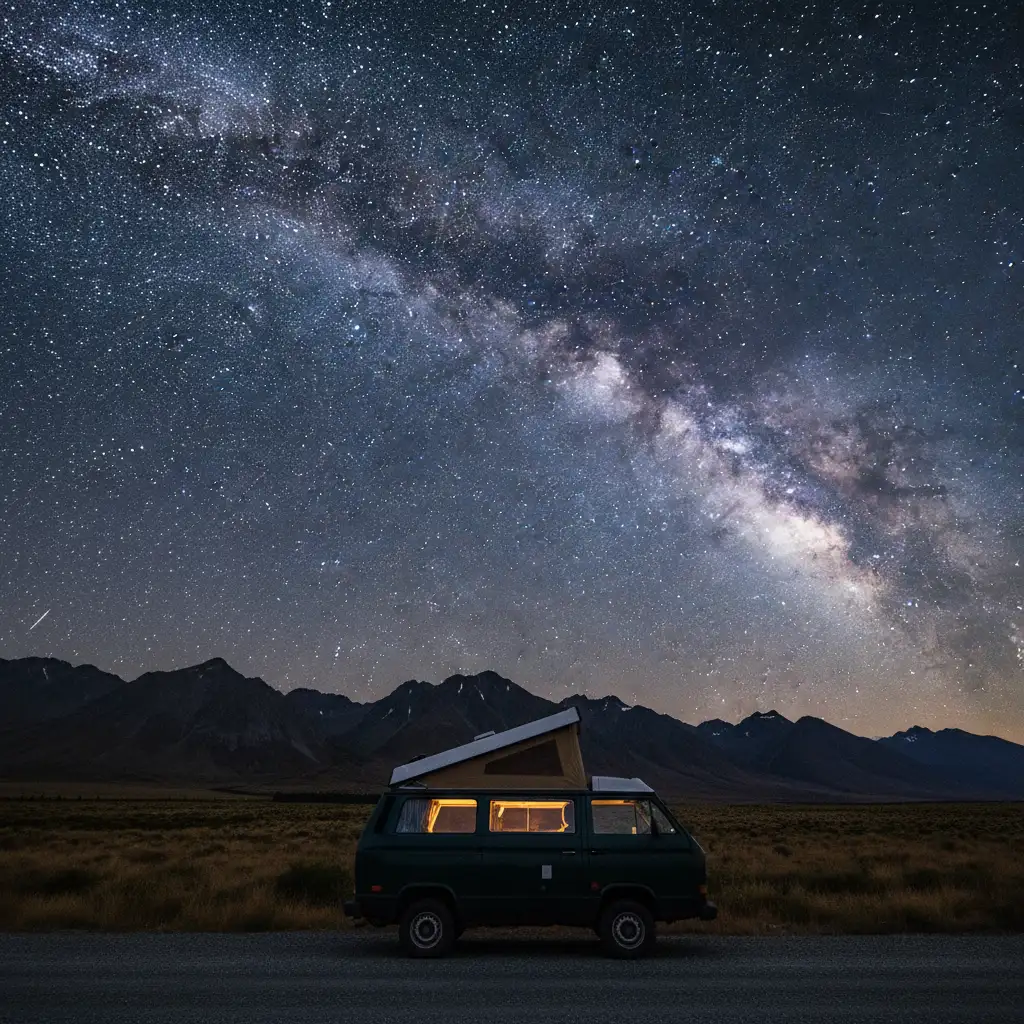
- Respect the Night: As a Dark Sky Reserve, light pollution is a major concern. Use red lights at night and keep external vehicle lights off to preserve the view of the stars for everyone.
Frequently Asked Questions
Is freedom camping allowed at Lake Tekapo?
Generally, no. Freedom camping is prohibited within the immediate township and lakefront of Lake Tekapo. You must use the commercial holiday park (Lake Tekapo Motels & Holiday Park) or travel further afield to designated areas like Lake Pukaki or the Pattersons Ponds area (check current bylaws as this changes frequently).
Can I freedom camp in a rental car or non-self-contained van?
No. You cannot freedom camp in a vehicle that is not certified self-contained. You will risk a $400 fine. You must use campgrounds with toilet facilities.
Where can I dump my campervan waste in Mackenzie Basin?
There are public dump stations located in Fairlie (Talbot Street), Tekapo (Lakeside Drive), and Twizel (Ruataniwha Road). Most are free to use.
Is it safe to drink the water from the lakes?
While the water looks pristine, it is recommended to boil all water taken from lakes or rivers due to the risk of Giardia or Didymo. It is safer to fill up at potable water stations in the townships.
Do I need to book freedom camping spots in advance?
No, freedom camping spots operate on a first-come, first-served basis. In peak summer (January), spots like Lake Pukaki can fill up by mid-afternoon. Have a backup plan (like a DOC site) ready.
Are dogs allowed when freedom camping in Mackenzie Basin?
Dogs are allowed in many freedom camping areas but must be kept on a leash at all times to protect local birdlife, such as the Black Stilt (Kakī). However, dogs are often prohibited in national parks and some DOC reserves, so check signage carefully.