New Zealand offers a distinct range of edible fungi, primarily found in Autumn (April to June). The most common and safe varieties for foragers include the Wood Ear (Hakeke), Giant Puffball, and Field Mushroom. While native beech forests host spectacular biodiversity, foragers must exercise extreme caution to distinguish edible species from deadly lookalikes such as the Death Cap.
Introduction to NZ Mycology: A Hidden Kingdom
New Zealand’s isolation from the rest of the world for 80 million years has resulted in a flora and fauna distinct from anywhere else on Earth. This uniqueness extends beneath the canopy of our native forests to the fungal kingdom. For the eco-tourist and the independent traveler, exploring the undergrowth of Aotearoa offers a treasure hunt that combines culinary reward with visual wonder.
Edible fungi NZ enthusiasts often find themselves walking a fine line between the introduced species brought over by European settlers and the ancient, indigenous species that have co-evolved with our Kauri and Beech trees. While the culinary pursuit is rewarding, the visual spectacle of New Zealand’s fungi—ranging from vibrant blues to translucent whites—is a draw in itself.
However, the forest is not merely a supermarket. It is a complex ecosystem where fungi play the critical role of decomposers and symbiotic partners to our native trees. Understanding this relationship is the first step to becoming a successful and responsible forager.
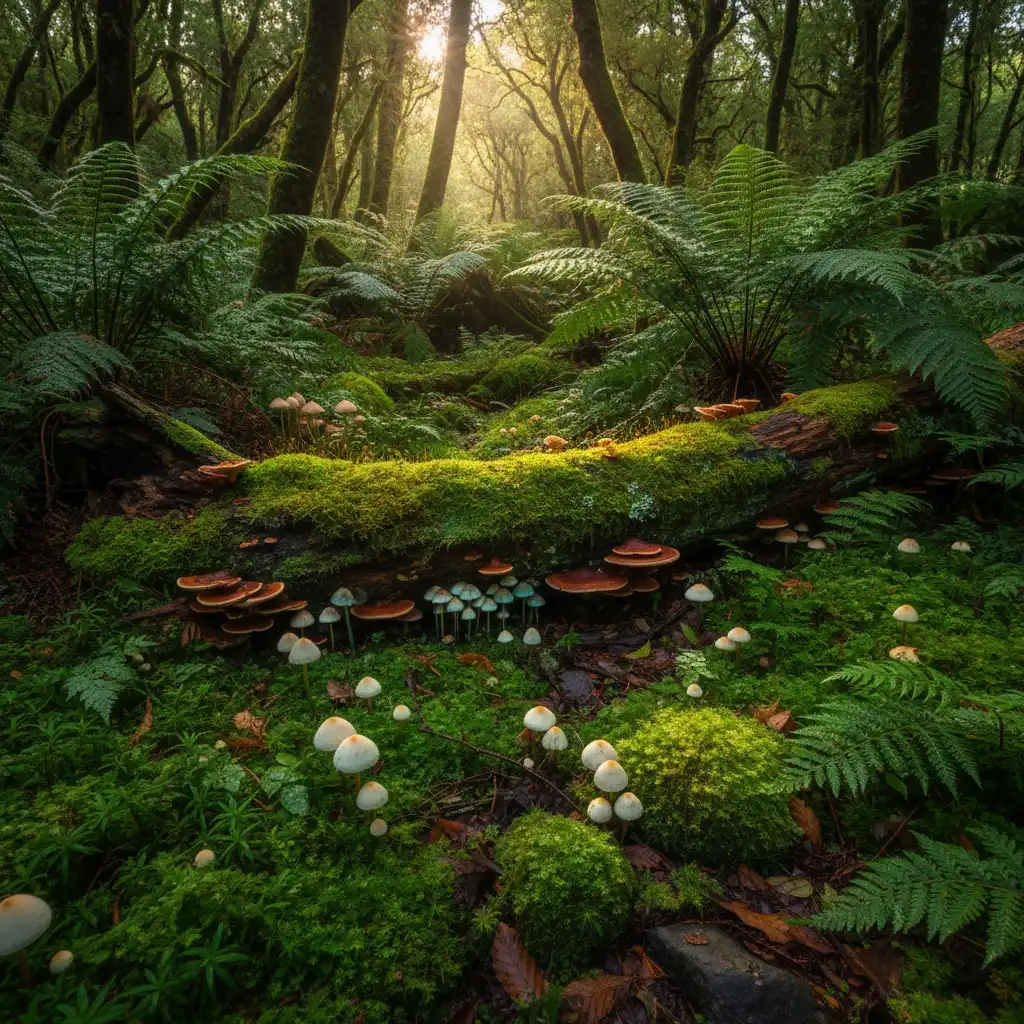
Top Edible Fungi in NZ: Identification Guide
When searching for edible fungi NZ, it is imperative to start with the “foolproof four”—species that are relatively easy to identify and have few toxic lookalikes. Always remember the golden rule of foraging: If in doubt, leave it out.
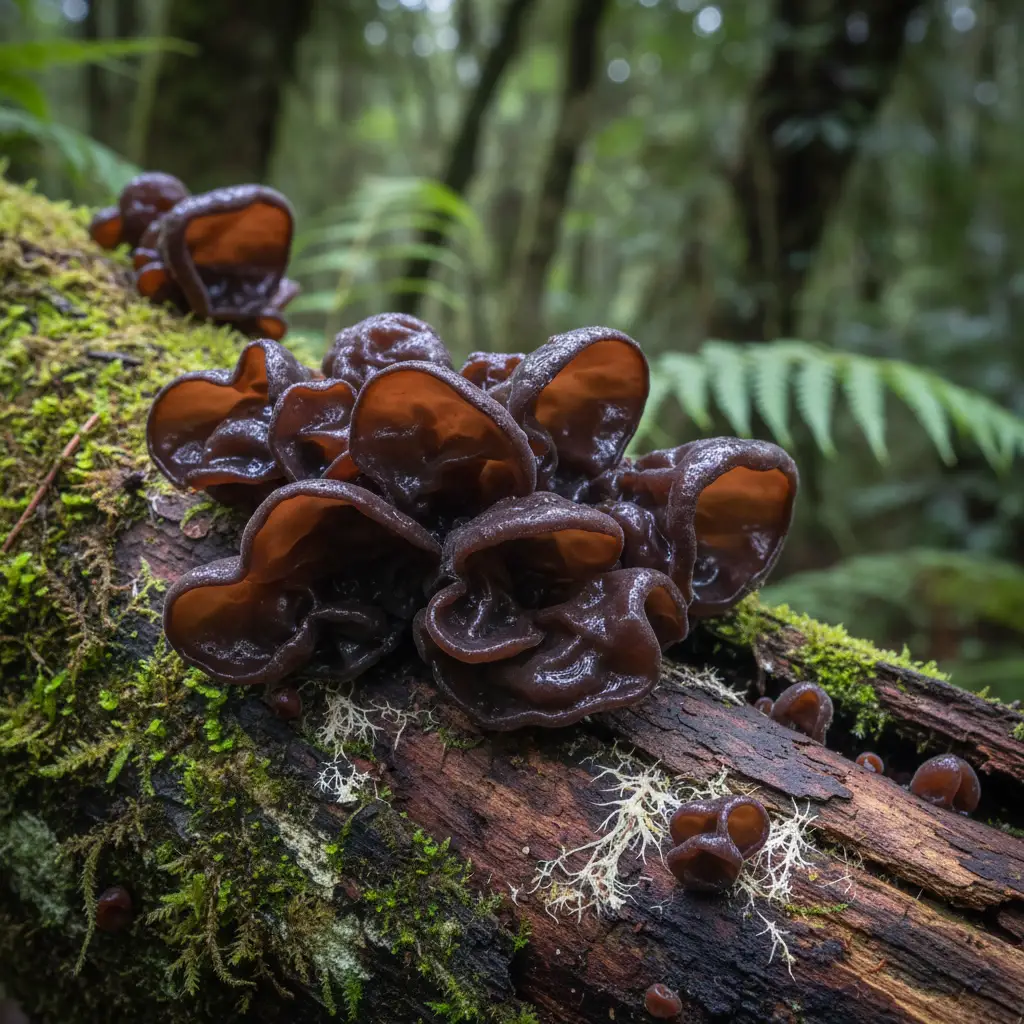
1. Wood Ear (Auricularia cornea-novozelandica) – Hakeke
Habitat: Found growing on dead or dying wood, particularly Mahoe and Tawa trees.
Appearance: As the name suggests, it looks like a brown, gelatinous ear. It is soft and rubbery when wet, and hard and shriveled when dry.
Culinary Use: Hakeke has a mild flavor but is prized for its crunch and texture. It is a staple in Asian cuisine and was historically one of New Zealand’s major exports to China in the late 1800s. It absorbs flavors well in soups and stir-fries.
2. Giant Puffball (Calvatia gigantea)
Habitat: Pastures, meadows, and grassy clearings near forest edges.
Appearance: Large, white, soccer-ball-sized spheres. They have no gills and no stem.
Identification Safety: You must slice the puffball open vertically. The interior must be solid, pure white, and resemble marshmallow texture. If there is any yellowing, brown, or the outline of a mushroom shape inside (which could be a young Amanita egg), discard it immediately.
3. Field Mushroom (Agaricus campestris)
Habitat: Grassy fields, never in the deep forest.
Appearance: White cap, pink gills that turn dark brown with age, and a ring on the stem.
Warning: Beware the Yellow-staining Mushroom (Agaricus xanthodermus), which looks identical but bruises bright yellow when the cap is scratched and smells of chemical disinfectant. The edible Field Mushroom smells pleasantly mushroomy.
4. Slippery Jack (Suillus luteus)
Habitat: Exclusively under pine trees (introduced forests).
Appearance: Brown, slimy cap with yellow pores underneath instead of gills.
Preparation: The slimy skin on the cap must be peeled off before cooking, as it can cause gastric upset in some people. These are excellent dried and reconstituted for risottos.
The Elusive Blue Mushroom (Werewere-kōkako)
While the search for edible fungi NZ drives many into the bush, the “Holy Grail” for photographers and nature lovers is the Werewere-kōkako (Entoloma hochstetteri). This mushroom is not for eating—its toxicity is currently unknown, and it is too precious to harvest—but it is an icon of New Zealand biodiversity, featured on the $50 banknote.
Where to Find the Werewere-kōkako?
This striking azure-blue mushroom is endemic to New Zealand. It gets its color from azulene, a pigment rarely found in nature. To increase your chances of spotting one:
- Season: Late summer to late autumn (February to June).
- Habitat: Broadleaf/podocarp forests. They prefer deep leaf litter and mossy areas near Rimu and Tawa trees.
- Locations: While found throughout the country, hotspots include the West Coast of the South Island, the Waitakere Ranges (check for Kauri dieback closures), and Stewart Island.
Finding a Werewere-kōkako is a sign of a healthy, damp forest ecosystem. If you find one, take photographs but do not touch or disturb the mycelium structure underneath.
Best Beech Forests for Fungi Foraging
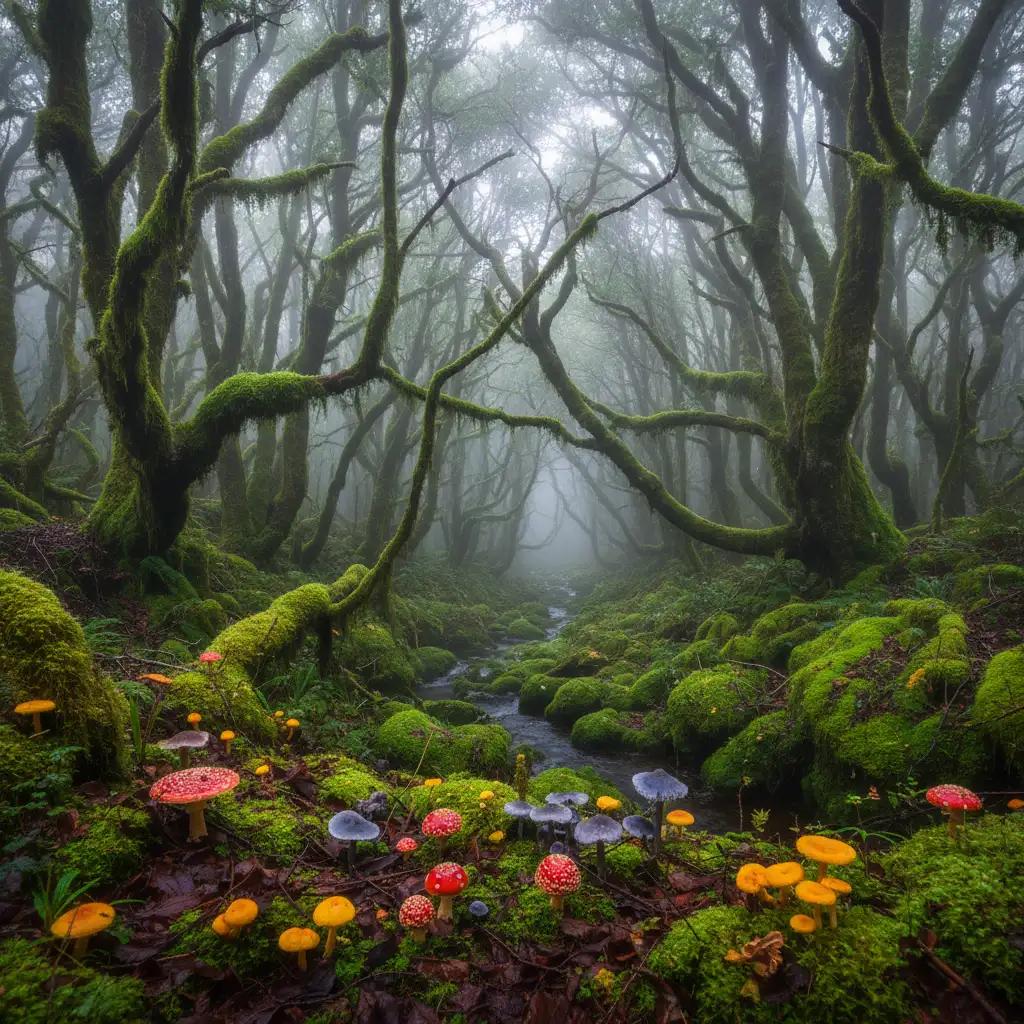
New Zealand’s Southern Beech (Nothofagus) forests are the engine rooms of fungal activity. The trees have a symbiotic ectomycorrhizal relationship with fungi, meaning the mushrooms wrap around the tree roots to exchange nutrients. This results in prolific fungal blooms in autumn.
1. Fiordland National Park
The high rainfall and dense beech canopy make Fiordland a fungal paradise. The Kepler Track, particularly the lower sections near Lake Te Anau, offers accessible foraging and viewing opportunities. Look for the Strawberry Fungus and various colorful bioclimatic species.
2. Nelson Lakes National Park
The area surrounding Lake Rotoiti is famous for its beech forests. The Honey Dew found on the beech trees here attracts birds, while the forest floor is often carpeted in diverse fungal species. This is a prime location for spotting the Potato Fungus (Rossbeevera pachydermis), which looks like a blue-stained potato.
3. Tongariro National Park (Lower Slopes)
While the alpine crossing is volcanic rock, the lower slopes covered in Mountain Beech are rich with fungal life. The cooler temperatures here often trigger fruiting earlier than in coastal areas.
Safety First: Poisonous Species to Avoid
New Zealand is generally free from dangerous animals, but our fungi can be lethal. Misidentification is the leading cause of fungal poisoning. When researching edible fungi NZ, you must study the toxic species with equal vigor.
The Death Cap (Amanita phalloides)
This is an introduced species and is responsible for the majority of fatal mushroom poisonings worldwide. It grows near oak and chestnut trees (often in parks or exotic forests).
Identification: Olive-green to yellowish cap, white gills, a skirt on the stem, and a cup-like volva at the base (often hidden underground).
Toxicity: Deadly. Symptoms are delayed for 6–24 hours, by which time massive liver damage has occurred.
Fly Agaric (Amanita muscaria)
The classic fairytale mushroom with a red cap and white spots. While some cultures process it for consumption, it is considered toxic in NZ, causing hallucinations, nausea, and muscle twitching. It is best admired from a distance.
Native Cortinarius Species
New Zealand has many purple or reddish Cortinarius mushrooms. Many of these contain orellanine, a toxin that attacks the kidneys. A key identifier is a “cortina” (web-like veil) protecting the gills in young specimens, and a rusty-brown spore print.
Safety Protocol:
- Never consume a mushroom unless you are 100% certain of its ID.
- Use a spore print to aid identification (place the cap on white/black paper overnight).
- Keep a sample of any consumed mushroom in the fridge; if you get sick, this sample could save your life by helping doctors identify the toxin.
Foraging Ethics and Conservation
Foraging has grown in popularity, putting pressure on delicate ecosystems. To ensure edible fungi NZ remains sustainable:
- Cut, Don’t Pull: Use a sharp knife to cut the stem at the base. Pulling can damage the mycelial network underground, which is the actual living organism.
- Take Only What You Need: Never clear an entire patch. Leave at least 50% of the mushrooms to drop spores and continue the lifecycle.
- Respect Tapu: In Māori culture, certain areas may be wāhi tapu (sacred). Always obey signage and respect private land.
- DOC Regulations: Generally, foraging for personal consumption is permitted in National Parks, but commercial harvesting is strictly prohibited without a concession. Always check local Department of Conservation rules.
Capturing the Micro-World: Photography Tips
Because many of New Zealand’s native fungi are diminutive and grow in low-light environments, photographing them requires specific techniques. Whether you are documenting the Werewere-kōkako or the translucent pores of a Pore Fungus, these tips will elevate your imagery.
1. Get Down Low
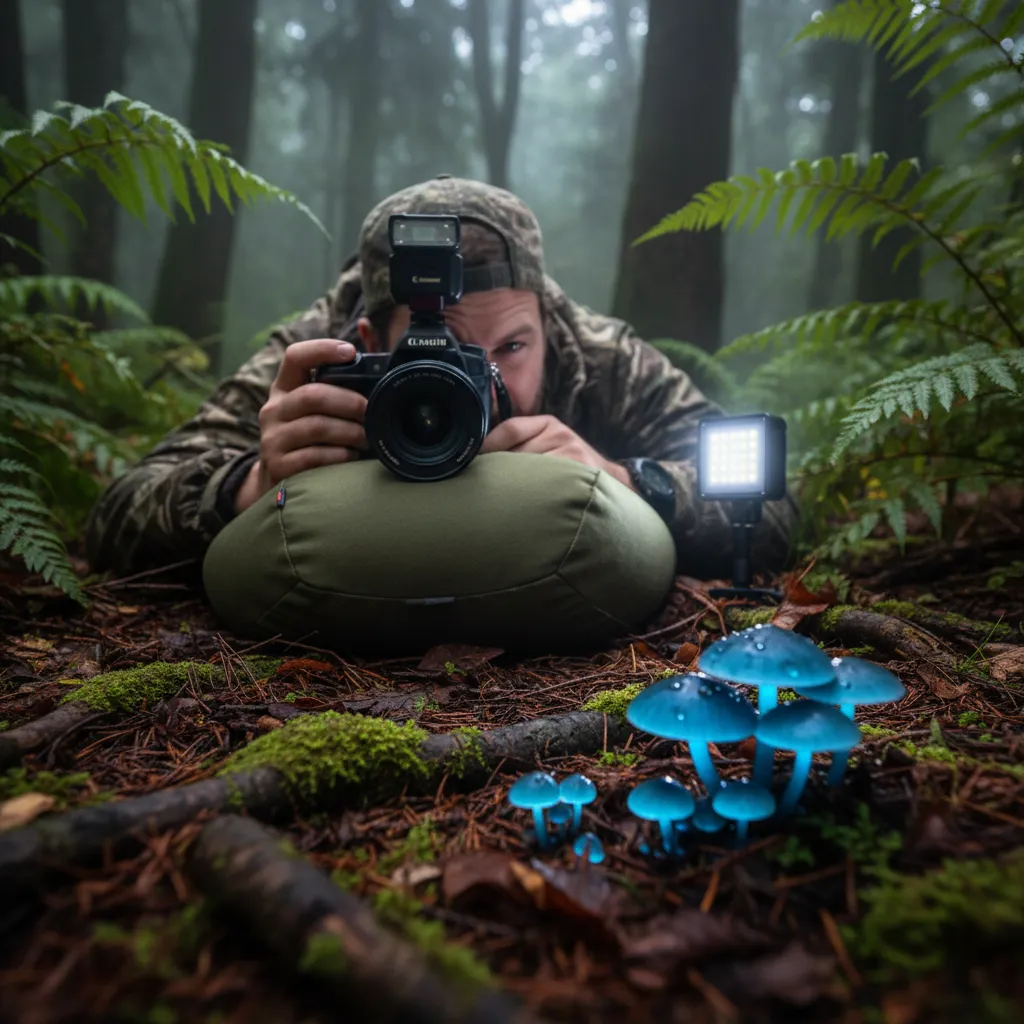
The most common mistake is shooting from a standing or crouching position. To capture the majesty of a mushroom, you must get your lens parallel to the ground. Use a beanbag or a tripod with a reversible center column to get “worm’s eye” level.
2. Lighting the Undercarriage
Forest floors are dark. While a flash can be harsh, using a small LED panel or even a smartphone torch to side-light the mushroom can reveal the texture of the gills and the translucency of the cap. Backlighting a mushroom can create a magical, glowing effect.
3. Focus Stacking
In macro photography, the depth of field is razor-thin. If you focus on the front of the cap, the stem may be blurry. Many modern cameras offer focus bracketing. Take multiple shots at different focus points and blend them in post-processing for a crisp image from front to back.
People Also Ask
What is the most common edible mushroom in New Zealand?
The Wood Ear (Auricularia cornea-novozelandica), known as Hakeke, is likely the most common and easily identifiable edible fungus in native forests. In open pastures, the Field Mushroom (Agaricus campestris) is the most commonly foraged species.
Is it legal to pick mushrooms in New Zealand National Parks?
Generally, yes. The Department of Conservation (DOC) usually allows limited gathering of fungi for personal, non-commercial use in National Parks. However, this is prohibited in Scientific Reserves and Ecological Areas. Always check specific park bylaws.
Are there hallucinogenic mushrooms in New Zealand?
Yes, species such as Psilocybe weraroa (the blue pouch fungus) are native to New Zealand. However, under the Misuse of Drugs Act 1975, it is illegal to cultivate, possess, or consume psilocybin mushrooms in New Zealand.
How do I tell if a mushroom is poisonous in NZ?
There is no single rule or test (like the “silver spoon” myth) to detect poison. The only way to know is to positively identify the species using a field guide, spore print, and expert verification. If you cannot identify it 100%, assume it is poisonous.
What is the blue mushroom on the NZ $50 note?
This is the Werewere-kōkako (Entoloma hochstetteri). It is a native fungus recognized by its vibrant blue color. It is not considered edible and is a taonga (treasure) species in New Zealand.
When is the best time for mushroom foraging in NZ?
The prime season is Autumn, specifically from April to June, when the temperatures drop and the rains increase. However, some species like the Wood Ear can be found year-round if conditions are damp enough.