Freedom camping NZ rules primarily require visitors to utilize certified self-contained vehicles equipped with fixed toilets and water systems when staying on public land. Under the Freedom Camping Act and recent 2023 amendments, camping is generally permitted on Department of Conservation and council land unless specifically restricted or prohibited by local bylaws.
New Zealand offers some of the most spectacular road trip experiences on the planet. The ability to park your campervan amidst the Southern Alps or beside a rugged West Coast beach is a major draw for independent travelers. However, the privilege of “freedom camping”—staying overnight on public land for free—comes with significant responsibilities and a complex web of regulations. Recent legislative changes have tightened these rules to protect the environment and local communities.
This guide serves as the authoritative resource for navigating the logistics, legalities, and ethical considerations of freedom camping in Aotearoa.

What is the Freedom Camping Act?
The foundation of camping legislation in New Zealand is the Freedom Camping Act 2011. This legislation was originally introduced to manage the influx of tourists during the Rugby World Cup, but it has since evolved to address growing concerns regarding environmental degradation and overcrowding.
The core philosophy of the Act is that freedom camping is permitted on public conservation land and local council land unless it is restricted or prohibited. This is a permissive statute, meaning the default position is “yes,” provided you follow the rules. However, the Self-Contained Motor Vehicles Legislation Act 2023 has significantly altered the landscape, aiming to eliminate the use of vehicles with portable toilets for freedom camping.
The Three Categories of Land
To understand the rules, you must understand the jurisdiction of the land you are standing on:
- Prohibited Areas: Camping is strictly banned. These are usually high-traffic areas, town centers, or sensitive environments. Signage is usually clear, featuring a campervan with a red line through it.
- Restricted Areas: Camping is allowed subject to specific conditions. The most common condition is that the vehicle must be certified self-contained. Other restrictions may limit the number of nights you can stay (e.g., maximum 2 nights) or the specific hours you can park.
- Permitted Areas: Camping is allowed with few restrictions, though standard conduct rules apply. These are becoming rarer near tourist hotspots.
What Does “Certified Self-Contained” Mean?
If there is one term you must memorize before renting or buying a van in New Zealand, it is Certified Self-Contained (CSC). This certification proves that your vehicle can support its occupants for three days without requiring external services for water or waste.
Historically, a blue sticker indicated self-containment. However, regulations have tightened drastically.
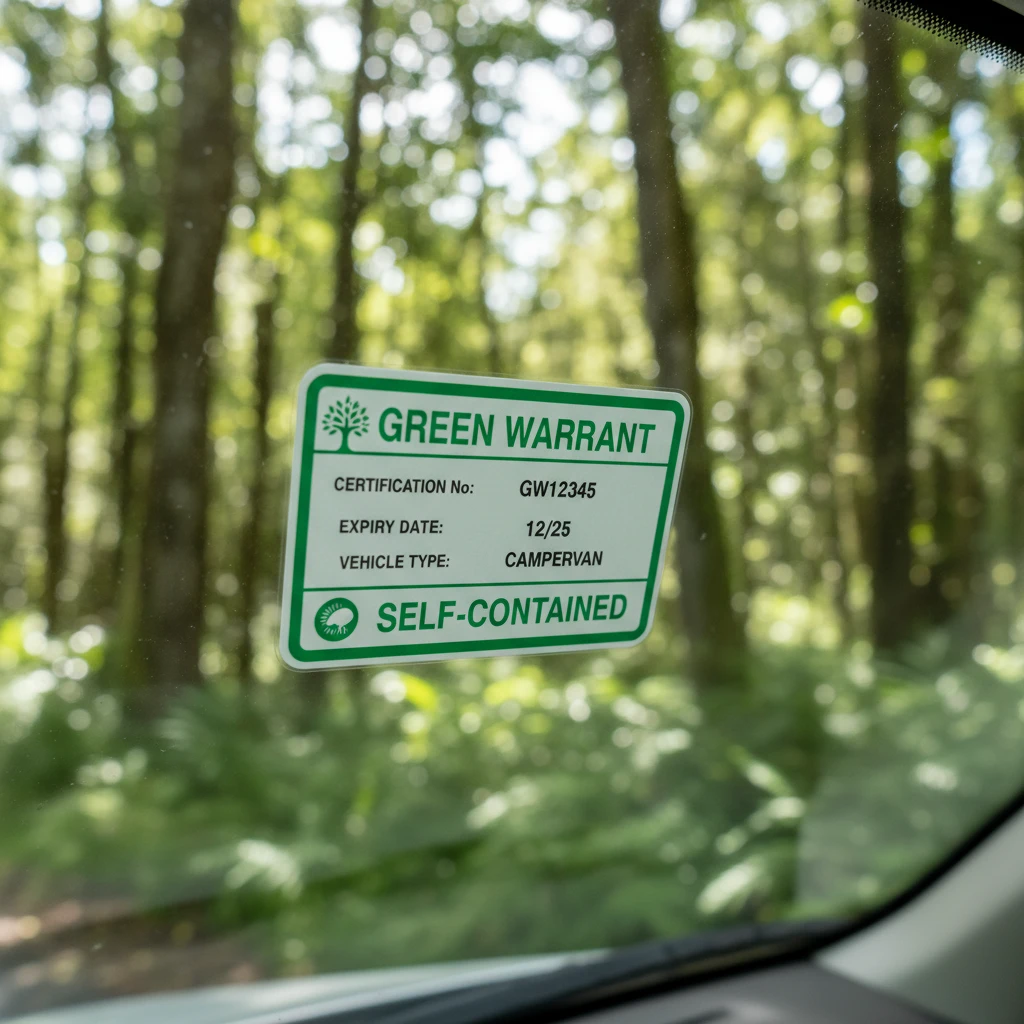
The Shift from Blue to Green Warrants
Under the new 2023 regulations, the definition of a self-contained vehicle has changed. To be certified self-contained under the new “Green Warrant” system, a vehicle must have:
- A Fixed Toilet: This is the most critical change. Portable chemical toilets (Porta Pottis) that are not permanently plumbed into the vehicle are no longer sufficient for a Green Warrant. The toilet must be permanently fixed to the vehicle and empty into a black water tank.
- Water Supply: A fresh water tank and a sink connected to a wastewater (grey water) tank.
- Wastewater Storage: Tanks must be large enough to hold water for all occupants for three days.
- Ventilation: Proper ventilation for waste tanks to prevent odors and gas buildup.
- Rubbish Storage: A sealable rubbish bin.
Important Transition Period: If you have a vehicle with a current Blue Warrant (issued before the law change), it may still be valid for a limited time, but rental companies are rapidly phasing these out. If you are converting a van yourself, you must adhere to the Green Warrant standards (fixed toilet) to legally freedom camp in restricted areas.
Where Can You Actually Camp?
Finding a legal spot requires due diligence. You cannot simply pull over into a layby and sleep. Authorities distinguish between resting (sleeping to recover from fatigue) and camping (setting up for the night with intent).
Department of Conservation (DOC) Land
The DOC manages a vast amount of New Zealand’s wilderness. They offer three tiers of campsites:
- Serviced/Scenic Campsites: These are paid sites with facilities (kitchens, showers). They are not freedom camping spots, but are eco-friendly and affordable.
- Standard Campsites: Minimal facilities (long-drop toilets), usually a small fee.
- Basic Campsites: Often free. These are true freedom camping spots on conservation land. They usually provide a basic toilet but no running water.
Council Land
Local councils (e.g., Queenstown Lakes District Council, Thames-Coromandel District Council) set their own bylaws. This creates a patchwork of rules across the country. In one district, you might be allowed to park in any paved area; in the next, you might be fined $400 for parking outside a designated holiday park.
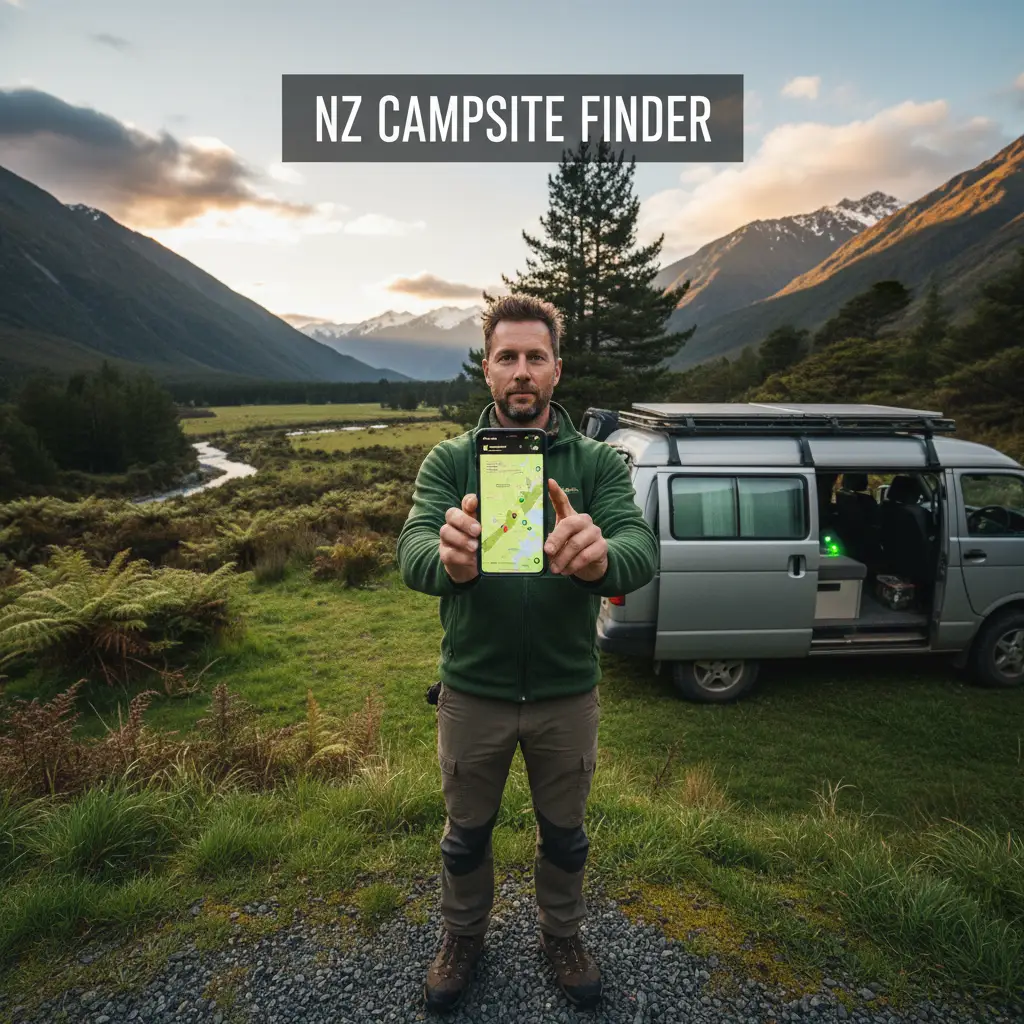
Pro Tip: Use apps like CamperMate or Rankers. These apps aggregate official council data and user reviews to show exactly where you can and cannot camp. Look for the green icons for free sites, but always verify by looking for physical signage at the location.
The Tiaki Promise & Leave No Trace Principles
New Zealand promotes the Tiaki Promise, a commitment to care for New Zealand, for now and for future generations. As a freedom camper, you are a temporary guardian of the land.
Key Eco-Tourism Principles
Adhering to these principles is not just about avoiding fines; it is about preserving the ecosystem that makes New Zealand unique.
- Pack In, Pack Out: If you bring it with you, take it with you. There are no bins in the deep wilderness. Carry your rubbish until you reach a town with transfer stations.
- Use Provided Facilities: Even if you are self-contained, use public toilets whenever available to reduce the load on your vehicle’s tanks and the risk of improper dumping.
- Dump Stations Only: strictly dispose of grey water (sink water) and black water (sewage) at designated dump stations. Dumping waste on the roadside or in storm drains is a serious environmental offense and carries heavy fines.
- Respect Wildlife: Keep a safe distance from native birds like the Kea or Weka. Do not feed them, as human food harms their health and alters their natural behavior.
Regional Differences in Enforcement
Enforcement of freedom camping NZ rules varies significantly by region, largely driven by the volume of tourism pressure.
High-Pressure Zones
Queenstown, Wanaka, and Mackenzie District (Lake Tekapo/Pukaki): These areas have zero tolerance for non-compliant camping. The councils employ enforcement officers who patrol nightly. If you are not in a certified self-contained vehicle, or if you are parked in a prohibited zone (which covers most town centers and lakefronts), you will receive a fine. In these areas, it is often safer to book a cheap DOC site or a holiday park.
The Coromandel Peninsula
The Thames-Coromandel District has strict “restricted zones.” You generally cannot camp on the roadside. You must be in designated freedom camping areas, and you must be self-contained.
West Coast (South Island)
The West Coast is generally more lenient due to its vastness and lower population density, but the rules regarding self-containment still apply. The Department of Conservation manages much of this land, so look for DOC signage.

Fines and Infringements
The government has recently increased the financial penalties to deter bad behavior. It is vital to understand the cost of non-compliance.
- Standard Infringement Fee: The default fine for freedom camping in a prohibited area or without a self-contained vehicle where required has risen significantly. Expect fines starting at $400 NZD.
- Improper Waste Disposal: Dumping sewage or littering can result in much higher fines, potentially leading to court prosecution and fines up to $10,000 NZD for serious environmental damage.
- Rental Vehicle Liability: If you receive a fine in a rental vehicle, the rental company will charge your credit card for the fine plus a substantial administration fee.
How to Fix a Non-Compliant Situation?
If you find yourself in a vehicle that is not self-contained (no sticker or expired warrant), you must stay in paid campgrounds, holiday parks, or specific DOC campsites designated for non-self-contained vehicles. You cannot legally freedom camp on restricted council land.
Strategic Planning for Independent Travelers
To maximize your experience while minimizing legal risks, follow this strategic workflow:
- Vehicle Selection: Rent a vehicle with the new Green Warrant if possible. Ensure the rental company guarantees the certification is current.
- Route Planning: Map out Dump Stations every 2-3 days of travel. You cannot freedom camp with full tanks.
- The “Late Arrival” Rule: Do not arrive at popular freedom camping spots late at night. They fill up quickly, often by 4:00 PM in summer. Have a backup plan (a paid campsite) nearby.
- Check the Bylaws: Before entering a new district, do a quick Google search for “[District Name] freedom camping map.” Most councils provide PDF maps of prohibited zones.
By respecting the freedom camping NZ rules, you contribute to the sustainability of this unique travel style. The regulations are not there to stop you from exploring; they are there to ensure the pristine landscapes of Aotearoa remain beautiful for the next traveler.
People Also Ask
Can you sleep in your car in NZ for free?
You can sleep in your car for free only in designated areas that permit non-self-contained vehicles. Most freedom camping spots strictly require the vehicle to be certified self-contained (with a toilet). Sleeping in a standard car in a restricted zone will result in a $400 fine.
What is the fine for freedom camping in NZ?
The standard infringement fee for breaking freedom camping rules has increased to $400 NZD. Fines for illegal dumping of waste or littering can be significantly higher, and rental companies will add administration fees to these fines.
Do you need a self-contained van to freedom camp in NZ?
In the vast majority of cases, yes. Most council bylaws and restricted DOC areas require a Certified Self-Contained vehicle (Green or valid Blue warrant). Without this, you are limited to paid campgrounds or a small number of basic DOC sites with toilet facilities.
Where can I shower if I am freedom camping?
If your vehicle does not have a shower, you can use facilities at public swimming pools, community hubs, or paid service hubs (often found at gas stations or hostels). Apps like CamperMate list public shower locations and costs.
Is freedom camping banned in New Zealand?
No, freedom camping is not banned. It is regulated. It is permitted on public conservation land and council land unless specifically prohibited. However, the requirements for vehicles have become stricter to prevent environmental damage.
How do I know if a spot is legal for camping?
Look for physical signage. Signs will explicitly state if camping is “Prohibited” (Red) or “Restricted” (usually requiring self-containment). If there are no signs, check the local council’s website or use a reputable camping app to confirm the land status.