New Zealand birds became flightless primarily due to millions of years of evolution in geographic isolation without terrestrial mammal predators. In this safe environment, flight—an energy-expensive adaptation—became unnecessary. Consequently, ground-dwelling species evolved to be larger and heavier, filling ecological niches usually occupied by mammals elsewhere.
Evolution in Isolation: The Gondwana Split
To understand why are NZ birds flightless, one must look back approximately 80 million years to the breakup of the supercontinent Gondwana. New Zealand, or Aotearoa, drifted away from the landmass that would become Australia and Antarctica, carrying with it a unique cargo of flora and fauna. This event created what biologists often refer to as “Moa’s Ark”—a biological life raft that remained isolated from the rest of the world for eons.
Unlike other landmasses that were periodically connected by land bridges during ice ages, New Zealand remained distinct and separate. This isolation is the fundamental driver of the country’s unique biodiversity. While the rest of the world saw the rise of aggressive mammalian predators, New Zealand remained a land dominated by birds, reptiles, and invertebrates. Evolution takes different paths depending on environmental pressures; in New Zealand, the pressure to escape ground-dwelling predators was virtually non-existent for millions of years.
The Absence of Native Land Mammals
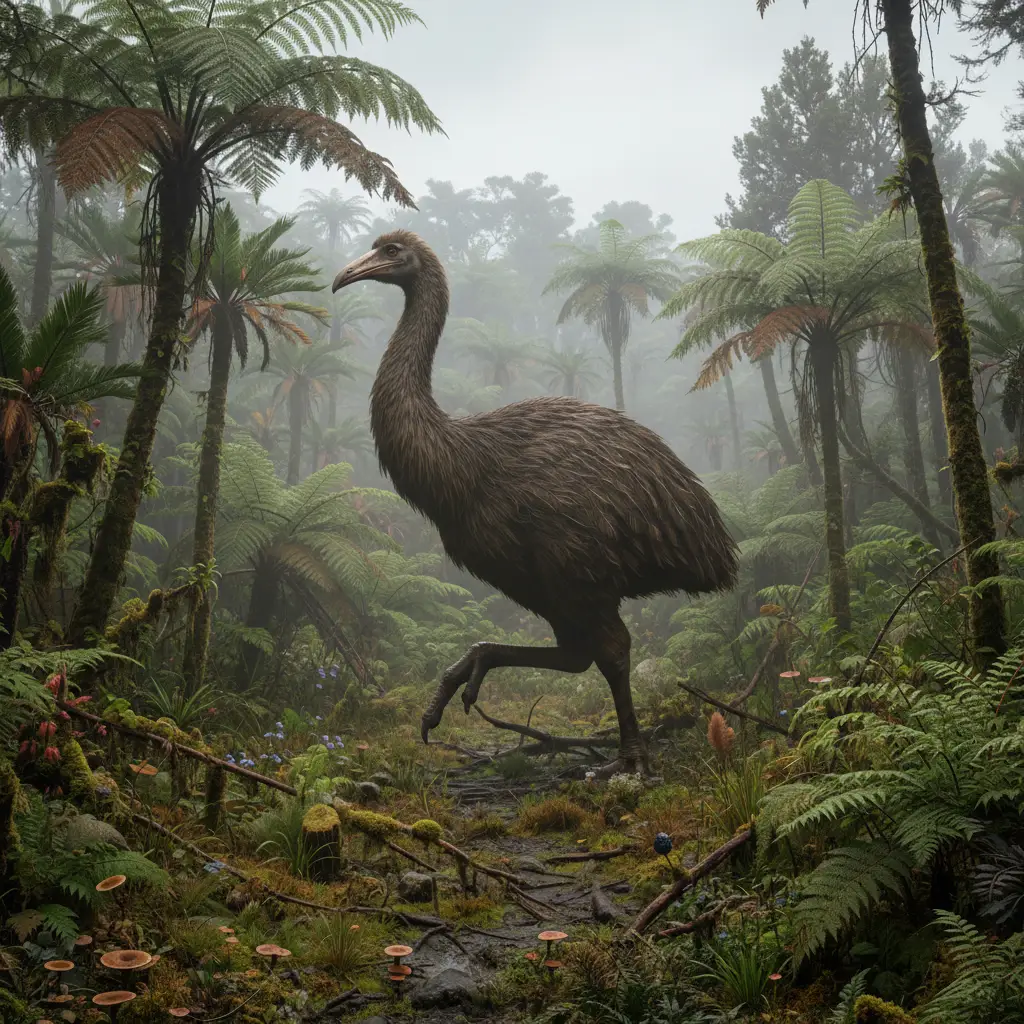
The most critical factor answering the query “why are NZ birds flightless” is the historical absence of terrestrial mammals. Before humans arrived, the only native mammals in New Zealand were three species of bats (one now extinct) and marine mammals like seals and dolphins. Without land mammals to hunt them or compete for food, birds were free to colonize the forest floor.
Birds Filling Mammalian Niches
In most ecosystems, mammals occupy specific ecological niches: mice are scavengers, deer are browsers, and badgers are foragers. In New Zealand, birds evolved to fill these roles. The Moa, for instance, functioned much like a deer or giraffe, browsing on high vegetation. The Kiwi evolved to function like a badger or a hedgehog, rooting through the soil for invertebrates. Because these food sources were on the ground and there were no predators to ambush them from the undergrowth, the necessity for flight diminished.
This phenomenon is not unique to New Zealand but is most pronounced here due to the size of the islands and the length of isolation. It allowed for a radical restructuring of avian anatomy. Wings, which are heavy and require massive pectoral muscles to operate, became a burden rather than an asset. Over thousands of generations, natural selection favored birds that invested energy in body size and reproduction rather than maintaining the complex machinery required for flight.
The Energy Economics of Flight
Flight is one of the most metabolically expensive activities in the animal kingdom. It requires a massive caloric intake, lightweight bones, huge muscle mass relative to body size, and a highly efficient respiratory system. From an evolutionary standpoint, nature follows a strict “use it or lose it” policy. If a physiological trait does not confer a survival advantage, it is eventually selected against because it wastes energy.
In the predator-free forests of ancient New Zealand, a bird that spent energy growing large wing muscles was at a disadvantage compared to a bird that directed that energy toward a larger digestive system (to process tough vegetation) or larger egg production. The birds that flew less survived just as well as those that flew often. Eventually, the birds that couldn’t fly at all—but were robust and energy-efficient—became the dominant genetic lineage.
Physiological Adaptations
As flightlessness set in, New Zealand birds underwent significant physiological changes:
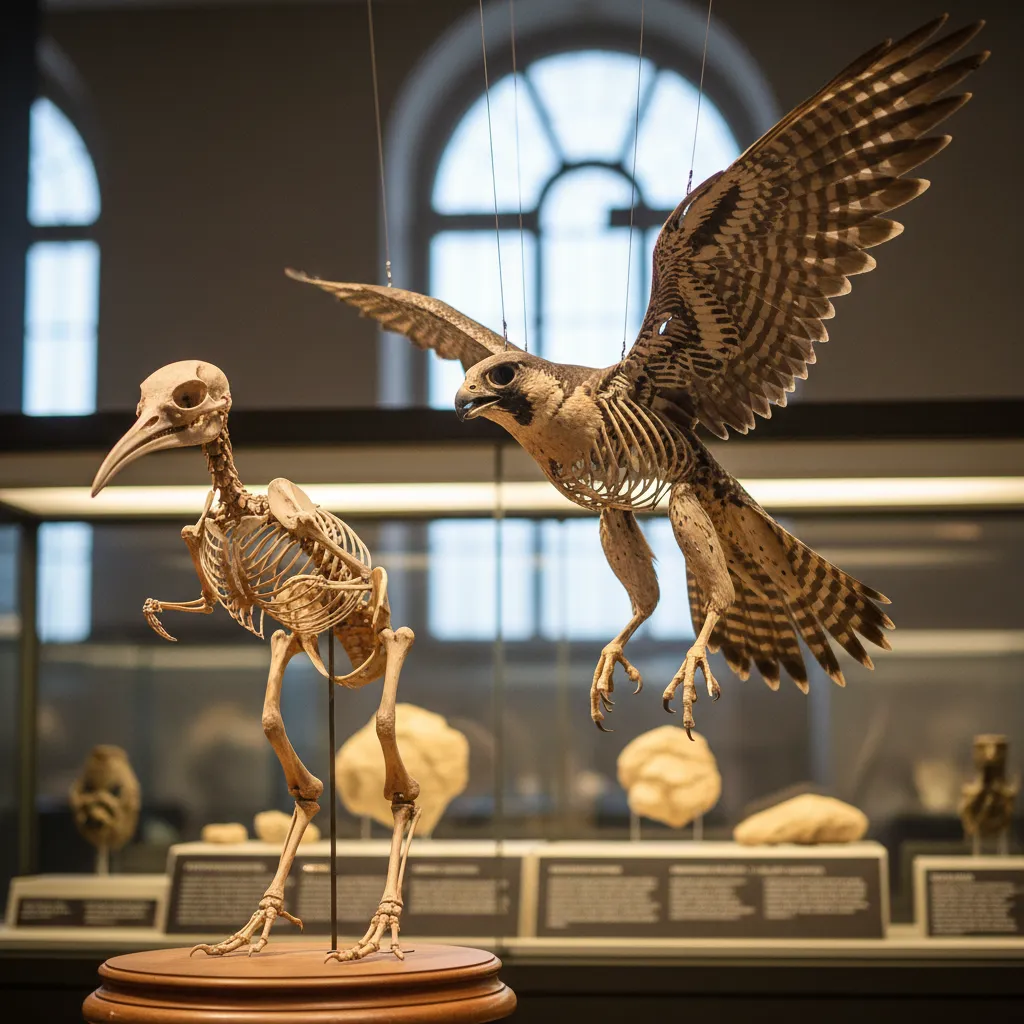
- Reduction of the Keel: Flying birds have a protruding breastbone (keel) where flight muscles attach. Flightless birds, known as ratites (like the Kiwi and Moa), possess a flat breastbone.
- Feather Modification: Without the need for aerodynamics, feathers changed. Kiwi feathers, for example, are more like hair or fur, designed for warmth and camouflage rather than lift.
- Bone Density: Flying birds have hollow, lightweight bones. Flightless birds evolved heavier, marrow-filled bones to support greater body weight and leg strength.
Island Gigantism and Biological Changes
A common evolutionary trend observed on islands is “Island Gigantism.” Small species that arrive on an island often evolve to become much larger in the absence of constraints like predation or competition. This is clearly visible in the fossil record of New Zealand.
The Haast’s Eagle, which preyed on the Moa, was the largest eagle to ever live, evolving from a much smaller ancestor. The Moa itself is the prime example, with some species reaching heights of 3.6 meters (12 feet) and weighing up to 230 kilograms (510 lbs). Even the Takahe, a rail species, is significantly larger and heavier than its flying relatives. Gigantism offered advantages such as better thermal regulation and the ability to process lower-quality, fibrous plant matter through a larger gut.
Iconic Flightless Species of Aotearoa
New Zealand is home to a variety of flightless birds, each with a unique evolutionary story. Understanding these species provides context to the broader question of flightless evolution.
The Kiwi
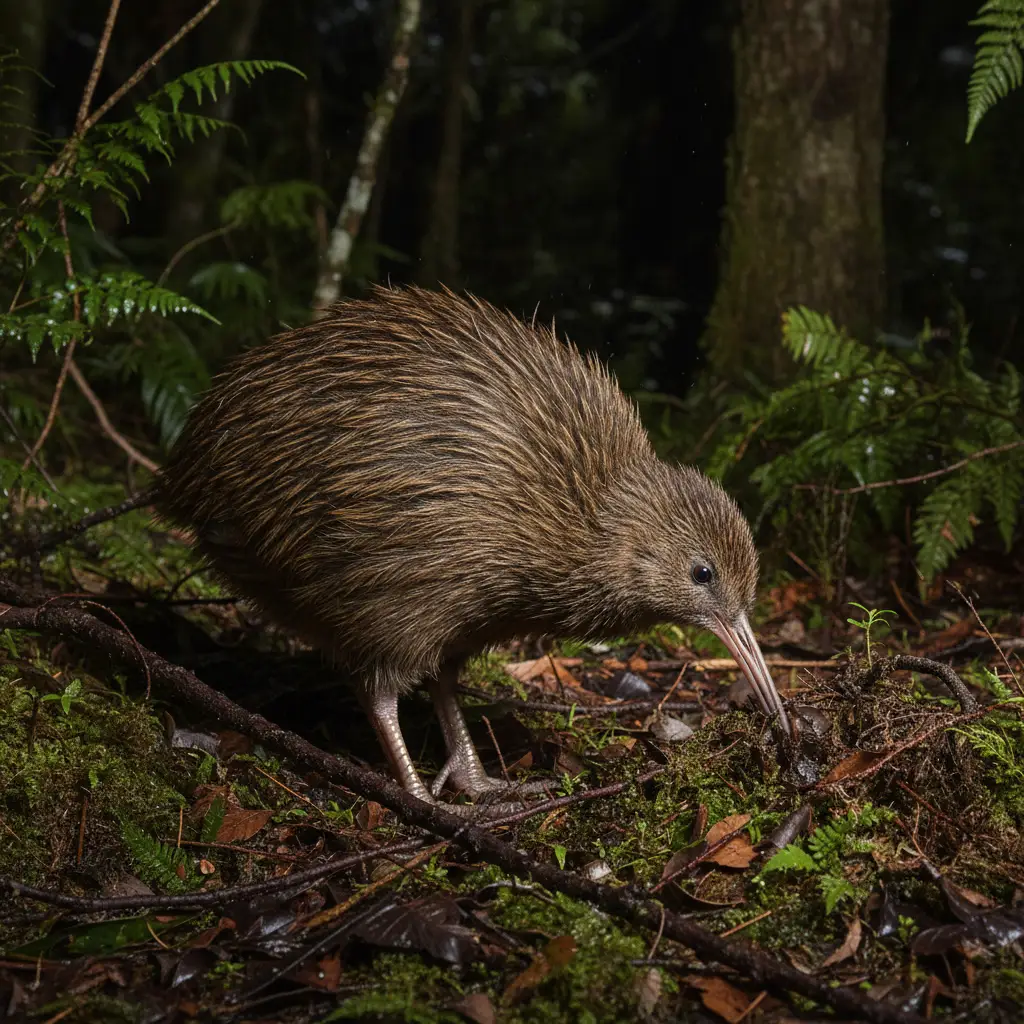
The national icon of New Zealand, the Kiwi, is a biological oddity. It is the only bird in the world with nostrils at the end of its beak, allowing it to smell prey underground. It has loose, hair-like feathers, heavy bones, and tiny vestigial wings hidden under its plumage. The Kiwi lays an egg that is up to 20% of the female’s body weight, a ratio unmatched by any other bird.
The Kakapo
The Kakapo is the world’s only flightless parrot and also the heaviest. Nocturnal and solitary, it behaves more like an owl than a parrot. The Kakapo evolved in an environment of abundance, leading to a slow metabolism and a long lifespan (up to 90 years). Its defense mechanism—freezing in place—was perfect for avoiding visual detection by the Haast’s Eagle but proved disastrous against scent-hunting mammalian predators.
The Takahe
Once thought to be extinct, the Takahe was rediscovered in 1948 in the Murchison Mountains. It is a large, flightless rail with a beak adapted for stripping seeds from tussock grass. The Takahe represents a classic example of a bird that became flightless to maximize its efficiency as a grazer in alpine environments.
The Vulnerability to Introduced Pests
The very adaptations that made New Zealand birds successful for millions of years became their downfall upon the arrival of humans. The first wave of extinction occurred with the arrival of Polynesians (Māori) around 1280 AD, who brought the kiore (Pacific rat) and kurī (dog). Hunting and habitat loss led to the extinction of the Moa and the Haast’s Eagle.
However, the devastation accelerated with the arrival of Europeans in the 18th and 19th centuries. They introduced a suite of apex mammalian predators: ship rats, Norway rats, stoats, weasels, ferrets, possums, and feral cats. These predators were devastating because:
- Lack of Fear: NZ birds had no innate fear of mammals (naive behavior).
- Ground Nesting: Flightless birds nest on the ground, making eggs and chicks easy targets.
- Scent: Birds like the Kiwi and Kakapo have strong scents, making them easy for mammals to track.
- Defense Mechanisms: Freezing in place is ineffective against predators that hunt by smell.
The introduction of these pests turned the evolutionary advantage of flightlessness into a critical vulnerability. The ecosystem, once balanced, collapsed under the pressure of these new invaders.

Conservation and Predator Free 2050
Today, New Zealand is a world leader in conservation biology, largely driven by the need to protect its unique flightless birds. The government has adopted an ambitious goal known as Predator Free 2050, which aims to eradicate the most damaging introduced predators (rats, stoats, and possums) from the country.
Sanctuaries and Translocation
To prevent extinction, conservationists have established offshore island sanctuaries (like Kapiti Island and Tiritiri Matangi) that are completely free of predators. Birds are translocated to these islands to breed in safety. On the mainland, “fenced sanctuaries” like Zealandia in Wellington use pest-proof fencing to create safe havens for species like the Little Spotted Kiwi and Takahe.
For eco-tourists, visiting these sanctuaries offers a glimpse into what New Zealand looked like before human arrival. It is a testament to the resilience of nature and the dedication of humans trying to reverse the damage caused by introduced species. Understanding why NZ birds are flightless is not just a lesson in evolutionary history; it is a call to action to protect these fragile, unique treasures of the natural world.
Why do New Zealand birds lay such large eggs?
New Zealand birds, particularly the Kiwi, lay massive eggs relative to their body size because the chicks need to be born in an advanced state of development. In a harsh forest environment without flight, a chick that hatches fully feathered and able to forage (precocial) has a higher survival rate than one that is helpless in the nest.
Are there any flightless birds in NZ that are now extinct?
Yes, the most famous examples are the various species of Moa. These giant birds were hunted to extinction within a few centuries of human arrival. Other extinct flightless birds include the Adzebill and several species of flightless wrens and rails.
How does the Kakapo survive without flying?
The Kakapo survives by being nocturnal, using camouflage to blend into the mossy forest floor, and climbing trees using its strong beak and claws. It glides or parachutes down from trees but cannot power flight. Its primary defense was freezing, which worked against eagles but fails against mammals.
What is the ‘Predator Free 2050’ goal?
Predator Free 2050 is an ambitious New Zealand government goal to eradicate rats, stoats, and possums from the entire country by the year 2050. This is essential for the survival of flightless birds, as these introduced pests prey on eggs, chicks, and adult birds.
Did the Moa have wings?
No, the Moa is unique among birds because it had absolutely no wing bones. While other flightless birds like the Kiwi and Ostrich retain vestigial wings, the Moa lost its wings entirely over millions of years of evolution.
Why are flightless birds more common on islands?
Flightless birds are more common on islands because islands often lack large predators. Without the need to escape predators, birds stop investing energy in flight muscles. Additionally, islands have limited resources, and flightless birds generally require less energy to survive than flying ones.