Fiordland biodiversity is characterized by a rare phenomenon known as “deep-water emergence,” where a permanent freshwater layer stained with tannins blocks light penetration. This allows deep-sea species, such as ancient black coral and rare brachiopods, to thrive in shallow waters, creating a globally unique marine ecosystem in New Zealand’s southwest.
Fiordland National Park, a UNESCO World Heritage site, is not just a spectacle of granite peaks and cascading waterfalls; it houses one of the most intriguing marine environments on Earth. For regenerative tourism advocates and marine biologists alike, the underwater world of the fiords offers a window into the deep ocean without the need for a submersible. This guide explores the complex biological mechanics of the fiords, the fragility of its “China Shops,” and how modern conservation efforts are reshaping the visitor experience in 2025.
The Freshwater Layer Phenomenon: A Light-Blocking Shield
The defining feature of Fiordland’s marine ecology is the permanent freshwater layer that sits atop the seawater. This is not merely a mixture of water types; it is a distinct stratification that dictates the biological rules of the fiords.
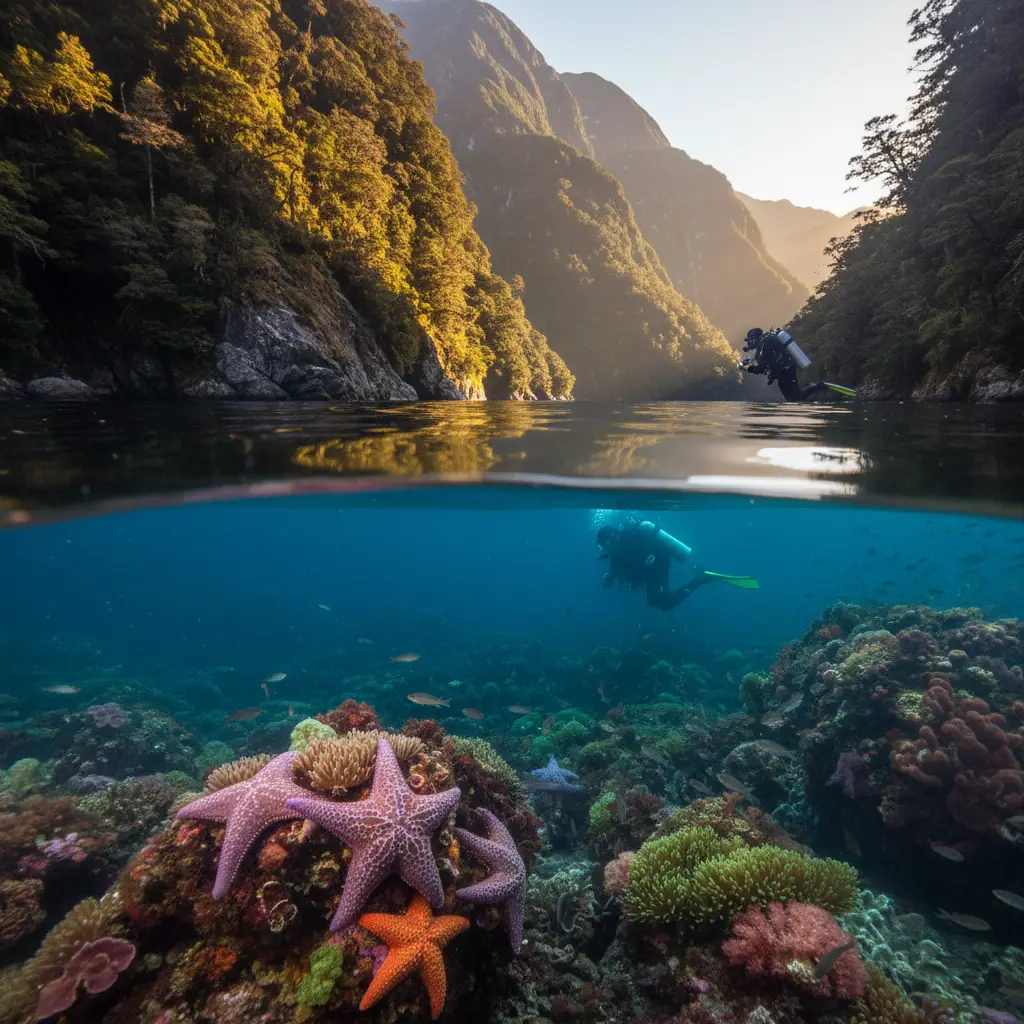
Fiordland receives immense rainfall—up to 8 meters (26 feet) annually in some areas. This rainwater percolates through the lush temperate rainforests clinging to the steep cliff sides. As it travels, it leaches tannins from rotting vegetation and leaf litter, turning the water a dark, tea-like brown. When this runoff hits the fiords, it does not immediately mix with the ocean water. Because freshwater is less dense than saltwater, it floats on the surface, forming a layer that can range from 5 centimeters to over 10 meters deep.
This tannin-stained layer acts as a natural pair of sunglasses for the marine environment below. It blocks significant amounts of sunlight, creating a twilight zone in relatively shallow depths. In open ocean conditions, light penetration regulates where photosynthetic plants can grow and where deep-water animals can survive. In Fiordland, the darkness mimics depths of over 100 meters at just 10 meters below the surface. This suppresses the growth of common light-loving seaweeds and allows shade-tolerant, deep-water invertebrates to colonize the vertical rock walls in the shallows.
Black Coral: Ancient Giants of the Shallows
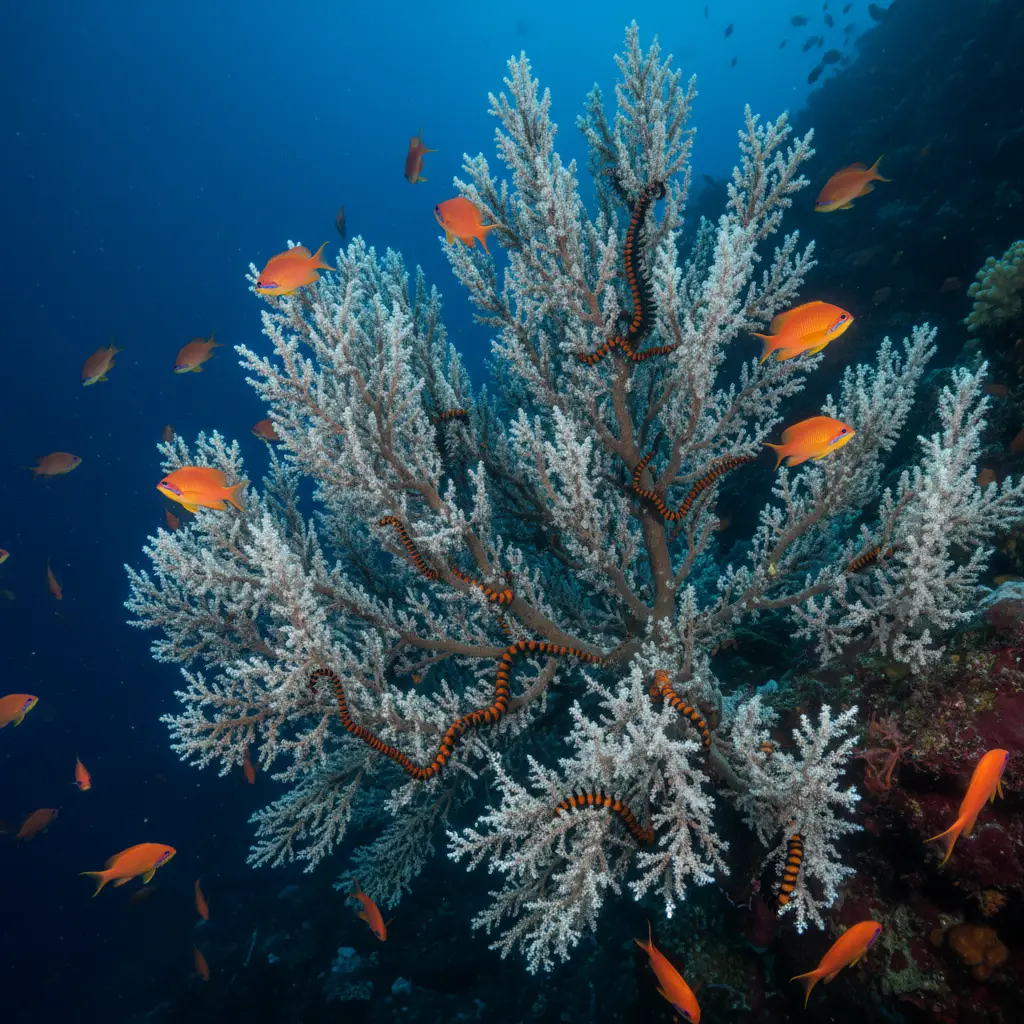
The most famous beneficiary of the low-light environment is the endemic Black Coral (Antipathes fiordensis). In most parts of the world, black coral is a deep-sea species found at depths exceeding 100 meters, accessible only to technical divers or submersibles. In Fiordland, however, these magnificent trees can be viewed by recreational divers and sometimes even snorkelers at depths as shallow as 10 meters.
Why is Black Coral White?
Despite the name, living black coral colonies appear distinctively white or grey. This is due to the fleshy living tissue (polyps) that covers the skeleton. It is only the hard, internal skeleton that is jet black. These colonies are fragile and slow-growing, adding only a fraction of a millimeter in girth per year. Some of the larger “trees” found in the fiords are estimated to be over 300 years old, making them older than the European colonization of New Zealand.
The structure of the black coral provides a crucial habitat for a symbiotic ecosystem. Snake stars (a type of brittle star) are often found wound tightly around the branches. They act as cleaners, consuming debris that settles on the coral, while the coral provides them with an elevated platform to filter feed in the current. This relationship highlights the interconnectedness of Fiordland biodiversity and why damage to a single coral tree can disrupt a micro-ecosystem.
Bottlenose Dolphins and Marine Mammals
While the invertebrate life on the rock walls is spectacular, the megafauna of Fiordland draws significant attention. The fiords are home to three distinct populations of Bottlenose Dolphins (Tursiops truncatus), residing in Doubtful Sound, Dusky Sound, and the northern fiords.
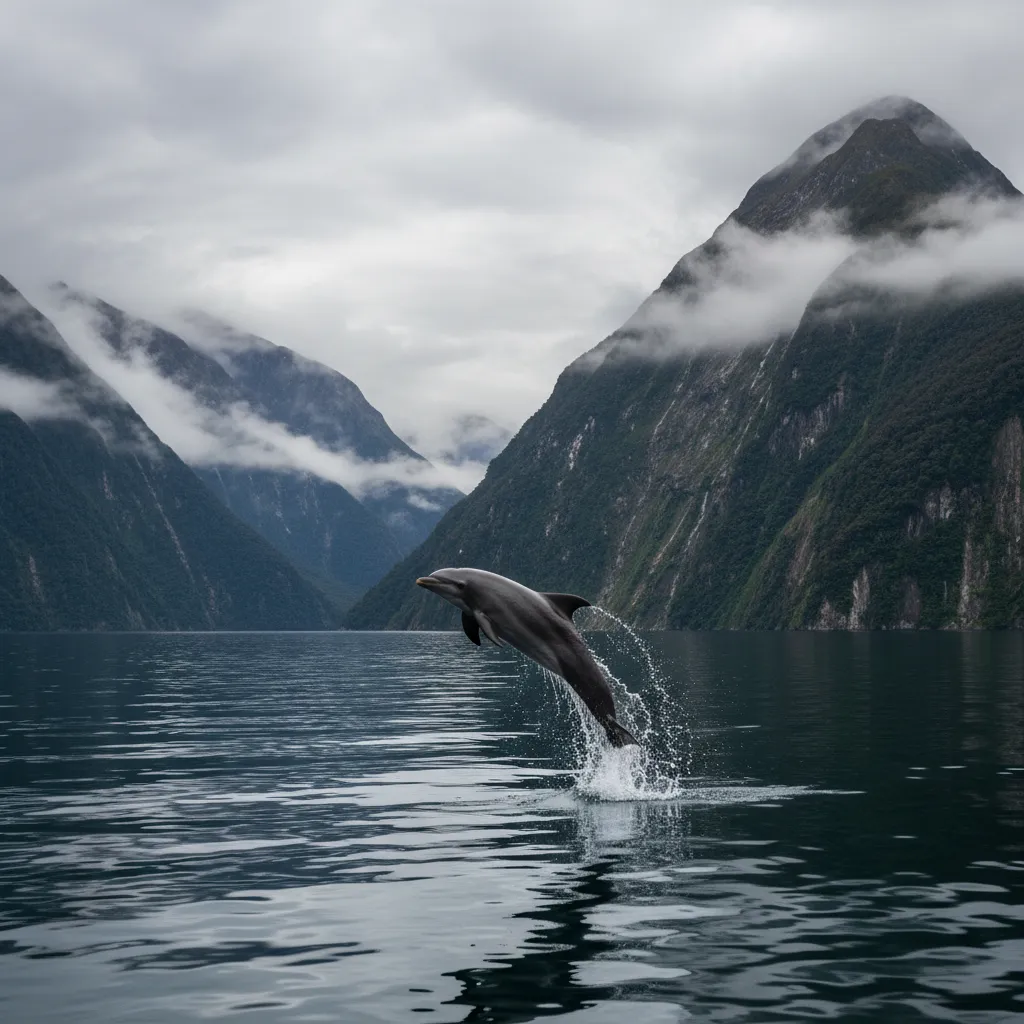
These dolphins are physically larger than their open-ocean counterparts, an adaptation to the colder water temperatures. They are also unique in that they live at the absolute southern limit of the species’ range. The population in Doubtful Sound is critically small and has been the subject of intense conservation efforts. Researchers have noted that calf survival rates are a concern, likely due to a combination of cold water stress and human impacts.
The Kekeno (New Zealand Fur Seal)
New Zealand Fur Seals are abundant throughout the fiords. Unlike the dolphins, their populations are recovering well from the sealing era of the 19th century. They can often be seen sunning themselves on rocks at the entrance to the fiords, where the swell is higher. The interaction between the marine layer and the seals is fascinating; seals will often dive below the freshwater layer to hunt, as the saltwater layer is richer in prey species.
Fiordland Crested Penguin (Tawaki)
One of the world’s rarest penguins, the Tawaki, nests in the rainforests of Fiordland. It is one of the few penguin species that thrives in a forest environment. They are seasonal visitors to the marine environment, heading out to sea to feed but returning to the steep, rocky shores to breed. Seeing a Tawaki is a rare privilege, and regenerative tourism operators emphasize strict distance protocols to ensure these shy birds are not disturbed.
China Shops: Fragile Marine Zones
The term “China Shops” was coined by marine researchers to describe specific, highly sensitive areas within the fiords that contain an exceptional density of fragile marine life. Just as a bull in a china shop would cause destruction, a careless anchor or an erratic diver’s fin can obliterate centuries of growth in seconds.
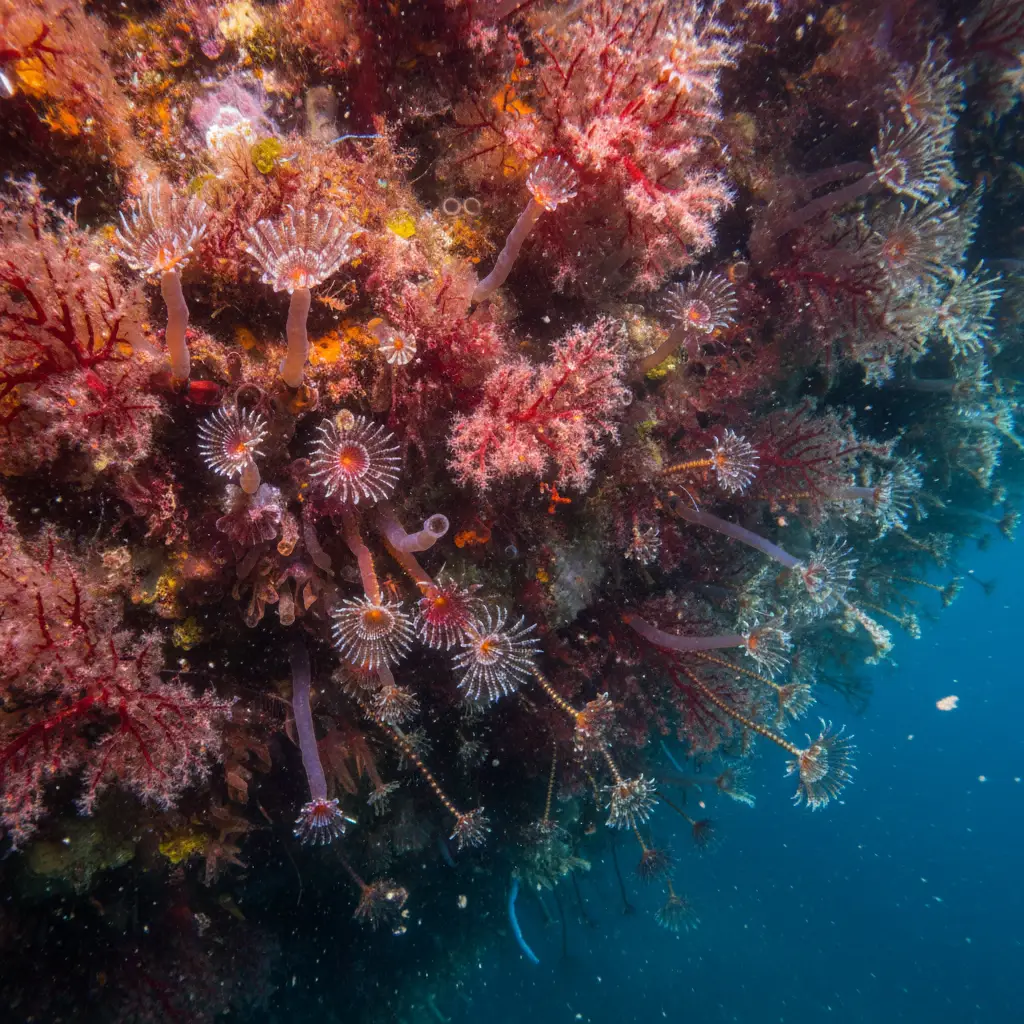
These zones are often located in areas with moderate currents that bring nutrients to suspension feeders like sea pens, tube worms, and soft corals. However, because these species evolved in a low-energy environment protected by the fiords’ geography, they lack the structural robustness of open-ocean species. A single impact can shatter a coral skeleton that took 200 years to grow.
Protection and Management
Recognizing this fragility, the Fiordland Marine Guardians—a group comprising commercial fishers, recreational users, mana whenua (indigenous people), and scientists—have been instrumental in establishing marine reserves and protection zones. In “China Shop” areas, anchoring is often strictly prohibited to prevent the heavy chains from scouring the seafloor. Instead, permanent moorings are provided, or vessels are required to drift.
Regenerative Tourism and Biosecurity
In late 2024 and moving into 2025, the conversation has shifted from “sustainable tourism” to “regenerative tourism.” It is no longer enough to simply minimize harm; visitors and operators aim to leave the environment better than they found it. In Fiordland, this manifests primarily through biosecurity and citizen science.
The Threat of Invasive Species
The isolation of Fiordland’s marine biodiversity makes it highly susceptible to invasive pests. The greatest current threat comes from exotic seaweeds like Undaria pinnatifida and potentially Exotic Caulerpa, which has caused issues in northern New Zealand. These fast-growing weeds can outcompete native species and disrupt the delicate light balance established by the tannin layer.
Regenerative tourism operators are now active participants in surveillance. Dive charters often include hull inspections and gear cleaning protocols that exceed government requirements. Tourists are educated on how to identify invasive pests and are encouraged to report sightings. This “all eyes on the water” approach effectively turns every visitor into a marine guardian.
Supporting Research
Many high-end expeditions now allocate a portion of ticket prices to the Fiordland Marine Guardians or specific research projects, such as dolphin population monitoring. By choosing these operators, visitors directly fund the science required to protect this ecosystem. This economic model ensures that tourism remains a tool for conservation rather than a drain on resources.
Frequently Asked Questions
Why is the water in Fiordland dark?
The water appears dark due to a surface layer of freshwater stained with tannins (organic matter) from forest runoff. This layer absorbs sunlight, reducing visibility in the top few meters and creating dark conditions below that mimic the deep ocean.
Can you see black coral in Fiordland without diving?
Yes, in some areas. Because black coral grows as shallow as 10 meters (33 feet) due to the low light conditions, it can sometimes be viewed by snorkelers or via underwater observatories, such as the one in Milford Sound.
Are there sharks in Fiordland sounds?
Yes, several shark species inhabit the fiords, including Sevengill sharks and Spiny Dogfish. Great White Sharks are rare visitors but generally stay in the open ocean rather than entering the deep fiords.
What is the best time of year to see Fiordland biodiversity?
The summer months (December to March) offer the warmest weather and best chances for spotting dolphins and penguins. However, winter offers calmer water for diving, though the water temperature is significantly colder.
What is a “China Shop” in marine terms?
A “China Shop” refers to a designated area within the fiords containing extremely fragile marine life, such as sea pens and red coral. These areas are identified for special protection to prevent damage from anchors and diving equipment.
How can tourists help protect Fiordland’s marine life?
Tourists can practice regenerative tourism by choosing eco-certified operators, strictly following biosecurity cleaning rules (Check, Clean, Dry) for gear, avoiding single-use plastics, and adhering to “no-take” rules in marine reserves.