Aurora Australis viewing NZ offers some of the world’s most spectacular celestial displays, primarily visible from the lower South Island’s dark sky sanctuaries. The best viewing opportunities occur during the winter months of March through September in locations like Stewart Island, Lake Tekapo, and The Catlins, requiring clear skies, minimal light pollution, and high geomagnetic activity.
New Zealand is uniquely positioned as one of the premier destinations globally for witnessing the Aurora Australis, or Southern Lights. Unlike its northern counterpart, the Aurora Borealis, the Southern Lights shine over the vast, unpopulated Southern Ocean, often making the chase a solitary and deeply spiritual experience in nature. For eco-tourists and astrophotography enthusiasts, the quest for the “Lady of the South” is more than just a visual spectacle; it is a journey into the pristine night environments that New Zealand aggressively protects.
Where are the Best Locations for Aurora Australis Viewing in NZ?
To successfully view the aurora, you must prioritize latitude and darkness. The further south you go, the closer you are to the magnetic pole. However, latitude is useless if light pollution washes out the faint ionization of the atmosphere. The following locations represent the gold standard for aurora hunting in Aotearoa.
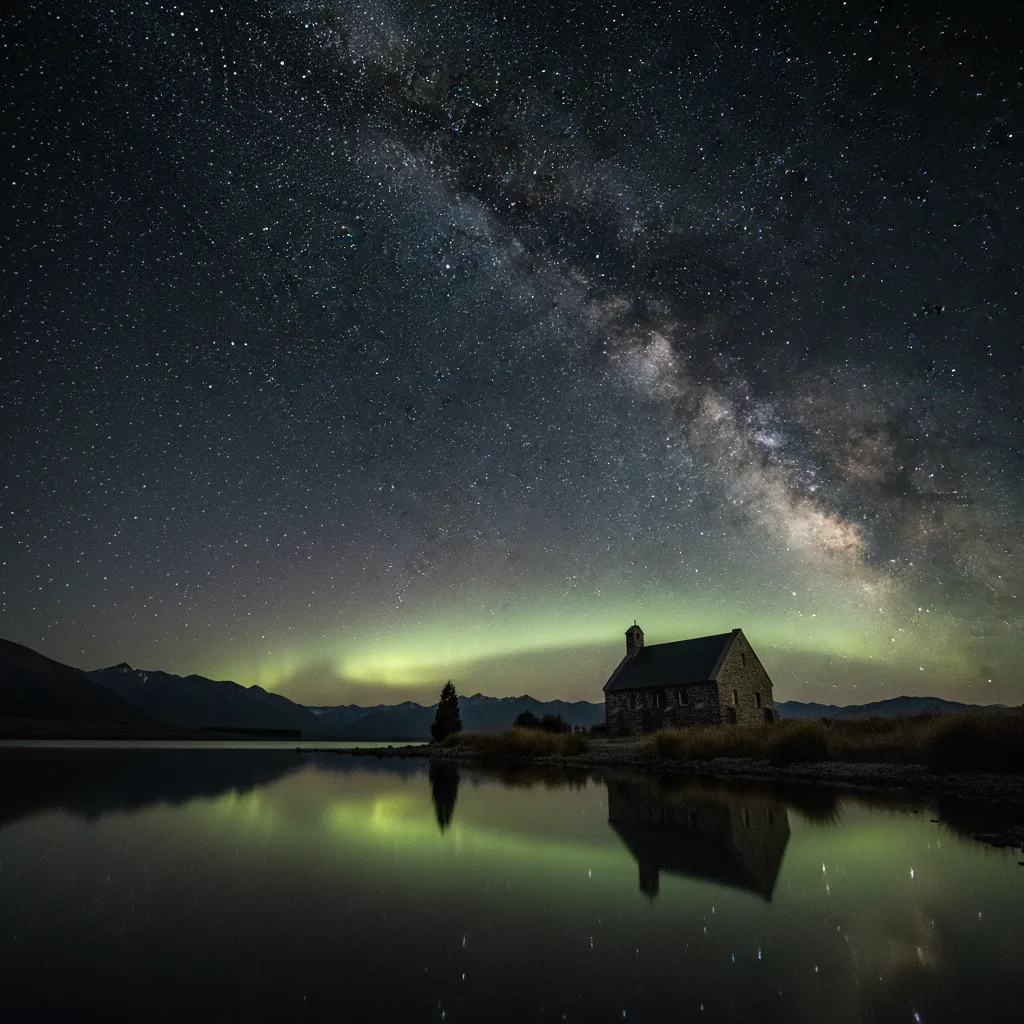
Stewart Island (Rakiura)
Rakiura, which translates from Māori as “The Land of Glowing Skies,” is arguably the best location in New Zealand for aurora australis viewing. As an accredited International Dark Sky Sanctuary, light pollution is virtually non-existent here. Sitting at 47 degrees south, it offers the closest land-based vantage point to the Antarctic Circle outside of scientific bases.
Top Spot: Observation Rock in Oban offers a clear, elevated view to the south. Because the population is so sparse, you can often see the lights from your accommodation’s balcony.
The Catlins, Southland
The Catlins is a rugged stretch of coast bridging Southland and Otago. It is famous for its wild weather, distinct geology, and complete lack of urban development. The southern horizon here looks straight out to Antarctica with zero light interference.
Top Spot: Nugget Point Lighthouse (Tokatā). The composition of the historic lighthouse silhouetted against a dancing curtain of pink and green light is the holy grail for landscape photographers. Waipapa Point is another excellent, low-elevation coastal spot.
Aoraki Mackenzie International Dark Sky Reserve
While slightly further north than Southland, the Mackenzie Basin (including Lake Tekapo, Twizel, and Mt Cook) compensates with some of the clearest, most stable atmospheric conditions in the world. The region is strictly regulated to minimize light spill, ensuring the night sky retains its ink-black quality.
Top Spot: The shores of Lake Tekapo, specifically near the Church of the Good Shepherd, provide a stunning foreground. However, for a more secluded experience, drive to the remote roads around Lake Pukaki.
Queenstown and Wanaka
While Queenstown itself suffers from light pollution due to its tourism infrastructure, a short drive out of town opens up incredible possibilities. The mountainous terrain can sometimes block the horizon, so elevation is key.
Top Spot: The Crown Range Road between Queenstown and Wanaka offers high-altitude pull-offs. Alternatively, Moke Lake (just outside Queenstown) is sheltered from city lights and offers calm waters for reflections.
When is the Best Time to See the Southern Lights?
Unlike a scheduled tourist attraction, the aurora is a natural phenomenon dependent on solar wind interactions with Earth’s magnetic field. However, you can significantly increase your odds by timing your trip correctly.
The Winter Season (March to September)
Technically, the aurora happens year-round. However, during the New Zealand summer, the sun sets late (around 10:00 PM) and rises early, leaving a very small window of true darkness. Aurora australis viewing nz is most successful during the winter months.
- March (Equinox): Historically, the equinoxes (March and September) are associated with the “Russell-McPherron effect,” where cracks in the Earth’s magnetic field allow more solar wind to enter, creating stronger auroras.
- June – July: These are the darkest months with the longest nights. You can start viewing as early as 6:00 PM. However, these are also the coldest months, so thermal layers are essential.
Moon Phase Matters
A full moon acts like a giant streetlamp in the sky. If the aurora is faint (which it often is to the naked eye), a full moon will wash it out completely. Always plan your aurora hunting trip around the New Moon phase, or times when the moon rises very late or sets very early.
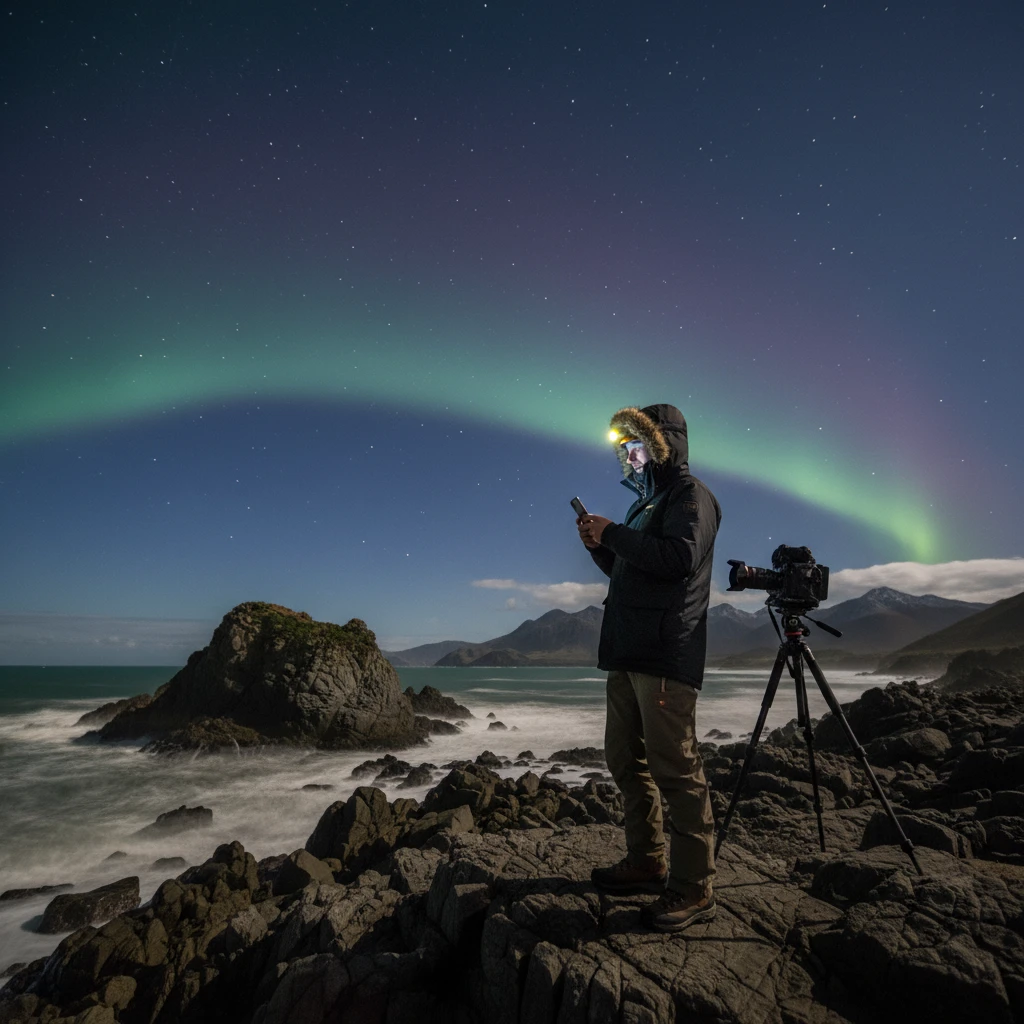
Understanding the Kp Index and Forecasting Apps
To avoid freezing on a beach for no reason, you must learn to read space weather data. The magnetic activity is measured by several metrics, but the Kp Index is the most common.
What is the Kp Index?
The Kp index measures geomagnetic activity on a scale of 0 to 9.
Kp 0-2: Low activity. Aurora might be visible photographically but unlikely to be seen with the naked eye unless you are extremely far south (like Stewart Island).
Kp 3-4: Moderate storm. Visible beams and pillars may be seen on the horizon from Southland and Otago.
Kp 5-9: Geomagnetic Storm. This is the “main event.” The aurora will be high in the sky, colorful, and moving rapidly. It may be visible as far north as Christchurch or Wellington.
The “Bz” Factor
Advanced chasers look at the Bz reading. This indicates the direction of the Interplanetary Magnetic Field (IMF). For the solar wind to flow into our atmosphere and create lights, the Bz needs to be negative (Southward). If the Kp is 5 but the Bz is positive (Northward), you likely won’t see anything.
Essential Apps
Do not rely on general weather apps. Download these specific tools:
- Aurora Reach: Provides real-time notifications and crowd-sourced sightings.
- Glendale App: A favorite among NZ locals for its precise data graphs relevant to the Southern Hemisphere.
- SpaceWeatherLive: Offers deep data on solar flares and coronal mass ejections (CMEs).
How to Photograph the Aurora Australis
Often, the camera sees what the eye cannot. The human eye struggles to see color in low light, often perceiving the aurora as a white or grey shifting cloud. The camera sensor, however, can accumulate light over time to reveal vibrant pinks (nitrogen) and greens (oxygen).
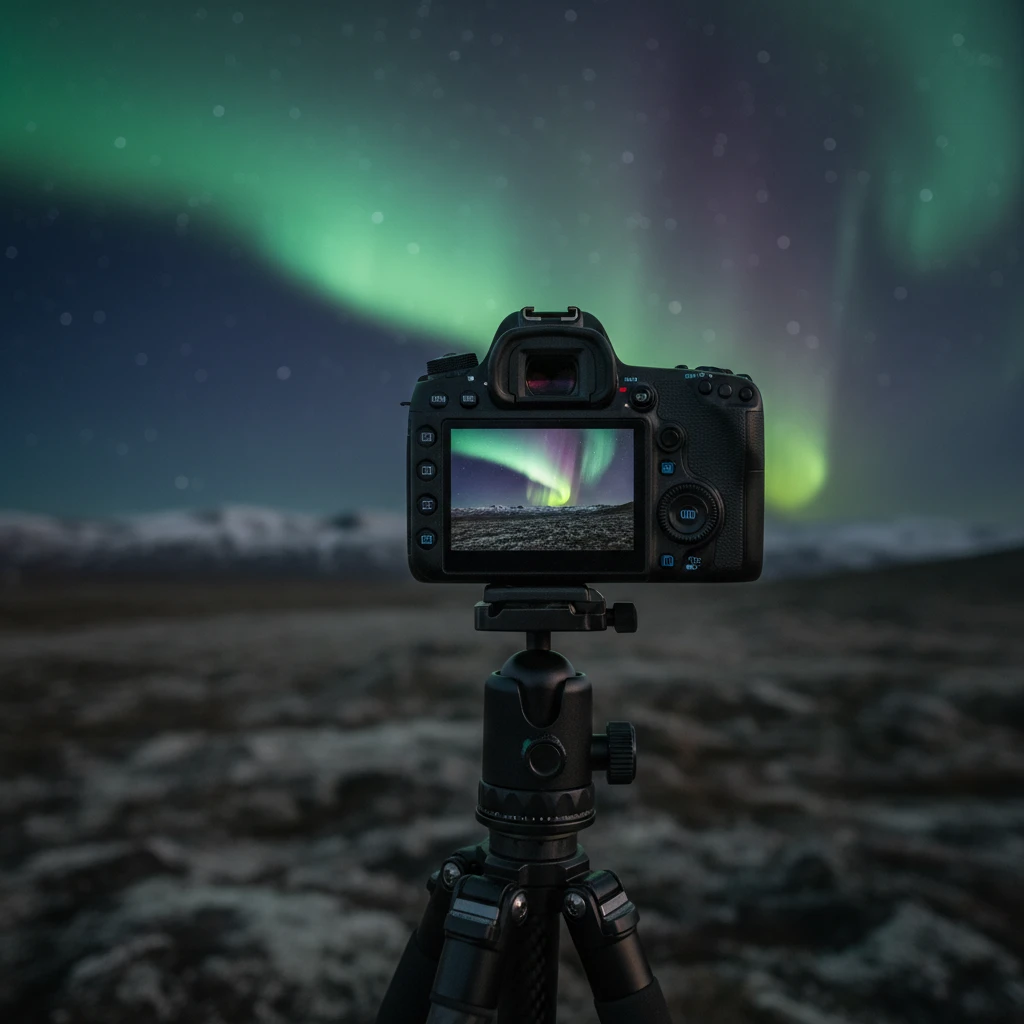
Recommended Gear
- Tripod: Non-negotiable. You will be shooting exposures lasting 10 to 30 seconds. Handholding is impossible.
- Fast Wide-Angle Lens: You want a lens with an aperture of f/2.8 or lower (f/1.8 is ideal). A wide focal length (14mm to 24mm) captures the expansive landscape.
- Remote Shutter/Intervalometer: To prevent camera shake when pressing the button.
Camera Settings Cheat Sheet
Switch your camera to Manual (M) mode and use these baseline settings:
- Focus: Manual Focus. Set to infinity (∞). Test this during the day or on a bright star using Live View zoom. If your focus is off, the stars will look like blobs.
- Aperture: The widest possible (lowest number, e.g., f/2.8).
- ISO: Start at ISO 1600. If the image is too dark, push to 3200 or 6400. Higher ISO introduces “noise” (grain), so find the balance for your specific camera.
- Shutter Speed: 10 to 20 seconds. If the aurora is moving very fast, a shorter shutter speed (5-8 seconds) helps retain the detail in the “pillars” rather than blurring them into a wash of color. If the aurora is static, you can go up to 25 seconds.
- White Balance: Set manually to Kelvin 3500K – 4000K. Auto White Balance often makes the night sky look too orange or blue.
Dark Sky Conservation and Eco-Tourism Etiquette
New Zealand is a leader in the Dark Sky movement. As an eco-tourist, it is your responsibility to help preserve these environments. Light pollution is an encroaching threat that erases our connection to the cosmos.
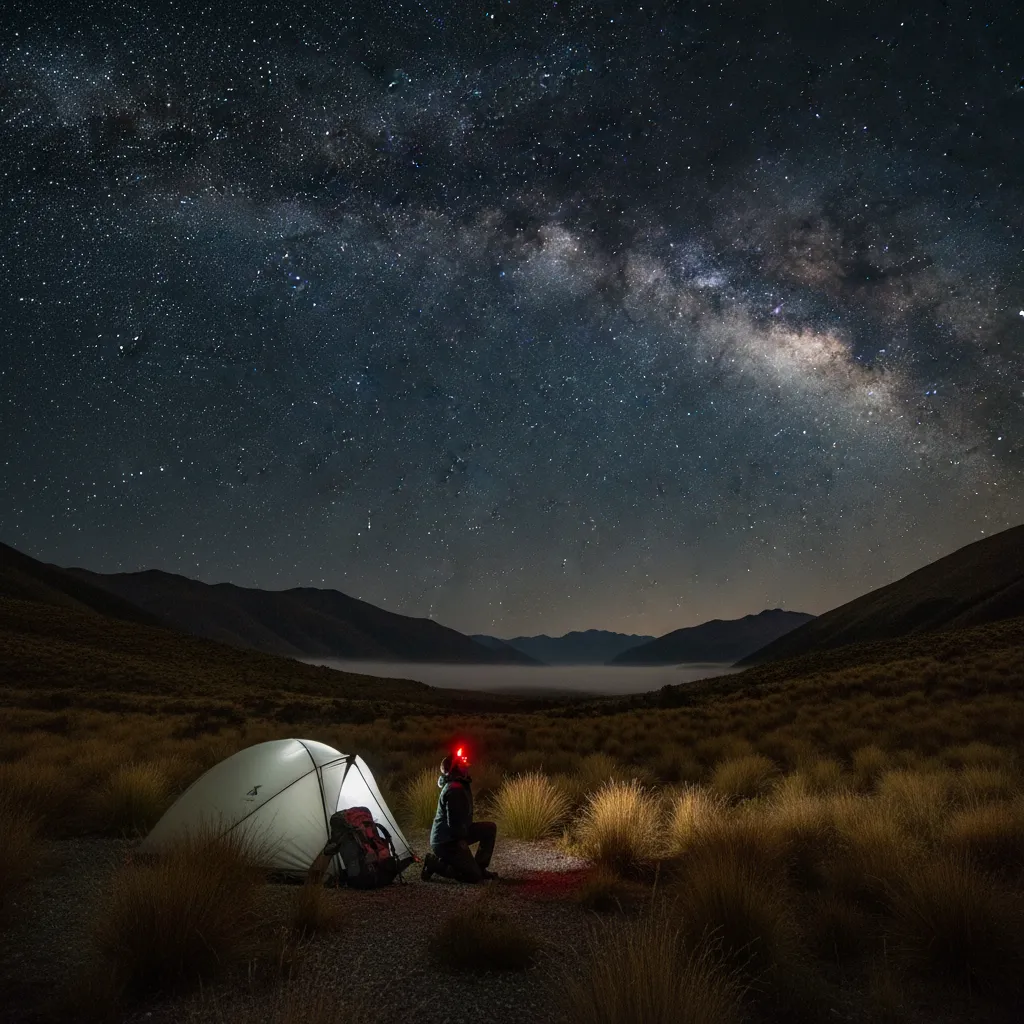
Respect the Dark
When arriving at a viewing location (like a car park at Nugget Point), turn your headlights off immediately. Use parking lights only if moving. Bright headlights ruin the night vision of other photographers and stargazers, which takes 20 minutes to regenerate.
Red Light Only
Use a headlamp with a red light mode. Red light does not affect human night vision or interfere with long-exposure photography as aggressively as white light.
Leave No Trace
Many of the best viewing spots are in conservation estates or near wildlife habitats (such as penguin colonies in Oamaru or The Catlins). Do not disturb wildlife, take all rubbish with you, and stick to formed paths to protect fragile native vegetation.
Frequently Asked Questions
Can you see the Aurora Australis with the naked eye?
Yes, but it depends on the intensity. During a strong storm (Kp 5+), you can see beams of light dancing and shifting. However, the colors are much fainter to the eye than in photos. To the naked eye, it often appears as white or grey moving beams, with subtle hints of green or pink only visible during intense activity.
Is 2024 a good year for Aurora Australis viewing?
Yes, 2024 and 2025 are excellent years. We are currently near the “Solar Maximum,” the peak of the sun’s 11-year solar cycle. This means increased solar flares and sunspots, leading to more frequent and intense aurora displays compared to previous years.
What is the difference between Aurora Borealis and Aurora Australis?
Scientifically, they are mirror images of the same phenomenon occurring simultaneously at both poles. The main difference is accessibility. The Aurora Borealis (North) is viewed over land masses (Norway, Canada), while the Aurora Australis (South) is mostly viewed over the Southern Ocean, making New Zealand one of the few accessible land-based viewing points.
How far north in NZ can you see the aurora?
While Southland and Otago are the primary viewing regions, during extreme geomagnetic storms (G4 or G5 class), the aurora has been photographed as far north as Auckland and Northland, though this is rare. Wellington and the Wairarapa coast occasionally get views during strong events.
Do I need a tour guide to see the Southern Lights?
No, you can self-drive to these locations. However, booking a tour with a local astrophotographer or astronomy guide can be beneficial. They know the micro-climates to avoid cloud cover, have access to private land, and can teach you how to use your camera effectively.
Why do my aurora photos look blurry?
Blurry photos are usually caused by two things: the camera moved during the long exposure, or the focus was missed. Ensure your tripod is sturdy (weigh it down if it’s windy) and double-check your manual focus is set precisely to infinity. Do not rely on autofocus in the dark.