Stewart Island ferry tickets are purchased primarily through RealNZ, the sole operator of the catamaran service crossing the Foveaux Strait. The ferry departs from Bluff and arrives in Oban (Halfmoon Bay) in approximately one hour. Travellers should book tickets in advance, particularly during the peak summer season, and must arrive 30 minutes prior to departure for luggage check-in and biosecurity screening.
How to Book Stewart Island Ferry Tickets
Securing your passage to Rakiura National Park is the first step in your eco-tourism adventure. Unlike other ferry services in New Zealand that may have multiple operators, the Stewart Island ferry is exclusively operated by RealNZ. This monopoly ensures consistent service standards but also means that capacity is finite, and alternative sea routes do not exist.
For independent travellers, the most efficient method to secure Stewart Island ferry tickets is via the official RealNZ website. Online booking allows you to view real-time availability, select your preferred sailing time, and add extras such as vehicle transfers to the terminal or connecting bus services from Invercargill.
While tickets can be purchased at the Bluff Visitor Terminal on the day of travel, this is highly risky during the peak season (October to April). The catamarans have a strict passenger limit, and flights to the island are weather-dependent and significantly more expensive. Therefore, pre-booking is essential for peace of mind.
Pricing, Tiers, and Cancellation Policies
Ticket pricing is generally fixed, though seasonal variations can occur. Standard adult fares typically hover around the NZD 95-100 mark for a one-way trip, with return tickets offering no significant discount over two singles. It is crucial to check for “Dynamic Pricing” or special deals during the shoulder season (May to September).
Fare Types:
- Adult: Standard seating in the main cabin.
- Child: Discounted rates for ages 5-14. Infants (0-4) often travel free but must still have a booked ticket for headcount purposes.
- Premium/Lounge: Some sailings offer a VIP upgrade which includes priority boarding and complimentary tea/coffee, though the short duration of the trip makes this a luxury rather than a necessity.
Cancellation Policy: Given the unpredictable nature of the Foveaux Strait, understanding the cancellation policy is vital. Generally, tickets are fully refundable if the operator cancels due to weather. If you change your plans, amendments are usually free up to 24 hours before departure, but always read the fine print regarding refunds.
Bluff Ferry Crossing Times & Schedules
The schedule for the Stewart Island ferry changes based on the season, catering to the influx of hikers and tourists during the warmer months and scaling back during the winter.
Summer Schedule (October – April):
During the peak season, there are typically three to four scheduled departures daily from both Bluff and Stewart Island.
Typical Bluff Departures: 9:45 AM, 1:00 PM, 4:30 PM (and occasionally 8:00 AM or 5:15 PM during height of summer).
Typical Oban Departures: 8:00 AM, 11:00 AM, 3:30 PM.
Winter Schedule (May – September):
Frequency reduces to two or three daily crossings to accommodate the lower visitor numbers and shorter daylight hours.
Typical Bluff Departures: 9:45 AM, 4:30 PM.
Typical Oban Departures: 8:00 AM, 3:00 PM.
The crossing takes approximately one hour. However, this is weather-dependent. In rough conditions, the skipper may reduce speed for passenger comfort, extending the trip to 1 hour and 15 minutes.
Getting to Bluff and Parking Your Vehicle
Bluff is located at the very bottom of the South Island, a 25-minute drive south of Invercargill. Since the ferry is a passenger-only service (no vehicles), you must leave your car on the mainland. This is a major logistical consideration for campers and road-trippers.
Parking Your Vehicle in Bluff
You have two primary options for parking: secure paid parking and unsecured free parking.
1. Secure Parking (Recommended):
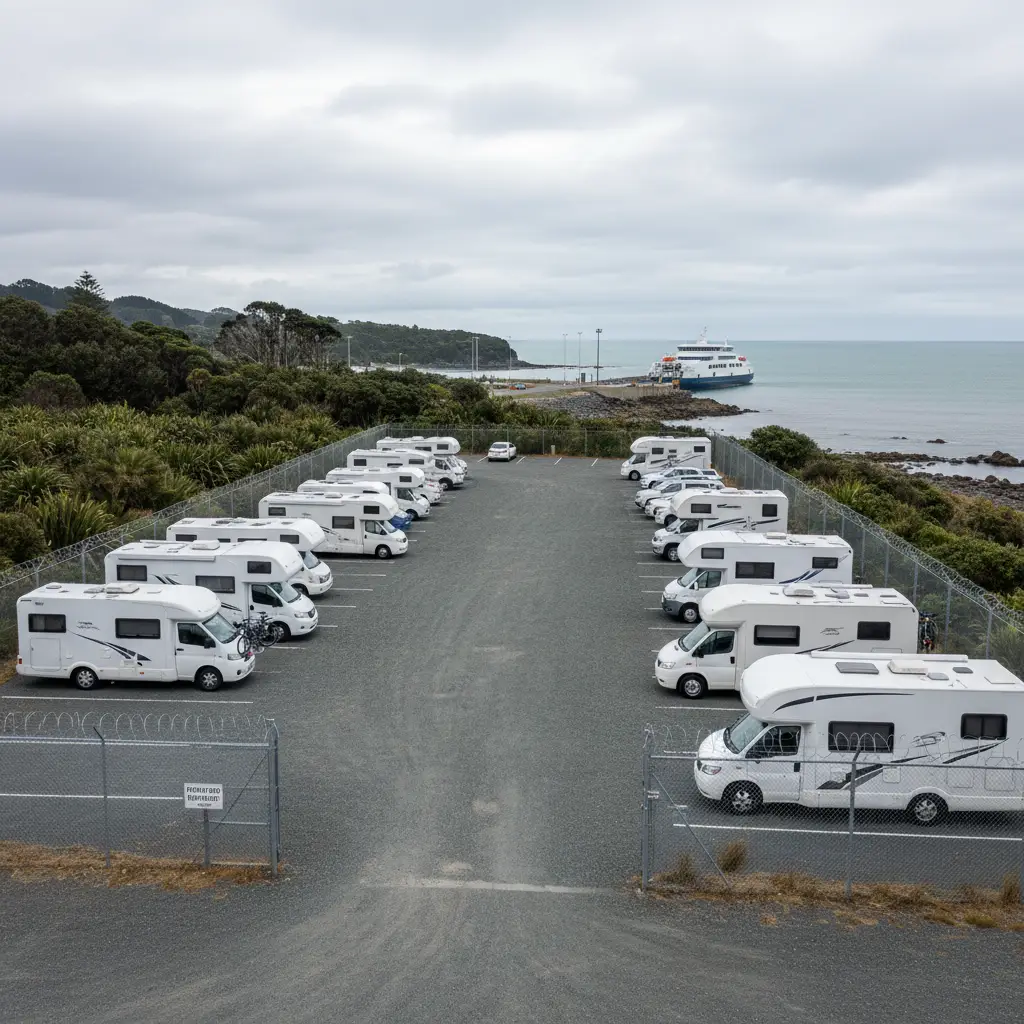
Adjacent to the Bluff Visitor Terminal, there is a dedicated long-term parking facility. This requires a fee (usually around NZD 15-20 per day). It is fenced and monitored, providing peace of mind for those leaving rental cars or campervans behind for several days while hiking the Rakiura Track. You can often book this parking simultaneously with your ferry tickets.
2. Free Street Parking:
There is free parking available on the streets surrounding the ferry terminal. However, this is unsecured public parking. While Bluff is generally a safe community, leaving a vehicle unattended for multiple days with valuables inside is a risk. If you choose this option, ensure absolutely no luggage or valuables are visible.
Luggage Allowances for Campers and Hikers
Because Stewart Island is a haven for outdoor enthusiasts, the ferry operator is accustomed to passengers carrying heavy trekking equipment. However, there are strict limits to ensure vessel stability and crew safety.
Carry-on Luggage:
Passengers are allowed one small piece of carry-on luggage, similar to airline restrictions. This should contain your valuables, medication, and camera gear. It must fit under your seat or in the overhead racks.
Checked Luggage:
The standard allowance is generally two bags per person, with a maximum weight of 23kg per bag (similar to international economy flights).
Important for Campers: If you are bringing chilly bins (coolers), hiking packs, or storage boxes, these count towards your checked allowance. Extra freight can be arranged for a fee, but it must be booked in advance.
Prohibited Items:
Dangerous goods regulations apply. You cannot carry fuel canisters (gas bottles) in your checked luggage unless they are brand new and purged, or stored in designated dangerous goods containers provided by the operator. It is often easier to buy gas canisters at the glowing sky store or Four Square in Oban upon arrival.
Biosecurity: Protecting Rakiura
Stewart Island is a sanctuary for native birdlife, including the Kiwi, Kākā, and various penguins. It is pest-free in many areas, and the Department of Conservation (DOC) works hard to keep it that way. Before boarding the ferry, you will undergo a biosecurity check.
The Check Process:
Staff will ask you to inspect your gear. You must ensure:
- Footwear: Boots are scrubbed clean of soil and seeds.
- Camping Gear: Tents and pegs are free of dirt and insects.
- Bags: No rodents or pests are hiding in open pockets.
- Food: All food must be sealed in rodent-proof containers (hard plastic tubs), not just plastic bags.
Failure to comply can result in being denied boarding or having items confiscated. This is not just bureaucracy; it is essential conservation work.

Surviving the Foveaux Strait: Seasickness Tips
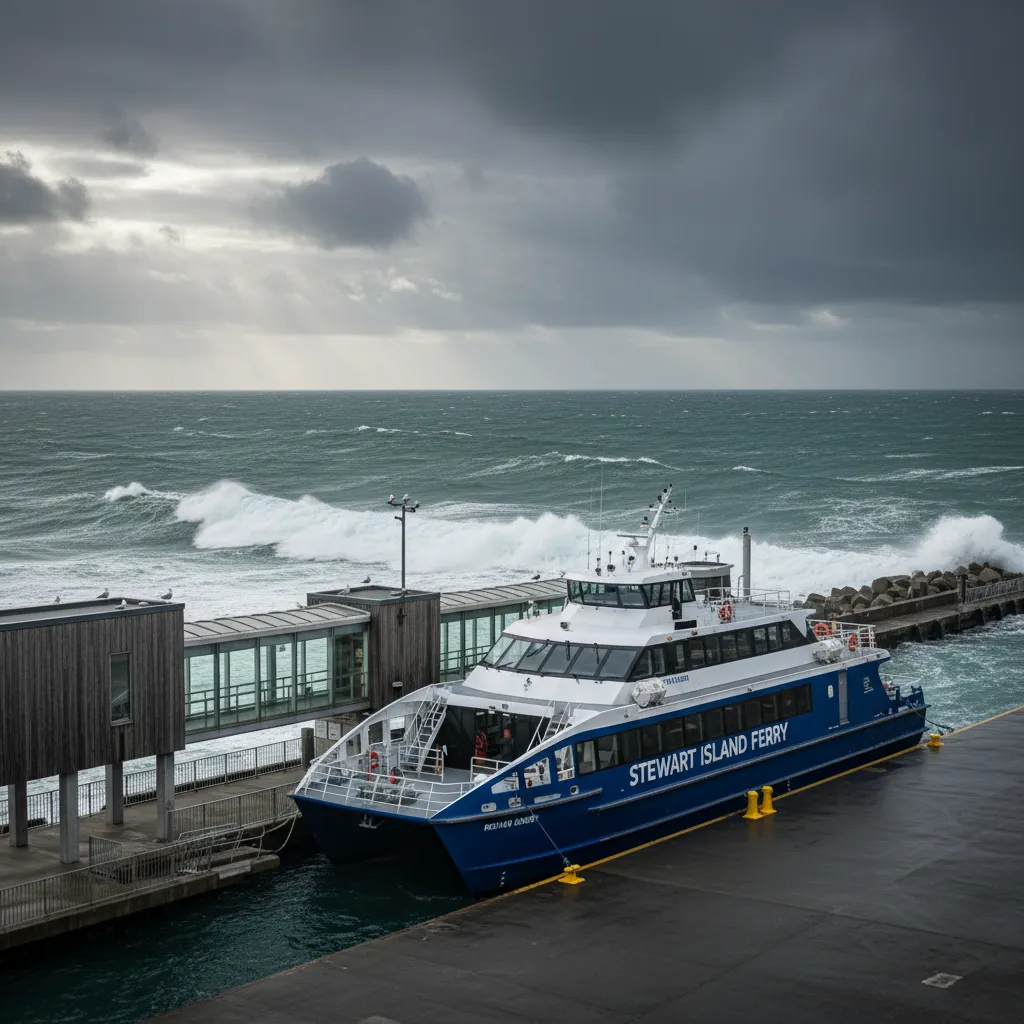
The stretch of water between the South Island and Stewart Island is known as the Foveaux Strait. It sits squarely in the “Roaring Forties” latitude, meaning strong westerly winds and large swells are common. Even seasoned sailors can find this crossing challenging.
Is the crossing rough?
Frequently, yes. While the catamarans are designed for stability, cutting through the waves rather than riding over them, the motion can still be significant. If the swell exceeds safety limits, sailings will be cancelled, but sailings often proceed in 3-4 meter swells.
How to Prevent Seasickness
If you are prone to motion sickness, preparation is key:
- Medication: Take seasickness tablets (like Sea-Legs) at least 30 to 60 minutes before the ferry departs. Taking them once you feel sick is usually too late.
- Positioning: Sit in the lower cabin, towards the rear and center of the boat. This area experiences the least amount of pitch and roll. Avoid the front of the boat where the vertical movement is most violent.
- Horizon: If possible, look out the window at the horizon. However, on very rough days, spray may obscure the view.
- Fresh Air: If the weather permits and the crew allows it, standing on the back deck in the fresh air can help alleviate nausea, though you will get wet and cold.
Arrival in Oban and Transfers
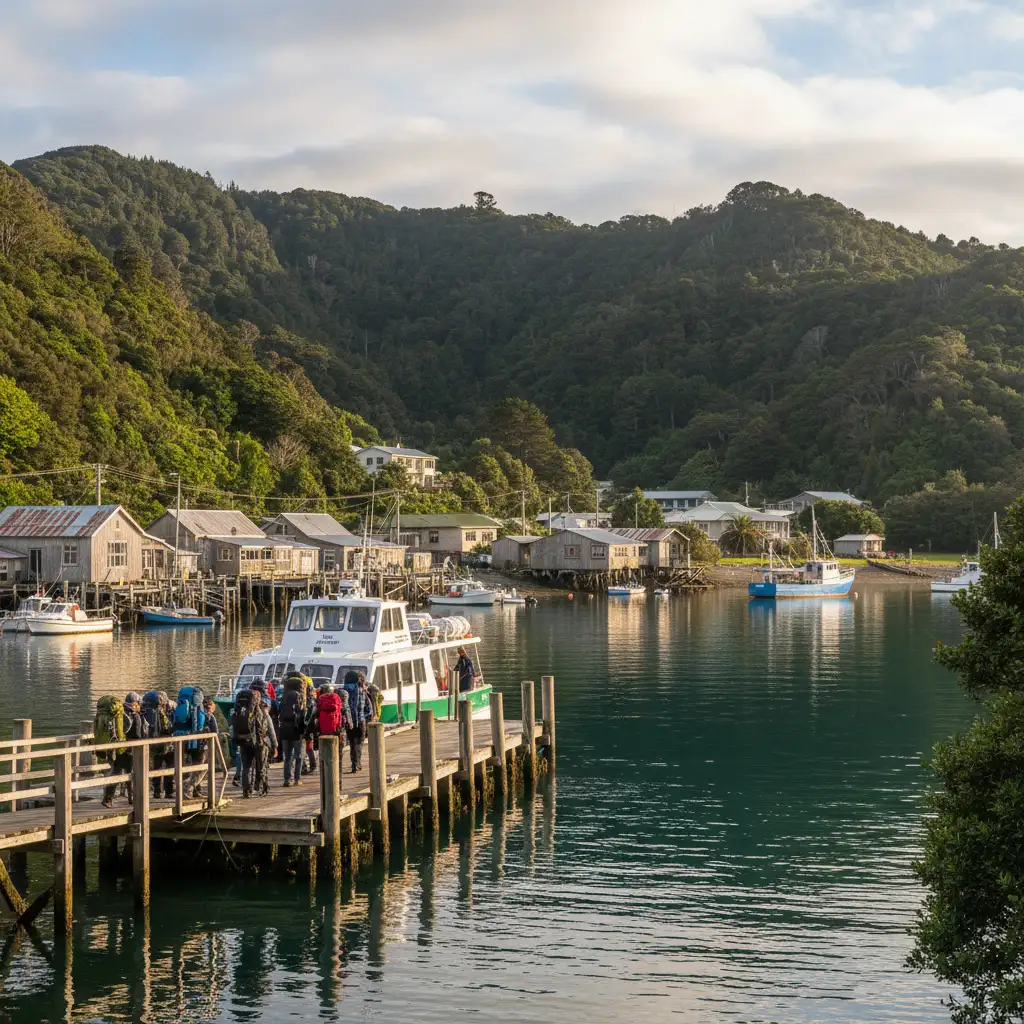
The ferry docks at the Oban wharf in Halfmoon Bay. This is the only town on the island. Upon arrival, the process is generally chaotic but friendly.
Luggage Collection:
Crew will unload luggage into large bins or directly onto the wharf. Passengers must identify and collect their own bags. Ensure your bags are clearly tagged, as many hikers have identical-looking Osprey or Macpac packs.
Transfers:
Most accommodation providers on Stewart Island offer a courtesy shuttle service. Look for a driver holding a sign with your hotel or lodge name. If you are staying at the backpackers or a holiday home without a transfer, you can walk (Oban is small) or utilize the local taxi/shuttle service. Note that the terrain is hilly, so dragging a 23kg suitcase to your accommodation might be strenuous.
People Also Ask
How long is the ferry ride to Stewart Island?
The ferry ride from Bluff to Oban typically takes one hour. However, adverse weather conditions or rough seas can extend this travel time to approximately 1 hour and 15 minutes as the captain may need to reduce speed for safety and passenger comfort.
Can I take my car on the Stewart Island ferry?
No, the RealNZ ferry service to Stewart Island is for passengers and light freight only. There is no vehicle ferry service across the Foveaux Strait. Visitors must park their vehicles in Bluff and rent a car, scooter, or e-bike upon arrival in Oban if transport is needed.
Is the ferry to Stewart Island rough?
The Foveaux Strait is notorious for rough water due to its location in the Roaring Forties. While the catamarans are stable, significant swells are common. Passengers prone to seasickness should take medication 30 minutes prior to departure and sit in the rear of the vessel.
Do I need to book Stewart Island ferry tickets in advance?
Yes, booking in advance is highly recommended, especially during the peak summer season (December to February) and holiday weekends. The ferries have limited seating capacity, and flights are significantly more expensive, so missing a ferry can disrupt travel plans significantly.
What is the luggage allowance for the Stewart Island ferry?
Passengers are generally allowed two checked bags (up to 23kg each) and one small carry-on item. Extra luggage, such as large chilly bins or camping equipment, may incur an additional freight fee and should be declared at the time of booking.
Where do I park my car when going to Stewart Island?
You can park your vehicle at the secure parking facility adjacent to the Bluff Visitor Terminal for a daily fee. Alternatively, free street parking is available in Bluff, but this is unsecured and at the owner’s risk. For multi-day trips, the secure lot is recommended.