What Defines Orokonui Ecosanctuary Biodiversity?
Orokonui Ecosanctuary is a 307-hectare biodiversity haven near Dunedin, New Zealand, protecting a rare cloud forest ecosystem. It functions as a mainland island, utilizing a predator-proof fence to safeguard threatened native species such as the Haast Tokoeka kiwi, Kākā, and Tuatara, allowing them to thrive in a pre-human natural state.
The Cloud Forest Ecosystem Explained
The Orokonui Ecosanctuary represents one of the few remaining examples of a coastal cloud forest in the southern South Island of New Zealand. Unlike typical lowland forests, the cloud forest ecosystem at Orokonui is defined by its altitude and its constant interaction with moisture-laden mists rolling in from the Pacific Ocean. This unique climatic condition fosters an environment where mosses, lichens, and ferns proliferate, creating a dense, verdant understory that is critical for invertebrate life.
The biodiversity here is stratified. The canopy is dominated by ancient podocarps, including Rimu and Miro, which provide essential nesting sites and food sources for native birds. Beneath this upper tier lies a complex sub-canopy of tree ferns and broadleaf species like Kamahi. The high humidity levels maintained by the cloud cover ensure that the forest floor remains damp, a prerequisite for the decomposition processes that fuel the nutrient cycle of the sanctuary. This density of vegetation acts as a carbon sink and a water catchment area, playing a vital role in the local ecological stability of the Otago Peninsula region.

Engineering Conservation: The Predator-Proof Fence
The survival of the Orokonui Ecosanctuary biodiversity hinges entirely on a feat of modern conservation engineering: the 8.7-kilometer predator-proof fence. This structure is not merely a boundary; it is a biosecurity shield. Standing approximately two meters high, the fence features a fine stainless steel mesh skirt that extends underground to prevent burrowing animals like rabbits and stoats from entering. A curved top hood prevents climbing pests, such as possums and feral cats, from scaling the perimeter.
Maintaining this fence is a rigorous, daily operation. Staff and volunteers patrol the perimeter to check for breaches caused by falling branches or weather events. The integrity of this barrier is what allows species that have been extinct on the mainland for over a century to be reintroduced successfully. Without this exclusion zone, the slow-breeding native birds and reptiles would be decimated by introduced mammalian predators within weeks.
Key Species: Exploring Orokonui Ecosanctuary Biodiversity
When visitors step through the double-gated entry system, they are entering a time capsule. The sanctuary is home to a wide array of species that showcase the evolutionary distinctiveness of New Zealand’s wildlife. Because New Zealand evolved in isolation for millions of years, its fauna developed without mammalian predators, leading to unique adaptations such as flightlessness and ground-nesting habits.
Avian Residents
The cacophony of bird song in Orokonui is a testament to the success of the project. Key species include:
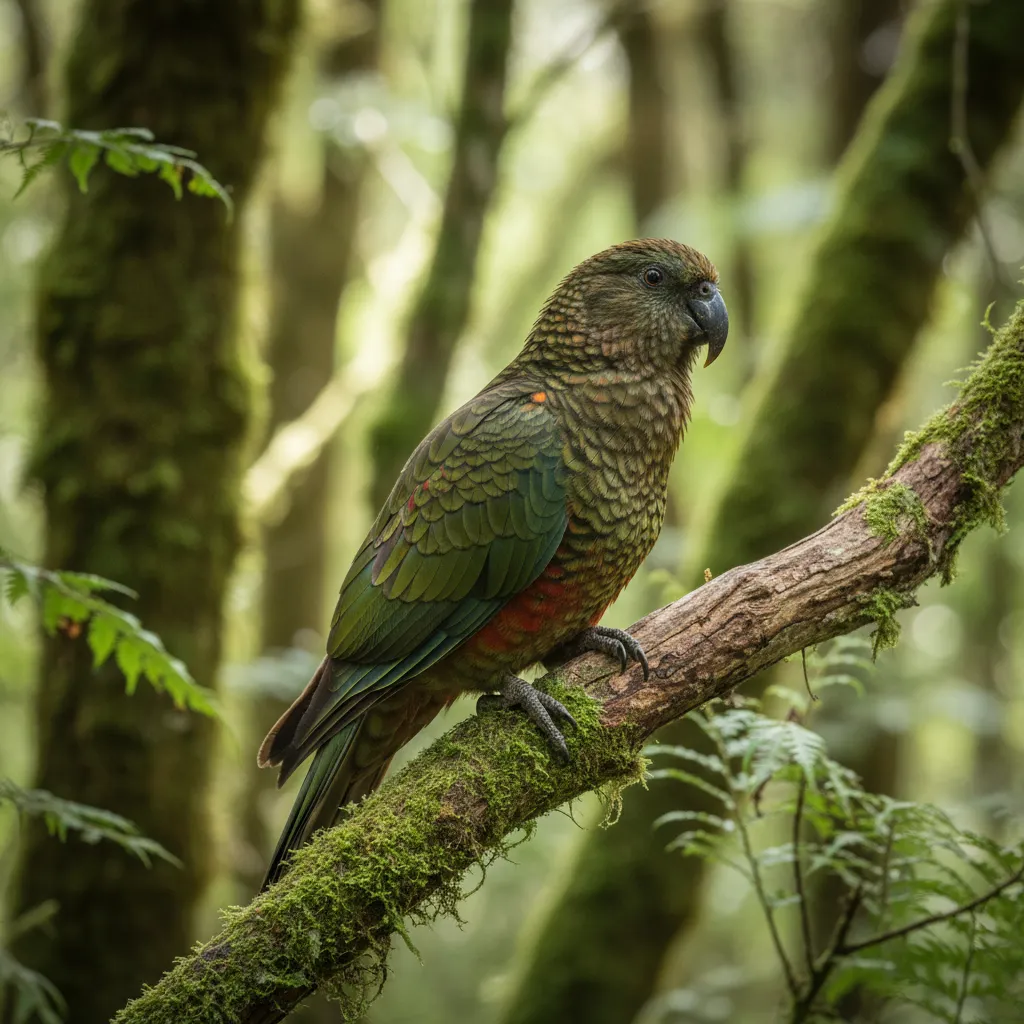
- South Island Kākā: These large, forest-dwelling parrots are often seen tearing into dead wood in search of grubs. They are charismatic, loud, and play a crucial role in the ecosystem as pollinators and seed dispersers.
- Takahē: Once thought extinct, these flightless rails are a conservation icon. Orokonui provides a safe habitat for these heavy, grass-eating birds, which are often found near the wetland areas of the sanctuary.
- Bellbird (Korimako) and Tūī: These honeyeaters are abundant, feeding on the nectar of flax and fuchsia, and their songs dominate the acoustic landscape of the forest.
Reptiles and Invertebrates
Biodiversity extends beyond the birds. The sanctuary is a haven for the Jewelled Gecko and the Otago Skink, both of which suffer from predation outside the fence. Perhaps most notably, Orokonui is home to a population of Tuatara. These “living fossils” are the sole survivors of an order of reptiles that thrived in the age of the dinosaurs. Their presence here marks a significant achievement in southern conservation, as the climate in Dunedin is cooler than their typical northern habitats, yet they are successfully breeding.
Haast Tokoeka Kiwi Conservation
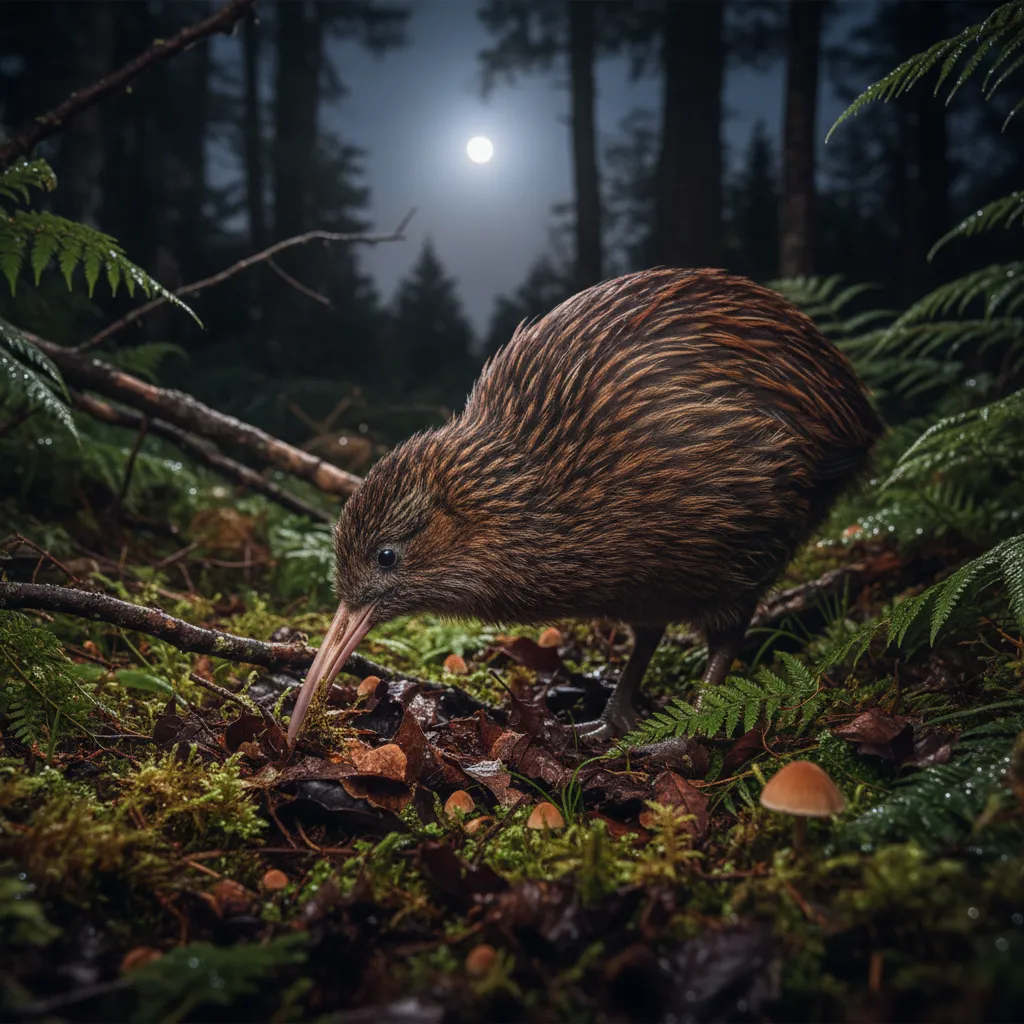
One of the most critical functions of Orokonui Ecosanctuary is its role as a “crèche” for the Haast Tokoeka Kiwi. The Haast Tokoeka is one of the rarest kiwi taxa, with a population that is classified as Nationally Critical. In the wild, kiwi chicks face a mortality rate of nearly 95%, primarily due to stoats which can easily kill young birds that cannot yet fight back.
Orokonui intervenes in this lifecycle to ensure survival. Eggs or young chicks are brought from the wild (specifically from the Haast sanctuary area on the West Coast) to Orokonui. Here, in the predator-free environment, they are allowed to grow until they reach a “stoat-safe” weight, typically around 1.2 kilograms. At this size, they are large enough to defend themselves against stoats.
Once they reach this critical weight, the sub-adult kiwi are recaptured and returned to their original wild habitat to contribute to the breeding population. This strategy has significantly boosted the survival rates of the species. While visitors may not always see these nocturnal, elusive birds, the knowledge that the forest floor beneath them serves as a nursery for one of New Zealand’s rarest treasures adds a profound layer of significance to the eco-tourism experience.
Walking Tracks and Visitor Guides
Exploring the Orokonui Ecosanctuary biodiversity is accessible through a network of well-maintained walking tracks. These tracks cater to various fitness levels and time constraints, ensuring that everyone from casual walkers to serious hikers can experience the cloud forest.
The Robin’s Saddle Track
For those seeking a comprehensive experience, the Robin’s Saddle Track is a popular choice. This loop track takes approximately one hour to complete and descends gently through the regenerating forest into the mature cloud forest. Along this route, visitors frequently encounter South Island Robins (Toutouwai), which are known for their fearlessness and tendency to approach humans, hoping to catch insects disturbed by footsteps.
The Bellbird Track
This is an accessible, shorter track suitable for wheelchairs and strollers. It remains near the top of the sanctuary, offering sweeping views over the Blueskin Bay estuary and the surrounding Otago coastline. Despite its proximity to the visitor center, it is teeming with birdlife, particularly Tūī and Bellbirds feeding on the flax collections.
Guided Tours vs. Self-Guided Walks
While the tracks are well-signposted for self-guided exploration, the sanctuary offers expert-led guided tours. These are highly recommended for visitors who want to deepen their understanding of the Orokonui Ecosanctuary biodiversity. Guides provide context on the medicinal uses of plants (Rongoā Māori), point out cryptic species that the untrained eye might miss, and share the detailed history of the conservation efforts.
Educational Programs for Children
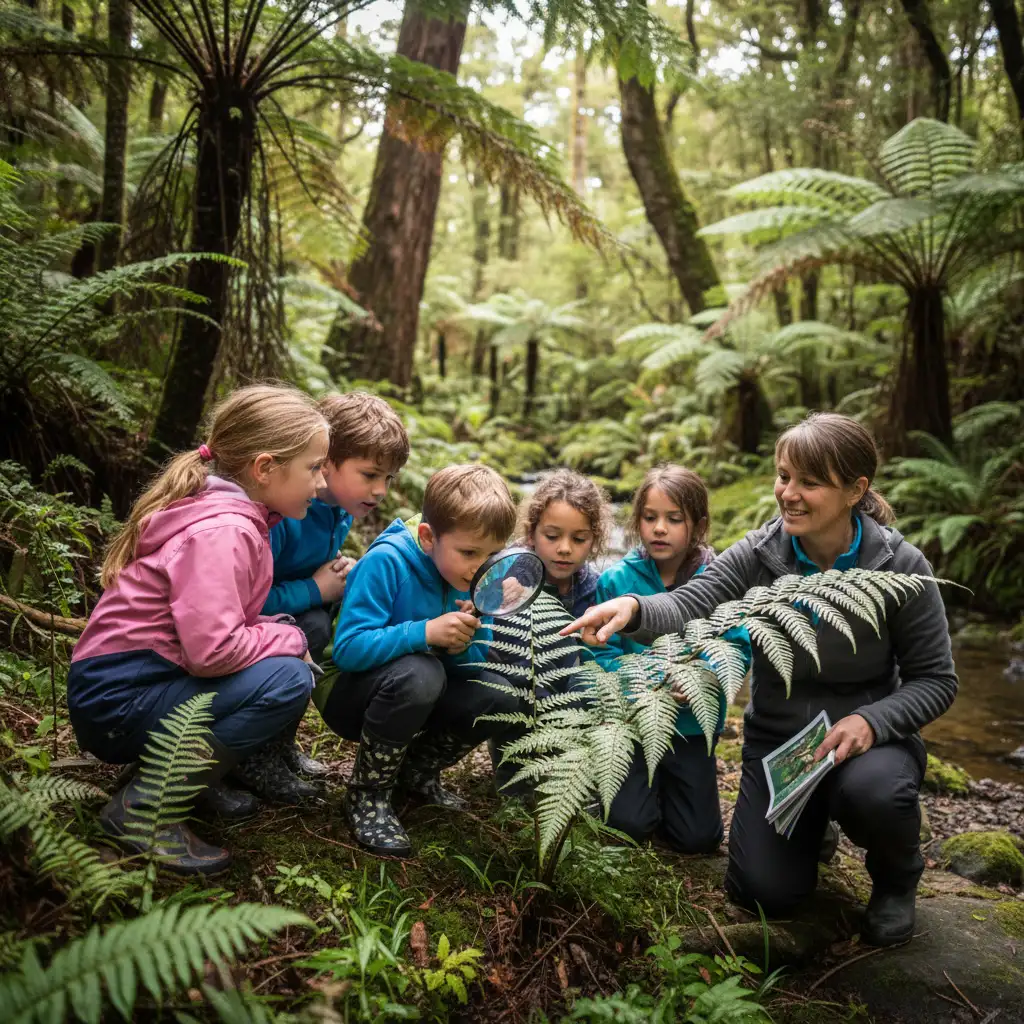
Orokonui Ecosanctuary is not just a tourist destination; it is an educational hub designed to foster the next generation of conservationists. The sanctuary runs a robust education program tailored for schools, from early childhood centers to tertiary institutions.
The programs are curriculum-aligned and focus on hands-on learning. Students might engage in water quality testing, invertebrate identification, or tracking tunnel analysis to understand how scientists monitor biodiversity. The goal is to move beyond passive observation to active participation in science.
Holiday Programs
During school holidays, the sanctuary offers “Nature Guardian” programs. These day-long experiences allow children to immerse themselves in the forest, learning bushcraft skills, nature photography, and the importance of pest control. By connecting children with nature in a tactile, engaging way, Orokonui ensures that the value of biodiversity is understood and cherished by future leaders.
The Future of Eco-Tourism in Dunedin
The success of Orokonui serves as a blueprint for eco-tourism across New Zealand. It demonstrates that conservation and tourism can be mutually beneficial. Revenue generated from visitor entry fees, the café, and the gift shop is reinvested directly into the maintenance of the fence and the care of the wildlife.
However, challenges remain. Climate change poses a threat to the sensitive cloud forest ecosystem. As temperatures rise, the mist and moisture levels that define this microclimate may alter, potentially impacting the flora that relies on high humidity. Furthermore, the constant battle against re-invasion by pests requires vigilance and funding.
Supporting Orokonui Ecosanctuary through visits, donations, or volunteering is a direct contribution to the preservation of New Zealand’s natural heritage. It is a place where the silence of extinction has been replaced by the song of the wild, offering a glimpse of what Aotearoa looked like before human arrival.
People Also Ask
What is the best time of day to visit Orokonui Ecosanctuary?
The best time to visit is in the morning, shortly after opening. Bird activity is generally highest in the early hours, and the Kākā are often fed near the visitor center around 11:00 AM, providing excellent photo opportunities.
How long does it take to walk around Orokonui Ecosanctuary?
A typical visit lasts between 2 to 4 hours. The shorter loop tracks can be done in 45 minutes, while exploring the deeper valley tracks and observing wildlife can take half a day.
Can you see Kiwi at Orokonui Ecosanctuary during the day?
It is very rare to see Kiwi during the day as they are nocturnal. However, the sanctuary occasionally runs special night tours where visitors have a chance to hear and potentially spot the Haast Tokoeka Kiwi foraging.
Is Orokonui Ecosanctuary wheelchair friendly?
Yes, parts of the sanctuary are accessible. The visitor center, café, and the upper walking tracks (such as the Bellbird Track) are designed to be wheelchair and stroller accessible.
What animals are in the Orokonui Ecosanctuary?
The sanctuary is home to Tuatara, Otago Skinks, Jewelled Geckos, and birds such as Kākā, Tūī, Bellbirds, Takahē, Kererū, and the Haast Tokoeka Kiwi.
Why is the predator fence important?
The fence excludes introduced mammalian predators like stoats, possums, rats, and cats. This allows native species, which often lack defense mechanisms against these mammals, to breed and survive safely.