Kaitiakitanga is the Māori concept of guardianship, stewardship, and protection. It represents the active obligation to care for the land, sea, and sky, ensuring nature’s resources are preserved for future generations. Rooted in the word ‘tiaki’ (to care for), it defines the reciprocal relationship between people and the natural world.
What is the Meaning of Kaitiakitanga?
To fully grasp the essence of New Zealand’s conservation ethos, one must look beyond the English dictionary definition of “guardianship.” Kaitiakitanga is a profound cultural philosophy that dictates how humans interact with the natural world. In Te Ao Māori (the Māori world view), humans are not superior to nature; we are part of it. We are related to the mountains, rivers, and forests through whakapapa (genealogy).
The term can be broken down linguistically to understand its depth:
- Tiaki: To guard, keep, foster, protect, and watch over.
- Kai: A prefix denoting the doer of the action.
- Tanga: A suffix transforming the verb into a noun (the concept or practice).
Therefore, a Kaitiaki is a guardian—this can be a person, a group (iwi or hapū), or even a spiritual entity like a taniwha (supernatural water creature). Kaitiakitanga is the practice of that guardianship. It is not merely a passive state of “leaving nature alone,” but an active management system involving deep knowledge of local ecosystems, seasonal rhythms, and resource sustainability.

The Spiritual Dimension of Stewardship
Kaitiakitanga operates on both physical and spiritual planes. The physical aspect involves ensuring that food sources (mahinga kai) remain abundant. If a mussel bed is over-harvested, the kaitiaki must intervene. The spiritual aspect involves maintaining the mauri (life force) of the environment. If a river becomes polluted, its mauri is diminished, affecting the spiritual health of the people who reside beside it.
Understanding Manaakitanga (Hospitality)
While Kaitiakitanga focuses on the environment, Manaakitanga focuses on people. However, in the context of New Zealand eco-tourism, these two concepts are inseparable.
Manaakitanga is loosely translated as hospitality, kindness, or generosity, but its roots are far deeper. It comes from two words:
- Mana: Prestige, authority, control, power, and spiritual status.
- Aki: To encourage or urge on.
Consequently, Manaakitanga is the process of uplifting the mana of others. When visitors arrive at a Marae (meeting grounds) or an eco-tourism lodge, the hosts extend Manaakitanga to ensure the guests are fed, sheltered, and respected. By treating guests well, the mana of the host is also increased.

The Symbiosis: How Guardianship Enables Hospitality
For visitors to New Zealand, understanding the link between these two concepts is crucial. You cannot practice true Manaakitanga (hospitality) without Kaitiakitanga (guardianship).
Consider a traditional feast (hākari). To uplift the mana of the guests, the hosts must provide the best local delicacies—crayfish (kōura), kumara, or eel (tuna). If the hosts have failed in their Kaitiakitanga—if the river is polluted or the sea is overfished—they cannot provide this food. Therefore, their ability to show hospitality is compromised, and their mana suffers.
In the modern eco-tourism sector, this translates to sustainable operations. A tour operator practicing Kaitiakitanga ensures that their presence doesn’t degrade the environment, ensuring they can continue to offer Manaakitanga to tourists for decades to come.
Rahui (Temporary Bans) and Respect
One of the most tangible manifestations of Kaitiakitanga that tourists may encounter is the Rāhui. A Rāhui is a temporary ritual prohibition, ban, or restriction placed on an area or resource. This is a powerful tool used by Kaitiaki to allow the environment to heal.
When is a Rahui used?
Rāhui are typically placed for two primary reasons:
- Conservation: To allow a depleted resource to recover. For example, if a scallop bed is declining, a Rāhui forbids gathering scallops there until numbers bounce back.
- Spiritual Respect (Tapu): In the event of a tragedy, such as a drowning, a Rāhui is placed on that stretch of water. It prohibits swimming and fishing out of respect for the deceased and to allow the tapu (sacredness) of the event to lift, returning the water to a state of noa (neutral/safe).
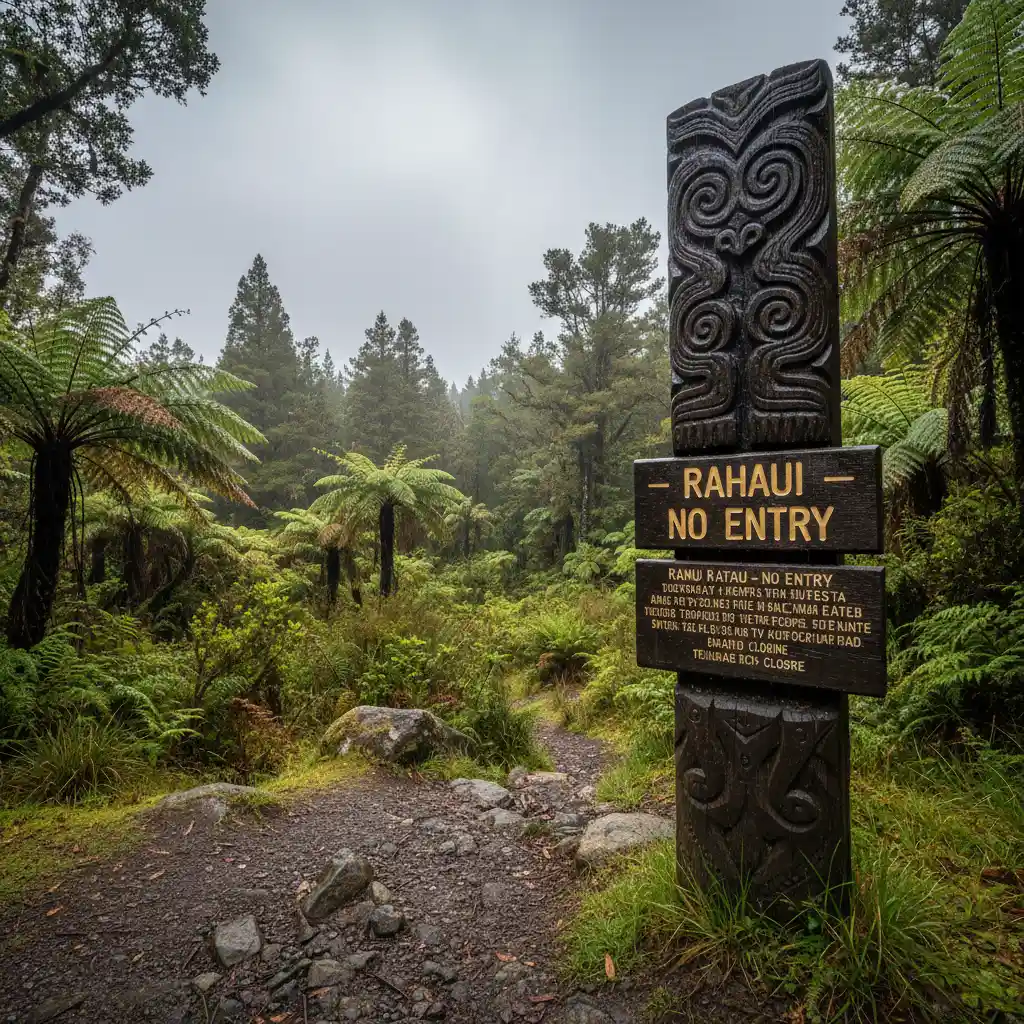
For eco-tourists, respecting a Rāhui is the ultimate sign of cultural competence. In recent years, Rāhui have been placed on areas like the Waitākere Ranges to prevent the spread of Kauri Dieback disease. Ignoring these bans is considered a grave insult to the mana of the local iwi and a violation of Kaitiakitanga.
Cultural Legends of the Landscape
To view the New Zealand landscape through a Māori lens is to see the earth as an ancestor. The legends of Aotearoa are not just stories; they are the history of the land’s formation and the basis for Kaitiakitanga.
Ranginui and Papatūānuku
The creation story begins with Ranginui (the Sky Father) and Papatūānuku (the Earth Mother). Locked in a tight embrace, they kept their children in darkness. Tāne Mahuta, the god of the forest, eventually separated his parents, pushing the sky up and the earth down, allowing light into the world. The rain is the tears of Rangi grieving for Papa, and the mist is Papa’s sigh of love for Rangi.
This legend establishes the earth as a mother. Just as one would protect their mother from harm, humanity is obligated to protect Papatūānuku. This personification of nature makes the destruction of landscapes feel like a personal assault on an ancestor.
Mountains as Ancestors
When Māori introduce themselves (pepeha), they cite their mountain (maunga) and river (awa) before their own name. This signifies that they belong to the land, not the other way around. For example, the Whanganui River was recently granted legal personhood, recognizing it as a living entity—a legal triumph of the concept of Kaitiakitanga.
The Tiaki Promise: Modern Eco-Tourism
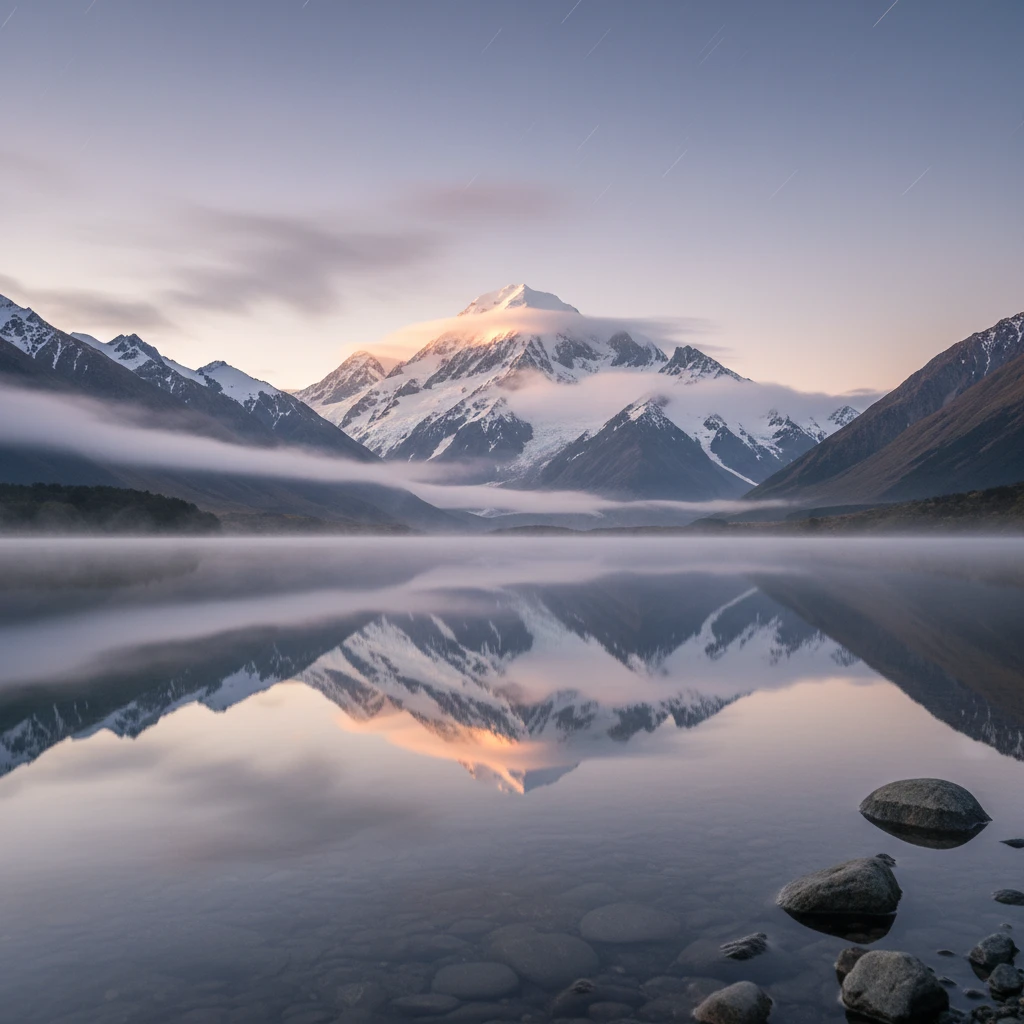
As tourism in New Zealand boomed, the pressure on infrastructure and the environment grew. In response, the tourism industry, in collaboration with Māori leadership, launched the Tiaki Promise. This is a commitment to care for New Zealand, for now and for future generations.
The Tiaki Promise asks visitors to act as guardians during their stay. It simplifies the complex concepts of Kaitiakitanga into actionable behaviors:
- Drive carefully: Respecting the safety of locals and wildlife.
- Be prepared: Ensuring safety in the outdoors to avoid putting rescuers at risk.
- Protect nature: Keeping kauri forests safe, disposing of waste properly, and respecting wildlife distances.
- Show respect: Traveling with an open heart and mind to local cultures and customs.
By adhering to these principles, tourists transition from passive consumers of the landscape to active participants in Kaitiakitanga. They help uphold the mana of the land, ensuring that the welcome (Manaakitanga) remains warm for those who follow.
Ultimately, Kaitiakitanga teaches us that we do not inherit the earth from our ancestors; we borrow it from our children. In the realm of eco-tourism, this means leaving no trace, respecting cultural boundaries, and understanding that the true beauty of Aotearoa lies not just in its scenery, but in the spiritual connection between the people and the land.
People Also Ask
What are the three main values of Kaitiakitanga?
The three core values often associated with Kaitiakitanga are Guardianship (active protection of nature), Stewardship (managing resources for future generations), and Whakapapa (the genealogical connection between humans and the natural world). Together, these values dictate that nature must be respected as an ancestor rather than exploited as a commodity.
How is Kaitiakitanga used today?
Today, Kaitiakitanga is used in environmental law (such as the Resource Management Act), fisheries management, and conservation projects. It guides the restoration of wetlands, the protection of native birds like the Kiwi, and the management of tourism impacts. It also informs the “Tiaki Promise,” a guideline for responsible tourism in New Zealand.
What is the difference between Manaakitanga and Kaitiakitanga?
Manaakitanga refers to hospitality, kindness, and the uplifting of people’s mana (prestige). Kaitiakitanga refers to the guardianship and protection of the natural environment. They are linked because you need a healthy environment (Kaitiakitanga) to provide the resources necessary to be a generous host (Manaakitanga).
What is an example of Kaitiakitanga?
A clear example of Kaitiakitanga is the imposition of a Rāhui (temporary ban) on a fishing area where stocks are low. By stopping fishing for a season, the Kaitiaki (guardians) allow the ecosystem to regenerate, ensuring there is food for future generations.
Why is Kaitiakitanga important to New Zealand tourism?
Kaitiakitanga is vital to NZ tourism because the industry relies on pristine natural landscapes. Without the active protection of these assets, the tourism product would degrade. Furthermore, it provides a unique cultural narrative that deepens the visitor experience, moving it from sightseeing to cultural connection.
Who can be a Kaitiaki?
Traditionally, tangata whenua (people of the land/local tribes) are the Kaitiaki of their specific rohe (territory). However, the concept has broadened in modern times. Anyone who actively protects and cares for the environment—including conservationists, government agencies, and responsible tourists—can be seen as exercising Kaitiakitanga.