Camping the Catlins NZ involves navigating a mix of Department of Conservation (DOC) campsites, commercial holiday parks, and strictly designated freedom camping zones. Travelers can stay at scenic locations like Purakaunui Bay or Curio Bay, but must utilize certified self-contained vehicles for freedom camping and strictly adhere to Clutha District Council bylaws to protect the sensitive coastal environment.
The Landscape of Camping in the Catlins
The Catlins, a rugged stretch of coast in the southeastern South Island, represents one of New Zealand’s last frontiers for independent travelers. Unlike the manicured resort towns of Queenstown or Wanaka, the Catlins offers a raw, wind-swept beauty that demands respect and preparation. For those researching camping the Catlins NZ, it is essential to understand the distinction between the three primary accommodation types available: DOC campsites, commercial holiday parks, and freedom camping areas.
This region is defined by its isolation. It is an eco-tourism haven where the forest meets the ocean, and as such, the camping infrastructure is designed to minimize human impact. While you will find powered sites and hot showers at major hubs, the true spirit of the Catlins is found in the low-cost Department of Conservation (DOC) sites that place you mere meters from crashing waves and towering cliffs.
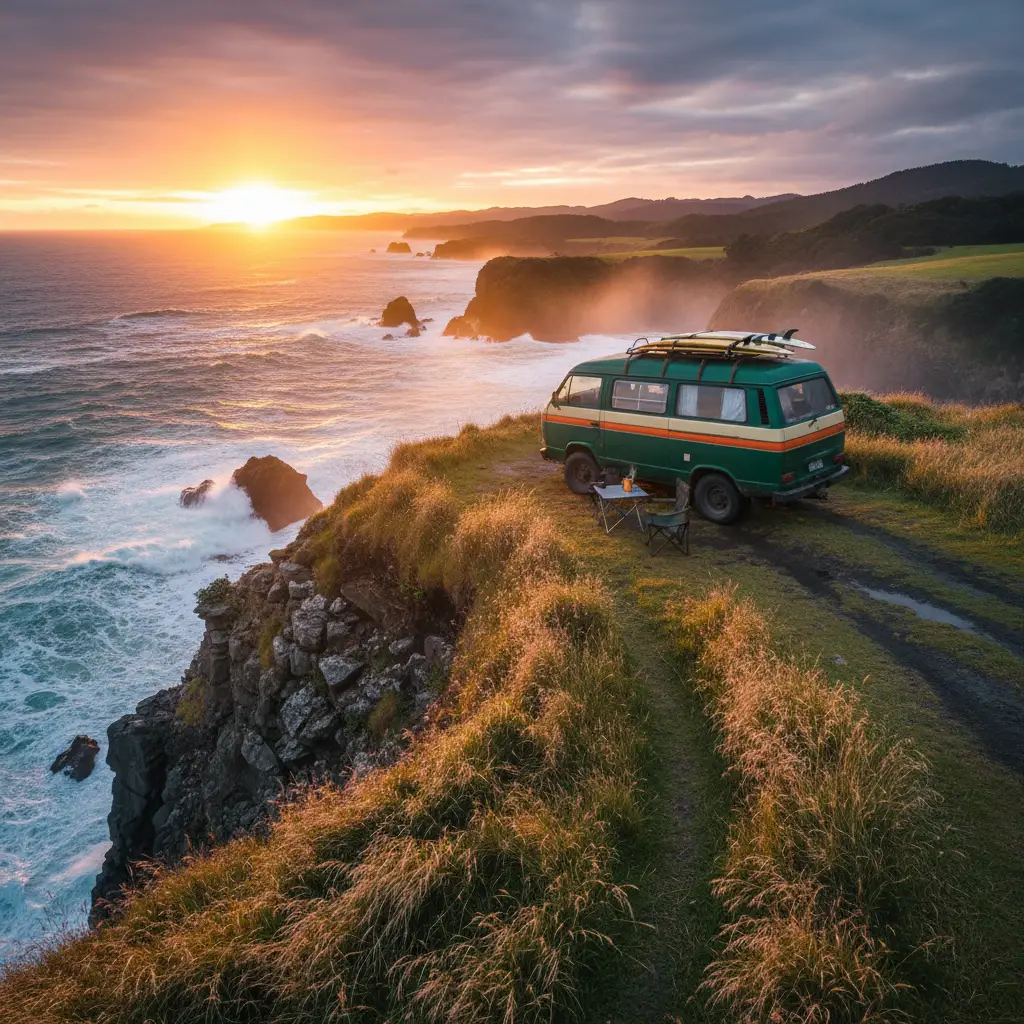
Purakaunui Bay DOC Campsite: The Iconic Spot
If you only stay at one Department of Conservation site while camping the Catlins, let it be Purakaunui Bay. Located approximately 17 kilometers south of Owaka, this site is legendary among New Zealand road trippers for its dramatic scenery. It is arguably one of the most scenic campsites in the entire country, featuring towering cliff faces that shelter the bay.
What amenities are available at Purakaunui Bay?
As a standard DOC campsite, amenities are basic but functional. The site operates on a first-come, first-served basis. Facilities include:
- Toilets: Long-drop (composting) toilets are available. They are generally kept clean but do not have running water or flush mechanisms.
- Water: There is a tap with untreated water. It is imperative that you boil this water for at least three minutes before drinking, or use a high-quality filtration system.
- Sites: There are no powered sites here. The camping area is a large, grassy expanse right next to the beach. It is suitable for campervans, caravans, and tents.
The primary draw here is not luxury, but proximity to nature. You will fall asleep to the roar of the Southern Ocean and wake up to spectacular sunrises over the water. Note that the access road is unsealed gravel; while generally accessible for standard vehicles, drive with caution.
Curio Bay Campsite Amenities & Eco-Experience
For travelers seeking more comfort without sacrificing location, the Curio Bay Camping Ground is the premier choice. Situated on the southern edge of the Catlins, this holiday park offers a unique blend of amenities and world-class wildlife viewing.
What facilities does Curio Bay Camping Ground offer?
Unlike the DOC sites, Curio Bay is a fully managed holiday park. It provides the infrastructure necessary to recharge both your vehicle and your body after days of off-grid travel.
- Powered Sites: Essential for charging campervan batteries and running heaters during colder nights.
- Kitchen & Laundry: A fully equipped communal kitchen and coin-operated laundry facilities are available, which is a luxury in this remote region.
- Hot Showers: While often coin-operated, the hot showers here are a welcome relief after exploring the windy coast.
- General Store: A small shop provides basic essentials, though stocking up in larger towns like Balclutha or Invercargill is still recommended.
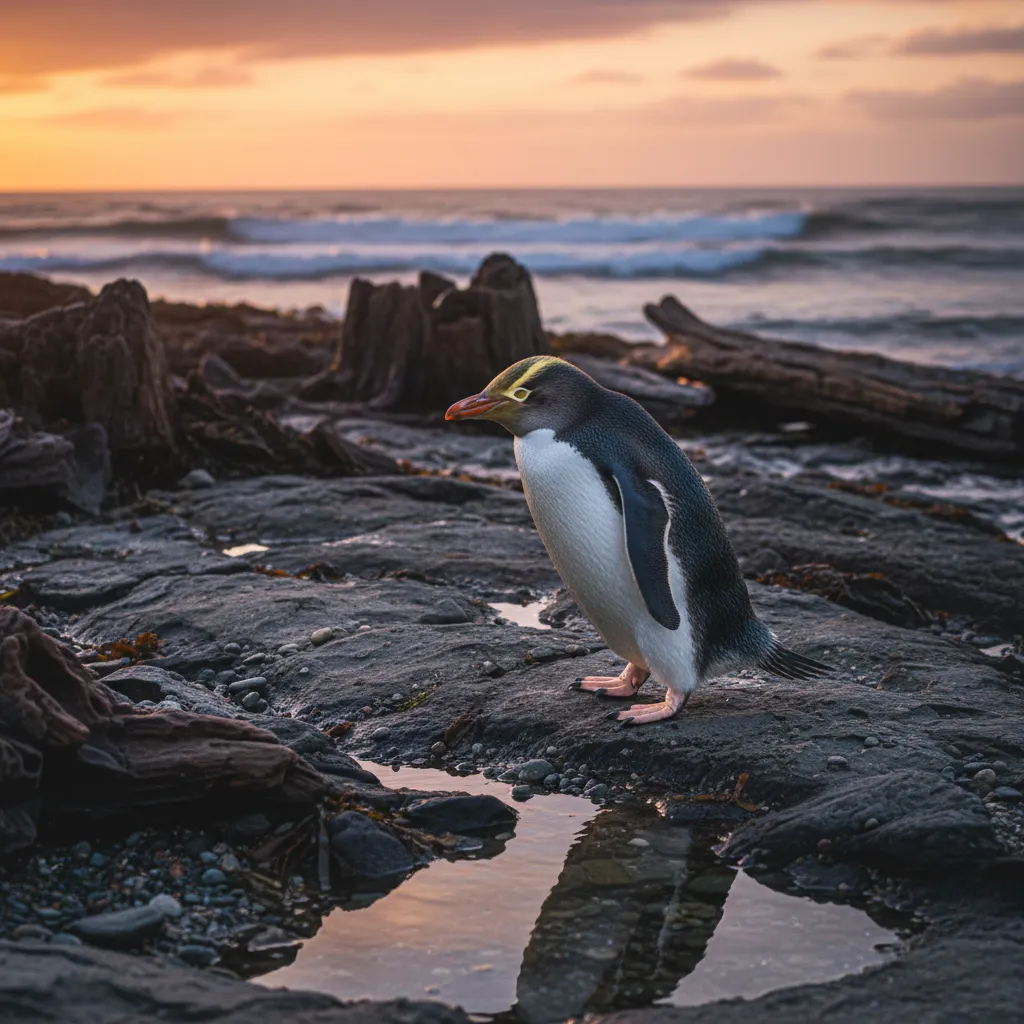
The true value of Curio Bay lies in its environment. The campsite is nestled within flax bushes that provide shelter from the wind. More importantly, it sits adjacent to a 180-million-year-old Petrified Forest. In the evenings, you may spot Yellow-eyed penguins (Hoiho) returning to shore, and Hector’s dolphins are frequently seen playing in the surf at the nearby Porpoise Bay.
Freedom Camping Regulations & Restricted Zones
Freedom camping—staying overnight for free on public land—is a contentious issue in New Zealand, and the Catlins is no exception. Due to the rapid growth of tourism, the Clutha District Council and DOC have implemented strict enforcement to prevent environmental degradation.
Where can you freedom camp in the Catlins?
You cannot simply pull over and camp anywhere. Freedom camping is generally prohibited in town centers, near official campsites, and on sensitive reserves. To freedom camp legally, you must:
- Be Certified Self-Contained: Your vehicle must display a current blue or green warrant card indicating it has an internal toilet, freshwater, and wastewater storage. Vehicles without this certification must use official campgrounds.
- Respect “No Camping” Signs: Many scenic lookouts, such as Nugget Point and Florence Hill Lookout, are strictly day-use only. Fines of $200 NZD or more are issued instantly to offenders.
- Limit Your Stay: Most designated freedom camping areas limit stays to 2 or 3 nights to allow turnover.
Popular designated spots for self-contained vehicles include the weirdly named “Weir Road” near the Slope Point turnoff, though facilities there are non-existent. Always check the camper apps like CamperMate or Rankers for the most current zoning maps.
Secondary Sites: Papatowai and Tawanui
While Purakaunui and Curio Bay steal the headlines, the Catlins offers other exceptional camping experiences for those willing to explore.
Papatowai Campsite
Located in the heart of the Catlins forest, the Papatowai DOC campsite is a serene alternative. It is more sheltered than the coastal sites, nestled amongst native bush. It features a standard kitchen shelter (bring your own cooker) and flush toilets. It is an excellent base for exploring the nearby Tahakopa Bay.
Tawanui Campsite
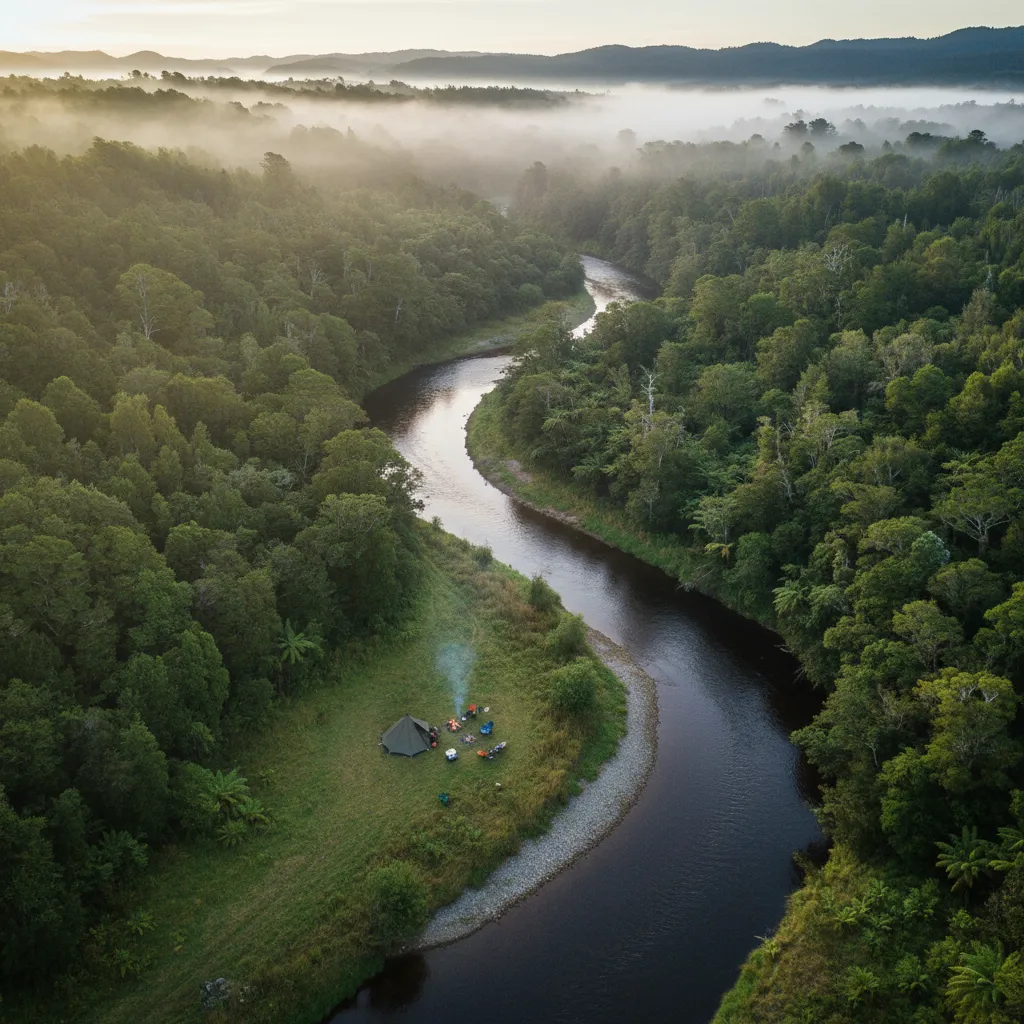
For those who prefer the river to the sea, Tawanui is situated alongside the Catlins River. It is a spacious, grassy site perfect for families. It is a standard DOC site, meaning fees are low, but amenities are limited to water and toilets. It serves as a great starting point for the Catlins River Wisp Loop Walk.
Logistics: Cell Reception Dead Zones & Supplies
One of the most critical aspects of planning your trip is understanding the limitations of infrastructure in this region. The Catlins is not a place where you can rely on constant connectivity.
Where are the Cell Reception Dead Zones?
Be prepared to be offline. Large stretches of the Southern Scenic Route have absolutely no mobile coverage. Specifically:
- Inland Routes: The roads connecting Papatowai to Curio Bay often drop out completely.
- Purakaunui Bay: Reception is notoriously poor or non-existent at the campsite itself. You may catch a weak signal on the hill above the bay, but do not rely on it.
- Carriers: Spark generally has better rural coverage than One NZ (Vodafone) or 2degrees in the South Island, but even Spark struggles here.
Pro Tip: Download offline maps (Google Maps or Maps.me) and any necessary DOC brochures before leaving Balclutha or Invercargill.
Fuel and Food
There are very few petrol stations. Owaka and Papatowai have fuel pumps, but they can be expensive and have limited hours. Fill up your tank before entering the region. Similarly, while Owaka has a Four Square supermarket, it carries a premium price tag. Stock up on camping meals, water, and sandfly repellent in larger cities.
Nearby Waterfalls and Wildlife Encounters
Camping the Catlins NZ is ultimately about access to nature. The campsites place you on the doorstep of some of the country’s most photogenic waterfalls and wildlife habitats.
Waterfalls
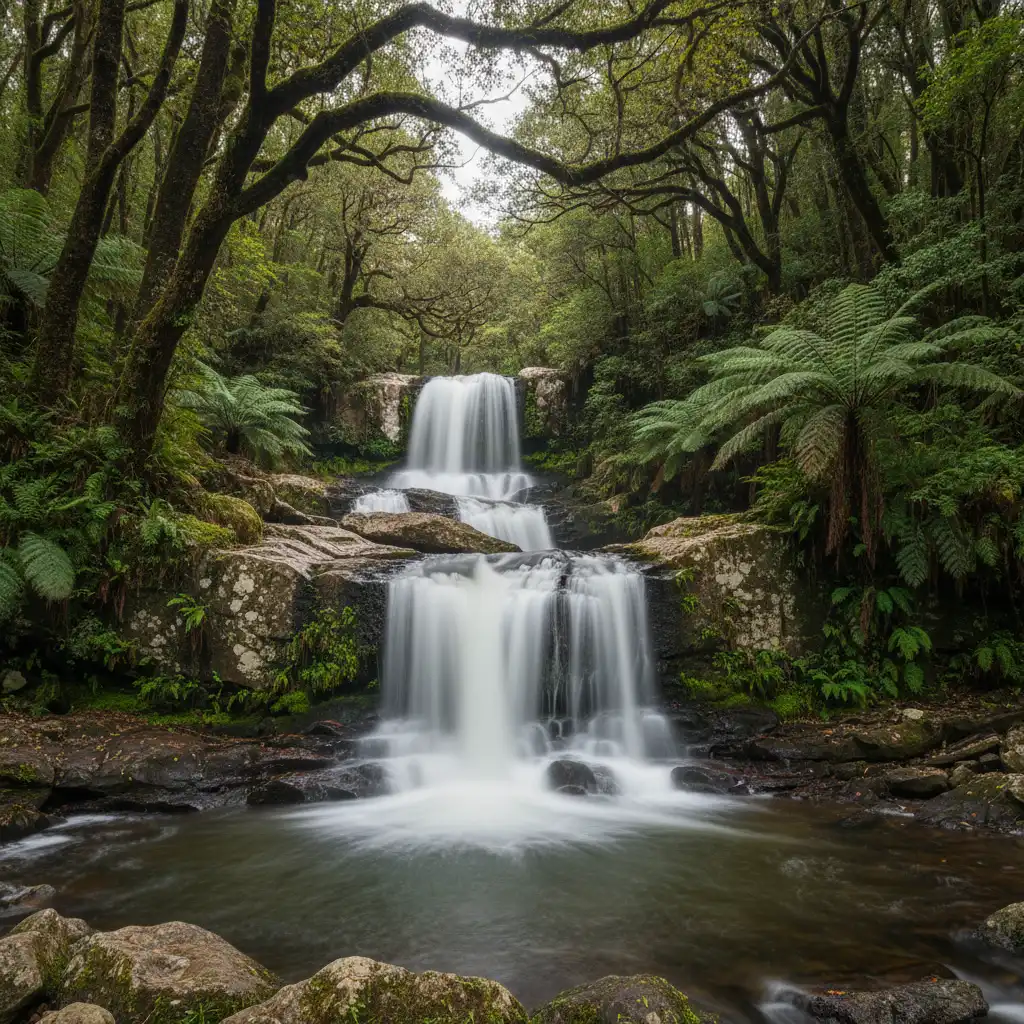
Purakaunui Falls: A short drive from the Purakaunui Bay campsite, this is New Zealand’s most photographed waterfall. It is a cascading, three-tiered fall surrounded by beech forest. The walk is easy (20 minutes return) and accessible for all fitness levels.
McLean Falls: Often cited as the most spectacular fall in the region, McLean Falls is located on the Tautuku River. The track is slightly more rugged but leads to a massive 22-meter drop into a deep gorge.
Wildlife
Surat Bay & Cannibal Bay: These beaches are famous for New Zealand Sea Lions (Whakahao). These are rare and large animals. When camping nearby, always keep a distance of at least 10 meters (20 meters if they are active). Never block their path to the sea.
Nugget Point: While you cannot camp at the lighthouse, it is a must-visit for sunset or sunrise. The viewing platform offers sights of fur seals, elephant seals, and masses of seabirds nesting on the rocks below.
Weather and Preparation
The Catlins is exposed to the Southern Ocean, meaning the weather is volatile. “Four seasons in one day” is a literal description here, not a metaphor.
- Summer (Dec-Feb): The most popular time for camping. Days are long (sunset around 9:30 PM), but temperatures rarely exceed 25°C (77°F). Campsites fill up quickly.
- Shoulder Season (Mar-Apr): Often the best time to visit. The winds tend to be lower, and the crowds have dispersed.
- Winter (Jun-Aug): Only for the brave. Many campsites remain open, but temperatures drop near freezing, and storms are frequent. You must have a heater in your campervan.
Regardless of the season, bring high-quality rain gear, thermal layers, and arguably the most important item: insect repellent. Sandflies in the Catlins, particularly around wet areas like Tawanui and Papatowai, can be ferocious.
People Also Ask
Is camping free in the Catlins?
Not everywhere. While there are designated freedom camping spots for certified self-contained vehicles, most scenic spots are DOC campsites (small fee, approx $10-$15 NZD per adult) or commercial holiday parks (higher fees). Always check local signage.
Do I need to book DOC campsites in the Catlins?
Most DOC campsites in the Catlins, including Purakaunui Bay and Papatowai, operate on a first-come, first-served basis. However, during the peak summer season (Christmas to late January), arriving early in the day is recommended to secure a spot.
Are the roads in the Catlins suitable for campervans?
Yes, the main Southern Scenic Route is sealed. However, access roads to specific sights like Purakaunui Bay and some waterfalls are gravel. Most standard campervans can handle these, but drive slowly to avoid stone chips and dust.
Can I bring my dog camping in the Catlins?
Generally, no. Dogs are prohibited at most DOC campsites and beaches in the Catlins to protect vulnerable wildlife like penguins and sea lions. Commercial parks may have specific dog-friendly policies, but you must check in advance.
How many days do I need to camp the Catlins?
To truly experience the region, 2 to 3 nights is recommended. This allows you time to visit the waterfalls, see the wildlife at dawn or dusk, and enjoy the campsites without rushing through on a single day’s drive.
Is there drinking water at Catlins campsites?
Commercial parks like Curio Bay provide potable water. DOC sites usually provide rainwater tanks or stream water which is untreated. You must boil, filter, or chemically treat this water before consumption to avoid illness.