An Aurora Australis NZ forecast relies on analyzing real-time solar data, specifically looking for a Kp index of 4 or higher combined with a negative Bz (interplanetary magnetic field) reading. For the best viewing chances in New Zealand, monitor short-term forecasts from NOAA or local alerts, and seek clear, dark skies in southern regions like Southland and Otago.
Witnessing the Southern Lights, or Aurora Australis, is a bucket-list experience for many travelers venturing to New Zealand. Unlike the predictable rhythm of the tides, the aurora is an elusive phenomenon governed by the volatile moods of the sun. Successfully hunting the lights requires more than just luck; it demands a solid understanding of forecasting metrics, the right digital tools, and knowledge of the dark sky geography that makes New Zealand a world-class eco-tourism destination.
This guide serves as your comprehensive manual for interpreting forecasts and planning your independent travel itinerary to maximize your chances of seeing the sky dance.
Understanding the Aurora Australis NZ Forecast
To successfully chase the Southern Lights, you must first understand what powers them. The aurora is caused by charged particles from the sun interacting with Earth’s magnetic field and atmosphere. A forecast is essentially a weather report for space, predicting when these solar winds will be strong enough to create a visible display in the Earth’s upper atmosphere.
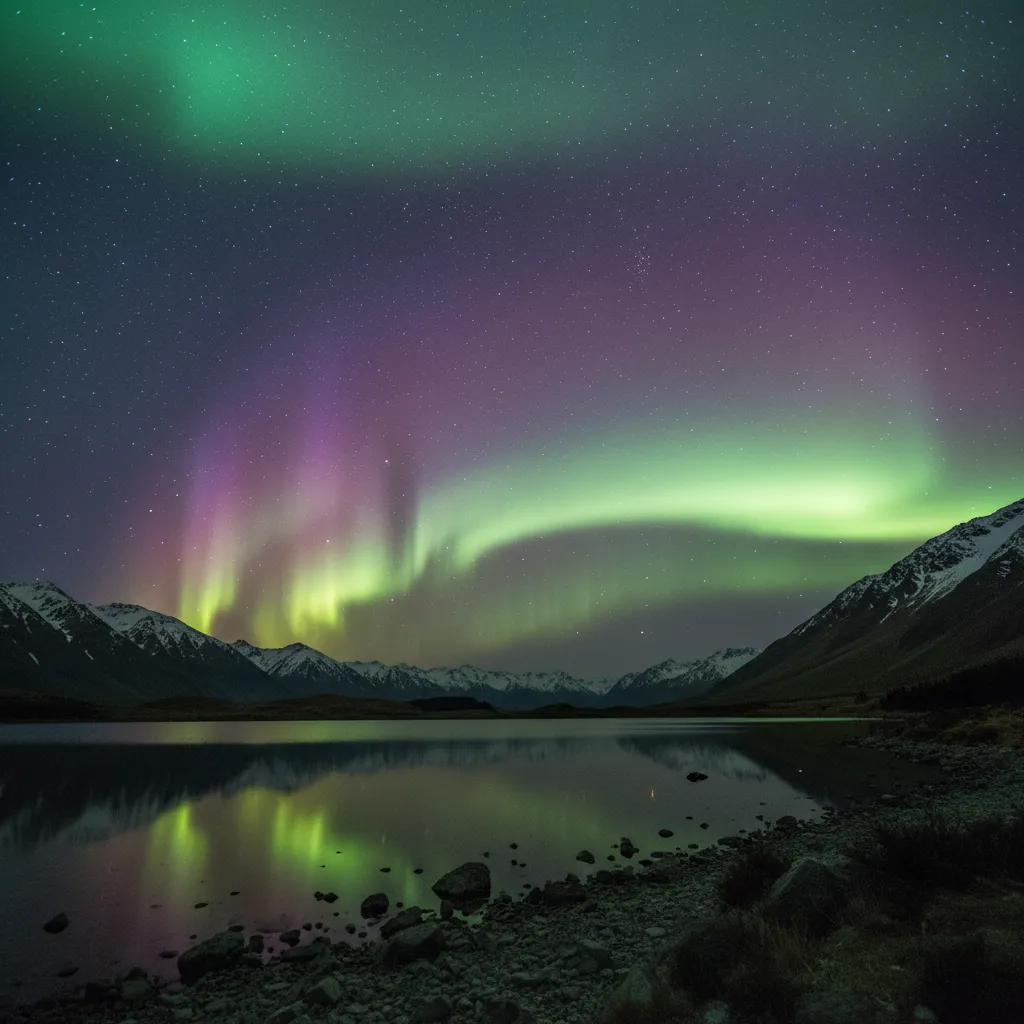
Unlike standard weather forecasts which can be reasonably accurate days in advance, aurora forecasts are most reliable in the short term—often just 30 to 60 minutes out. Long-term forecasts (3-27 days) are based on the sun’s rotation and the recurrence of active solar regions, but they are merely probabilities, not guarantees.
Key Metrics: Kp Index, Bz, and Solar Wind
When you look at an aurora dashboard, you will be bombarded with data. For a traveler in New Zealand, three specific metrics matter most: the Kp Index, the Bz, and the Solar Wind Speed.
What is the Kp Index?
The Kp index is a scale from 0 to 9 that measures geomagnetic activity. It is the most commonly cited metric for aurora hunters.
- Kp 0-2: Low activity. The aurora is likely only visible photographically on the horizon from Antarctica.
- Kp 3-4: Moderate activity. Visible to the naked eye from Stewart Island and the southern coast of the South Island. Cameras will pick up color.
- Kp 5 (Geomagnetic Storm G1): High activity. Visible from Queenstown, Wanaka, and potentially as far north as Christchurch.
- Kp 6-9: Extreme activity. The lights may be seen from the North Island, including Wellington and Auckland during rare major events.
However, the Kp index is a global average over a 3-hour period. It is a lagging indicator. For real-time success, you must look deeper into the solar wind data.
Why is the Bz Important?
The Bz refers to the direction of the Interplanetary Magnetic Field (IMF). Think of this as a gatekeeper.
- Positive Bz (North): The gate is closed. Even with high solar wind speed, the particles bounce off Earth’s magnetic shield.
- Negative Bz (South): The gate is open. The IMF connects with Earth’s magnetic field, allowing solar particles to flood into the atmosphere.
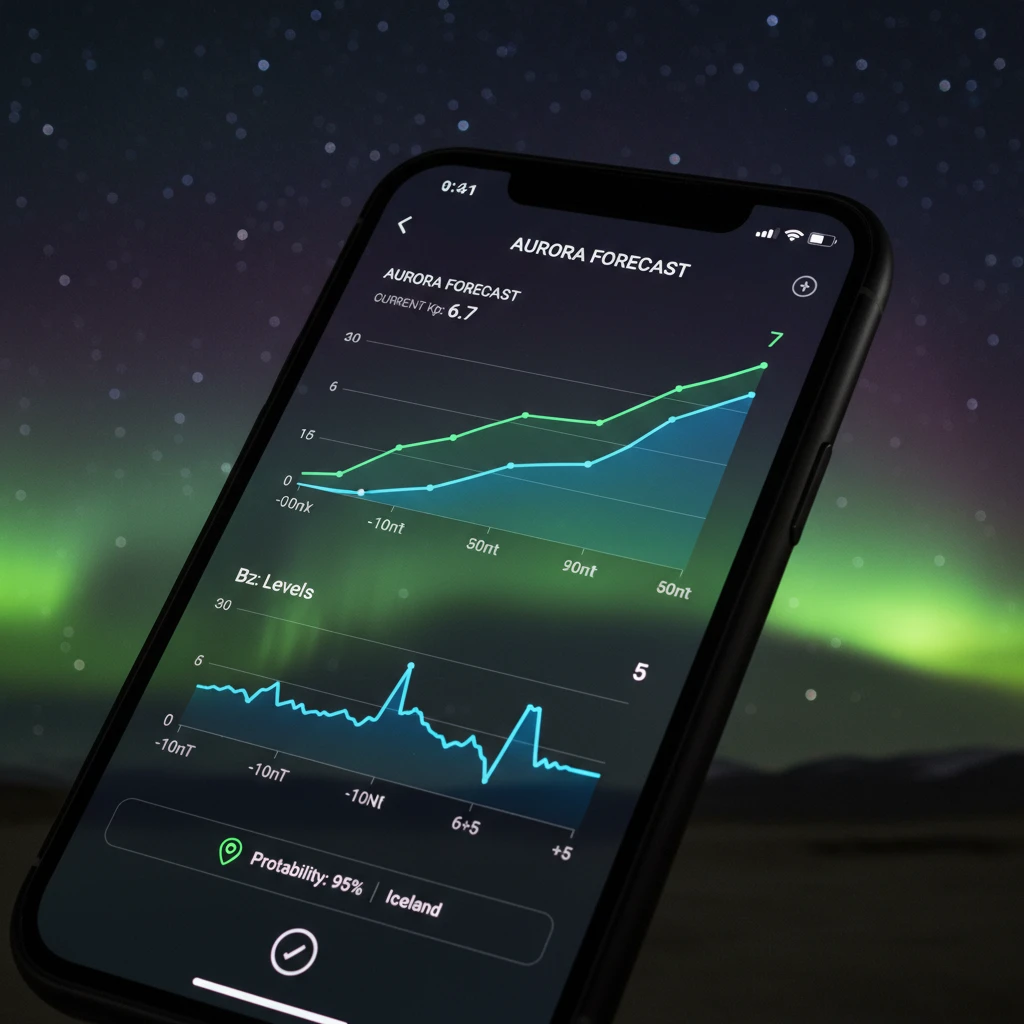
Pro Tip: If you see a forecast with a high Kp but a positive Bz, you likely won’t see anything. You need the Bz to drop into the negative (south) for the magic to happen. A sharp drop in Bz often precipitates a sudden burst of auroral activity, known as a substorm.
Solar Wind Speed and Density
The speed is measured in kilometers per second (km/s). Normal background wind is around 300-400 km/s. When a Coronal Mass Ejection (CME) or a high-speed stream from a coronal hole hits Earth, speeds can exceed 600-800 km/s. Higher speeds mean more energy is transferred to the atmosphere, resulting in brighter and more active displays. Density (protons/cm³) also plays a role; higher density means more fuel for the fire.
Best Apps and Websites for Real-Time Alerts
Relying on luck is not a strategy. Equip yourself with the right technology to receive alerts when the metrics align.
Glendale App (Aurora Alert NZ)
This is arguably the gold standard for New Zealand aurora hunters. It provides real-time data specifically calibrated for NZ latitudes. The graphs are easy to read, showing the Kp levels and, crucially, the Bz direction. It often features a “traffic light” system or a percentage chance of viewing based on your current location.
SpaceWeatherLive
For those who want raw data, SpaceWeatherLive offers the most comprehensive set of graphs. You can monitor the Hemispheric Power (HP), which estimates the total energy being deposited into the atmosphere. For NZ, you want to watch the Southern Hemisphere HP (measured in Gigawatts). Values above 40-50GW often indicate good viewing potential.
Social Media Groups
Facebook groups like “Aurora Australis (NZ)” are invaluable. Members post real-time sightings. If someone in Invercargill posts “Beams visible now!”, that is your cue to head out immediately, regardless of what the apps say. The community aspect is a powerful tool for independent travelers seeking local advice.
Top Locations: Southland & Otago
To see the aurora, you need three things: high magnetic latitude (being far south), clear skies, and zero light pollution. New Zealand’s South Island offers some of the best eco-tourism infrastructure in the world for this specific pursuit.
Stewart Island / Rakiura
Rakiura literally translates to “The Land of Glowing Skies.” As an accredited International Dark Sky Sanctuary, it is arguably the best place in New Zealand to view the aurora. With a population of only 400 and located at 47 degrees south, light pollution is non-existent. Observation Rock in Oban is a convenient viewing platform, but venturing to the remote beaches offers complete isolation.
The Catlins
Located on the southeastern corner of the South Island, the Catlins is a rugged, sparsely populated region perfect for aurora photography. Locations like Nugget Point Lighthouse and Curio Bay offer dramatic foregrounds. The coastline faces directly south toward Antarctica, providing an unobstructed view of the horizon where the aurora often sits.
Aoraki Mackenzie International Dark Sky Reserve
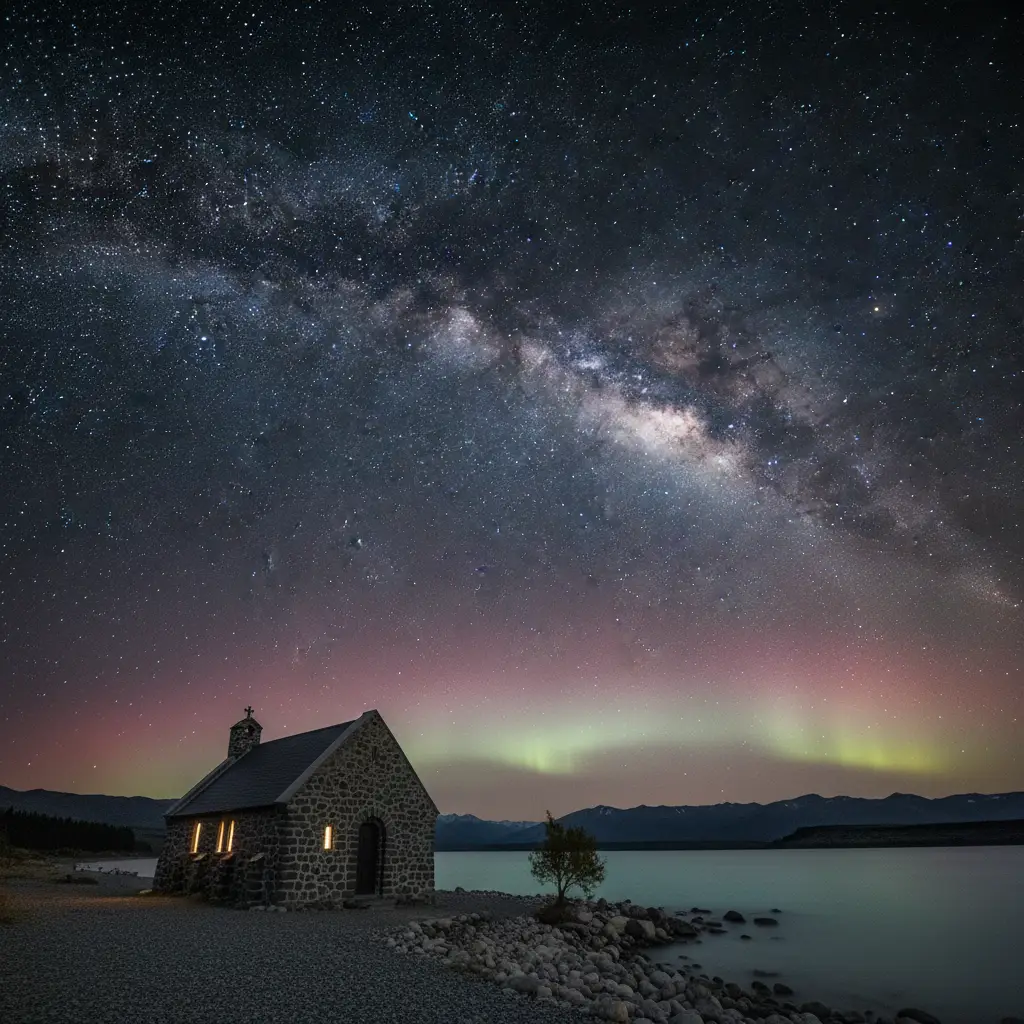
This massive reserve includes Lake Tekapo, Mt Cook Village, and Twizel. While slightly further north than Southland, the exceptional clarity of the air and strict light pollution controls make it a prime location. The Church of the Good Shepherd is an iconic spot, though it can get crowded. For a more private experience, drive up to the Mt John Observatory (if accessible) or find a secluded spot along the lake shore.
Queenstown and Wanaka
While Queenstown itself has light pollution, a short drive to Moke Lake or along the road to Glenorchy provides dark skies. In Wanaka, driving out towards Lake Hawea or up the Cardrona Valley can yield excellent results during strong storms (Kp 5+).
When to Go: Winter vs. Equinox Viewing
Many travelers assume the middle of winter is the only time to see the lights, but the science suggests otherwise. The “Russell-McPherron effect” explains why geomagnetic activity is often higher around the equinoxes.
The Equinox Advantage (March and September)
During the Spring and Autumn equinoxes, the alignment of the Earth’s magnetic field relative to the sun’s magnetic field creates cracks that allow solar wind to pour in more easily. Statistically, March and September are the most active months for geomagnetic storms. The temperatures are also milder than mid-winter, making the long nights of waiting more bearable.
The Winter Solstice (June – August)
The primary advantage of winter is the duration of darkness. In June and July, the South Island experiences long nights, giving you a viewing window from 6:00 PM to 7:00 AM. This maximizes your chances simply by giving you more hours of darkness. However, winter weather can be treacherous, with clouds and snow often obscuring the sky. Eco-tourists should be prepared for sub-zero temperatures and icy roads.
Essential Gear and Photography Tips
The human eye often perceives the aurora as white or pale grey beams dancing in the sky unless the storm is very strong. Cameras, however, can accumulate light over time, revealing the vibrant greens, pinks, and purples.
Camera Settings
- Manual Mode: You must shoot in manual.
- Focus: Set lens to manual focus and adjust to infinity. Test this on a bright star or distant light.
- Aperture: Use the widest aperture possible (lowest f-number), ideally f/2.8 or lower.
- ISO: Start between ISO 1600 and 3200. High ISO adds noise but captures more light.
- Shutter Speed: Between 10 to 20 seconds. Any longer and the stars will start to trail (blur) due to earth’s rotation.
Clothing and Safety
Aurora hunting is a sedentary activity in freezing conditions. Dress in layers: merino wool base layers, a fleece mid-layer, and a windproof/waterproof down jacket. Wear gloves that allow you to operate your camera/phone. Always carry a headtorch with a red light mode to preserve your night vision and that of other stargazers around you.
Frequently Asked Questions
What is the best month to see the Aurora Australis in New Zealand?
While the aurora can occur year-round, the equinox months of March and September statistically offer the highest geomagnetic activity. However, the winter months (June to August) provide the longest hours of darkness, increasing your window of opportunity.
Can I see the Southern Lights with the naked eye?
Yes, during strong geomagnetic storms (Kp 5+), the aurora is visible to the naked eye as moving beams of light. However, colors are much less intense than in photos. To the eye, it often appears as a shifting white or grey glow, while the camera sensor reveals the greens and reds.
How far north in NZ can the aurora be seen?
During extreme geomagnetic storms (G4 or G5), the aurora has been seen as far north as Auckland and Northland. However, for consistent viewing, you should be as far south as possible, ideally in the Otago or Southland regions of the South Island.
What does a negative Bz mean for aurora forecasting?
A negative Bz indicates that the Interplanetary Magnetic Field is pointing south, which aligns with Earth’s magnetic field to “open the door” for solar particles. A sustained negative Bz is crucial for a strong aurora display.
Is there a specific time of night the aurora appears?
The aurora does not follow a set schedule and can appear anytime it is dark. However, statistically, the period around magnetic midnight (usually between 10 PM and 2 AM in NZ) often sees the most activity.
Do I need a professional camera to photograph the aurora?
Not necessarily. Modern smartphones with “Night Mode” or long-exposure settings can capture the aurora, especially if you use a tripod to keep the phone steady. However, a DSLR or mirrorless camera with a wide-angle lens will produce significantly higher quality images.