Kauri Dieback is a fatal condition caused by Phytophthora agathidicida, a microscopic soil-borne pathogen that attacks the roots of New Zealand’s kauri trees, damaging the tissues that transport nutrients and water. There is currently no known cure for this disease, which ultimately starves the tree, making strict biosecurity measures and hygiene protocols essential for the survival of these ancient giants.
What is Phytophthora agathidicida?
To understand the gravity of the threat facing the forests of northern New Zealand, one must first understand the biological agent responsible. Phytophthora agathidicida (formerly known as Phytophthora taxon Agathis or PTA) is not a fungus, although it behaves similarly to one. It is a water mold, an oomycete, which literally translates from Greek as “plant destroyer.”
This pathogen is specific to the kauri (Agathis australis). It lives in the soil and infects the tree through its root system. The life cycle of this pathogen is particularly insidious because it utilizes distinct spore phases to survive and spread. The primary vector for infection is the zoospore. These are microscopic, kidney-shaped spores equipped with flagella (tail-like structures) that allow them to swim through films of water in the soil. They are chemically attracted to kauri roots.
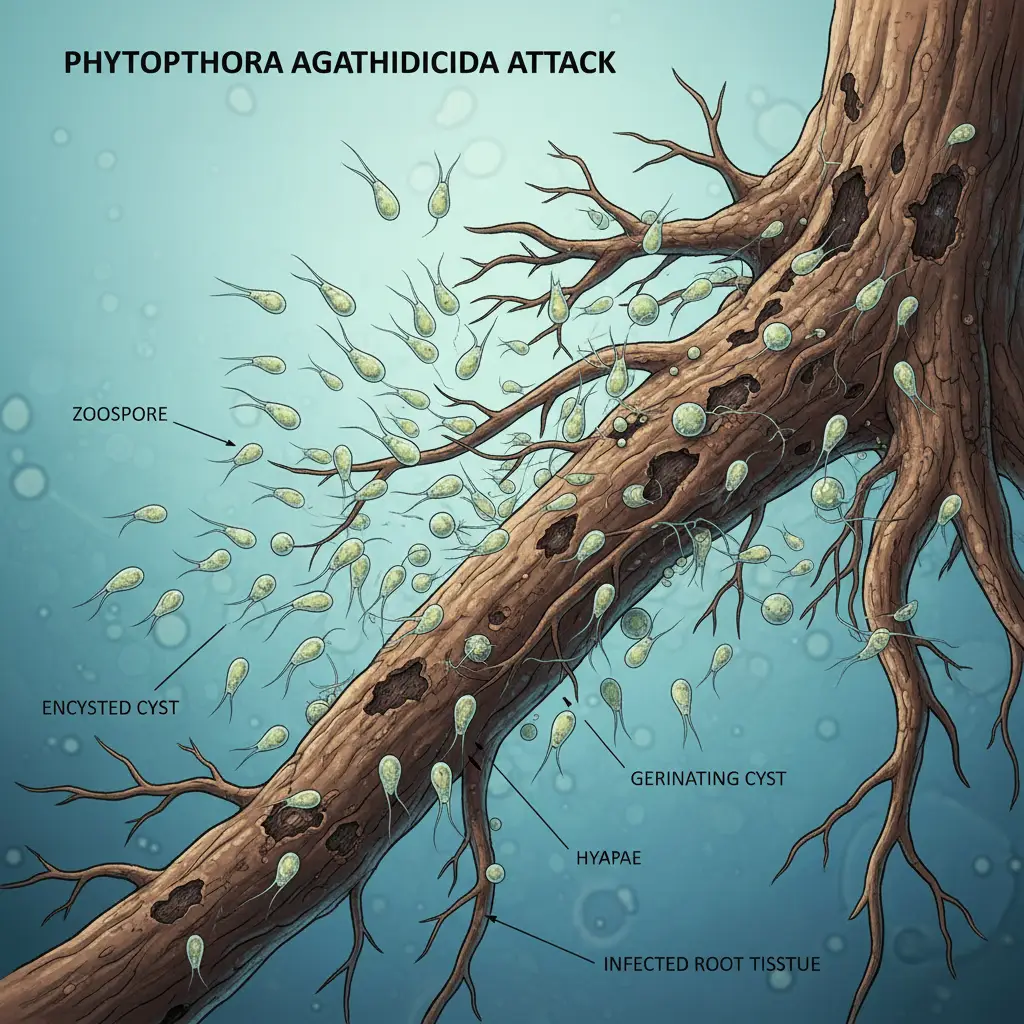
Once the zoospores reach the root, they encyst and penetrate the outer layer. Inside the tree, the pathogen produces mycelia which grow through the root tissue, destroying the cells responsible for transporting water and nutrients up the trunk to the canopy. essentially, the tree dies of thirst and starvation, despite being rooted in nutrient-rich soil.
How does the pathogen spread?
While the zoospores can swim short distances through waterlogged soil, the primary method of long-distance transmission is the movement of contaminated soil. This is where human interaction becomes the critical factor. A pinhead-sized amount of soil can contain thousands of oospores (the resting phase of the pathogen), which can survive in a dormant state for years.
Vectors for spreading the disease include:
- Footwear: Hikers carrying mud in the treads of their boots.
- Equipment: Walking poles, tripods, and camping gear.
- Animals: Wild pigs and feral animals disturbing soil and carrying it on their hooves.
- Machinery: Vehicles and earthmoving equipment used in forest areas.
The Significance of Kauri Among Native Trees of Aotearoa
When discussing the native trees of Aotearoa, the Kauri stands as a biological and cultural titan. Growing in the subtropical northern distincts of the North Island, they are among the world’s largest and longest-living trees. Some specimens are estimated to be over 2,000 years old, with trunks exceeding 5 meters in diameter.
Ecologically, Kauri are a keystone species. They modify the soil beneath them, creating a specialized environment known as a podzol. This unique soil chemistry dictates what other native trees of Aotearoa can grow in the vicinity. A healthy kauri forest supports a complex ecosystem of epiphytes, birds, and insects that rely specifically on the architecture and microclimate provided by these giants.
Culturally, to the Māori people, the Kauri is Te Whakaruruhau (The Protector). In creation mythology, the Kauri is the legs of Tāne Mahuta, the god of the forest, who separated the earth mother (Papatūānuku) and sky father (Ranginui) to let light into the world. The death of these trees is not just an ecological loss; it is a spiritual crisis, viewed by many as a weakening of the life force (mauri) of the forest.
Identifying Symptoms of the Disease
Detecting Kauri Dieback can be difficult because the disease has a long latency period. A tree may be infected for years before showing outward signs of distress. However, for eco-tourists, guides, and conservationists, recognizing the visual symptoms is vital for reporting potential new infection sites.
1. Basal Bleeding (Gummosis)
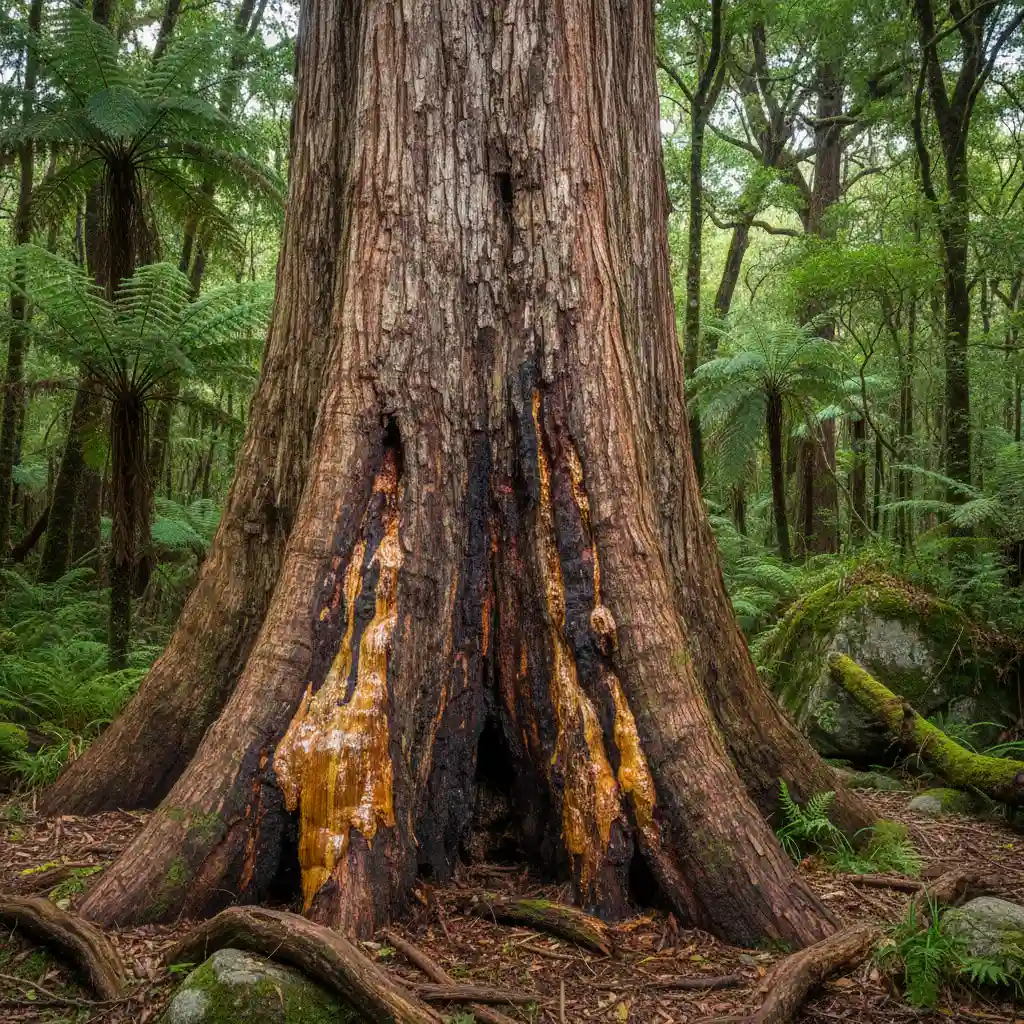
The most iconic and heartbreaking symptom is the bleeding of gum (resin) at the base of the trunk. While Kauri naturally produce gum to heal wounds, dieback-induced bleeding is distinct. It often appears as a collar of resin around the lower trunk, extending from the soil line upwards. The resin looks like candle wax or spilled blood, oozing through cracks in the bark caused by the internal destruction of the cambium layer.
2. Canopy Thinning and Chlorosis
As the roots fail to deliver water, the upper parts of the tree begin to suffer. The canopy, usually thick and dominating, begins to thin out. The leaves turn from a vibrant, deep green to a sickly yellow (chlorosis). This often starts at the very top of the crown and works its way down. Eventually, the tree is left with bare branches, resembling a stag’s antlers, indicating the tree is dead or near death.
3. Root Death
While not visible without excavation (which should never be done by the public), the feeder roots beneath the soil rot away. This loss of root integrity can sometimes lead to the tree becoming unstable, though the deep taproots usually keep the dead snag standing for decades.
Understanding Track Closures in Waitakere and Northland
In response to the rapid spread of the disease, the Department of Conservation (DOC) and local Iwi have implemented strict measures, including the closure of significant tracts of forest. This is a triage strategy designed to quarantine healthy areas from infected ones.
The Rāhui: A Cultural and Legal Prohibition
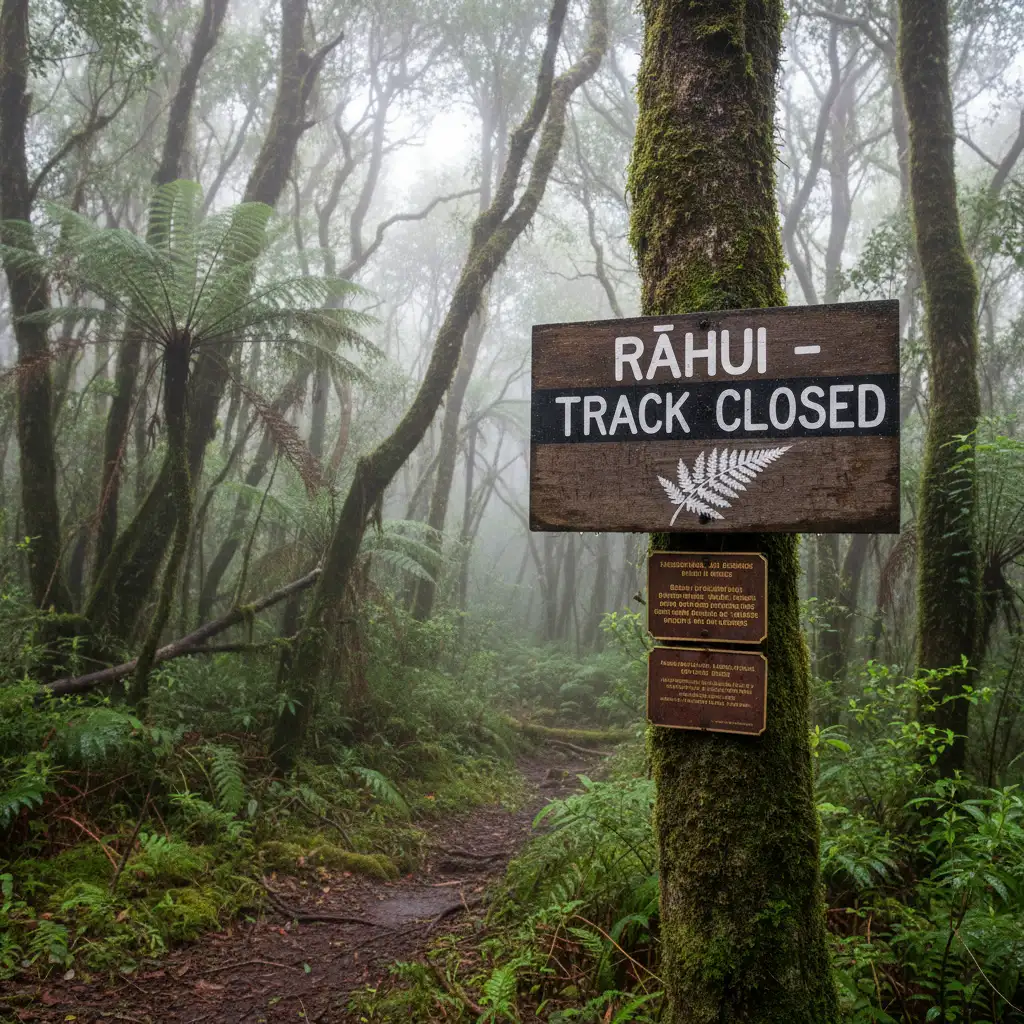
In areas like the Waitakere Ranges west of Auckland, local Iwi (Te Kawerau ā Maki) placed a rāhui over the forest. A rāhui is a traditional prohibition restricting access to an area or resource to allow it to heal. This cultural institution is supported by the Controlled Area Notice (CAN) under the Biosecurity Act, making entry into these closed areas illegal.
Impact on Eco-Tourism
For visitors seeking to experience the native trees of Aotearoa, these closures mean that many popular tracks are inaccessible. In the Waitakere Ranges, many tracks remain closed or are being upgraded with boardwalks to keep feet off the tree roots. In Northland, specifically the Waipoua Forest (home to Tāne Mahuta), access is strictly controlled. Visitors must stay on the designated boardwalks. Stepping off the track for a photo puts the entire forest at risk.
It is crucial for tourists to check the Department of Conservation website for the latest track status before planning a hike. Ignoring closures carries heavy fines and risks spreading the pathogen to pristine areas.
Comprehensive Scrubbing Station Instructions
If you are entering a forest where Kauri are present, you will encounter cleaning stations. These are not optional suggestions; they are the frontline defense for the native trees of Aotearoa. Proper usage is mandatory.
The “Check, Clean, Dry” Protocol
Follow these steps rigorously every time you enter and exit a track:
- CHECK: Before you leave your car or accommodation, check your gear. Look at the soles of your boots, the tips of your walking poles, and the feet of any pets. If you see soil, it must be removed.
- THE SCRUBBING STATION – ENTRY:
- Approach the station and place one foot on the grate or brush pad.
- Use the provided brushes to vigorously scrub every crevice of your footwear soles. Do not forget the instep and the sides.
- Use the spray bottle (containing SteriGENE, a disinfectant) to saturate the soles of your boots.
- Ensure all visible soil is dislodged and falls through the grate.
- THE SCRUBBING STATION – EXIT:
- Repeat the process when leaving the forest. This prevents you from carrying spores from an infected forest to your next destination.
- DRY: Whenever possible, allow your gear to dry completely between hikes. The spores rely on moisture to survive.
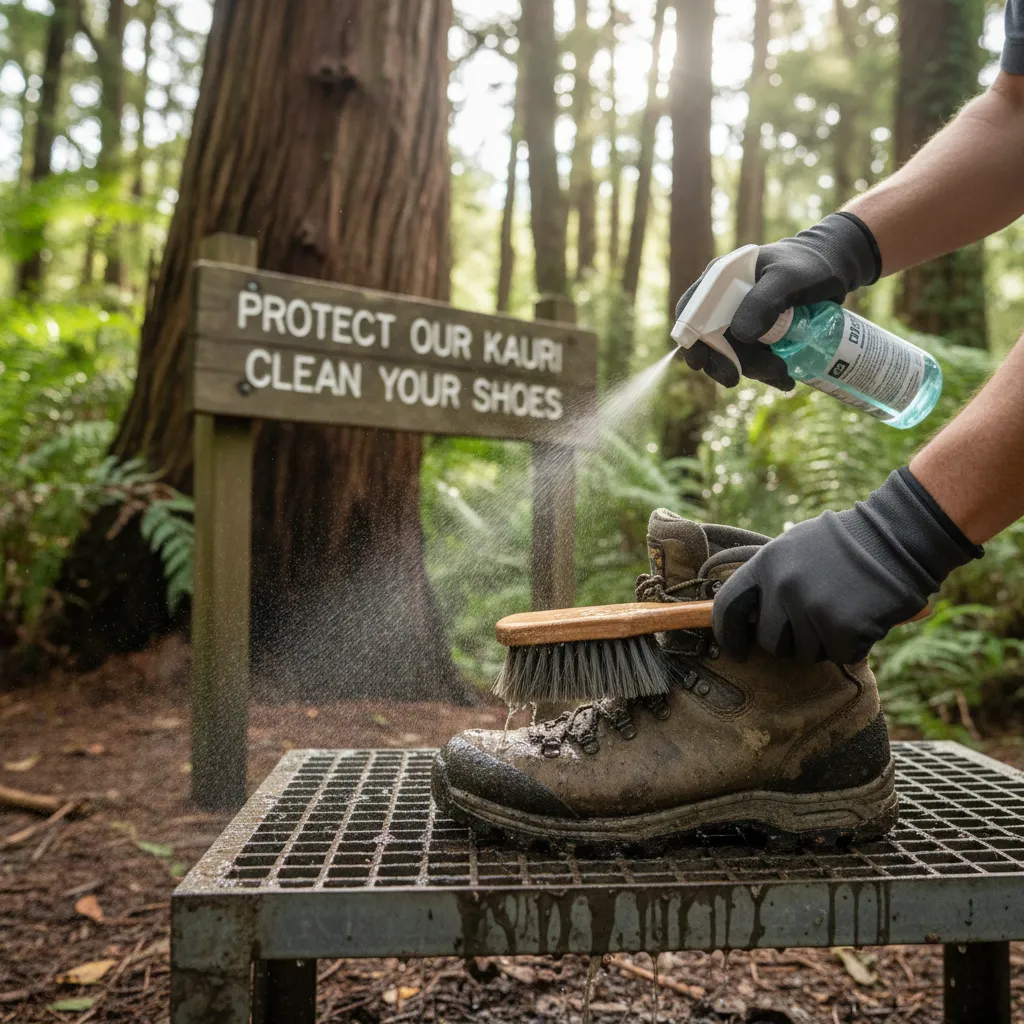
Note on Equipment: If you are using hiking poles, they must also be scrubbed and sprayed. Many stations have specific brushes for this. If you are biking (on permitted tracks), tires must be thoroughly cleaned.
The Future of Kauri Conservation
Is there hope for the Kauri? Science is racing to find solutions. Researchers are currently investigating the use of Phosphite, a chemical compound that has shown promise in boosting the tree’s immune system and suppressing the symptoms of the disease. While not a cure, it may act as a life-support measure for individual trees.
Furthermore, geneticists are searching for “super stocks”—individual trees that show natural resistance to the pathogen. By identifying and propagating these resistant lines, we may be able to ensure the survival of the species in the long term.
Until a cure is found, the responsibility lies with every person who steps into the New Zealand bush. By respecting closures and maintaining strict hygiene, we protect the legacy of the native trees of Aotearoa for future generations.
People Also Ask
Can Kauri Dieback be cured?
Currently, there is no cure for Kauri Dieback disease. Once a tree is infected, the pathogen stays in the soil and the tree forever. Treatments like Phosphite injections can help manage symptoms and prolong the life of the tree, but they do not eradicate the pathogen.
Is Kauri Dieback harmful to humans?
No, Phytophthora agathidicida is not harmful to humans or animals. It is a plant-specific pathogen that targets Kauri trees. However, humans are the main vector for spreading it, which is why hygiene is critical.
Why are tracks closed in the Waitakere Ranges?
Tracks are closed to prevent the movement of soil by hikers. The Waitakere Ranges are heavily infected, and closing tracks (via a Rāhui and Controlled Area Notices) helps quarantine the disease and protects the remaining healthy Kauri stands from contamination.
What disinfectant is used for Kauri Dieback?
The standard disinfectant used at cleaning stations is SteriGENE (formerly known as Trigene). It is a non-toxic, biodegradable disinfectant that is effective against the spores of the pathogen when applied to clean surfaces.
How long does Kauri Dieback stay in the soil?
The pathogen produces oospores (resting spores) that are incredibly resilient. They can survive in the soil for many years, even without a host tree nearby, waiting for conditions to become favorable or to be moved to a new location.
Does Kauri Dieback affect other native trees of Aotearoa?
Phytophthora agathidicida is highly specific to Kauri (Agathis australis). While it doesn’t kill other native trees, the loss of Kauri disrupts the entire ecosystem, affecting the plants and animals that rely on the Kauri forest environment.