What are the Matariki Star Clusters?
Matariki is the Māori name for the Pleiades star cluster, an open cluster of several hundred stars located in the constellation Taurus. Its heliacal rising in mid-winter marks the beginning of the Māori New Year, signifying a pivotal time for remembrance, celebrating the present harvest, and planning for the future in Aotearoa New Zealand.
Identifying the Pleiades Cluster in the Night Sky
For amateur astronomers and cultural enthusiasts alike, locating the Matariki star clusters is a rewarding experience that connects the observer to centuries of navigational history. Scientifically known as Messier 45 (M45), the Pleiades is one of the nearest star clusters to Earth and is clearly visible to the naked eye. However, finding it requires knowing where to look relative to other celestial landmarks.
How do you find Matariki?
To locate Matariki, you must look towards the north-east horizon before the sun rises. The most reliable method involves using the constellation Orion (Tautoru) as a guide. First, identify the three bright stars that form Orion’s Belt (Tautoru). Draw an imaginary line from Tautoru moving left (northwards). You will pass a triangular cluster of stars known as the Hyades (Te Kokotā), which forms the face of the Bull in Taurus. Continuing on that same trajectory, you will arrive at a distinct, tight grouping of twinkling blue-white stars. This is Matariki.
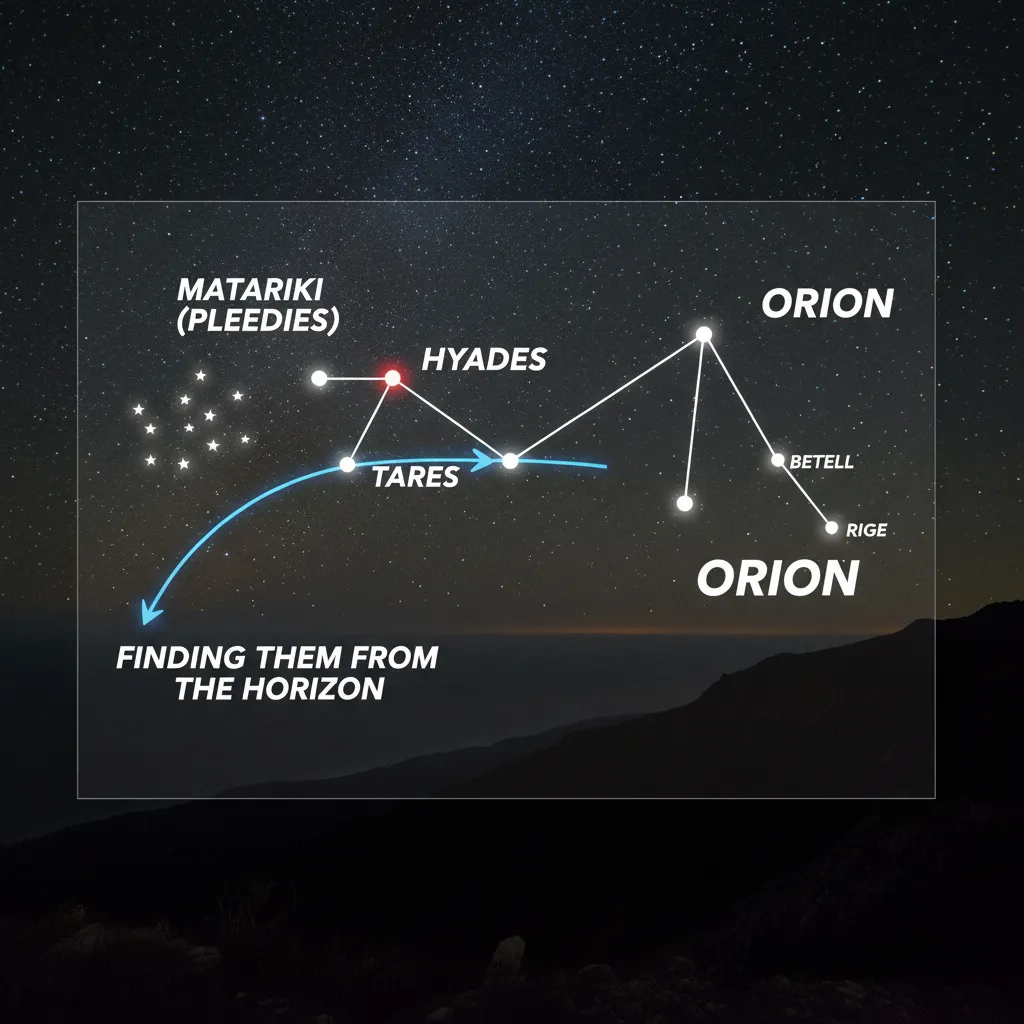
The visibility of the cluster is often described in Māori tradition as a sign of the year to come. If the stars appear clear and bright, it is believed that the year ahead will be warm and productive. Conversely, if they appear hazy or shimmering significantly, it may predict a cold winter and leaner harvest.
Cultural Significance and the Nine Stars
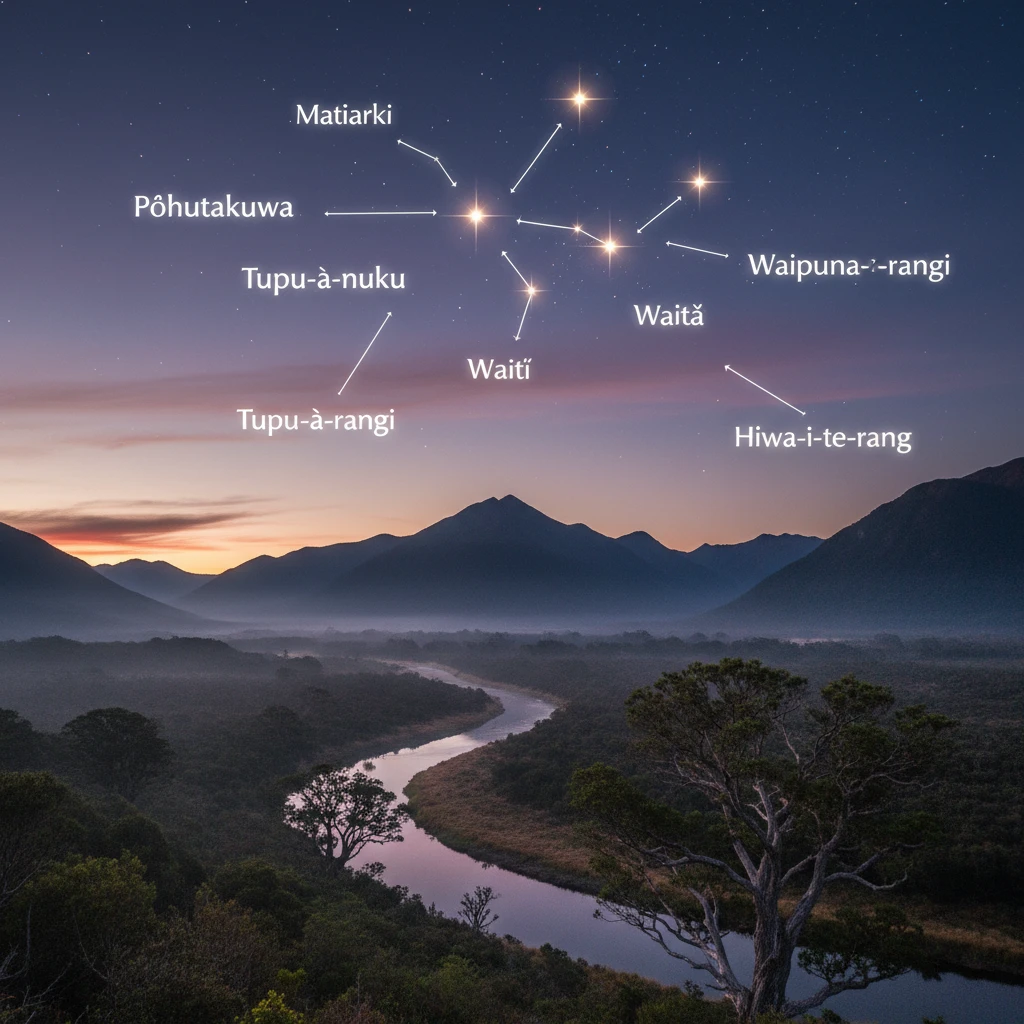
While Western astronomy typically identifies seven main stars (the Seven Sisters), Māori astronomy identifies nine distinct stars within the Matariki star clusters. Each star holds dominion over a specific aspect of the environment and human life, making Matariki a holistic celebration of the natural world. This deep connection between the celestial and the terrestrial drives the conservation ethos often associated with the holiday.
What is the legend behind Matariki?
One of the most profound creation stories regarding Matariki involves the separation of Ranginui (Sky Father) and Papatūānuku (Earth Mother). Tāwhirimātea, the god of wind and weather, was distraught by the separation of his parents. In his anger and grief, he tore out his own eyes and crushed them within his hands, throwing the fragments into the heavens. These shards of divine vision became ‘Ngā Mata o the Ariki’ (The Eyes of the God), later shortened to Matariki. This legend underscores why the weather (Tāwhirimātea’s domain) is so closely linked to the appearance of these stars.
The Nine Stars and Their Domains
Understanding the individual stars is essential for appreciating the eco-tourism and conservation aspects of the New Year:
- Matariki: The mother star, signifying reflection, hope, and the health of the people.
- Pōhutukawa: Connects to those who have passed on; it is the star of remembrance.
- Tupuānuku: Associated with food grown in the ground (kumara, potatoes). This star encourages soil health and sustainable agriculture.
- Tupuārangi: Associated with food from the sky and above ground (birds, fruit, berries). It highlights the importance of forest conservation.
- Waitī: Connects to fresh water and the creatures within it (eels, trout). It is a reminder of the importance of river and lake water quality.
- Waitā: Represents the ocean and salt water food sources. This star brings focus to marine conservation.
- Waipuna-ā-rangi: Associated with rain, hail, and snow. It reflects the hydrological cycle.
- Ururangi: Connected to the winds.
- Hiwa-i-te-rangi: The wishing star, to which people send their dreams and aspirations for the coming year.
Best Time to View and Eco-Tourism Hotspots
The resurgence of Matariki as a public holiday in New Zealand has galvanized the eco-tourism sector, particularly regarding Dark Sky tourism. Observing the Matariki star clusters is best done when light pollution is minimal, aligning perfectly with New Zealand’s conservation efforts to protect the night sky.
When is the best time to view Matariki?
The optimal time to view Matariki is in mid-winter, specifically during the months of June and July. The cluster becomes visible on the north-eastern horizon just before dawn (pre-dawn rising). However, the specific dates for the New Year celebration shift annually based on the lunar calendar (Maramataka). The holiday is timed to the rising of Matariki during the Tangaroa moon phase (the last quarter), which is believed to be the most productive time for viewing.
Top Dark Sky Sanctuaries in New Zealand
To truly appreciate the magnitude of the cluster, one should visit a designated Dark Sky Reserve. These locations offer the lowest levels of light pollution and often host guided eco-tours that explain the Māori narratives associated with the stars.
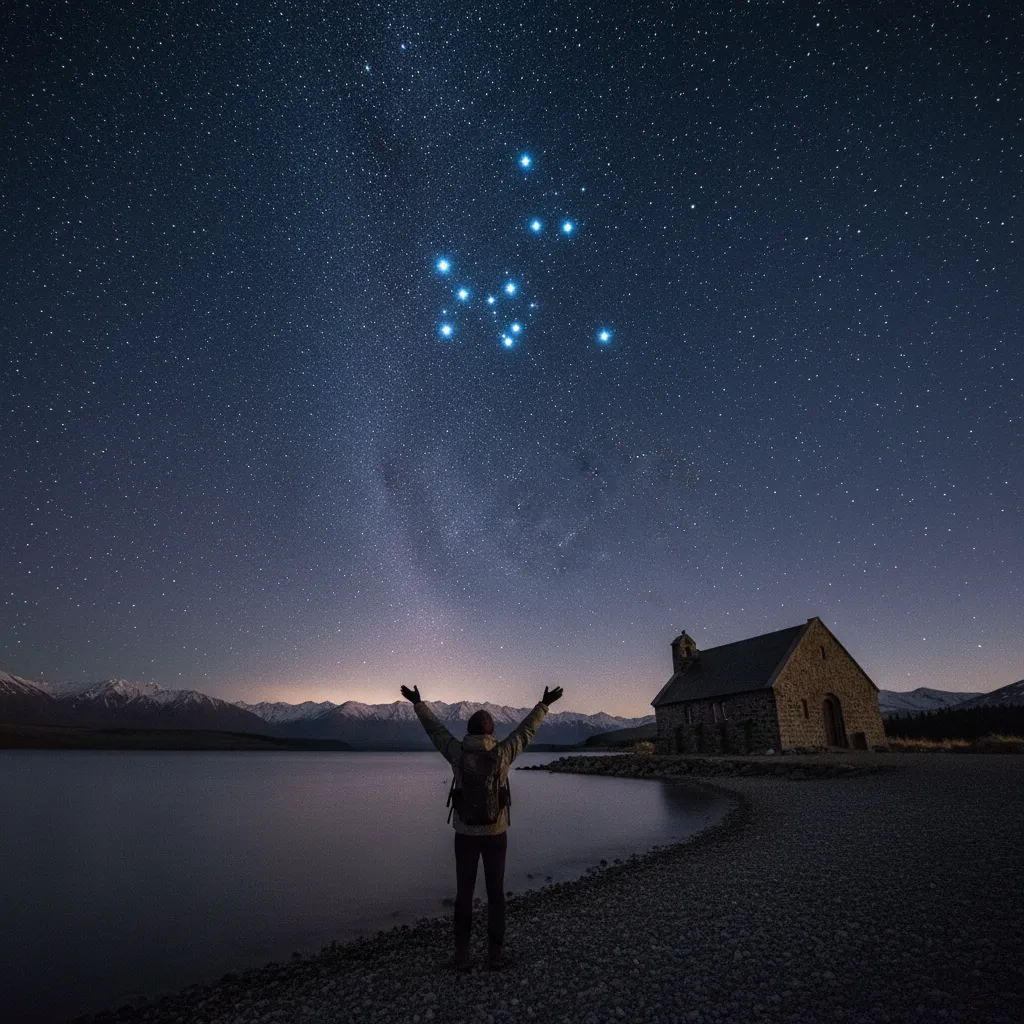
1. Aoraki Mackenzie International Dark Sky Reserve: Located in the South Island, this is the largest Dark Sky Reserve in the Southern Hemisphere. The region, including Lake Tekapo and Mount Cook, offers unparalleled views. Local tours often combine astronomy with Māori storytelling.
2. Great Barrier Island (Aotea): An International Dark Sky Sanctuary located off the coast of Auckland. Being an island completely off the grid, the skies here are pristine. It is an ideal location for those seeking a rugged, nature-immersive experience.
3. Rakiura (Stewart Island): As the southernmost populated island in New Zealand, Rakiura offers a high chance of seeing the Aurora Australis alongside Matariki. The island’s heavy focus on conservation and native bird life (like the Kiwi) makes it a premier eco-tourism destination.
How to Celebrate Matariki Respectfully
As Matariki gains international attention, visitors and locals alike seek ways to participate in the festivities respectfully. The celebration is not merely a party; it is a solemn and joyous observance rooted in three major principles: Remembrance, Celebrating the Present, and Looking to the Future.
Remembrance of the Past
The first phase of Matariki involves acknowledging those who have passed away since the last rising of the star cluster. In traditional times, names of the deceased were called out to the star Pōhutukawa to guide them into the afterlife. Modern celebrations often involve quiet reflection, visiting family graves (urupā), or simply sharing stories of loved ones who are no longer with us.
Celebrating the Present (Hākari)
Matariki occurs after the harvesting season, making it a time of thanksgiving for the food stored for winter. A central part of the celebration is the *Hākari* (feast). Eco-tourism operators and local communities often host events featuring traditional Hāngī (food cooked in an earth oven). To celebrate respectfully, prioritize locally sourced, sustainable kai (food). This honors the stars Tupuānuku and Tupuārangi by respecting the earth’s resources.
Looking to the Future
The final aspect is planning. This is the time to set intentions, similar to Western New Year’s resolutions, but with a focus on community and environmental well-being. It is customary to send wishes to the star Hiwa-i-te-rangi. Educational workshops on sustainability, planting native trees, and preparing garden beds for the coming spring are common and respectful ways to observe this phase.

People Also Ask
What are the 9 stars of Matariki?
The nine stars are Matariki (the mother), Pōhutukawa, Tupuānuku, Tupuārangi, Waitī, Waitā, Waipuna-ā-rangi, Ururangi, and Hiwa-i-te-rangi.
Why is Matariki a public holiday in New Zealand?
It was established as a public holiday to recognize the unique indigenous heritage of New Zealand, marking the first public holiday based on the Māori lunar calendar (Maramataka).
What does the word Matariki literally mean?
Matariki is an abbreviation of ‘Ngā Mata o the Ariki’, which translates to ‘The Eyes of the God’ (referring to the god Tāwhirimātea).
Is Matariki visible everywhere in New Zealand?
While the cluster rises for the whole country, some regions with high mountain ranges to the east cannot see it clearly on the horizon. In these areas (like Taranaki and Whanganui), the star Puanga (Rigel) is celebrated instead.
Can I see Matariki without a telescope?
Yes, Matariki is an open star cluster that is clearly visible to the naked eye, appearing as a fuzzy group of stars roughly the size of the full moon.
What is the difference between Matariki and the Pleiades?
Astronomically, they are the same star cluster (M45). Culturally, Matariki refers specifically to the Māori significance, legends, and calendar system associated with the cluster’s mid-winter rising.