Driving in snow in New Zealand requires specific preparation: always carry snow chains and know how to fit them, drive significantly slower than the posted limit, increase following distances to four seconds, and check weather forecasts (MetService) and road closures (NZTA) before departing. For astro-tourists, extreme caution regarding black ice on remote roads at night is critical.
New Zealand’s South Island offers some of the clearest, darkest skies in the world, making it a pilgrimage site for astro-tourists and stargazers. However, the prime season for viewing the Aurora Australis and the galactic core—winter—coincides with the most treacherous driving conditions. The Mackenzie Basin, home to the Aoraki Mackenzie International Dark Sky Reserve, transforms into a winter wonderland that is as dangerous as it is beautiful. Navigating these roads requires more than just a valid license; it demands a respect for the elements and a mastery of specific winter driving techniques.
For independent travelers seeking the solitude of the stars, the journey often involves driving late at night, long after grit trucks have finished their rounds and when temperatures plummet well below freezing. This guide provides authoritative driving in snow NZ tips tailored specifically for those chasing the night sky.
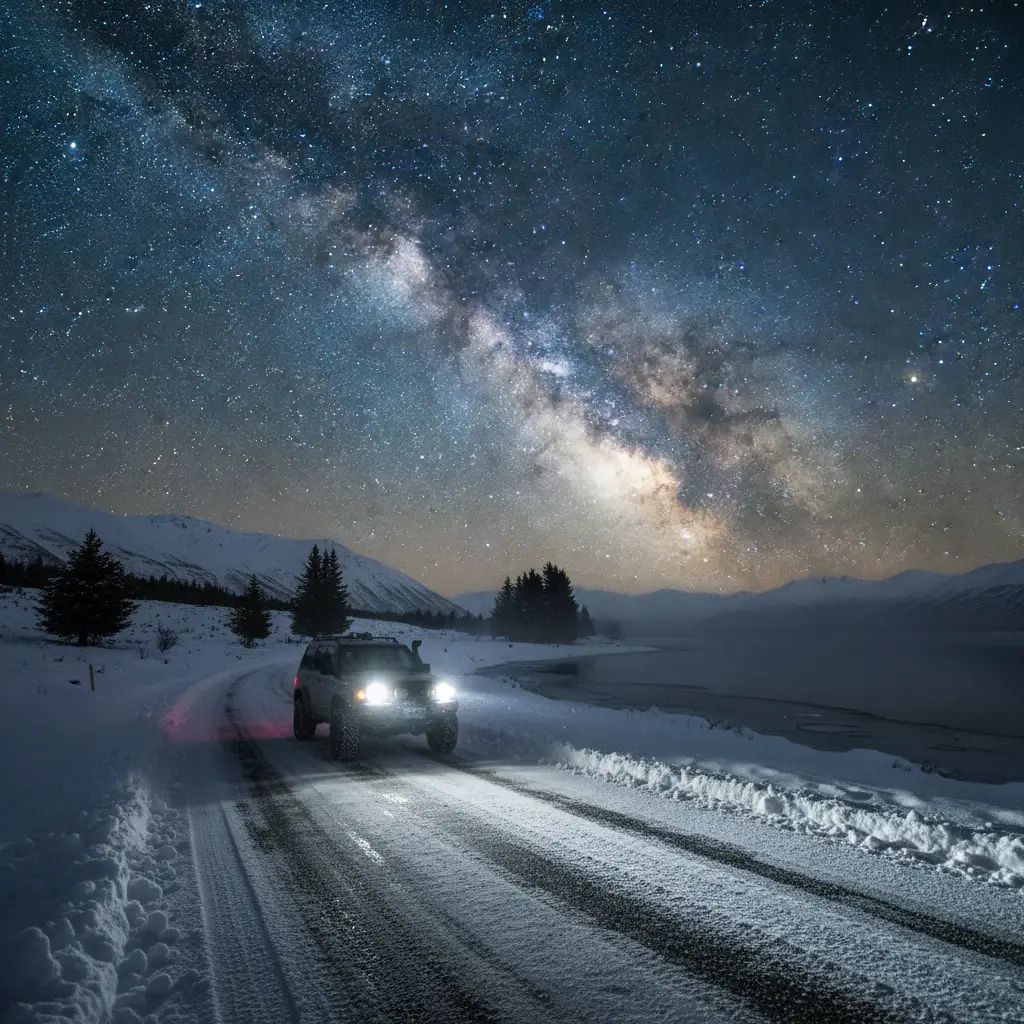
The Physics of Winter Grip: Understanding NZ Roads
Unlike North America or Europe, where roads are often heavily salted and wide, New Zealand’s alpine roads are typically narrow, winding, and surfaced with chip-seal. In winter, grit (small stones) is used instead of salt to aid traction. This creates a unique driving surface that can feel like driving on marbles if the ice beneath hasn’t melted.
When driving in snow in NZ, the primary rule is smoothness. Every input you give the car—steering, braking, accelerating—transfers weight. On dry tarmac, tires have enough grip to handle sudden weight transfers. On snow or ice, a sudden jerk of the steering wheel or a stomp on the brake pedal breaks the fragile bond of traction, sending the vehicle into a skid.
Astro-tourists must understand that their pursuit of dark skies often leads them to unsealed gravel roads or high-altitude passes (like the Lindis or Burkes Pass) where conditions change rapidly. The temperature difference between the sunny side of a valley and the shaded side can be enough to turn wet roads into sheets of ice instantly.
How to Fit Snow Chains Correctly?
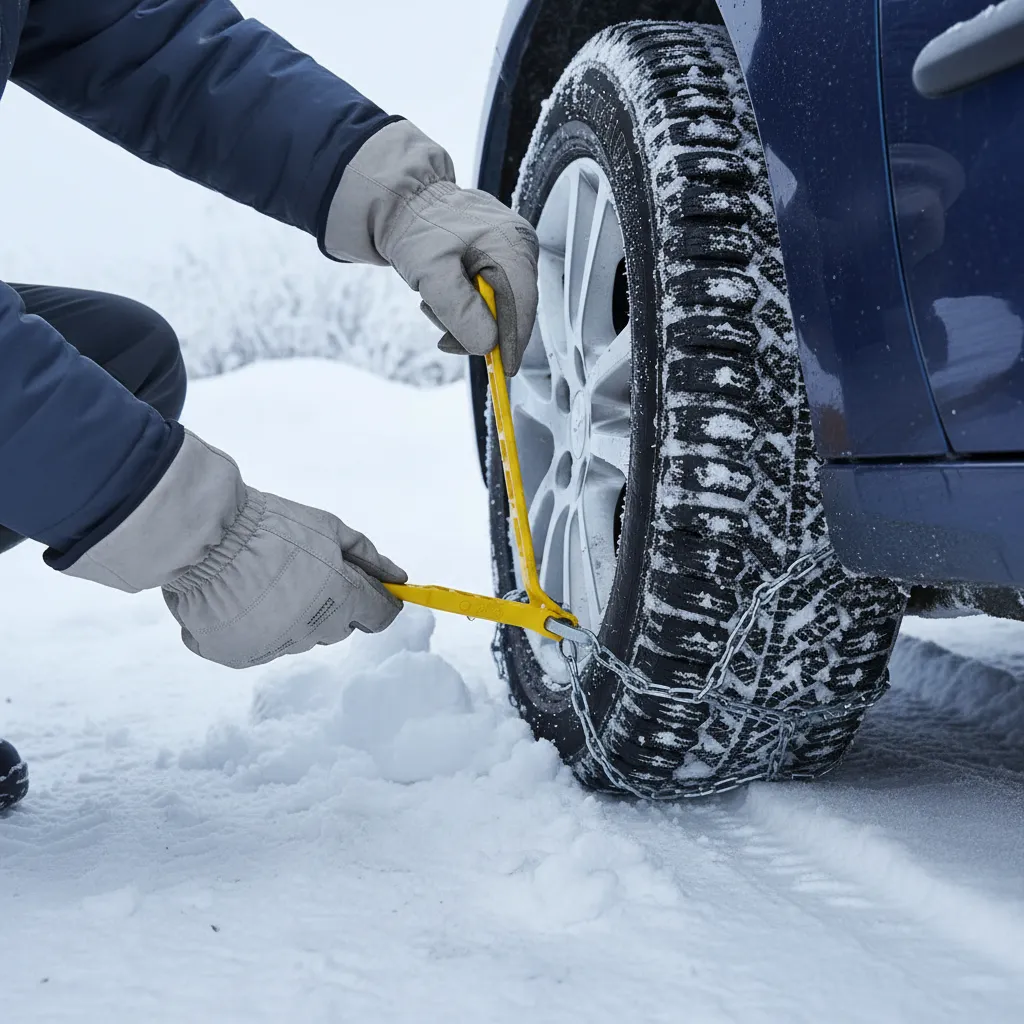
One of the most critical driving in snow NZ tips is regarding snow chains. It is a legal requirement on many South Island roads to carry chains during winter, and police often set up checkpoints to ensure compliance. For the astro-tourist driving a rental car, simply having them in the trunk is not enough; you must know how to use them before you are stuck in a blizzard at 2 AM.
When to Fit Chains
Do not wait until you are sliding backward down a hill to fit your chains. Fit them when:
- There is snow packed on the road surface.
- You see a “Chains Must Be Fitted” sign (ignoring this voids insurance and risks fines).
- Traction control lights are flickering constantly on your dashboard.
The Fitting Process
Ideally, practice this in the dry parking lot of your rental agency before heading out.
- Pull Over Safely: Find a flat, designated chain bay. Do not stop in the middle of the lane.
- Identify Drive Wheels: Chains must go on the wheels that power the car. For most small rental cars, this is the front. For many SUVs, it is all four, but if you only have one pair, put them on the front for steering and braking traction.
- Untangle: Hold the chains up to ensure no links are twisted.
- Drape and Connect: Drape the chain over the tire. Connect the inner ring first (behind the wheel), then the outer connectors.
- Center and Tighten: Ensure the chain is centered on the tread. Engage the tensioning mechanism.
- The 100-Meter Rule: Drive forward slowly for 100 meters, then stop and re-tighten. The chains will settle and become loose; failing to re-tighten can damage the wheel arch or brake lines.
What is Black Ice and How to Spot It?
Black ice is a thin coating of glazed ice on the road surface. It is visually transparent, allowing the black asphalt to show through, which makes it look exactly like a wet road. For astro-tourists moving between observation points, black ice is the single greatest hazard.
Where Black Ice Forms
Black ice forms where moisture freezes on the road surface. This typically happens:
- On Bridges: Cold air circulates above and below the bridge deck, freezing it faster than the insulated ground.
- In Shadows: Areas blocked by mountains or tree lines that receive no direct sunlight during the day.
- At Dawn and Dusk: When temperatures shift rapidly.
Detection and Reaction
If the road looks wet but there is no spray coming off the tires of the car in front of you, or if the road looks “glossy” or “polished” under your headlights, assume it is ice. If you hit black ice, do not brake and do not steer sharply. Lift your foot off the accelerator and keep the steering wheel straight. Allow the car to pass over the patch. Panic braking will lock the wheels (or activate ABS aggressively), causing a total loss of control.
Navigating the Dark Sky Reserves at Night
Astro-tourism necessitates driving when the environment is most hostile. While general tourists are safely tucked in their hotels, you may be driving to the Mt John Observatory or a secluded spot near Lake Pukaki. Night driving in winter presents specific challenges.
Headlight Etiquette and Visibility
High beams are essential for spotting hazards, but they must be dipped immediately for oncoming traffic. In heavy snow or fog, do not use high beams. The bright light reflects off the snowflakes or water droplets, creating a “white wall” effect that blinds you. Use low beams and fog lights if available.
Wildlife Hazards
New Zealand roads are unfenced in many high-country areas. Sheep, cattle, and possums are active at night. Hitting a cow at 80km/h is catastrophic. Scan the verges of the road constantly. Eye-shine (reflection of headlights in animal eyes) is often the first warning.

Vehicle Preparation and Rental Choices
Choosing the right vehicle is half the battle. While budget is always a factor, skimping on safety features for a winter road trip is unwise.
4WD vs. 2WD
For winter astro-tourism, a 4WD (Four Wheel Drive) or AWD (All Wheel Drive) vehicle is highly recommended. While 4WD does not help you stop on ice, it significantly assists with traction when cornering and accelerating, especially on inclines. However, a 4WD with summer tires is worse than a 2WD with winter tires. Always ask your rental agency about the tires fitted to the vehicle.
Daily Safety Checks
Before leaving your accommodation for a night of stargazing, perform these checks:
- Windshield: Ensure it is clean inside and out to reduce glare.
- Wipers: Lift them off the glass when parking overnight so they don’t freeze to the windshield.
- Fuel: Keep the tank at least half full. If you get stuck, the engine is your only source of heat.
- Lights: Check that all headlights, taillights, and indicators are functioning.
What Should Be in Your Winter Emergency Kit?
Remote areas in the South Island often have zero cell phone coverage. If you slide into a ditch at 1 AM while chasing the Southern Lights, you might be waiting hours or even until morning for help. Your survival depends on your preparation.
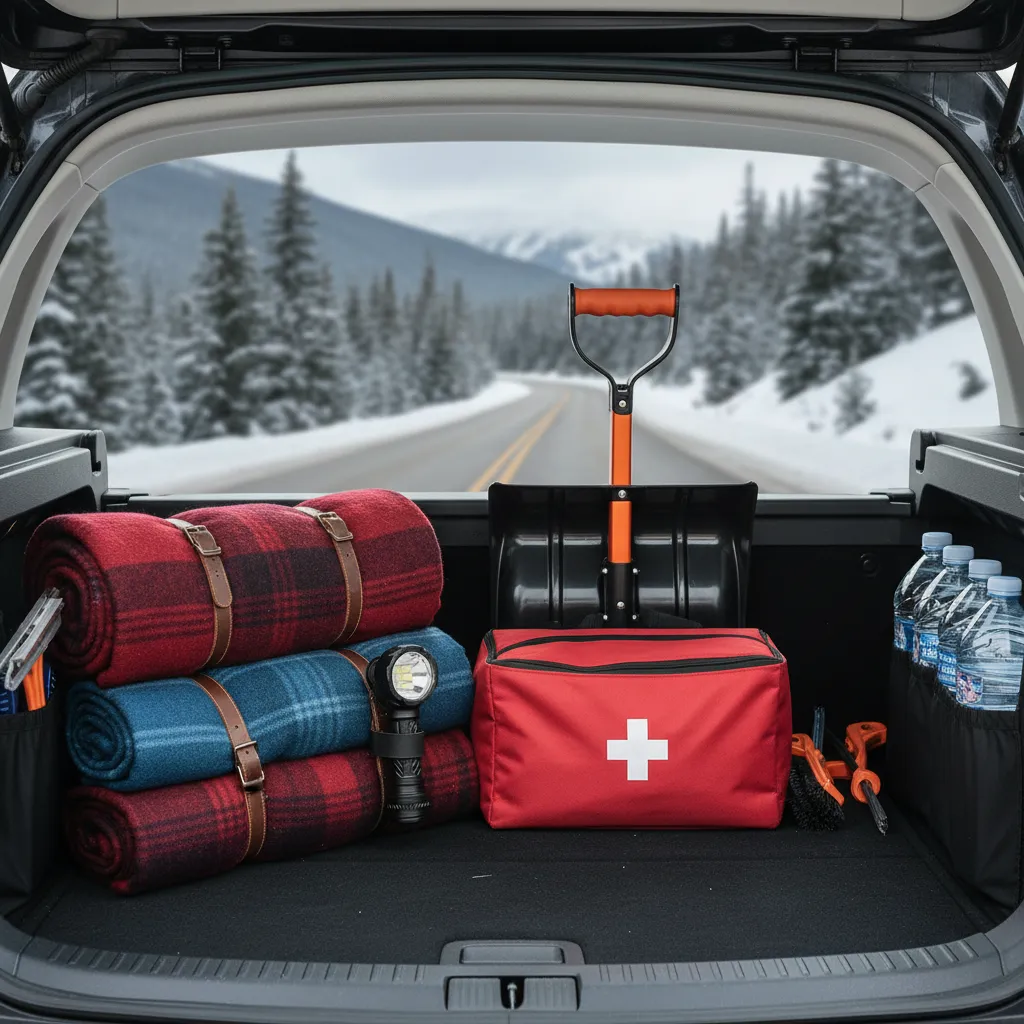
Every astro-tourist vehicle should carry a dedicated winter emergency kit containing:
- Thermal Blankets: One for each passenger.
- Torch/Headlamp: Essential for fitting chains in the dark (with spare batteries).
- High-Energy Food: Chocolate, nuts, or muesli bars.
- Water: Keep it inside the car cabin so it doesn’t freeze.
- First Aid Kit: Standard requirement.
- Ice Scraper and Brush: To clear visibility.
- Small Shovel: To dig snow away from tires if bogged.
- Reflective Jacket: So other drivers can see you if you are outside the vehicle.
High-Risk Routes for Stargazers
Certain roads are popular for astro-tourism but notorious for winter hazards. Being aware of these specific trouble spots can help you plan safer travels.
The Lindis Pass (SH8)
Connecting the Mackenzie Basin to Central Otago, this pass is high, exposed, and frequently closes due to snow. It is a stunning location for photography but has no cell coverage for long stretches. Ice lingers here well into the day.
The Crown Range
The highest main road in New Zealand, connecting Queenstown and Wanaka. It offers incredible views but is steep and winding. Chains are almost always required here in winter. Inexperienced drivers should take the longer route via Cromwell (SH6) if conditions are marginal.
Tekapo to Mt Cook (SH80)
This dead-end road leads to the heart of the dark sky reserve. It runs alongside Lake Pukaki. The wind coming off the lake can be fierce, pushing vehicles around, and the temperature drops significantly as you approach the mountains. Watch for black ice on the bridges crossing the glacial rivers.
People Also Ask
Do I really need snow chains if I have a 4WD in NZ?
Yes. 4WD helps you move forward, but it does not help you stop on ice. Police and road authorities frequently require all vehicles, including 4WDs, to carry and fit chains on high mountain passes like the Crown Range or Lindis Pass during snow events.
What is the speed limit when driving in snow in NZ?
There is no specific fixed speed limit for snow, but the legal limit of 100km/h is dangerously fast in winter conditions. You should drive to the conditions. In snow or ice, this often means driving at 30km/h to 50km/h, or even slower if visibility is poor.
How do I know if a road is closed in New Zealand?
The most reliable source is the Waka Kotahi NZ Transport Agency (NZTA) Journey Planner website or app. They provide real-time updates on road closures, road works, and weather warnings. Always check this before departing.
Is it safe to drive at night in New Zealand winter?
It carries higher risks due to reduced visibility and the prevalence of black ice as temperatures drop. However, with proper preparation, slow speeds, and the right equipment (chains, warm gear), it can be done safely. Avoid driving if you are fatigued.
What does the “Chains Essential” sign mean?
This sign indicates that the road ahead has snow or ice cover and is dangerous. You must have chains in your vehicle to proceed. If the sign says “Chains Fitted,” you must stop and put them on immediately, regardless of your vehicle type.
Can I drive a campervan in the snow in NZ?
Driving a large campervan in snow is difficult due to the weight and rear-wheel-drive configuration of many vans. Many rental companies restrict driving on certain roads (like ski field access roads) in winter. Check your rental agreement carefully.