The best glamping spots for stargazing on New Zealand’s West Coast combine luxury off-grid accommodation with zero light pollution zones. Top locations include the rugged coastline of Punakaiki, the remote river valleys of Haast, and native bush canopies near Hokitika, offering unparalleled views of the Southern Cross and Milky Way alongside amenities like outdoor baths and glass-roofed sleeping quarters.
New Zealand’s West Coast, known locally as Te Tai Poutini, is a rugged strip of land sandwiched between the Southern Alps and the Tasman Sea. It is one of the few inhabited places on Earth where true darkness still exists, making it a premier destination for nocturnal eco-tourism. For travelers seeking the ultimate intersection of comfort and cosmos, West Coast glamping offers a front-row seat to the universe.
Punakaiki Beach Camps: Sleeping Near the Pancake Rocks
Punakaiki is world-renowned for its limestone Pancake Rocks and blowholes, but for the discerning eco-tourist, the real magic happens after the sun dips below the Tasman horizon. Glamping sites in this region utilize the natural amphitheater of the coastline to block out residual light from distant towns, creating a pristine dark sky sanctuary.
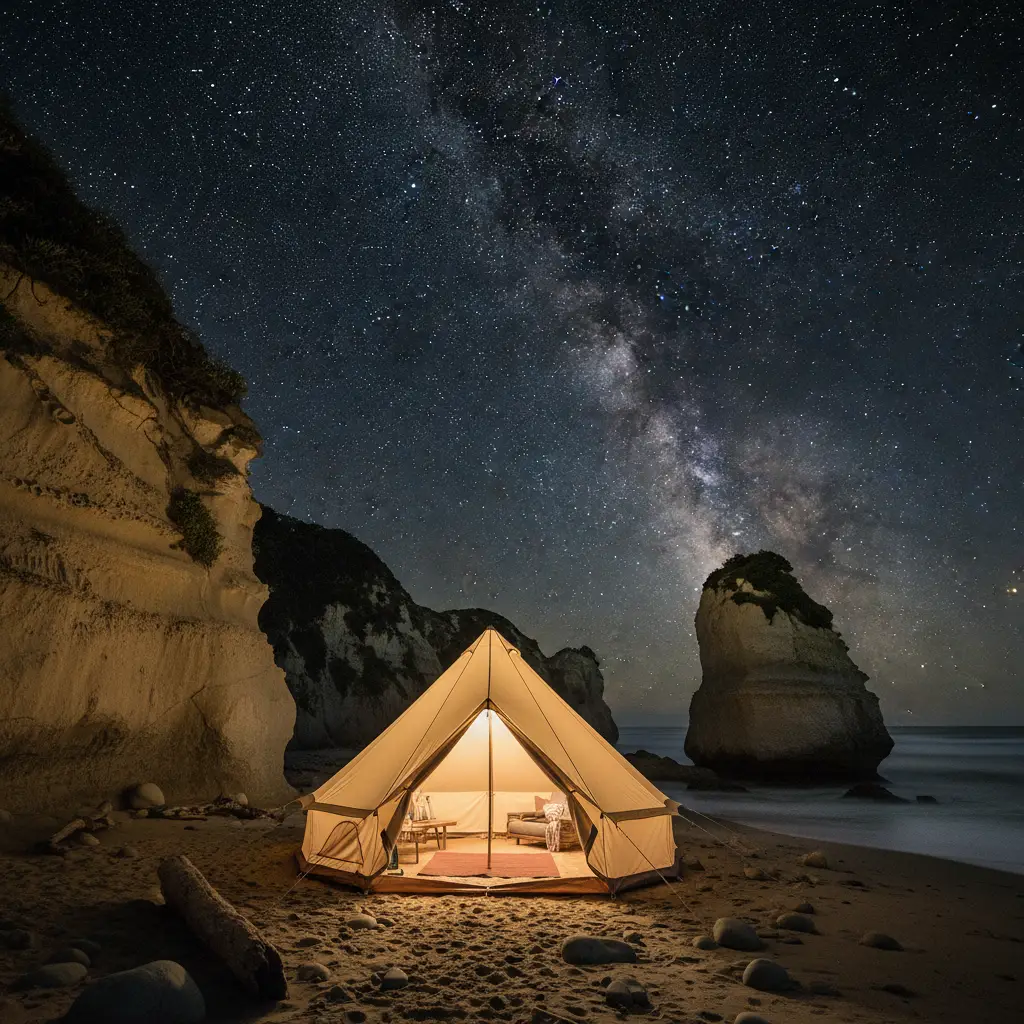
Why Punakaiki offers superior stargazing
The geographic orientation of Punakaiki faces directly west over the ocean. This means there is absolutely no light pollution for thousands of kilometers in the direction of the setting celestial bodies. As the Earth rotates, the core of the Milky Way becomes vividly apparent. Glamping operators here often position tents and eco-cabins to face the sea, allowing guests to watch the stars traverse the sky from the comfort of a queen-sized bed.
Accommodation Styles
In this area, you will typically find sturdy, weather-resistant structures designed to withstand the coastal elements while maximizing views. Look for:
- Glass-fronted Eco-Pods: Small, sustainable units with floor-to-ceiling windows.
- Safari Tents: Heavy canvas structures often raised on wooden platforms to protect the delicate dune flora.
Haast River Huts: Off-Grid Isolation
If your search for the best glamping spots for stargazing demands total isolation, the Haast region is unrivaled. Located in the heart of the Te Wahipounamu World Heritage Area, Haast is remote, wild, and incredibly dark.
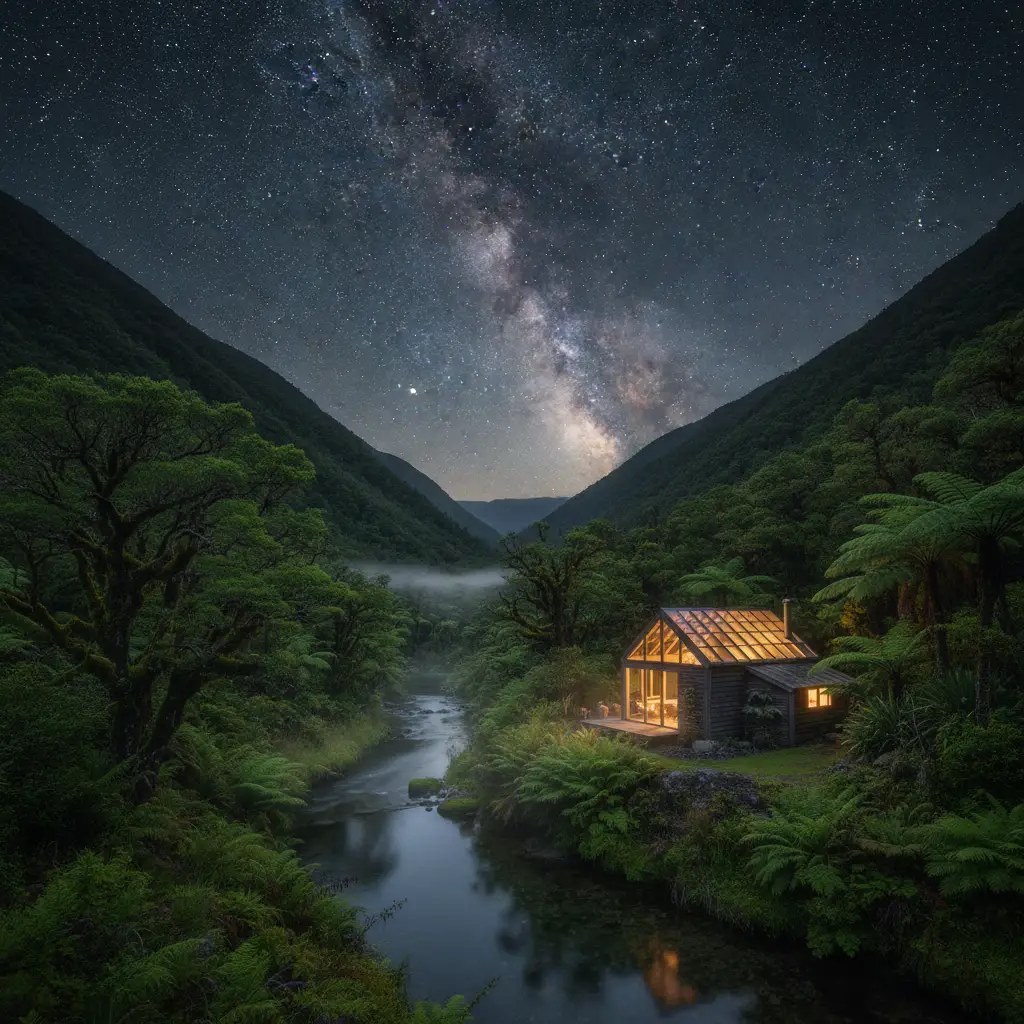
The Benefit of Deep Isolation
Haast River huts are often accessible only by boat, helicopter, or 4WD tracks. This inaccessibility is a feature, not a bug. By removing yourself entirely from the electrical grid, you eliminate “skyglow” entirely. The Bortle Scale, which measures night sky brightness, often rates this area as Class 1—the darkest possible sky.
Stargazing from the Riverbed
Many glamping spots here are situated on the edges of wide, braided riverbeds. These open spaces provide a 360-degree view of the sky, unobstructed by the dense rainforest canopy that covers much of the West Coast. It is the perfect setting for astrophotography enthusiasts who require long exposure times without interference.
Canopy Camping Options in Native Bush
Moving slightly inland, the concept of canopy camping elevates the glamping experience—literally. Nestled into the branches of ancient Rimu and Rata trees, these sites offer a unique perspective on the night sky, filtering the starlight through the silhouettes of native foliage.
Immersion in the West Coast Rainforest
Canopy camping sites near Hokitika and Greymouth are designed to blend seamlessly with the environment. These are not just tents on the ground; they are often architectural marvels suspended in the air or built into steep hillsides. The elevation takes you above the undergrowth, often putting you eye-level with the nocturnal birdlife.
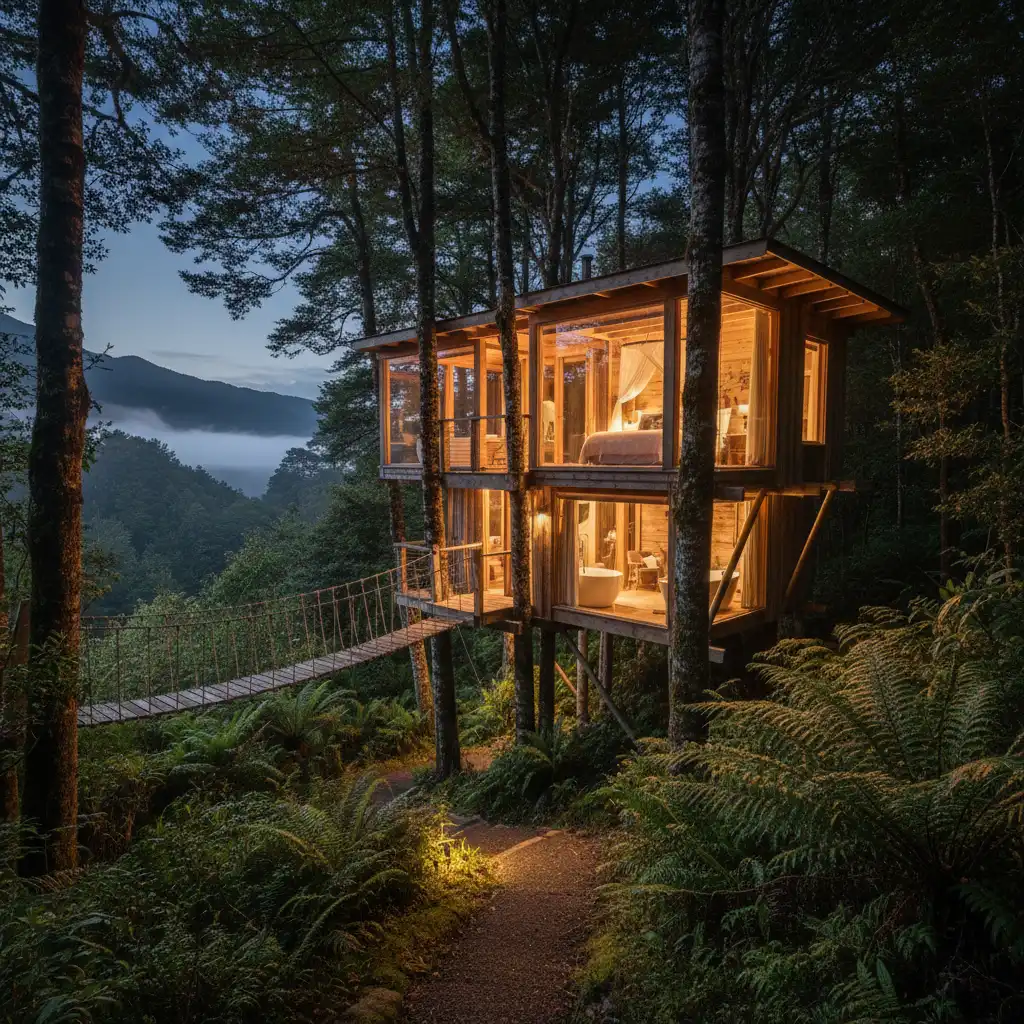
The “Sky-Window” Feature
A common feature in these high-end canopy sites is the skylight above the bed. Architects of these spaces understand the commercial intent of their guests: they want to see the stars without getting cold. Lying in a luxury treehouse, watching the Southern Cross rotate above through a double-glazed pane, is the epitome of West Coast glamping.
Facilities Guide: Solar Power, Outdoor Baths, and Connectivity
When booking the best glamping spots for stargazing, it is essential to understand the balance between rustic charm and modern luxury. The West Coast specializes in “rugged luxury,” where the amenities are high-end but eco-conscious.
Outdoor Baths: A Stargazer’s Best Friend
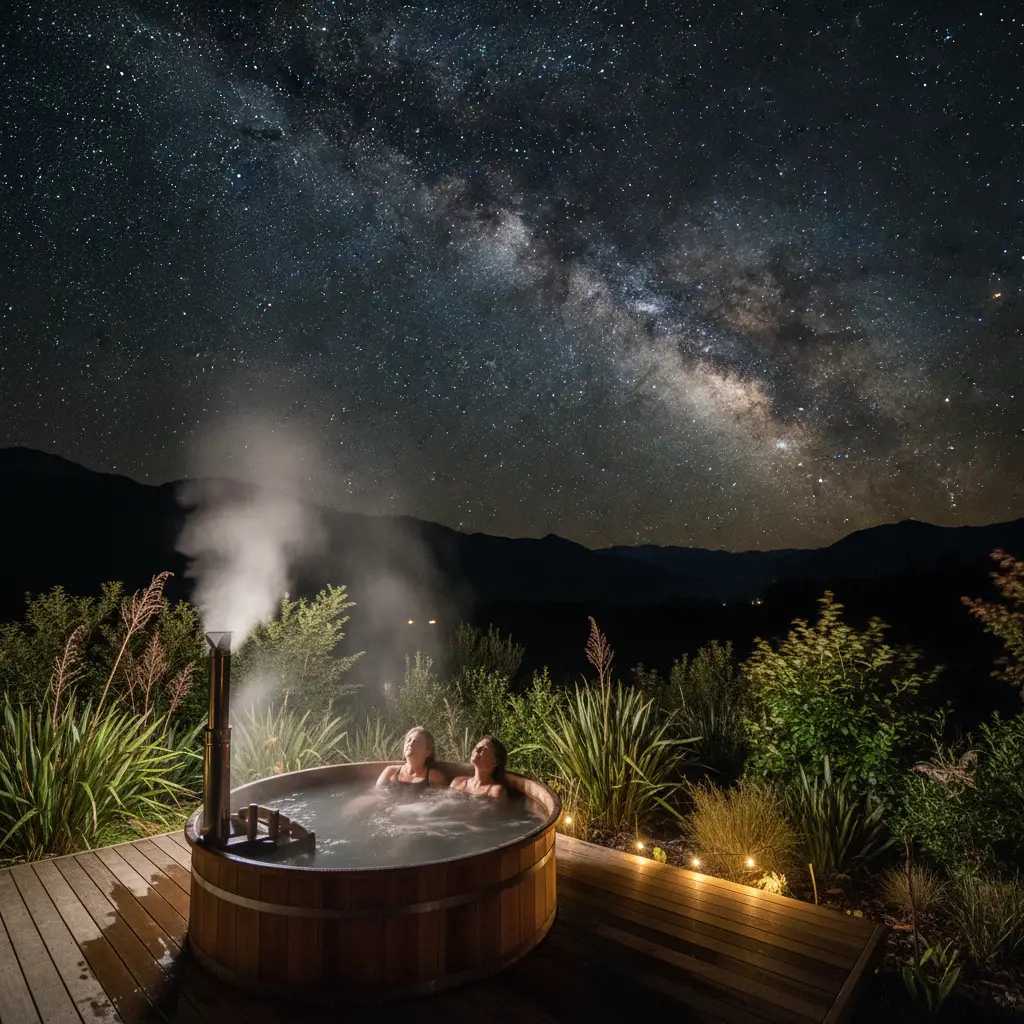
Perhaps the most sought-after amenity in New Zealand glamping is the outdoor bath. Whether it is a vintage clawfoot tub heated by gas or a wood-fired hot tub, the experience of soaking in hot water while the cool air nips at your face is legendary.
- Wood-fired Hot Tubs: Require some preparation (lighting the fire 2-3 hours prior), but offer a deep, natural heat.
- Gas-heated Outdoor Tubs: Instant heat, allowing for spontaneous stargazing sessions when the clouds clear.
Power and Connectivity
Most high-end glamping spots on the West Coast operate on solar power. This aligns with the eco-tourism ethos of the region.
- Lighting: Expect low-lumen, warm LED lighting. This is intentional to preserve night vision for stargazing.
- Charging: USB ports are common, but 3-pin plugs for hair dryers or high-draw appliances are rare.
- Wi-Fi: Many of these sites are “digital detox” zones. While some offer satellite internet, the best experience comes from disconnecting to reconnect with the cosmos.
Proximity to Nocturnal Wildlife Hotspots
Stargazing on the West Coast is rarely a solitary activity; you are often accompanied by the sounds of New Zealand’s unique nocturnal fauna. The best glamping sites are situated in corridors rich with biodiversity.
The Call of the Kiwi
The West Coast, particularly around Okarito and Haast, is home to the Rowi and Haast Tokoeka kiwi. These are among the rarest birds in the world. Glamping in these areas increases your chances of hearing their piercing calls at night. Some luxury operators even provide red-light torches (which do not disturb the birds) for guests wishing to spot them.
Glow Worms and Morepork
While looking up at the galaxy, do not forget to look into the bush. Many glamping sites have private walking tracks where glow worms (Arachnocampa luminosa) can be found on damp banks. The soundscape is often dominated by the haunting “Ruru” call of the Morepork, New Zealand’s native owl, adding an auditory layer to the visual spectacle of the night sky.
Frequently Asked Questions
What is the best time of year for stargazing on the West Coast?
Winter (June to August) is generally considered the best time for stargazing. Although it is colder, the air is crisp and clear, holding less moisture than in summer, which results in better visibility. Furthermore, the galactic core of the Milky Way is most visible during the winter months in the Southern Hemisphere.
Do I need a 4WD to access these glamping spots?
It depends on the specific location. Many secluded glamping sites in Haast or remote parts of Punakaiki are located down gravel roads or farm tracks. While operators usually ensure tracks are drivable for standard cars, a vehicle with higher clearance (like an SUV) is often recommended for comfort and safety.
Are these glamping sites suitable for children?
Many high-end glamping sites are designed as romantic retreats for couples and may have age restrictions or lack safety features for toddlers (such as unfenced decks or wood fires). However, there are family-friendly tent sites available; always check the specific listing for “family-friendly” amenities.
What should I pack for a West Coast glamping trip?
Pack warm layers, including merino wool thermals, even in summer, as temperatures drop significantly at night. Bring sturdy footwear, a high-quality torch (preferably with a red light mode for stargazing), insect repellent for sandflies, and a camera with manual settings for astrophotography.
How do I deal with sandflies while stargazing?
Sandflies are prevalent on the West Coast but are diurnal, meaning they are most active during the day and at dawn/dusk. They generally disappear once it is fully dark. To manage them during twilight, use repellent containing DEET or Picaridin and cover exposed skin. Most glamping tents are fully screened.
Is it safe to be off-grid on the West Coast?
Yes, it is very safe. New Zealand has no dangerous predators. The main risks are weather-related. Glamping operators have strict safety protocols, and even off-grid sites usually have emergency radio or satellite communication options in case of a medical event.