The ideal warm waterproof jacket for the Catlins must feature a minimum waterproof rating of 10,000mm and a breathable, windproof membrane to withstand the region’s notorious ‘Roaring Forties’ winds. We recommend a durable 3-layer hard shell with an adjustable storm hood, paired with separate merino wool or synthetic insulation layers for maximum versatility in changeable coastal conditions.
Exploring the rugged southeastern corner of New Zealand’s South Island requires gear that can handle four seasons in one day. The Catlins is a region defined by dramatic cliffs, lush temperate rainforests, and exposure to the Southern Ocean. While visually stunning, this environment demands high-performance apparel. Whether you are searching for yellow-eyed penguins at Curio Bay or trekking to the Purakaunui Falls, your choice of outerwear will determine whether your trip is a miserable endurance test or a comfortable adventure.
What makes the Catlins climate unique for clothing selection?
The Catlins is situated directly in the path of the “Roaring Forties,” strong westerly winds found in the Southern Hemisphere. This results in a climate that is generally cool, windy, and prone to sudden showers. Unlike the drier regions of Central Otago, the Catlins stays green year-round due to consistent rainfall.
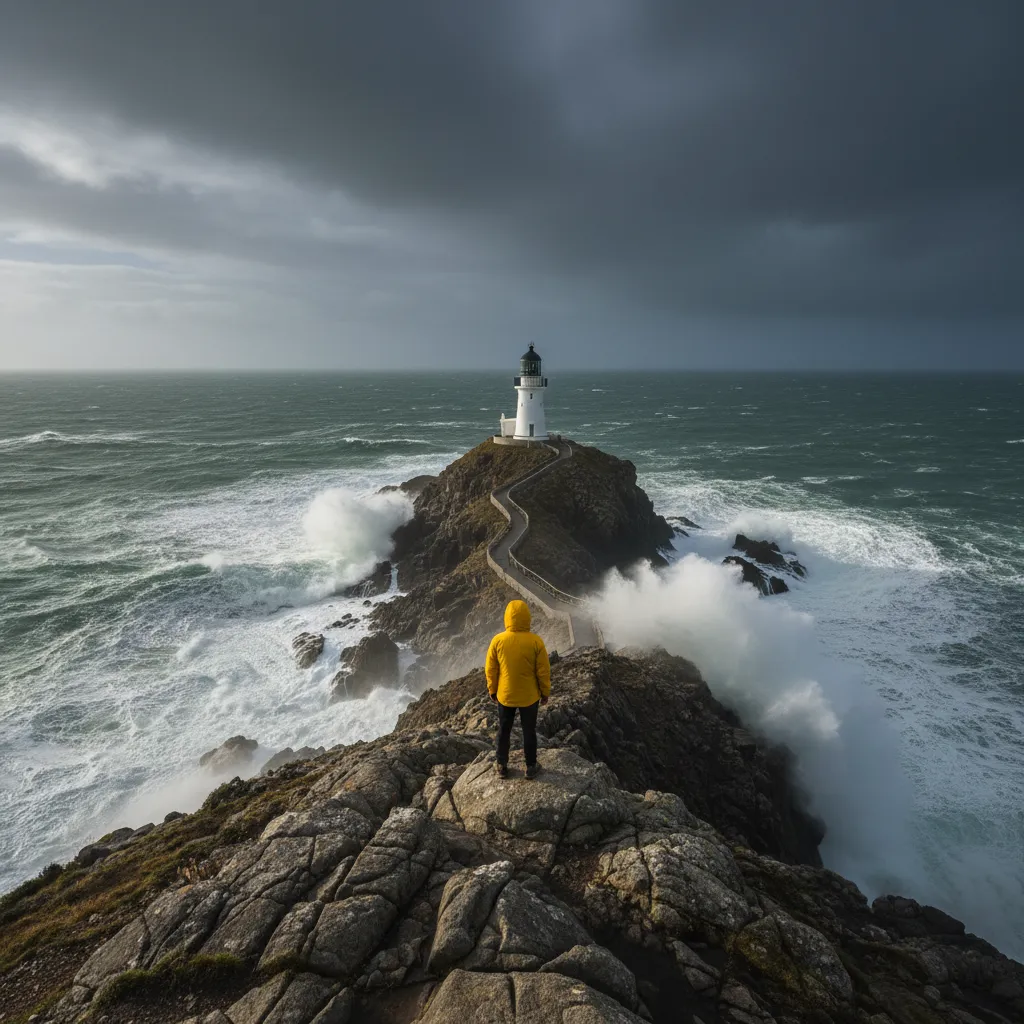
Because the temperature can fluctuate rapidly—often dropping significantly when the wind picks up or the sun sets—a standard raincoat is rarely sufficient. You need a “system” rather than just a jacket. The moisture here isn’t just vertical rain; it is often horizontal spray from the ocean or mist from the deep native bush. Therefore, the hydrostatic head (waterproof rating) of your jacket is critical. A rating of 5,000mm might handle light drizzle, but for the Catlins, you should aim for 10,000mm to 20,000mm to ensure you stay dry during sustained exposure.
Gore-Tex vs. Eco-Friendly Alternatives
For decades, Gore-Tex has been the gold standard for waterproof-breathable fabrics. However, the modern eco-conscious traveler often seeks sustainable alternatives that do not compromise on performance. Understanding the trade-offs is essential for making an informed purchase.
Is Gore-Tex necessary for New Zealand travel?
Gore-Tex (and specifically Gore-Tex Pro) offers exceptional durability and weatherproofing. It utilizes an ePTFE membrane that is incredibly efficient at blocking water while allowing sweat vapor to escape. For multi-day hikers tackling the Catlins River Wisp Loop Track, the reliability of Gore-Tex is hard to beat.
However, the manufacturing of traditional waterproof membranes often involves Perfluorochemicals (PFCs), which are harmful to the environment. Given that the Catlins is a haven for eco-tourism and rare wildlife like the Hector’s dolphin, many visitors prefer gear that aligns with conservation values.
What are the best eco-friendly waterproof technologies?
Several brands have developed high-performance proprietary membranes that are PFC-free and often made from recycled materials:
- Patagonia H2No: rigorous testing ensures these recycled nylon/polyester shells meet the same standards as traditional membranes.
- The North Face Futurelight: A nano-spun membrane that offers superior breathability, making it excellent for high-output activities like steep hiking, though sometimes sacrificing a small degree of absolute waterproofness compared to heavy-duty Gore-Tex.
- Pertex Shield Revolve: A mono-material fabric (made entirely from recycled polyester) which makes the jacket much easier to recycle at the end of its life.
Insulated vs. Shell Jackets: Which is better for NZ travel?
One of the most common mistakes travelers make when packing for New Zealand is bringing a heavy, insulated ski jacket. While warm, these are often too bulky and hot for hiking in temperate rainforests.
Why is a Shell Jacket often the superior choice?
A “Hard Shell” is a waterproof, windproof layer with no built-in insulation. This is the preferred choice for most New Zealand outdoor guides. The logic is simple: adaptability.
In the Catlins, you might start a hike in cold wind (needing a shell + fleece), warm up significantly while climbing a hill (needing just a base layer), and then encounter rain at the summit (needing a shell + base layer). If your insulation is sewn into your waterproof jacket, you cannot separate them. You are forced to either be wet and cool or dry and overheating.
When should you choose an Insulated Jacket?
Insulated waterproof jackets (often called “3-in-1” or purely insulated coats) are better suited for low-output activities. If your itinerary involves mostly driving, short 10-minute walks to lookouts, and standing still watching wildlife (like waiting for penguins at dusk), an insulated jacket provides immediate warmth without the hassle of layering. Look for synthetic insulation (like Primaloft) rather than down, as synthetic retains warmth even if damp—a crucial feature in the humid Catlins environment.
Understanding Windproof Ratings in the Roaring Forties
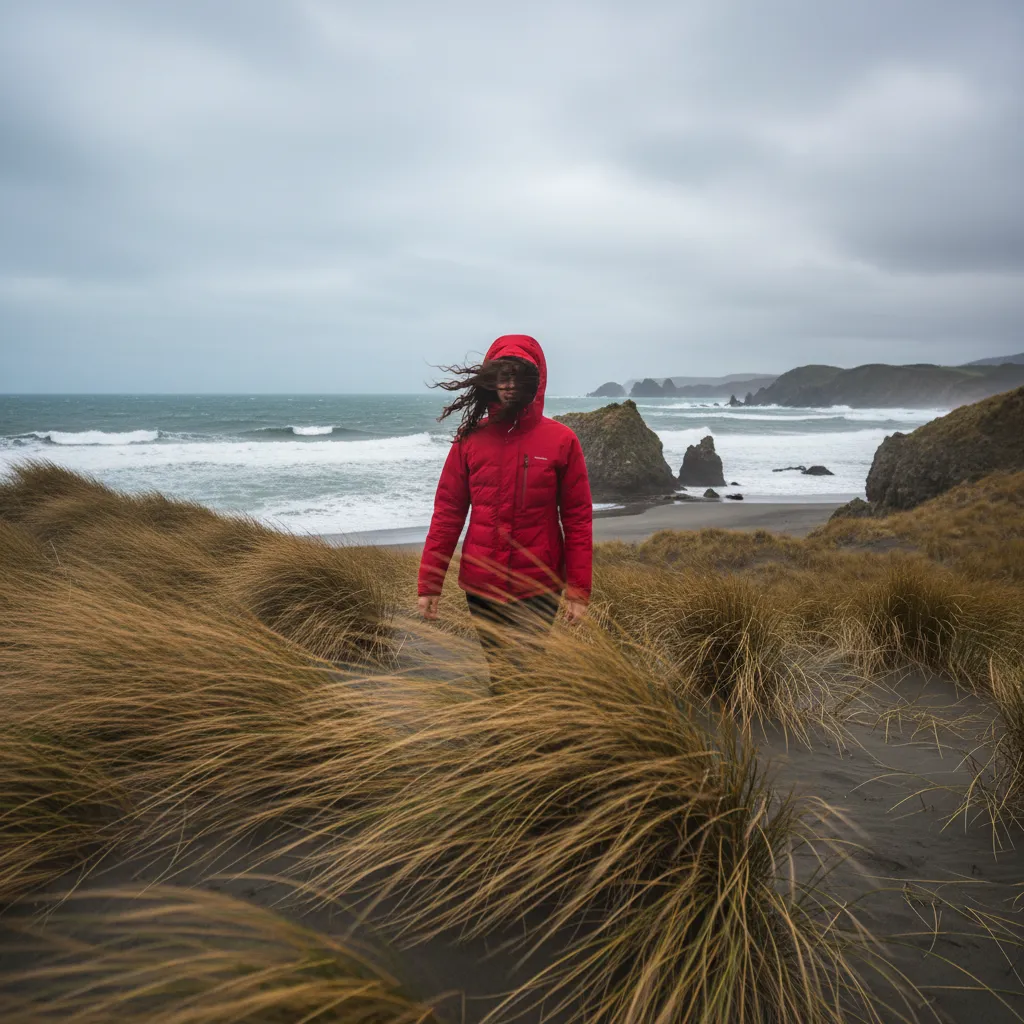
Wind chill is a significant factor in the Catlins. An ambient temperature of 12°C (53°F) can feel like 2°C (35°F) when exposed to a southerly blast from Antarctica. Therefore, a jacket that is waterproof but not windproof will leave you shivering.
Most high-quality waterproof membranes are inherently windproof. Windproof ratings are often measured in CFM (Cubic Feet per Minute), where 0 CFM is completely windproof. Standard fleece allows wind to pass through (approx. 200+ CFM), stripping away your body heat. A hard shell jacket acts as a shield, trapping a layer of warm air between you and the fabric.
Pro Tip: Ensure your jacket has adjustable cuffs (Velcro is best) and a hem cinch-cord. Sealing these gaps prevents the wind from blowing up into the jacket and flushing out your warm air.
Top Brands Available in New Zealand (Macpac, Kathmandu)
New Zealand has a strong heritage of outdoor equipment manufacturing. Buying local brands not only supports the economy but ensures the gear is designed specifically for NZ conditions.
Macpac
Founded in Christchurch, Macpac is renowned for durability. Their gear is often described as “bombproof.”
- Top Pick: The Resolution or Copland jackets. These are longer-cut jackets (covering the thighs), which is a classic NZ tramping style. The extra length prevents rain from running off your jacket and soaking your shorts or pants instantly.
- Material: They often use Reflex™ waterproof fabric oreVent™, both of which handle high humidity well.
Kathmandu
Kathmandu is ubiquitous in New Zealand and offers excellent accessibility and frequent sales. They focus heavily on the “travel and lifestyle” crossover market.
- Top Pick: The Gore-Tex Bealey range. It is a lighter weight option compared to Macpac’s heavy trampers, making it ideal for general travel and day walks.
- Sustainability: Kathmandu is a B-Corp certified company, meaning they meet high standards of social and environmental performance.
International Contenders
While local brands are excellent, international heavyweights like Arc’teryx, Patagonia, and The North Face are widely available in outdoor stores like Bivouac Outdoor or Torpedo7. These brands often lead the way in cutting-edge fabric technology and weight reduction, which is beneficial if you are trying to travel light.
Essential Features Checklist for Catlins Gear
Before purchasing, check your jacket against this list of must-have features for the Southern South Island:
- Pit Zips: Zippers under the armpits allow you to dump excess heat without opening the front of the jacket and letting rain in.
- Adjustable Hood: The hood must cinch down tight. A loose hood will be blown off your head instantly in the Catlins coastal winds. A stiffened peak/brim helps keep rain out of your eyes.
- Storm Flap: A flap of fabric covering the main zipper adds a second line of defense against driving rain.
- Pockets: Ensure pockets are accessible even when wearing a backpack hip belt. You’ll want easy access to your phone or camera for those sudden wildlife encounters.

How to maintain waterproof jackets?
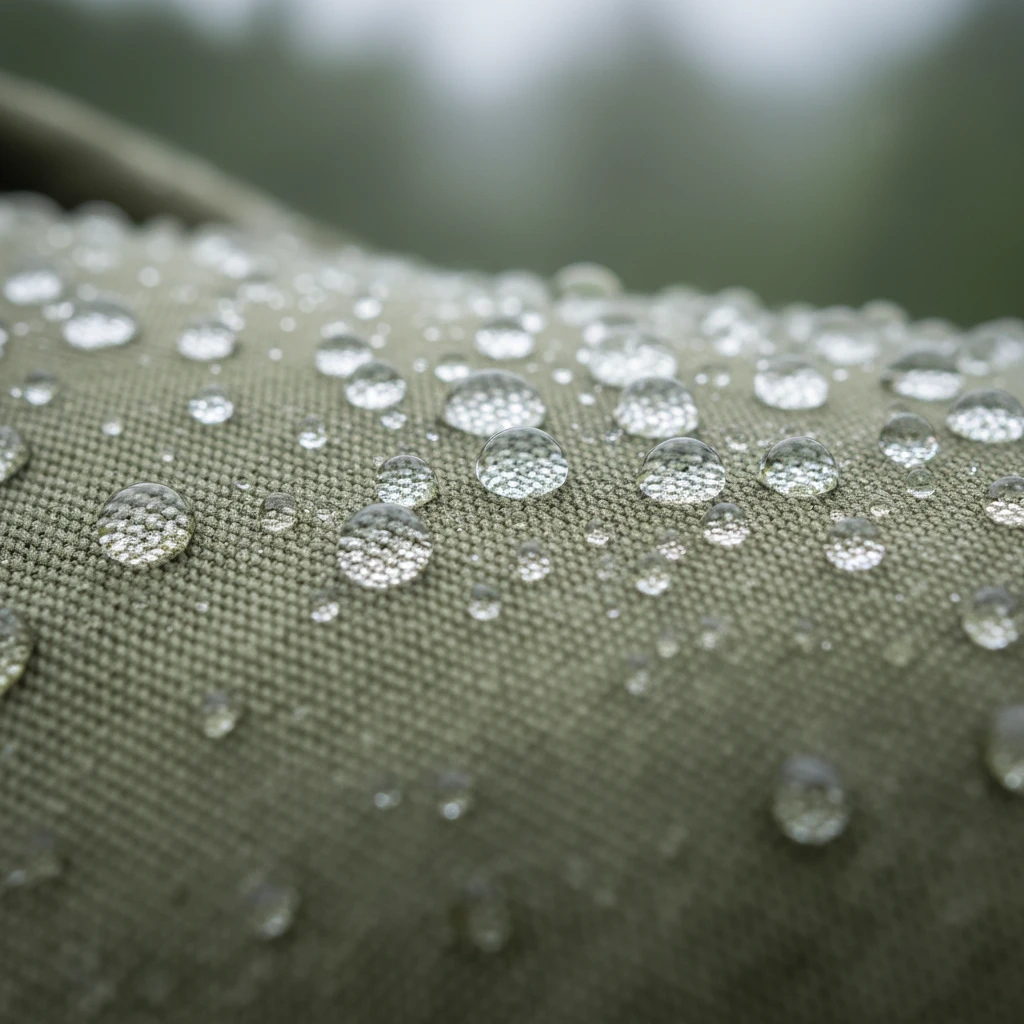
Even the most expensive jacket will eventually “wet out” (where the outer fabric absorbs water rather than beading it off). This reduces breathability and makes you feel cold.
To fix this, you must wash the jacket regularly with a technical cleaner (like Nikwax Tech Wash) to remove dirt and oils that clog the membrane. Follow this with a reproofing agent (wash-in or spray-on DWR) and, crucially, tumble dry on low heat (if the care label permits) to reactivate the water-repellent coating. Proper maintenance will extend the life of your jacket for years of New Zealand adventures.
People Also Ask
What is the best month to visit the Catlins?
The best time to visit the Catlins is generally between November and March (summer/early autumn) when temperatures are warmer and days are longer. However, weather is changeable year-round, so warm waterproof gear is always essential.
Do I need waterproof pants for the Catlins?
Yes, waterproof pants (over-trousers) are highly recommended. The horizontal rain and wet vegetation can soak regular trousers quickly. Lightweight, packable waterproof pants that can be pulled over your boots are ideal.
Is a puffer jacket waterproof?
Generally, no. Most down or synthetic puffer jackets are water-resistant at best. In the Catlins, you should wear your puffer jacket underneath a waterproof hard shell to keep the insulation dry and effective.
How many layers should I wear in New Zealand?
The three-layer system is best: a moisture-wicking base layer (merino wool is best), an insulating mid-layer (fleece or puffer), and a waterproof/windproof outer shell. This allows you to adjust to the rapidly changing weather.
Can I wear a poncho in New Zealand?
Ponchos are generally not recommended for the Catlins or exposed NZ landscapes because the high winds cause them to flap uncontrollably, providing poor protection and potentially becoming a safety hazard.
What is a good waterproof rating for New Zealand?
For New Zealand’s conditions, look for a rating of at least 10,000mm. For multi-day hikes or winter travel, a rating of 20,000mm or higher (like Gore-Tex) is preferable to handle sustained heavy rain.