The top rated binoculars for marine wildlife typically feature 7×50 or 8×42 specifications, offering the optimal balance between magnification and image stability on moving vessels. Essential features include nitrogen-purged waterproofing to withstand ocean spray, wide fields of view for tracking fast-moving animals, and fully multi-coated lenses to minimize harsh glare from the water surface.
New Zealand is a bucket-list destination for nature enthusiasts, boasting some of the most accessible and diverse marine life on the planet. From the resident Sperm Whales of Kaikoura to the playful Dusky Dolphins of the Kaikoura coast and the majestic fiords of Milford Sound, the opportunities for observation are endless. However, the difference between spotting a distant fin and seeing the barnacles on a whale’s back often comes down to one piece of gear: your binoculars.
Choosing the right optics for marine environments is distinct from selecting birding binoculars for the forest. The ocean is a dynamic, high-glare, and wet environment. Whether you are on a commercial eco-tour or chartering your own yacht in the Bay of Islands, your equipment must be rugged, waterproof, and optically superior.
Magnification vs. Stability: The 7x vs 8x vs 10x Debate
When shopping for binoculars, the first number indicates magnification. While it is tempting to purchase the highest magnification available (such as 10x or 12x) to get “closer” to the wildlife, this is often a rookie mistake in marine environments.
Why is lower magnification better on a boat?
On a moving vessel, stability is the enemy of high magnification. A boat is subject to pitch, roll, and yaw, along with the vibration of the engine. Every movement you make is amplified by the magnification power of the binoculars. If you use 10x binoculars on a choppy Hauraki Gulf ferry, the image will likely shake so violently that you cannot focus on the dorsal fin of a common dolphin.
The Marine Standard: 7×50
Traditionally, 7x magnification is considered the gold standard for marine use. It offers a wide field of view and enough forgiveness to keep the image stable despite the movement of the ocean. The “50” refers to the objective lens diameter in millimeters, which lets in a massive amount of light—crucial for dawn or dusk viewing.
The Eco-Tourist Hybrid: 8×42
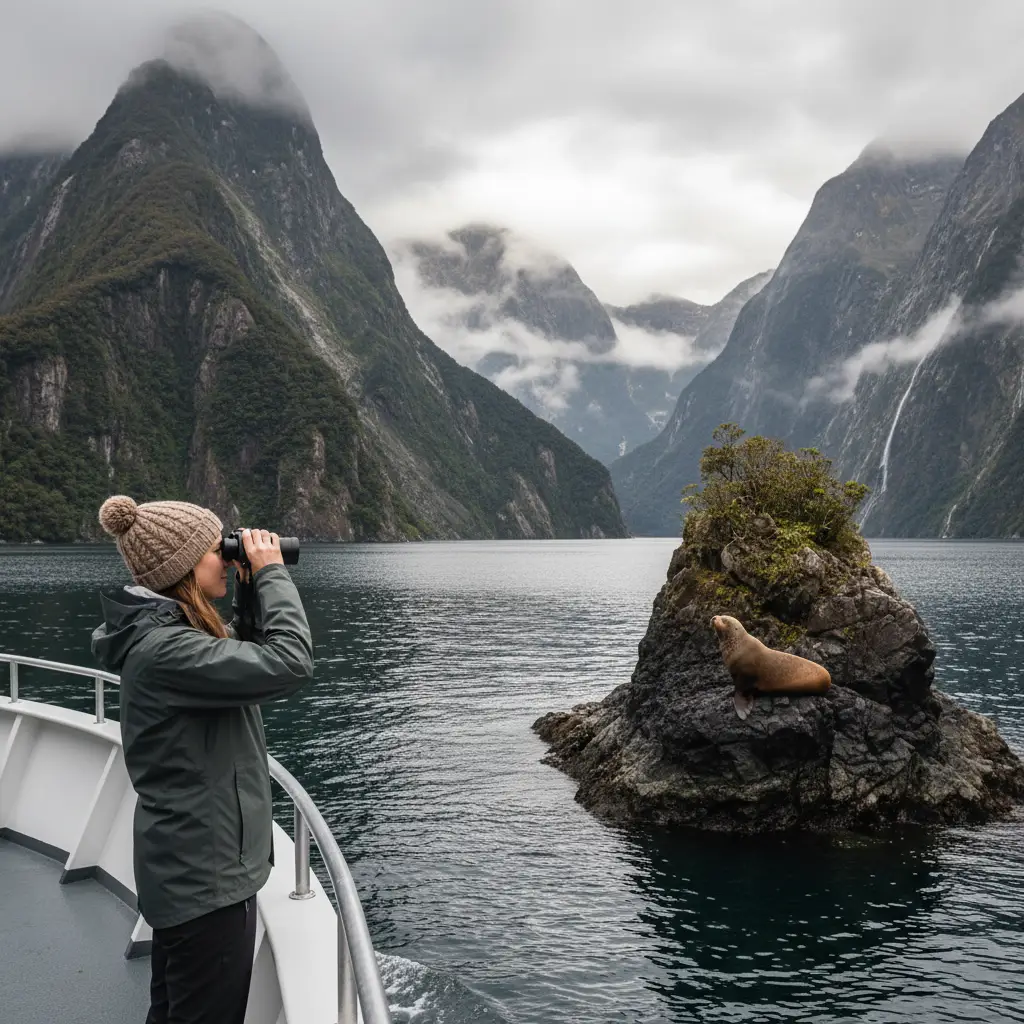
For the New Zealand independent traveler who wants one pair of binoculars for both the boat in Milford Sound and the hiking trails of the Tongariro Crossing, 8×42 is the ideal compromise. It is lighter than the bulky 7×50 marine sets but offers better stability than 10x42s.
Waterproofing and Fog-proofing: Surviving NZ Weather
New Zealand’s weather is notoriously unpredictable. You might experience four seasons in one day. Consequently, “water-resistant” is not enough; your binoculars must be fully waterproof and fog-proof.
Nitrogen vs. Argon Purging
To prevent internal fogging, high-end manufacturers purge the oxygen from the optical tubes and replace it with inert gas.
- Nitrogen Purging: The industry standard. It prevents internal lenses from fogging up when you move from a warm boat cabin to the cold deck air.
- Argon Purging: Found in premium models (like some Vortex lines). Argon molecules are larger than Nitrogen, meaning they leak out even slower over time, maintaining the waterproofing integrity for longer.
Furthermore, look for an O-ring seal. Saltwater is corrosive. If saltwater enters the barrel of your binoculars, it will crystallize and ruin the internal mechanics. A fully sealed unit also prevents dust and sand from entering the focus mechanism during beach landings.
Lens Coating for Glare Reduction
The New Zealand sun is harsh due to the thinner ozone layer in the Southern Hemisphere. When looking for marine wildlife, you are often scanning the surface of the water, which acts as a giant mirror reflecting intense sunlight. This glare can make spotting the blow of a whale or the fin of a shark nearly impossible.
Understanding Coating Terminology
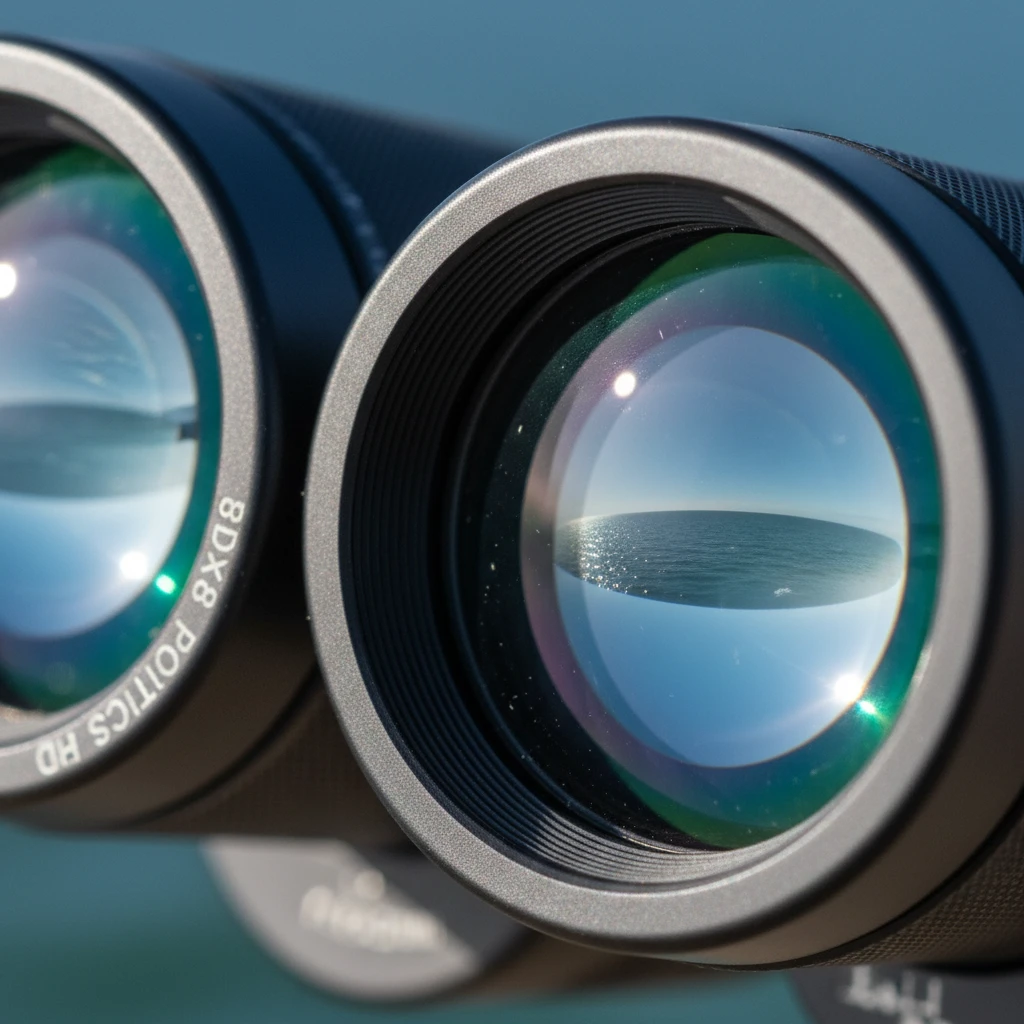
Glass naturally reflects about 4% of light. With multiple glass elements in a binocular, you could lose 50% of the light if the lenses aren’t coated. More importantly, coatings reduce glare and increase contrast.
- Coated: A single layer on at least one lens surface. (Avoid these).
- Fully Coated: A single layer on all air-to-glass surfaces.
- Multi-Coated: Multiple layers on at least one lens surface.
- Fully Multi-Coated (FMC): The standard you should demand. Multiple layers of anti-reflective compounds on all glass surfaces. This ensures maximum light transmission and minimizes the “whiteout” effect from ocean glare.
Porro vs. Roof Prisms for Depth Perception
Binoculars come in two main body styles, determined by the prism system used inside.
Porro Prism (The Traditional “Dog-Leg” Shape)
Porro prisms are offset, meaning the objective lenses are wider apart than the eyepieces. This wider stance provides superior depth perception and a three-dimensional image, which is incredibly helpful when trying to judge the distance of a breaching whale. They are generally cheaper to manufacture with high optical quality but are bulkier and heavier.
Roof Prism (The Straight Tube Shape)
Roof prisms align the objective lenses directly with the eyepieces. This results in a streamlined, compact, and durable shape. They are easier to pack for travel. However, they require expensive phase-correction coatings to match the optical clarity of Porro prisms. For the modern traveler, high-end Roof prisms are usually preferred for their ergonomics.
Nikon vs. Vortex for NZ Conditions
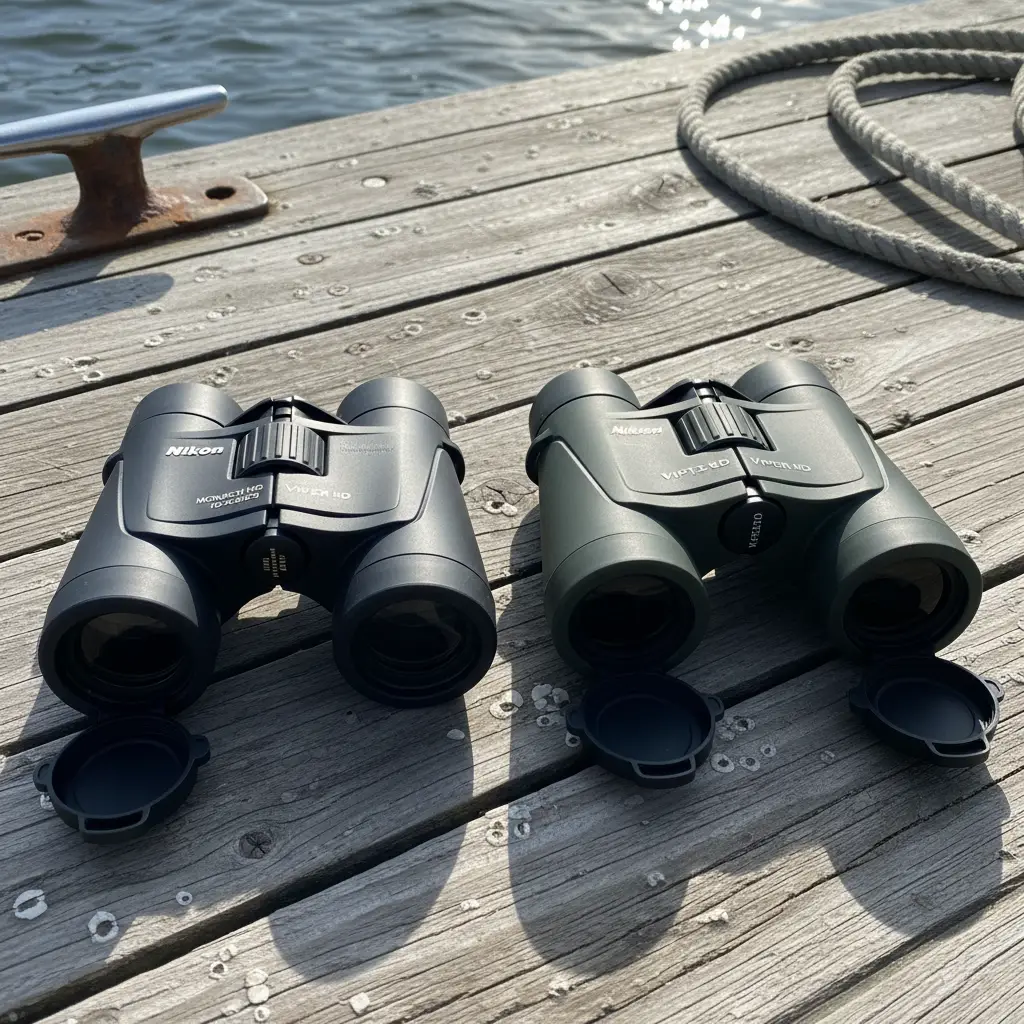
Two brands dominate the mid-to-high-end market for travelers in New Zealand: Nikon and Vortex. Both produce exceptional glass, but they serve slightly different needs.
Nikon: The Optical Legacy
Nikon is legendary for its glass quality. Their “Monarch” series is a staple in the birding and wildlife community. Nikon uses Extra-low Dispersion (ED) glass which virtually eliminates chromatic aberration (color fringing). When viewing a black-and-white Orca against blue water, cheaper glass will show a purple or yellow halo around the animal. Nikon’s ED glass keeps the edges sharp and true to color.
Vortex: The Rugged Warranty
Vortex has gained a cult following primarily due to their VIP Warranty: Unlimited, unconditional, and transferable. If you drop your binoculars onto the rocky shore of Kaikoura, or if a rogue wave smashes them against the boat railing, Vortex will repair or replace them for free. For the adventurous traveler engaging in “wet” eco-tourism, this peace of mind is invaluable.
Top Rated Recommendations for Marine Wildlife
Based on optical performance, durability, and suitability for New Zealand waters, here are the top picks.
1. The Professional Marine Choice: Steiner Navigator Pro 7×50
If your primary goal is boating, Steiner is the undisputed king. These use a “Sports-Auto-Focus” system where you set the focus once for your eyes, and everything from 20 meters to infinity is sharp. This is a game-changer when scanning the horizon for whales, as you don’t have to fiddle with a focus wheel while the boat is rocking.
2. The Best All-Rounder: Nikon Monarch M7 8×42
For the traveler who wants to see penguins in Oamaru and Kea in the Southern Alps, the Monarch M7 is perfect. It features ED glass, a very wide field of view (vital for tracking dolphins), and a locking diopter. It is lightweight, waterproof, and optically brilliant.
3. The Best Value: Vortex Diamondback HD 8×42
If you want premium features without the premium price tag, the Diamondback HD offers excellent resolution and color fidelity. It includes the Argon purging usually reserved for more expensive models and comes with a GlassPak chest harness, which is great for keeping the binoculars secure while moving around a boat.
People Also Ask
What is the best magnification for whale watching?
The best magnification for whale watching is generally 7x or 8x. While higher magnification (10x or 12x) seems appealing, it amplifies the movement of the boat, making it difficult to keep a steady image. A 7×50 or 8×42 pair provides a wide field of view, making it easier to spot whales when they surface and track them as they dive.
Are 10×42 binoculars good for marine use?
10×42 binoculars are generally not recommended for small to medium-sized boats because the higher magnification exaggerates hand shake and boat movement. However, if you are viewing marine wildlife from land (such as a lighthouse or shore lookout), 10×42 is excellent for the extra reach.
Do I need a compass in my marine binoculars?
For casual wildlife viewing, a compass is not necessary. Integrated compasses are designed for navigation to take bearings on landmarks. However, some professional marine binoculars (like Steiner) include them. They add weight and cost, so unless you are skippering the vessel, you can skip the compass.
Why are marine binoculars usually 7×50?
Marine binoculars are usually 7×50 because the 7x magnification provides stability on rough water, and the 50mm objective lens creates a large “exit pupil” (about 7.1mm). This allows maximum light to enter the eye, which is critical during low-light conditions at sea or when the pupil dilates due to the motion of the boat.
What is the difference between waterproof and water-resistant binoculars?
Water-resistant binoculars can handle light rain or splashes but cannot be submerged. Waterproof binoculars are O-ring sealed and nitrogen/argon purged, allowing them to withstand submersion and preventing internal fogging. For marine wildlife viewing, fully waterproof models are mandatory.
How do floating straps work?
A floating strap is a thick, foam-filled neck strap that provides enough buoyancy to keep your binoculars from sinking if they fall overboard. Most binoculars do not float on their own; they are heavy optical instruments. A high-visibility yellow or orange floating strap is an essential accessory for marine wildlife viewing.