The Poor Knights Islands Marine Reserve is a world-renowned protected marine area located 23 kilometers off New Zealand’s Tutukaka Coast. Established to preserve unique subtropical biodiversity created by the East Auckland Current, it offers premier diving and snorkeling experiences featuring massive sea caves, including Riko Riko, and thriving ecosystems where landing on the islands is strictly prohibited to protect native flora and fauna.
Regarded by Jacques Cousteau as one of the top ten diving sites in the world, the Poor Knights Islands offer an eco-tourism experience that is unrivaled in the Southern Hemisphere. This ancient volcano, now eroded and submerged, stands as a sentinel of conservation, separating the deep ocean from the coastal shelf. For travelers seeking a pristine underwater utopia, understanding the unique regulations, biological marvels, and logistical requirements is essential for a successful expedition.
What Makes the Poor Knights Islands Marine Reserve Unique?
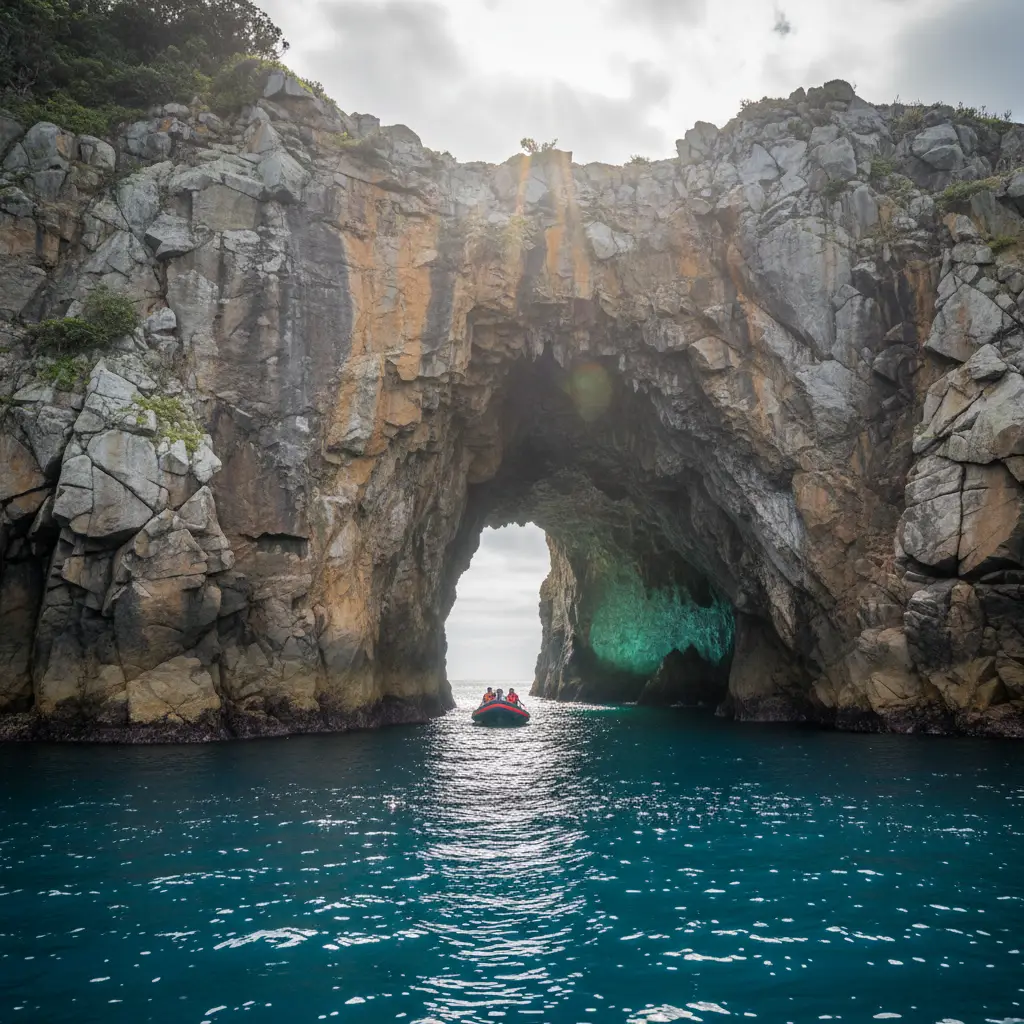
The Poor Knights Islands are not merely a collection of rocks in the ocean; they are the remnants of a massive rhyolitic volcano that erupted approximately four to ten million years ago. What remains today creates a dramatic underwater topography comprising cliffs, archways, tunnels, and caves. This geological complexity provides a diverse range of habitats for marine life, ranging from kelp forests in the shallows to sponge gardens in the depths.
The reserve status is total. Since 1998, it has been a fully protected marine reserve, meaning no fishing, shellfish gathering, or disturbance of any kind is permitted. This has allowed the ecosystem to return to a state of natural abundance rarely seen elsewhere. For the eco-tourist, this means encountering marine life that is unafraid of humans. Large schools of snapper and kingfish, usually skittish in fished waters, will often approach divers and snorkelers with curiosity, providing intimate encounters that are perfect for underwater photography.

How Do Subtropical Currents Impact Biodiversity?
The primary driver of the unique ecosystem at the Poor Knights Islands Marine Reserve is the East Auckland Current. This warm water current originates in the subtropical waters of the Coral Sea and flows southeast towards New Zealand. As it sweeps past the Poor Knights, it brings with it warm water, higher visibility, and the larvae of tropical species that would otherwise not survive in New Zealand’s typically cooler temperate waters.
This intersection of tropical and temperate environments creates a biological melting pot. It is the only place in New Zealand where you can see subtropical fish like the Lord Howe Coralfish swimming alongside temperate species like the Sandager’s Wrasse. The warmer temperatures also support vast gardens of gorgonian fans and black coral trees in shallower depths than usual, making them accessible to recreational divers.
Furthermore, the islands’ distance from the mainland (23km) means they are largely unaffected by coastal runoff. This results in exceptional water clarity, often exceeding 30 meters (100 feet) during the summer months. This visibility is crucial for the thriving sponge gardens that cover the vertical walls of the islands, creating a kaleidoscope of color that rivals tropical coral reefs.
Should You Choose Diving or Snorkeling?
One of the most common questions for visitors to the Tutukaka Coast is whether to book a diving or snorkeling charter. The commercial operators in the region are well-equipped to handle both, often on the same vessel, but the experiences differ significantly based on the topography of the islands.
The Case for Scuba Diving
Diving is the superior choice for those who wish to explore the vertical walls and deep archways. Many of the reserve’s most famous sites, such as the Northern Arch and the Giant Staircase, are best appreciated from depth. Diving allows you to hover motionless next to the sponge walls, observing the macro life—nudibranchs, triplefins, and blennies—that hide within the crevices. It also allows access to the deeper sponge gardens where massive stingrays often rest.
The Case for Snorkeling
Surprisingly, the Poor Knights is one of the few world-class dive sites that is equally spectacular for snorkelers. Because the islands are steep-sided cliffs that plunge into the ocean, the “walls” of life start at the surface. Snorkelers can float above dense kelp forests and look down into the blue to see schooling trevally and kingfish. Several sites, like the Nursery Cove, offer shallow, sheltered waters teeming with life just inches below the surface. Modern snorkeling gear provided by operators, including thick wetsuits and high-quality fins, makes this a comfortable experience even for those who are not strong swimmers.

What is Special About Riko Riko Cave?
Riko Riko Cave is the world’s largest sea cave by volume, and it is a highlight of any trip to the Poor Knights. The name translates to “Waning Light” or “Twilight,” referencing the quality of light that filters into the massive cavern. The cave is so immense that tour boats can navigate deep inside, turn around, and exit without touching the walls.
The acoustics inside Riko Riko are legendary. The vaulted ceiling and water surface create a natural amphitheater. Historically, the cave has been used for live music performances and even weddings due to this sonic property. When a boat engine is cut inside the cave, the silence is profound, broken only by the dripping of water and the breathing of the passengers. Operators often encourage visitors to sing or shout to test the echo, which reverberates for several seconds.
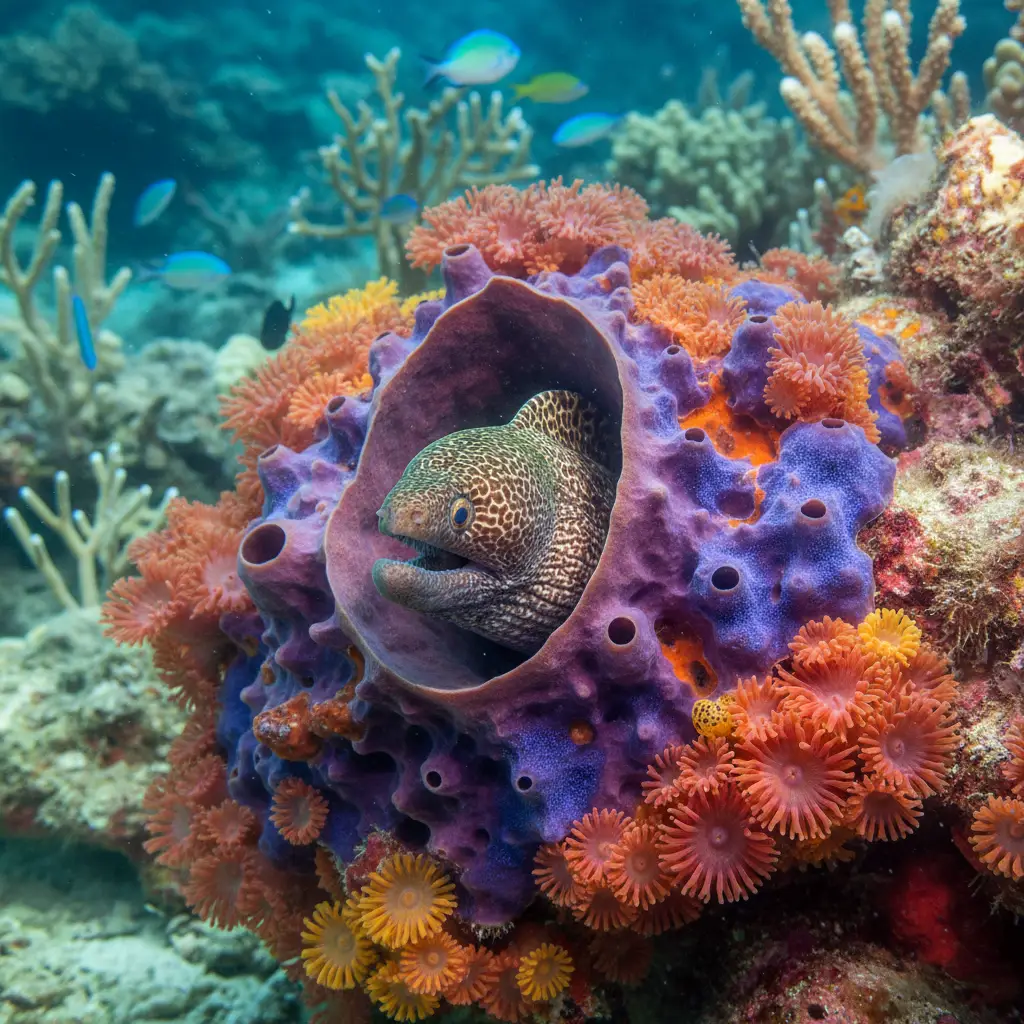
Beneath the surface, the cave is equally impressive. It is dark, requiring dive lights, but the floor of the cave is often carpeted with carpet sharks and stingrays seeking shelter. The lack of light prevents algae growth, meaning the walls are covered in sponges and anemones that do not require photosynthesis, creating a unique dark-zone ecosystem accessible to recreational divers.
Why is There a Strict No-Landing Policy?
While the marine reserve protects the water, the islands themselves are a Nature Reserve with even stricter protections. Landing on the Poor Knights Islands is completely prohibited for the general public. This policy is enforced to protect the islands’ fragile terrestrial ecosystem, which has been isolated from the mainland for millennia.
The islands are free of introduced pests such as rats, stoats, and possums, which have devastated bird populations on the mainland. As a result, the Poor Knights are a sanctuary for millions of seabirds, including Buller’s Shearwaters, which breed exclusively on these islands. The forest floor is home to the Tuatara, a prehistoric reptile, and the Giant Weta, a large flightless insect.
Culturally, the islands are wahi tapu (sacred) to the local Maori iwi, Ngati Wai. The islands were once inhabited but were declared tapu following a tragic massacre in the 1820s. Since then, they have remained uninhabited. The no-landing policy respects this cultural history while simultaneously acting as a biosecurity measure. Commercial boat operators provide close-up views of the cliffs and vegetation but will never allow passengers to set foot on the rocks.
What Marine Life Will You Encounter?
The density of marine life at the Poor Knights is the primary draw for eco-tourists. The reserve functions as a “breeding ground” that spills over into the surrounding ocean, but within the reserve boundaries, the biomass is staggering.
The Famous Residents
Short-tail Stingrays: These massive rays are a staple of the reserve. They are often seen stacking on top of one another in archways or gliding effortlessly through the kelp. They are generally docile and accustomed to divers.
Macro Life and Nudibranchs
For macro photography enthusiasts, the walls are a treasure trove. The Jason’s Mirabilis nudibranch, Lord Howe Coralfish, and various blennies provide endless subjects. The colorful jewel anemones cover vast swathes of rock face, creating tapestries of pink, yellow, and orange.
Seasonal Visitors
Depending on the time of year, the reserve attracts larger pelagic visitors. During the warmer months, it is not uncommon to see schools of Kingfish hunting, or even sightings of Bronze Whaler sharks. In the migration seasons, Humpback whales and Orca are occasionally spotted passing through the channel between the islands and the mainland.
How to Plan Your Commercial Eco-Tour
Visiting the Poor Knights Islands Marine Reserve requires booking with a licensed charter operator based in Tutukaka Marina. Tutukaka is the gateway to the islands and is located approximately 30 minutes drive from Whangarei, or 2.5 hours north of Auckland.
Choosing an Operator
Several high-quality operators run daily trips. When selecting a commercial tour, look for Qualmark Gold status, which indicates a commitment to sustainable tourism practices. Major operators like Dive Tutukaka provide full rental gear, including high-quality wetsuits (7mm is standard due to the 18-22°C water temperature), regulators, and dive computers.
Best Time to Visit
Summer (December – March): The water is warmest (20-23°C), and marine life is most active. However, this is peak tourist season, so boats can be busy. Book well in advance.
Autumn (April – June): Often considered the best time for diving. The water is still relatively warm, but the visibility peaks, often reaching 30m+. The crowds have thinned out, offering a more exclusive experience.
Winter (July – September): The water cools down (15-16°C), requiring drysuits or semi-drys, but the visibility can be crisp. This is the best time for solitude.
Logistics
Boats typically depart Tutukaka at 8:30 AM and return by 3:30 PM. Lunch is usually not provided on the boat (check with your specific operator), so packing a lunch is essential. However, hot drinks and snacks are standard. If you suffer from seasickness, prepare accordingly, as the 23km crossing can be choppy depending on the wind direction.
Do you need a license to dive the Poor Knights?
Yes, for scuba diving, you must be a certified diver (PADI Open Water or equivalent) to dive without an instructor. However, uncertified visitors can book “Try Dives” (Introductory Dives) where an instructor manages your equipment and guides you one-on-one in shallow water.
Can you stay overnight on the Poor Knights Islands?
No, you cannot stay overnight on the islands. Landing is strictly prohibited to protect the biosecurity and cultural heritage of the area. Accommodation is available on the mainland in Tutukaka or nearby Ngunguru.
Are there sharks at the Poor Knights Islands?
Yes, sharks are present, but they are generally not dangerous to divers. Common sightings include Carpet Sharks and Bronze Whaler sharks. Great White Sharks are extremely rare in this specific location. The sharks here are part of a healthy ecosystem and are typically uninterested in humans.
How deep are the dives at Poor Knights?
Depths vary significantly. Snorkeling and introductory dives happen in 0-12 meters. Recreational dives typically range from 12 to 30 meters. Technical divers can find depths exceeding 40 meters, but most commercial charters stick to recreational limits.
What is the water temperature at the Poor Knights?
Water temperature ranges from approximately 15°C (59°F) in winter to 23°C (73°F) in late summer. Most divers use a 7mm wetsuit with a hooded vest year-round, or a drysuit in winter.
Is the Poor Knights Marine Reserve suitable for children?
Yes, the reserve is suitable for children who are comfortable in the water. Snorkeling in the sheltered bays is safe and easy. Many operators have smaller wetsuits and life jackets available for children, making it a family-friendly eco-tourism activity.