New Zealand dark sky tourism combines world-class stargazing within designated Dark Sky Sanctuaries with the observation of unique nocturnal biodiversity. It encompasses experiences ranging from astronomical tours in the Mackenzie Basin to eco-tours spotting Kiwi and glowworms, offering travelers a sustainable way to explore Aotearoa’s pristine night environments.
While the world sleeps, New Zealand (Aotearoa) awakens. Renowned globally for its pristine landscapes, the country is rapidly becoming a premier destination for a different kind of exploration: the night. With some of the darkest skies on the planet and a distinct ecosystem of nocturnal creatures that evolved in isolation for millions of years, New Zealand dark sky tourism offers an unparalleled connection to the cosmos and the natural world.
This comprehensive guide explores the intersection of astronomy and ecology, providing the essential knowledge required to navigate New Zealand’s nocturnal wonders. From the glittering expanse of the Milky Way over the Southern Alps to the bioluminescent grottos of Waitomo, we delve into the locations, species, and seasons that define this growing market niche.
Mapping the Dark: Sanctuaries and Reserves
New Zealand is a world leader in the conservation of the night sky. The country recognizes that darkness is a natural resource, as vital as clean water or air. This commitment has led to the establishment of several International Dark Sky Sanctuaries and Reserves, accredited by the International Dark-Sky Association (IDA). These locations offer the lowest levels of light pollution, ensuring high-contrast views of celestial bodies unique to the Southern Hemisphere, such as the Southern Cross and the Magellanic Clouds.
What is the Aoraki Mackenzie International Dark Sky Reserve?
The Aoraki Mackenzie International Dark Sky Reserve is the largest of its kind in the Southern Hemisphere and a gold-standard destination for New Zealand dark sky tourism. Encompassing 4,300 square kilometers across the South Island’s central plateau, this reserve protects the skies above Aoraki/Mt Cook National Park and the Mackenzie Basin. The region’s geography—a high plateau surrounded by mountains—blocks low-level light and stabilizes the air, creating perfect seeing conditions.
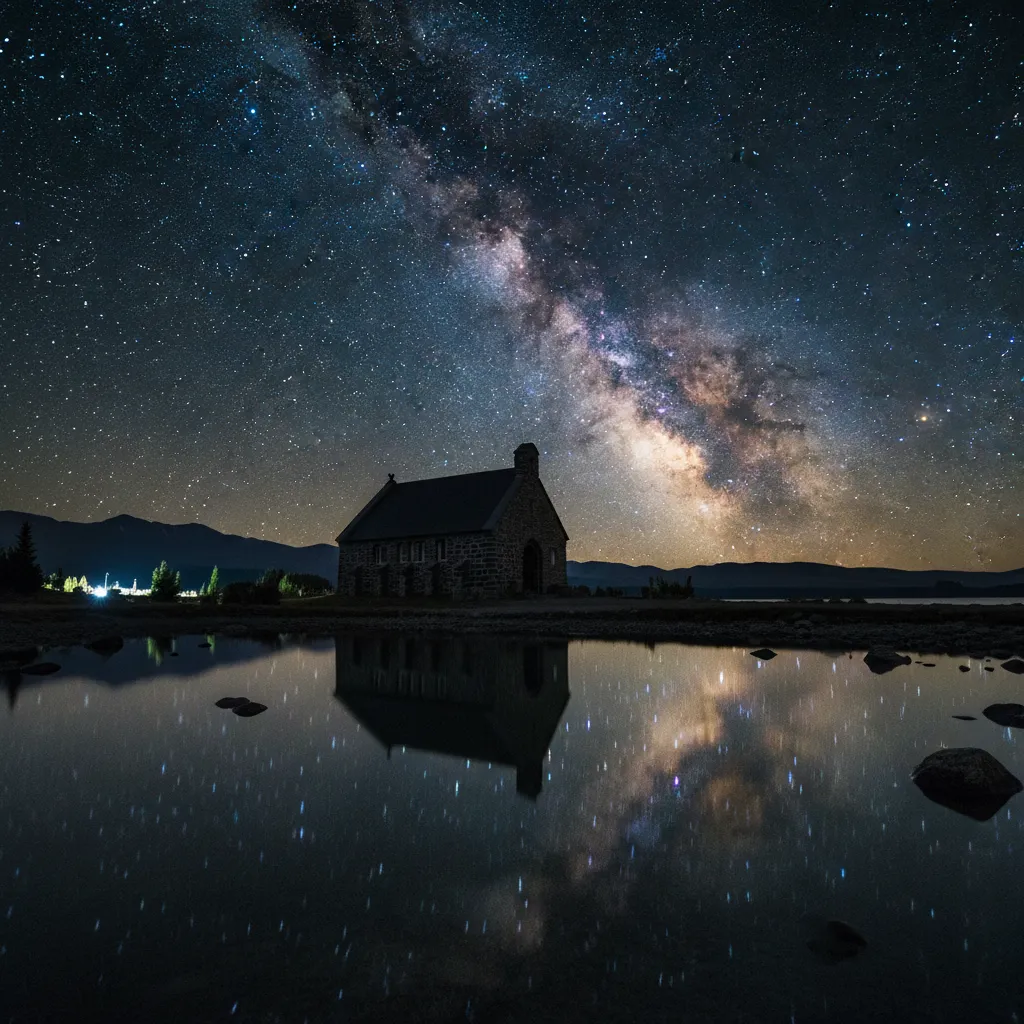
Visitors here flock to the Mt John Observatory in Lake Tekapo. Operated by the University of Canterbury, it is the country’s premier astronomical research center. Night tours here allow visitors to view globular clusters and nebulae through powerful optical telescopes. The sheer visibility of the Milky Way, stretching from horizon to horizon like a backbone of light, is a defining experience of the region.
Why visit Great Barrier Island (Aotea) for Stargazing?
Located 100 kilometers off the coast of Auckland, Great Barrier Island (Aotea) was the first island in the world to be designated an International Dark Sky Sanctuary. Unlike a reserve, a sanctuary is typically situated in a very remote location with little to no nearby threats to the quality of its dark night skies. Aotea is entirely off-the-grid, meaning there is no reticulated electricity supply; residents rely on solar and wind power, which naturally limits light pollution.
The island offers a rugged, raw experience. Here, the focus is on “astro-tourism” that integrates indigenous storytelling. Local guides often share Māori astronomy (tātai arorangi), explaining how celestial navigation guided the ancestors across the Pacific to these shores.
Rakiura (Stewart Island): The Land of Glowing Skies
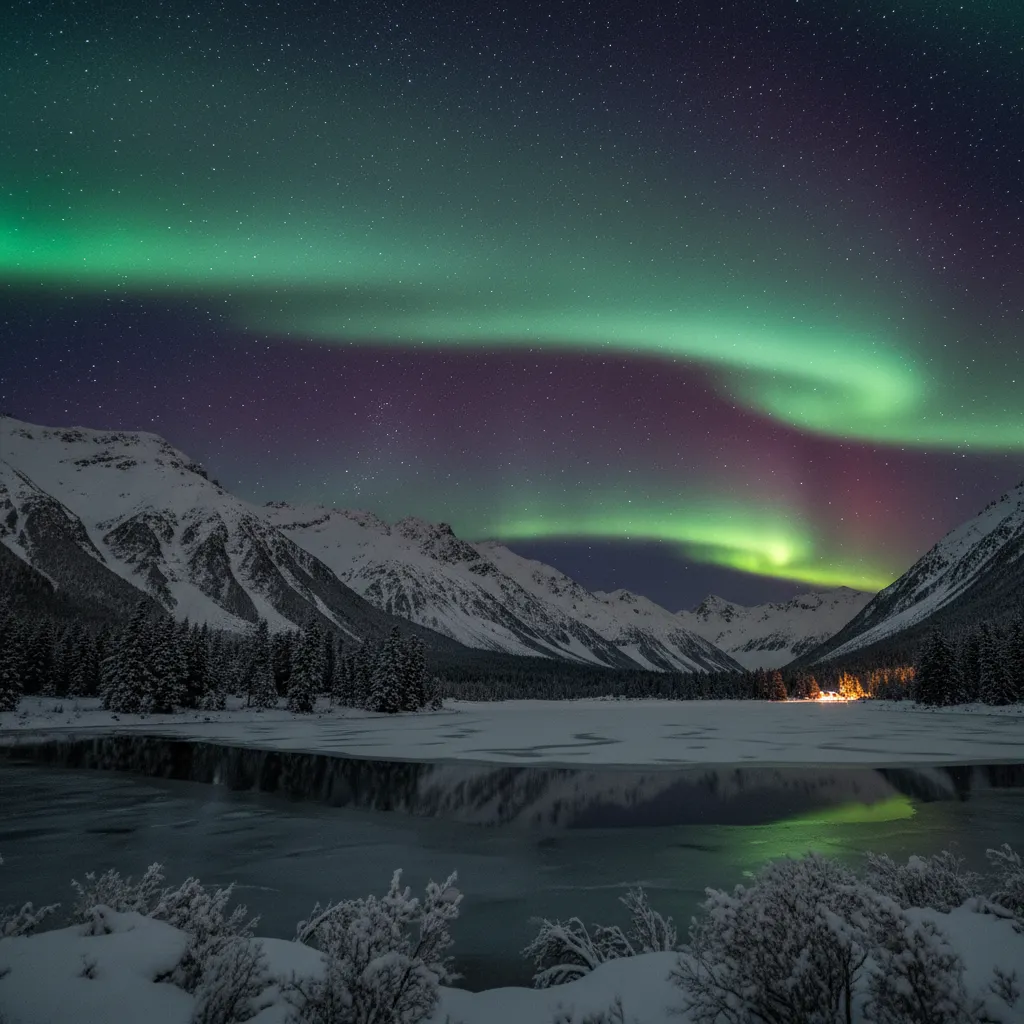
Rakiura, the Māori name for Stewart Island, translates to “The Land of Glowing Skies.” It is the southernmost Dark Sky Sanctuary in the world. Its high latitude (47°S) makes it the prime location for hunting the Aurora Australis (Southern Lights). While the Aurora Borealis is famous in the north, the southern counterpart offers a dynamic display of pinks, greens, and purples that dance over the Southern Ocean.
The Night Shift: New Zealand’s Nocturnal Biodiversity
New Zealand’s isolation caused its wildlife to evolve in unique ways. Before humans arrived, there were no land mammals (except bats), so birds and insects filled every ecological niche. Many of these species adapted to life in the dark to avoid avian predators like the (now extinct) Haast’s Eagle. Today, New Zealand dark sky tourism is as much about looking down into the bush as it is looking up at the stars.
The Kiwi: An Icon of the Shadows
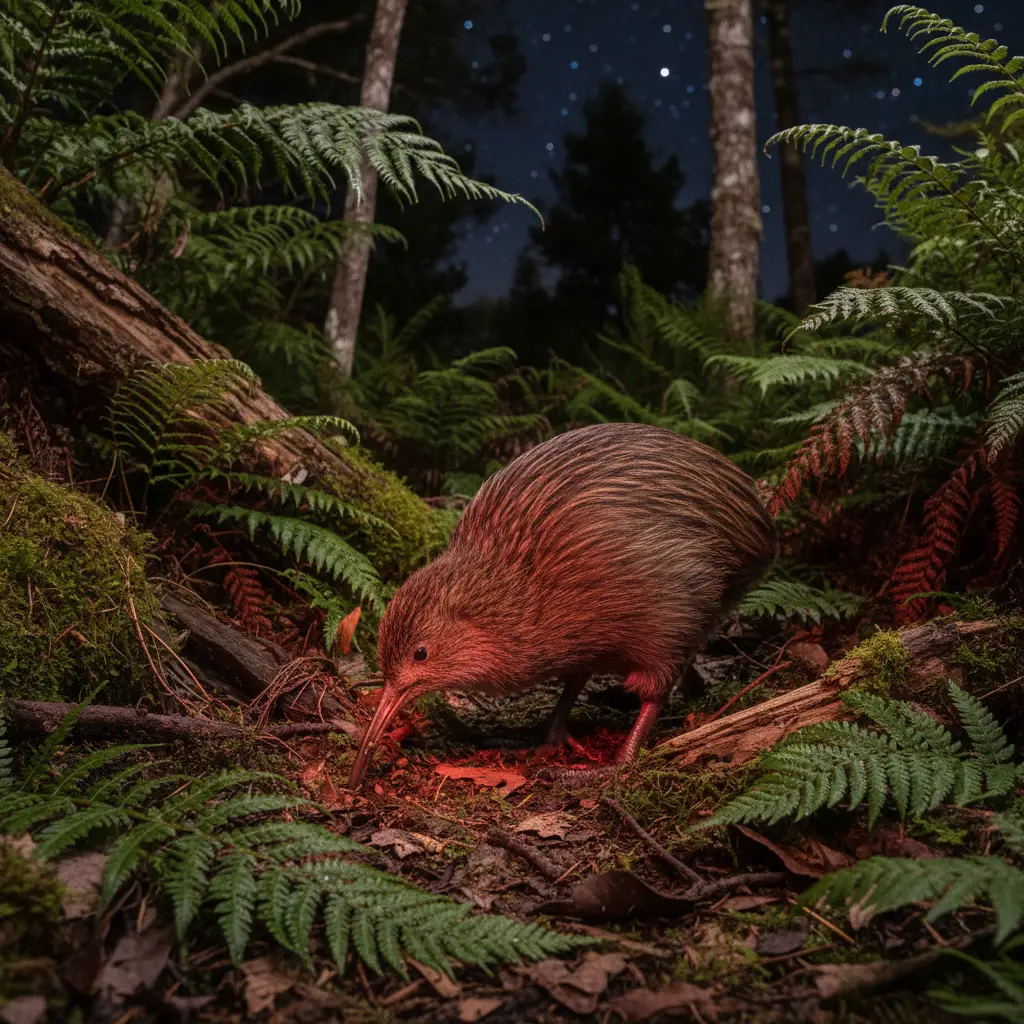
The Kiwi is perhaps the most famous nocturnal bird in the world. Flightless, with hair-like feathers and whiskers, it relies on smell and touch rather than sight. There are five species of Kiwi, all of which are biologically fascinating. They emerge from their burrows shortly after sunset to forage for invertebrates.
Top locations for spotting Kiwi in the wild include:
- Stewart Island (Rakiura): The Southern Brown Kiwi (Tokoeka) here is unique as it sometimes forages during the day, but night tours on Ocean Beach offer high sighting probabilities.
- Kapiti Island: A predator-free sanctuary near Wellington where Little Spotted Kiwi roam freely.
- Zealandia (Wellington): An urban eco-sanctuary offering guided night walks to spot Little Spotted Kiwi within the city limits.
Glowworms (Titiwai): Living Constellations
New Zealand’s glowworms (Arachnocampa luminosa) are not worms, but the larvae of a fungus gnat. They are exclusive to New Zealand. These larvae spin sticky silken threads (fishing lines) from the ceiling of caves or damp overhangs and illuminate their tails with bioluminescence to attract prey.
In the total darkness of a limestone cave, a colony of thousands of glowworms resembles a subterranean starry night. The Waitomo Caves are the commercial hub for this phenomenon, offering boat rides through glowing grottos. However, free and wild populations exist throughout the country, including the Minnehaha Walk in Fox Glacier and the glowworm dell in Hokitika. The chemistry of their light is highly efficient, producing almost no heat, a phenomenon known as “cold light.”
Weta and Pekapeka (Bats)
For the true macro-enthusiast, the Weta is a must-see. These giant flightless crickets have changed little in 190 million years. Some species, like the Giant Weta, are heavier than a sparrow. They are strictly nocturnal and can often be found on tree trunks in predator-free sanctuaries.
High above the canopy, the Pekapeka (Short-tailed and Long-tailed bats) hunt for moths. As New Zealand’s only native land mammals, they are critically endangered. The Short-tailed bat is particularly unusual as it spends much of its time scrambling on the forest floor, foraging like a mouse.
Seasonal Rhythms: From Matariki to Summer Glow
Understanding the seasonal shifts is crucial for planning a successful dark sky itinerary. Unlike equatorial destinations, New Zealand has distinct seasons that affect both celestial visibility and wildlife behavior.
Winter (June – August): Matariki and the Galactic Core
Winter is the premium season for serious astronomers. The nights are long, starting as early as 5:30 PM, and the cold air holds less moisture, resulting in crisp, distortion-free atmospheric conditions. This is the best time to view the core of the Milky Way directly overhead.
Culturally, this season is defined by Matariki. Matariki is the Māori name for the Pleiades star cluster. Its pre-dawn rising in mid-winter signals the Māori New Year. It is a time of remembrance, celebrating the present, and looking to the future. Since 2022, Matariki has been a public holiday in New Zealand, accompanied by festivals, night markets, and cultural storytelling events across the country.
Summer (December – February): The Glowworm Peak
Summer offers warmer nights, making it more comfortable for casual stargazing and camping. While the galactic core is less visible, the Orion constellation (viewed upside down compared to the Northern Hemisphere) dominates the sky.
Biologically, summer is the peak time for insect activity. Warmer temperatures mean more prey for glowworms, causing them to shine brighter and longer. This is the ideal season for kayaking tours in glowworm canyons (such as Lake McLaren near Tauranga) or evening bush walks.
Shoulder Seasons (Autumn and Spring): The Aurora Hunters
The Equinoxes (March and September) generally provide the highest probability of geomagnetic activity, increasing the chances of witnessing the Aurora Australis. Travelers aiming for the Southern Lights should utilize forecasting apps and head as far south as possible during these windows.
Navigating the Night: Eco-Luxe Stays and Logistics
The rise of New Zealand dark sky tourism has spurred investment in accommodation designed specifically for the night. “Eco-luxe” in this context refers to high-end, sustainable accommodation that minimizes light footprint while maximizing immersion.
Glass Cabins and PurePods
PurePods are luxury glass cabins located in secluded landscapes. With glass floors, ceilings, and walls, they offer a “sleeping under the stars” experience without sacrificing comfort. Locations like the Greystone PurePod in Waipara or the Manakau PurePod in Kaikoura are situated away from city lights, ensuring that the last thing you see before closing your eyes is the cosmos.
Glamping and Dark Sky Friendly Architecture
Glamping (glamorous camping) sites often utilize geodesic domes with skylights. Properties such as Valley Views Glamping in the Waitaki Valley provide off-grid luxury. When booking accommodation in Dark Sky Reserves, look for properties that adhere to lighting ordinances—using downward-facing, warm-temperature outdoor lighting to protect the scotobiology (darkness biology) of the surrounding area.

Capturing the Void: Astrophotography Essentials
Capturing the New Zealand night sky requires preparation. The low light pollution means sensors can pick up incredible detail, but technique is paramount.
- Equipment: A DSLR or Mirrorless camera with manual mode capability is essential. You will need a wide-angle lens (14mm to 24mm) with a fast aperture (f/2.8 or lower). A sturdy tripod is non-negotiable to prevent camera shake during long exposures.
- Settings: Start with an ISO of 1600-3200. Set your aperture as wide as it goes (lowest f-number). Use the “500 Rule” to calculate shutter speed to avoid star trails (500 divided by your focal length). For a 20mm lens, this would be 25 seconds.
- Focusing: Autofocus will not work in the dark. Switch to manual focus and zoom in on the brightest star in Live View until it is a sharp point of light.
- Etiquette: If shooting in a group or at a popular spot like the Church of the Good Shepherd, never use a white flashlight. Use a red headlamp to preserve your night vision and the night vision of others.
Frequently Asked Questions
Where is the best place to see the dark sky in New Zealand?
The Aoraki Mackenzie International Dark Sky Reserve is widely considered the best location due to its size, accessibility, and gold-tier status. However, Great Barrier Island and Stewart Island offer darker, more remote sanctuary experiences.
What is the best time of year for stargazing in NZ?
Winter (June to August) is the best time for stargazing. The nights are longest, the air is driest and clearest, and the core of the Milky Way is visible directly overhead. It is also when the Matariki cluster rises.
Can you see the Northern Lights in New Zealand?
No, but you can see the Southern Lights, known as the Aurora Australis. They are best viewed from the lower South Island (Southland, Stewart Island, The Catlins) during the equinoxes in March and September.
Are there dangerous animals in New Zealand at night?
No. New Zealand has no large predators, snakes, or dangerous nocturnal mammals. This makes night hiking and stargazing in the bush exceptionally safe compared to other wilderness areas globally.
What is a Dark Sky Sanctuary?
A Dark Sky Sanctuary is a certification by the International Dark-Sky Association (IDA). It distinguishes public or private land that has an exceptional or distinguished quality of starry nights and a nocturnal environment that is protected for its scientific, natural, or educational value, usually in a very remote location.
How much does a glowworm tour cost?
Prices vary significantly. A simple walking tour might cost $50-$80 NZD, while an extensive boat tour or black water rafting experience in Waitomo can range from $150 to $300 NZD per person.