New Zealand’s nocturnal wildlife encompasses a globally unique array of species that evolved in isolation, including the iconic flightless kiwi, the ancient tuatara, and the haunting morepork owl. Because Aotearoa lacked mammalian predators for millions of years, many native creatures adapted to active night lives, making the archipelago a premier destination for ethical dark-sky biological encounters.
When the sun sets over Aotearoa, a different world awakens. Unlike many other nations where the forests fall silent at dusk, the New Zealand bush comes alive with the rustle of flightless birds, the call of native owls, and the bioluminescence of glowworms. For the eco-tourist, understanding and respecting this nocturnal environment is key to a successful and memorable experience.
Understanding New Zealand’s Nocturnal Ecosystem
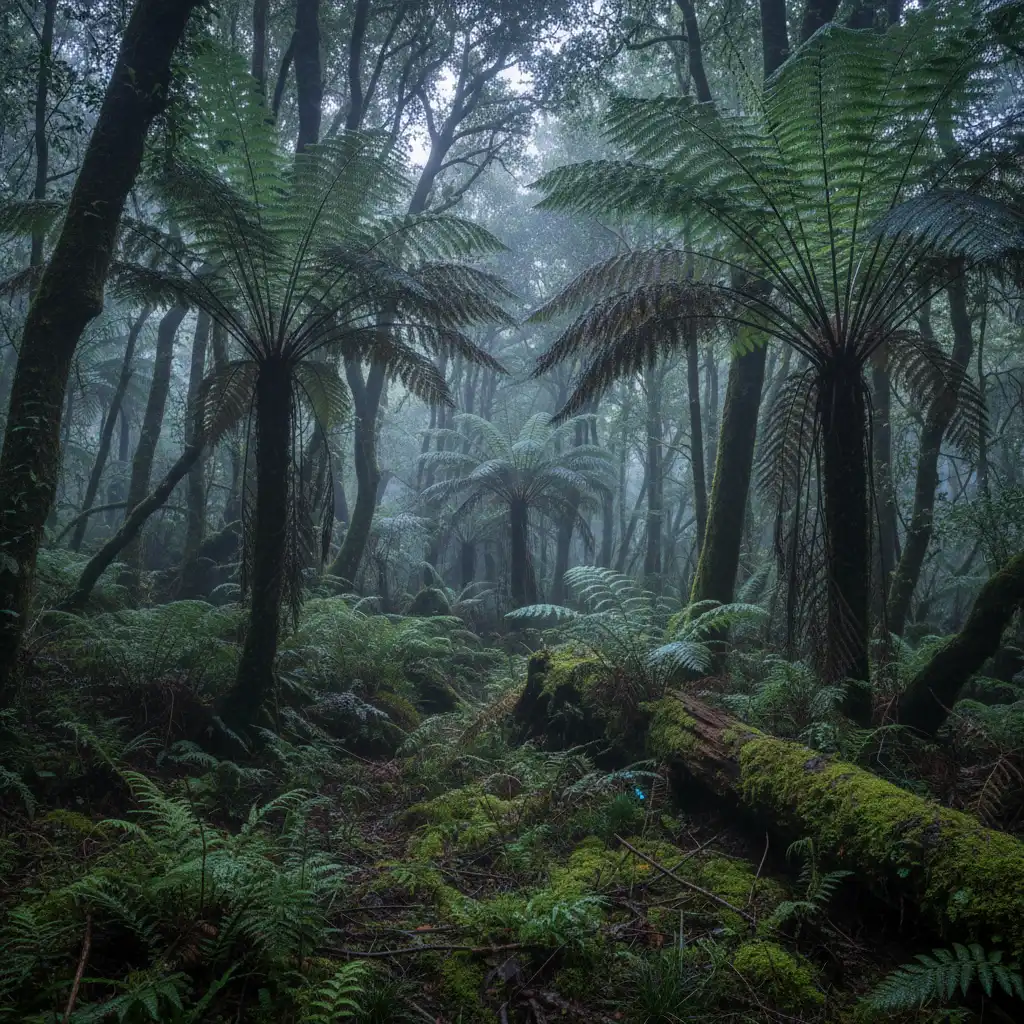
To truly appreciate nocturnal wildlife in New Zealand, one must first understand the evolutionary history that created it. For 80 million years, New Zealand drifted in isolation, separating from the supercontinent Gondwana. During this time, the land was devoid of terrestrial mammals, with the exception of three species of small bats. In the absence of mammalian predators, birds, insects, and reptiles filled ecological niches that are usually occupied by badgers, foxes, or mice elsewhere in the world.
This lack of predation allowed species to evolve unique traits. Many birds lost the ability to fly, becoming ground-dwellers. Others, relying on scent and sound rather than sight, became strictly nocturnal to avoid the few avian predators that hunted by day, such as the now-extinct Haast’s eagle. Today, the highest concentration of New Zealand’s biodiversity is active only after dark.
Evolution in the Dark
The sensory adaptations of NZ’s night creatures are fascinating. The kiwi, for example, is the only bird in the world with nostrils at the end of its beak, allowing it to sniff out invertebrates in the soil. The kakapo, a nocturnal parrot, relies on a distinct, sweet-smelling pheromone system to find mates in the dense, dark undergrowth. These evolutionary quirks make spotting these animals a rare privilege, as they exist nowhere else on Earth.
Iconic Nocturnal Species to Spot
While the list of native species is extensive, there are four primary categories of wildlife that draw eco-tourists to the dark forests of New Zealand.
The Kiwi (Apteryx)
The crown jewel of New Zealand’s fauna, the kiwi is a ratite—a relative of the ostrich and emu. There are five species of kiwi: the Brown Kiwi, Great Spotted Kiwi, Little Spotted Kiwi, Rowi, and Tokoeka. They are shy, elusive, and strictly nocturnal in most regions (though the Stewart Island Tokoeka can sometimes be seen by day). Hearing the piercing whistle of a male kiwi or the guttural growl of a female is often the first sign that you are in their territory.
The Ruru (Morepork)
The Ruru is New Zealand’s only surviving native owl. Its melancholic call—”more-pork”—is the classic soundtrack of the NZ night. These small, speckled owls are efficient hunters of large insects and small birds. They are often spotted perched on low branches, scanning the forest floor with large, yellow eyes adapted for low-light hunting.

Wētā and Tuatara
Invertebrates in New Zealand grow to giant proportions. The Wētā is a prehistoric-looking insect that can outweigh a mouse. The Giant Wētā is particularly impressive and is often found on tree trunks at night. Alongside them is the Tuatara, a “living fossil” reptile that is the sole survivor of an order that flourished 200 million years ago. While they bask during the day, they are often active at night hunting for beetles and spiders.
Pekapeka (Native Bats)
New Zealand’s only native land mammals are the Long-tailed Bat and the Short-tailed Bat. The Short-tailed Bat is unique globally as it spends much of its time scrambling on the forest floor using its folded wings as legs, foraging in a manner similar to a mouse. This behaviour is a direct result of evolving without ground-based predators.
Best Regions for Nocturnal Wildlife in New Zealand
Not all regions offer the same probability of sightings. To maximize your chances of an encounter, focus your itinerary on these biodiversity hotspots.
Stewart Island / Rakiura
Rakiura literally translates to “Land of Glowing Skies.” It is arguably the best place in the world to spot kiwi in the wild. The local population of Southern Brown Kiwi (Tokoeka) outnumbers the human population. Because of the island’s isolation and intensive pest control, the birdlife here is fearless. Mason Bay and Ocean Beach are prime locations for spotting them foraging in seaweed and sand dunes.
The West Coast & Okarito
The rugged West Coast of the South Island is home to the rarest species of kiwi, the Rowi. The Okarito Kiwi Sanctuary protects a large population of these birds. Guided tours into the Okarito forest provide a high success rate for sightings. The damp, mossy rainforests here are also teeming with glowworms and giant wētā.
Northland’s Ancient Forests
In the North Island, the Waipoua Forest is famous for Tāne Mahuta (the giant Kauri tree), but at night, it transforms. Guided walks by local Māori iwi offer a cultural dimension to the wildlife experience, weaving legends of the forest with sightings of the North Island Brown Kiwi and Kokako.
Urban Sanctuaries: Zealandia
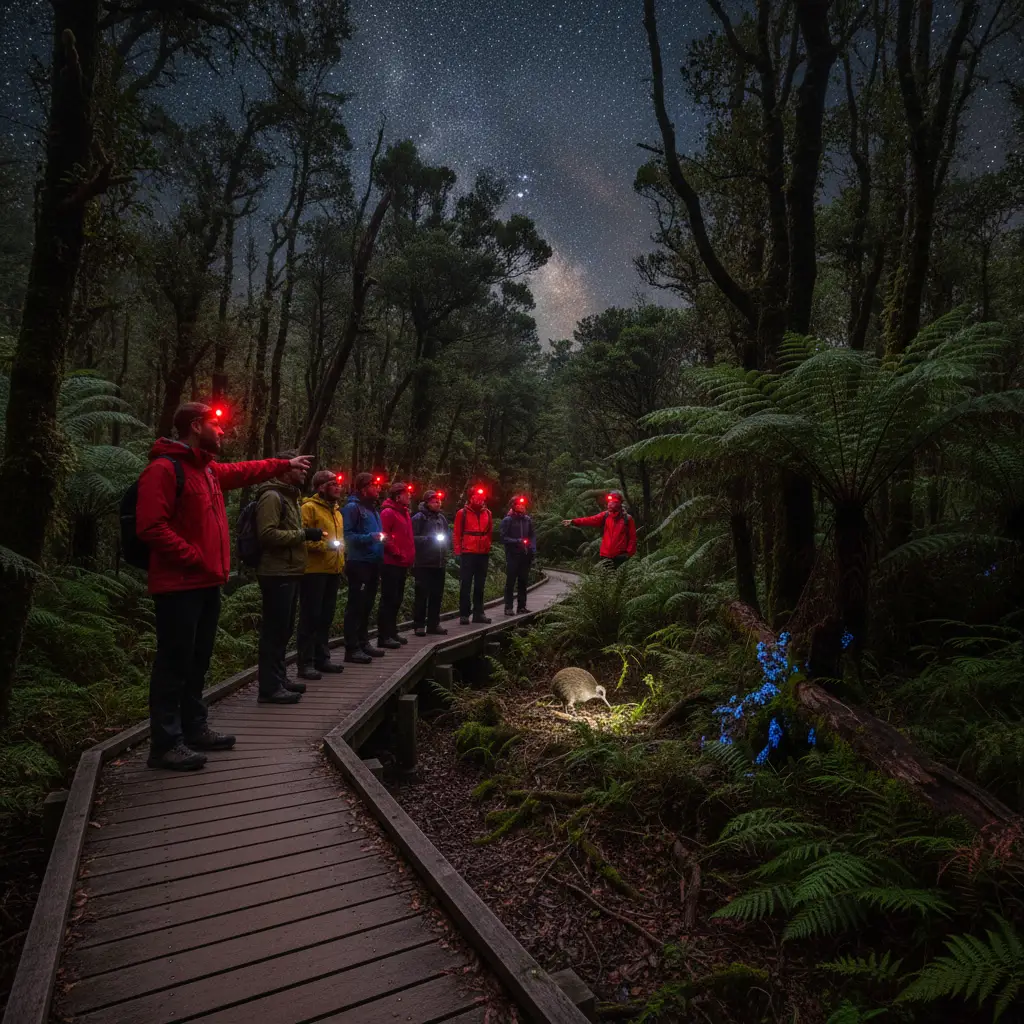
For those unable to travel to remote corners, Wellington’s Zealandia Ecosanctuary is a miracle of conservation. Surrounded by a predator-proof fence, this valley hosts over 100 Little Spotted Kiwi. Night tours here are exceptionally popular and offer a very high chance of seeing kiwi, tuatara, and glowworms within minutes of the capital city’s center.
Essential Gear for Night Spotting
Entering the bush at night requires specific preparation. The goal is to see the animals without disturbing them or compromising your own safety.
Why Red Light is Non-Negotiable
Standard white LED torches are blinding to nocturnal animals. A bright white beam can temporarily blind a kiwi or ruru, causing them distress and making them vulnerable to predators or accidents. Furthermore, white light destroys your own night vision.
The Rule: You must use a torch with a dedicated red light filter or mode. Red light has a longer wavelength that is less disruptive to the wildlife’s visual spectrum. Many animals will continue their natural behavior under a soft red light, whereas white light will send them running. Ensure your headlamp has a low-lumen red setting.
Silent Clothing and Layering
New Zealand’s nocturnal wildlife relies heavily on hearing. The “swish-swish” of nylon rain pants can sound like thunder to a kiwi. Opt for soft-shell fabrics, merino wool, or fleece that move silently. Additionally, temperatures drop significantly at night, even in summer. Layering is essential—start with a merino base layer, add a fleece mid-layer, and carry a quiet, waterproof outer shell.
Ethical Guidelines and Safety
The welfare of the wildlife is paramount. The Department of Conservation (DOC) sets strict guidelines for interacting with protected species.
The Code of Conduct
- No Flash Photography: Never use a flash. It stuns animals. If you cannot take a photo with high ISO and a fast lens, simply enjoy the moment with your eyes.
- Keep Your Distance: Maintain a buffer of at least 5 meters from any wildlife. Do not pursue an animal if it moves away.
- Silence is Golden: Keep voices to a whisper. Turn off mobile phones or set them to silent mode.
- Stay on the Track: wandering off-track damages delicate root systems and burrows. It also increases the risk of getting lost.
Personal Safety in the Bush
New Zealand’s weather is changeable. Always carry a personal locator beacon (PLB) if heading into remote areas without a guide. Tell someone your intentions and expected return time. Be aware of tree roots and uneven ground; navigating by torchlight affects depth perception.
The Intersection of Dark Sky Tourism and Wildlife
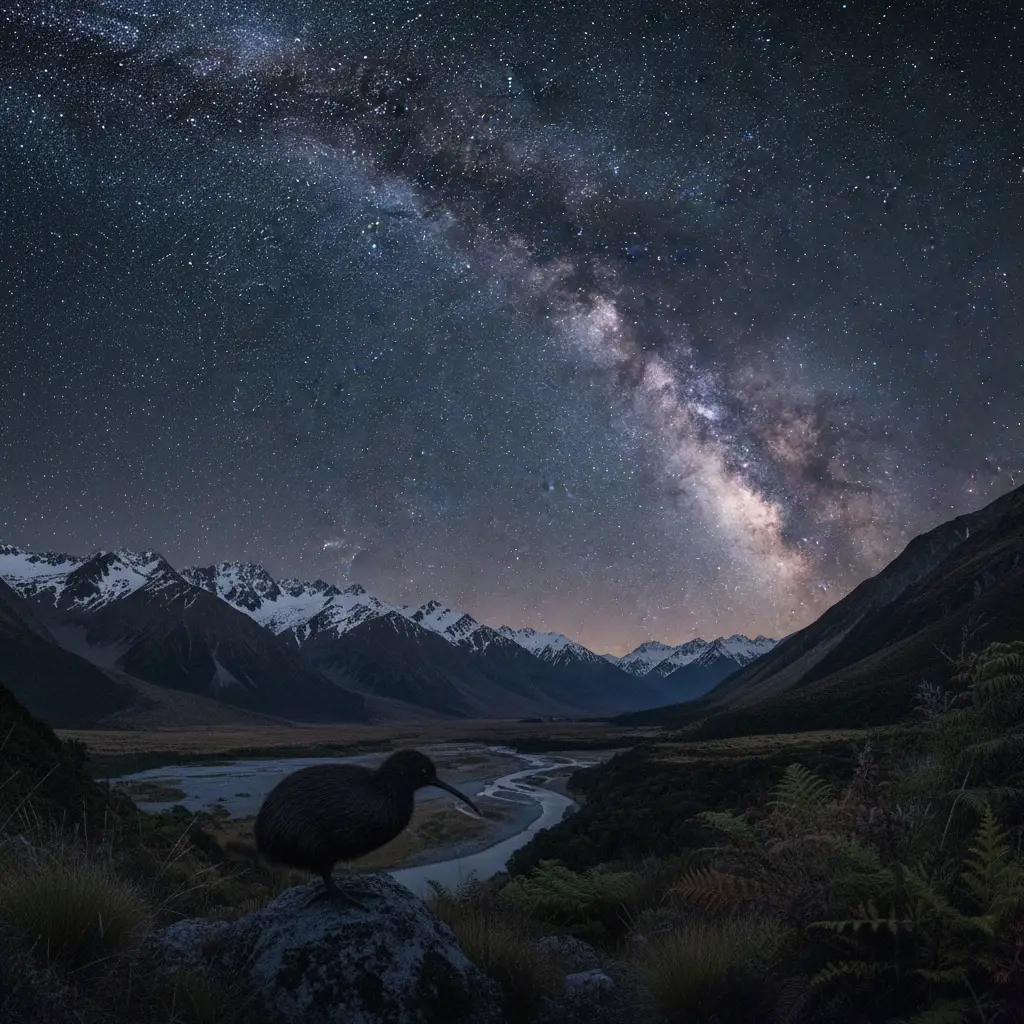
New Zealand is a world leader in Dark Sky Sanctuaries. Areas like the Aoraki Mackenzie International Dark Sky Reserve protect the night sky from light pollution. This preservation is not just for stargazers; it is critical for biodiversity. Artificial light at night (ALAN) disrupts the circadian rhythms of nocturnal species, affecting breeding and feeding.
Visiting these dark sky regions offers a dual benefit: you experience the Milky Way in unparalleled clarity while exploring an ecosystem that is functioning exactly as nature intended, free from the interference of artificial city glow. Combining an astronomy tour with a wildlife walk is the ultimate way to experience the New Zealand night.
People Also Ask
What is the best time to see nocturnal wildlife in New Zealand?
The best time is immediately after sunset. Kiwi and other nocturnal animals are most active during the first few hours of darkness as they emerge to feed. Seasonally, darker months (autumn and winter) provide longer viewing windows, but wildlife is active year-round.
Can I see a kiwi bird in the wild without a guide?
Yes, it is possible, particularly on Stewart Island or in sanctuary areas. However, your chances increase significantly with a guide who knows the specific territories and calls of the birds. Guides also ensure encounters are ethical and safe.
Why do I need a red light for kiwi spotting?
Kiwi and other nocturnal species are highly sensitive to white light, which can blind and distress them. Red light is less intrusive to their vision, allowing you to observe their natural behavior without disturbing them.
Are there dangerous nocturnal animals in New Zealand?
No. New Zealand has no large predators, snakes, or dangerous wild animals. The only minor risk comes from the Katipo spider (rare) or getting lost in the bush. The wildlife itself poses no physical threat to humans.
Where are the glowworms found in New Zealand?
Glowworms (Arachnocampa luminosa) are found throughout New Zealand in damp, dark places. Famous locations include the Waitomo Caves, Te Anau Glowworm Caves, and free outdoor viewing spots like the Minnehaha Walk in Fox Glacier.
What should I wear for a night wildlife tour?
Wear warm, non-rustling layers. Avoid denim and loud nylon. Sturdy walking shoes or hiking boots are essential for uneven terrain. Even in summer, nights can be cold, so bring a beanie and gloves.