The essential guidelines for visiting marine reserves in New Zealand center on a strict “look but don’t touch” policy to preserve biodiversity. Visitors must maintain a distance of at least 20 meters from seals and sea lions, reduce vessel speeds to “no wake” within 300 meters of marine mammals, and ensure no biological material or physical structures are removed from the reserve.
New Zealand, or Aotearoa, is renowned globally for its pristine marine environment and unique biodiversity. From the playful Hector’s dolphins to the imposing sperm whales of Kaikʼnura, the country’s coastal waters are a sanctuary for marine life. However, the surge in eco-tourism requires strict adherence to conservation protocols. Whether you are a local enthusiast or an international visitor, understanding the Department of Conservation (DOC) regulations is mandatory to ensure these ecosystems thrive for future generations and remain part of Accessible Nature.
What Are the Core Guidelines for Visiting Marine Reserves?
Marine reserves in New Zealand, such as the Poor Knights Islands, are established to preserve marine life in its natural state. They are often referred to as “wet libraries” or living museums. Under the Marine Reserves Act 1971, these areas enjoy the highest level of marine protection. The fundamental rule is simple: take nothing but photos, leave nothing but bubbles.
When visiting these sanctuaries, you are entering the Home of protected wildlife. The guidelines extend beyond merely not fishing; they encompass how humans interact with the environment physically and acoustically. Disturbance is a cumulative pressure. One boat approaching a pod of dolphins might seem harmless, but if ten boats do it daily, the animals may be forced to leave their feeding or breeding grounds, leading to population decline.

The “No-Take” Policy Explained
The most critical guideline for visiting marine reserves is the absolute prohibition on fishing, gathering, or disturbing marine life. This includes:
- No Fishing: Line fishing, spearfishing, and netting are strictly banned.
- No Gathering: You cannot take crayfish, shellfish, seaweed, or even inanimate objects like rocks, shells, or driftwood found on the foreshore of the reserve.
- No Feeding: Feeding fish or marine mammals alters their natural behavior, making them aggressive or dependent on humans. It can also introduce disease.
What Are the Distance Rules for Seals and Sea Lions?
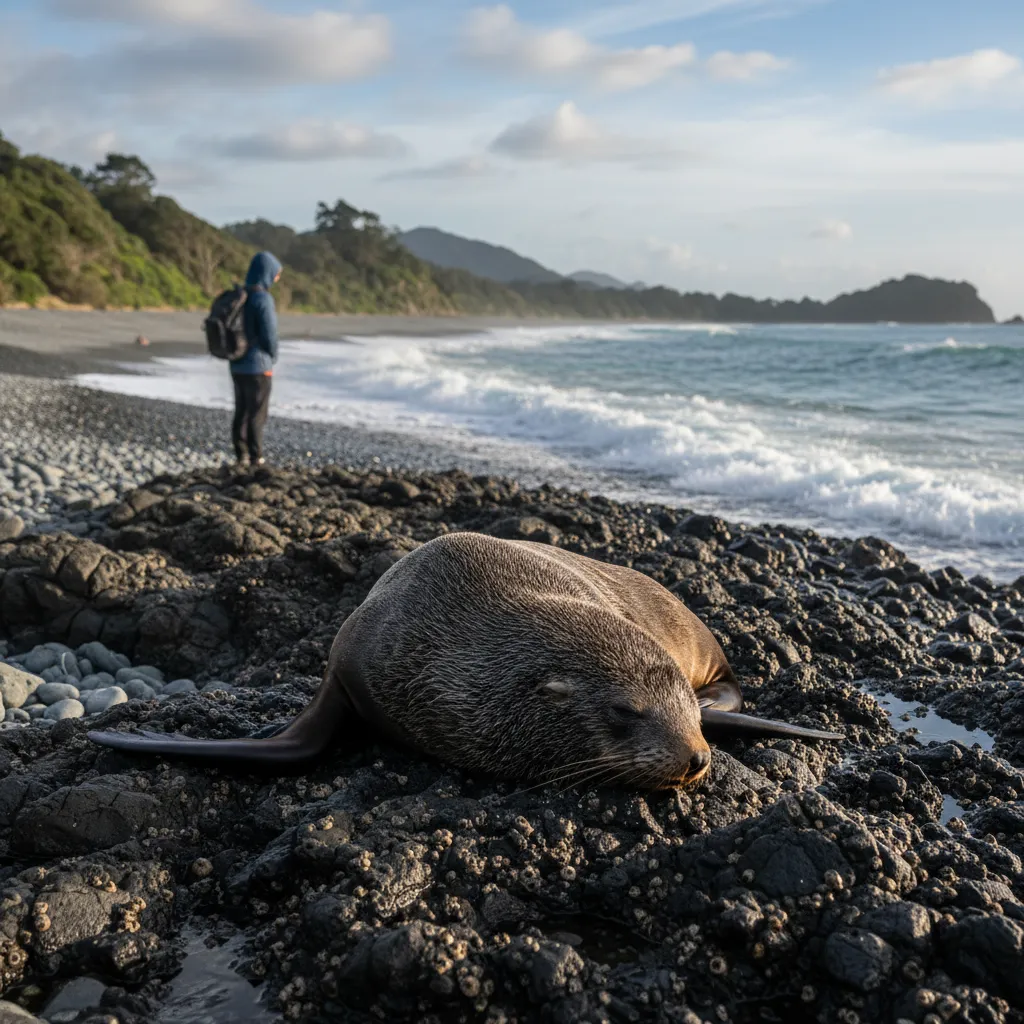
New Zealand Fur Seals (Kekeno) and New Zealand Sea Lions (Rāpoka) are frequently encountered on the coastlines of marine reserves. While they may appear docile while sunbathing, they are wild animals capable of moving surprisingly fast on land. Interactions with pinnipeds are governed by the Marine Mammals Protection Act 1978.
Standard Observation Distances
To ensure the safety of both the visitor and the animal, the Department of Conservation recommends specific safe distances:
- 20 Meters: Stay at least 20 meters away from active seals and sea lions. This buffer zone prevents the animal from feeling threatened.
- 10 Meters: If the animal is sleeping or resting, you may approach slightly closer, but never less than 10 meters. However, maintaining 20 meters is always the safer practice.
Behavioral Guidelines on Shore
Beyond distance, your behavior dictates the safety of the interaction. Always ensure you do not block the animal’s path to the sea. If a seal feels trapped between a human and the water (its escape route), it is likely to attack. Keep noise to a minimum and avoid sudden movements. If an animal lifts its head and stares at you, you are too close and causing stress. Retreat slowly and quietly.
What Are the Drone Regulations Over Marine Mammals?
The rise of aerial photography has led to increased drone usage in marine reserves. While drones offer a unique perspective for research and tourism, they are a significant source of acoustic disturbance for marine mammals. Whales and dolphins are highly sensitive to sound frequencies emitted by drone propellers.
Altitude and Horizontal Restrictions
Civil Aviation Authority (CAA) rules and DOC regulations are strict regarding Unmanned Aerial Vehicles (UAVs) near marine wildlife:
- 150 Meters Horizontal Distance: You must not fly a drone closer than 150 meters horizontally from any marine mammal.
- 600 Meters Vertical Altitude: If you are flying directly above a marine mammal, you must maintain an altitude of at least 600 meters (approx 2000 feet). Since most consumer drones are legally capped at 120 meters (400 feet) altitude, it is effectively illegal to fly a drone directly over marine mammals without a specific permit.
Exceptions exist only for scientific research operations that hold a valid DOC permit. For recreational tourists, the rule is clear: if you see a whale or dolphin, land the drone or fly away from the animal immediately.
Swimming with Dolphins: Ethics and Regulations
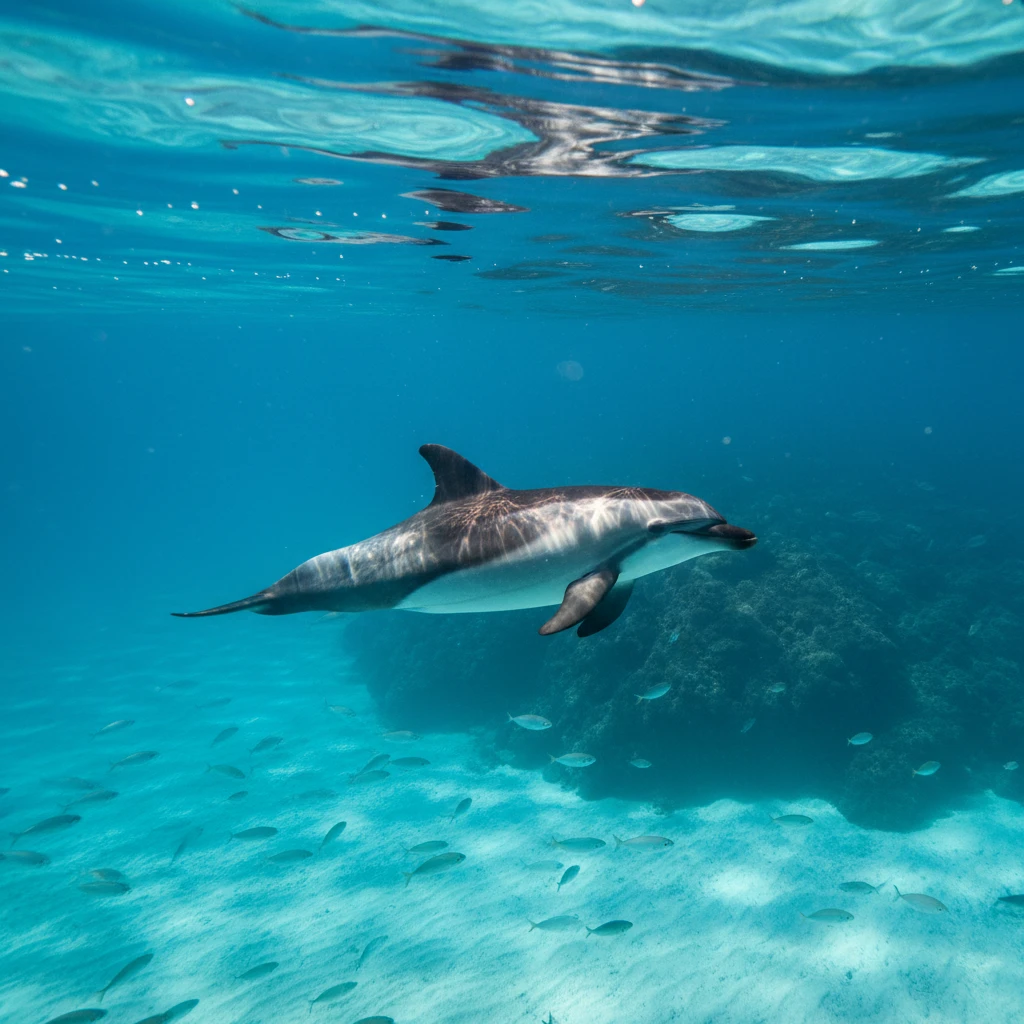
Swimming with dolphins is a bucket-list activity for many visitors to New Zealand, particularly in areas like Kaikʼnura and the Bay of Islands. However, unmanaged interaction can be harmful. In some regions, swimming with Bottlenose dolphins has been banned completely due to the impact on calf survival rates.
The “No Touch” Rule
If you are in the water and dolphins approach you, you must never attempt to touch them. Touching removes the protective mucus layer on their skin, leaving them susceptible to infection. Furthermore, dolphins are powerful animals; a playful nudge can result in serious injury to a swimmer.
Vessel Approach and Swimmer Deployment
Commercial operators are strictly regulated, but private boaties must also follow these rules:
- Wait for the Approach: Do not drive your boat through a pod to drop swimmers. Position the boat ahead and to the side, turn off the engine, and allow the dolphins to come to you voluntarily.
- Respect Mothers and Calves: It is illegal to swim with or disturb pods containing juvenile dolphins. If you see small calves, keep your distance.
- Duration Limits: Interactions should be kept brief to prevent disrupting the pod’s feeding or resting cycles.
How Should Vessels Operate Around Marine Mammals?
Boat strikes are a leading cause of mortality for marine mammals, particularly for slow-moving species like Southern Right Whales or sleeping Sperm Whales. When navigating within a marine reserve or any coastal water where mammals are present, the captain is responsible for minimizing impact.
The 300-Meter Caution Zone
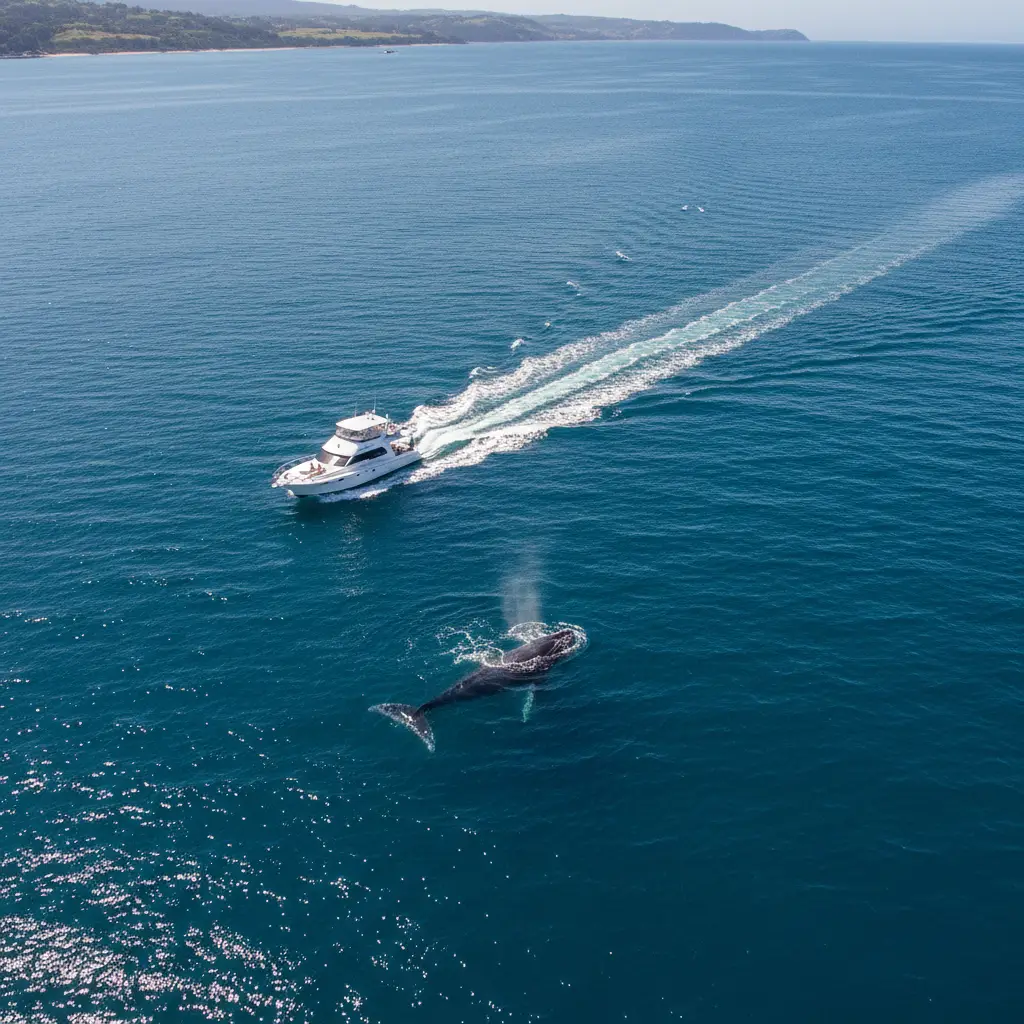
From a distance of 300 meters from a marine mammal, specific navigation rules apply:
- Reduce Speed: Slow down to a “no wake” speed (usually under 5 knots).
- Approach Angle: Never approach a whale or dolphin from the front or directly behind. Always approach from a parallel direction and slightly to the rear.
- No Crowding: No more than three vessels should be within 300 meters of a marine mammal at any one time. If there are already three boats, you must wait your turn outside the zone.
The 50-Meter Exclusion Zone
Vessels must not approach closer than 50 meters to a whale (or 200 meters for a whale with a calf). For dolphins and seals, the vessel should maintain a 50-meter distance, allowing the animals to control the interaction. If the animals choose to ride the bow wave, the skipper should maintain a steady course and speed, avoiding sudden turns.
How to Report Harassment and Violations?
Conservation relies on community enforcement. If you witness individuals harassing wildlife, fishing in a marine reserve, or violating drone regulations, it is vital to report the incident. The Department of Conservation cannot be everywhere at once, and reports from the public are crucial for prosecution and education.
What Information to Collect
For a report to be effective, gather as much evidence as possible without putting yourself in danger:
- Vehicle/Vessel Registration: Boat names, registration numbers, or car license plates.
- Descriptions: Physical descriptions of the people involved.
- Visual Evidence: Photos or videos of the violation taking place.
- Location and Time: GPS coordinates or specific landmarks, along with the date and time.
Contacting DOC
You can report suspicious activity via the 0800 DOC HOT (0800 362 468) emergency hotline. This line is manned 24/7. Alternatively, reports can be filed through the DOC website. By reporting violations, you contribute directly to the protection of New Zealand’s taonga (treasures).
Can I fish in a marine reserve if I catch and release?
No. Fishing of any kind, including catch and release, is strictly prohibited in New Zealand marine reserves. The act of hooking a fish causes stress and potential injury, which violates the complete protection status of the reserve.
Are dogs allowed in marine reserves?
Generally, dogs are allowed on the beaches of marine reserves unless specified otherwise by local council bylaws, but they must be kept under control. However, if marine mammals (seals/sea lions) are present, dogs must be leashed immediately to prevent harassment.
What should I do if I find a stranded whale or dolphin?
If you find a stranded marine mammal, contact 0800 DOC HOT immediately. Keep the animal cool by pouring water over it (avoiding the blowhole), keep it upright, and minimize noise and handling until rangers arrive.
Can I take shells or driftwood from a marine reserve?
No. All natural material, including dead shells, driftwood, stones, and sand, is protected within a marine reserve. Removing them disrupts the habitat for small organisms and the natural nutrient cycle.
Is it legal to feed fish in a marine reserve?
While not always explicitly illegal in every reserve statute, it is strongly discouraged and often considered an offense under “disturbing” marine life regulations. Feeding alters natural behaviors and ecological balance.
How close can I get to a whale on a jet ski?
Jet skis (personal watercraft) are treated as vessels. You must adhere to the 300-meter caution zone and the 50-meter exclusion zone. Due to their noise and speed, extreme caution and slow speeds are advised near marine mammals.