The history of Karori Sanctuary, now known as Zealandia Te Māra a Tāne, traces the transformation of a Victorian water catchment system into the world’s first fully-fenced urban ecosanctuary. Established in 1995 following the decommissioning of the reservoir, the project pioneered predator-proof fencing technology to restore a corner of Wellington to its pre-human state.
Located just minutes from downtown Wellington, this sanctuary represents a monumental shift in New Zealand conservation, moving from managing decline to active restoration. It stands as a global model for biodiversity recovery in urban environments.
The Water Catchment Era: Industrial Beginnings
Long before it became a haven for tieke and tuatara, the Karori valley served a purely utilitarian purpose for the growing city of Wellington. In the mid-19th century, Wellington was expanding rapidly, and the need for a reliable, clean water source was critical to public health and urban development.
In 1878, the Karori Reservoir was constructed. This was a significant engineering feat for the time, involving the damming of the Kaiwharawhara Stream. The Lower Dam, completed first, is an earth-fill structure with a puddle clay core—a testament to Victorian engineering that still stands today. It was the first large-scale gravity dam in New Zealand. As the city’s thirst grew, the Upper Dam was added in 1908 to increase capacity.
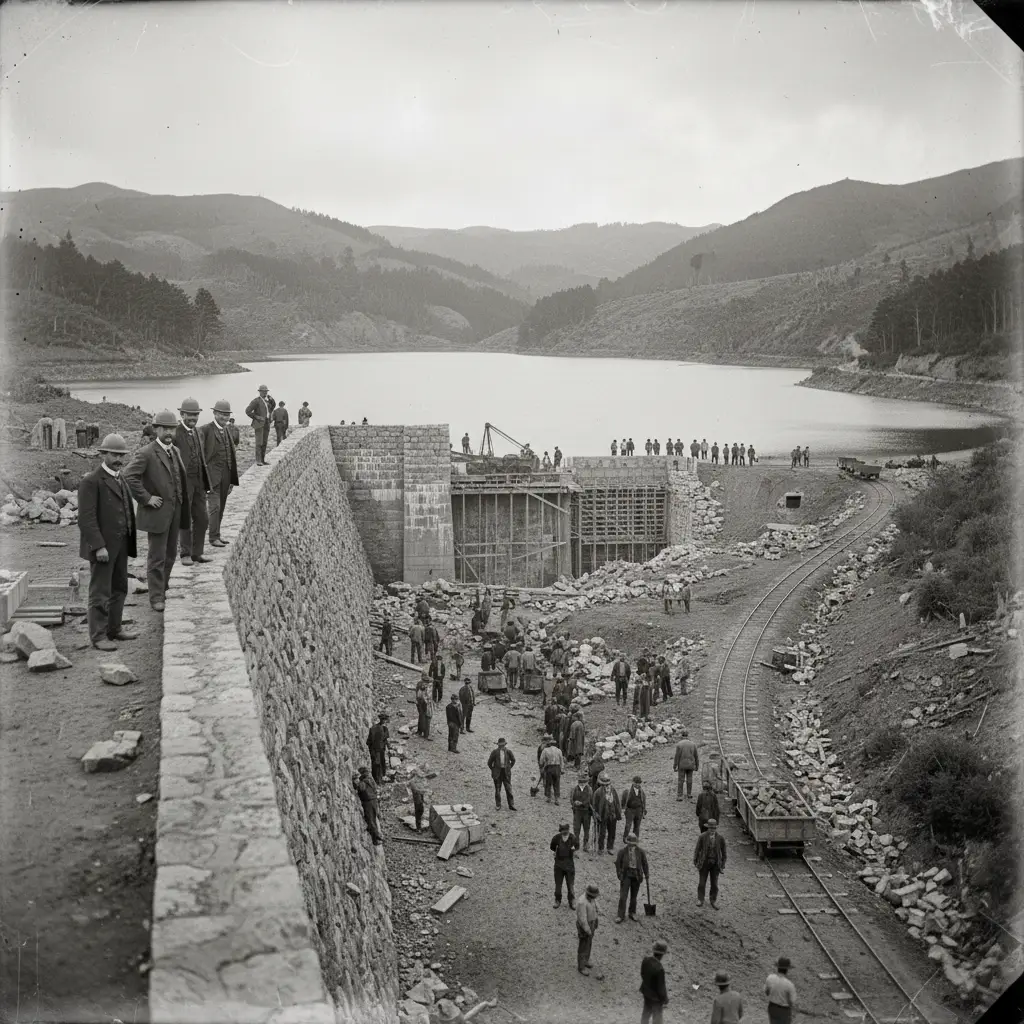
For over a century, this valley was strictly off-limits to the public. Access was prohibited to protect the water quality. Paradoxically, this exclusion created an accidental conservation effect. While the surrounding suburbs of Karori and Highbury were developed and deforested, the catchment area allowed a remnant of regenerating native forest to survive relatively undisturbed. Though introduced pests like possums and rats were present, the forest canopy remained intact, providing the structural foundation for what would later become the sanctuary.
By the early 1990s, the dams were deemed earthquake-prone and no longer necessary for Wellington’s modern water grid. The catchment was decommissioned, leaving a 225-hectare valley of regenerating bush in the heart of the city without a purpose. This void set the stage for one of the most ambitious conservation experiments in history.
A Radical Proposal: The Birth of the Sanctuary
The transition from a disused utility site to a conservation powerhouse was not immediate. In 1992, the Wellington Regional Council and City Council were debating the future of the land. Proposals ranged from housing developments to public parks. However, a local naturalist and visionary named Jim Lynch saw a different potential.
Lynch proposed a radical idea: seal off the entire valley with a fence that no mammal could breach, eradicate all introduced pests inside, and reintroduce the native species that had been lost to the region for over a century. At the time, this concept was revolutionary. Mainland islands existed, but none were located in a capital city, and none relied on a physical barrier of this magnitude to exclude all mammalian predators, from tiny mice to agile stoats.
In 1995, the Karori Sanctuary Trust was formed to turn this vision into reality. The community support was overwhelming, yet skepticism remained regarding the feasibility of maintaining a pest-free environment so close to urban housing.
Engineering the Predator-Proof Fence
The cornerstone of the sanctuary’s success—and its most distinct physical feature—is the predator-proof fence. Standard farm fences or even high-security deer fences were insufficient against the suite of invasive mammals that plague New Zealand’s wildlife. The fence needed to stop:
- Possums: Excellent climbers.
- Rats and Mice: Capable of squeezing through tiny gaps.
- Stoats and Weasels: Agile, fast, and able to tunnel.
- Cats and Dogs: Strong jumpers and diggers.
The resulting design, finalized in 1999, is a marvel of conservation engineering. The fence stretches 8.6 kilometers around the perimeter of the valley. It stands 2.2 meters high and features a unique “top hat” capping that prevents animals from climbing over. The mesh is woven so tightly that even a baby mouse cannot squeeze through. Furthermore, a skirt extends underground to prevent burrowing animals from digging underneath.
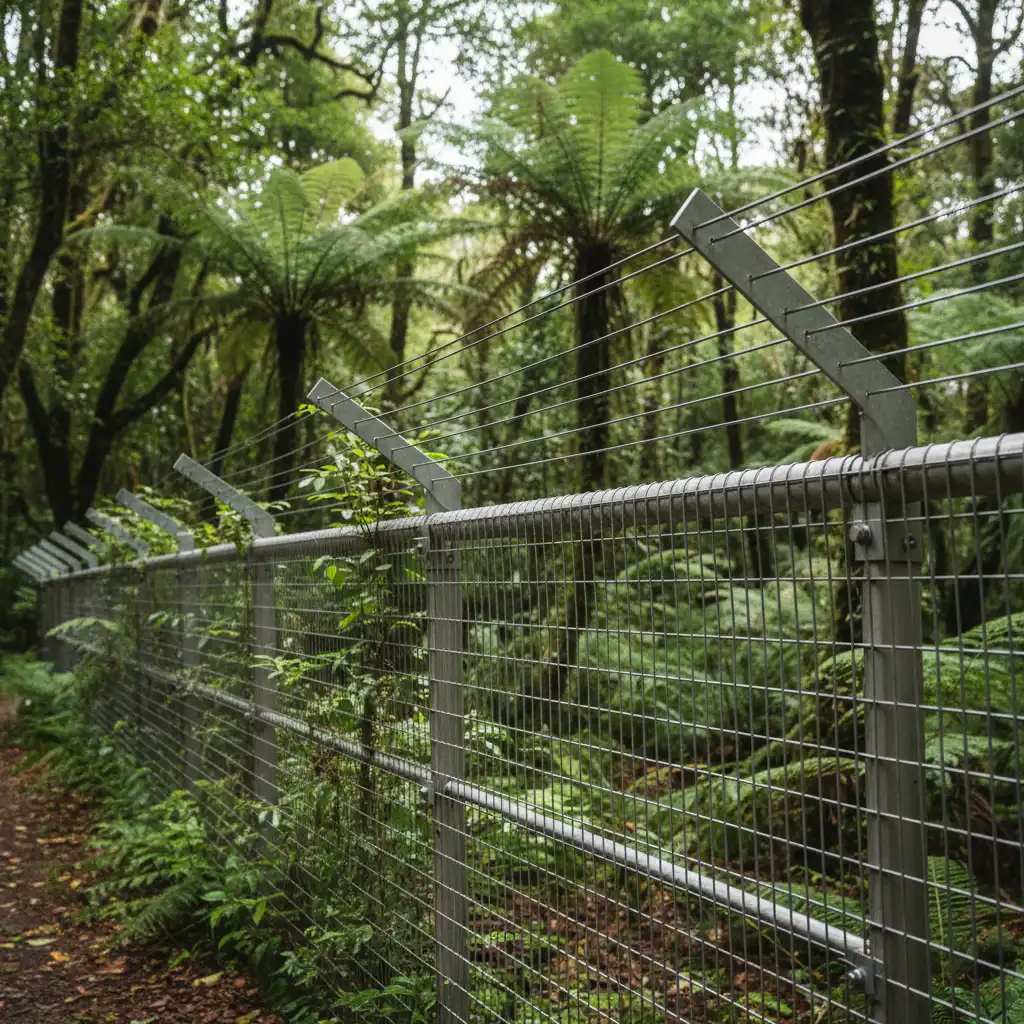
Constructing the fence was a logistical challenge. The terrain of the Karori valley is steep and rugged. Helicopters were used to drop materials into remote sections of the boundary line. Upon its completion in 1999, the fence physically separated the valley from the surrounding ecological pressure, creating a literal island on the mainland.
The Great Eradication and Species Return
With the fence closed, the Karori Sanctuary Trust undertook one of the most comprehensive pest eradication programs ever attempted in an urban area. The goal was to remove roughly 14 species of introduced mammals. This involved an intensive grid of trapping and toxin application.
The eradication was largely successful, although removing mice proved to be an ongoing battle due to their small size and rapid breeding cycles. By 2000, the valley was declared free of major predators (possums, mustelids, rats, and cats), marking the beginning of the restoration phase.
The ecological impact was immediate. Vegetation began to recover as possums were no longer stripping the canopy. This paved the way for the reintroduction of species that had been extinct on the mainland for generations.
Key Milestones in Species Reintroduction
The history of the sanctuary is best told through the return of its inhabitants. Each release represented a victory against extinction and a step toward the 500-year goal. Below is a timeline of significant reintroductions that have defined the sanctuary’s success.
2000: Little Spotted Kiwi (Kiwi Pukupuku)
The Little Spotted Kiwi was the first species to be reintroduced. Extinct on the mainland since the late 19th century, 40 birds were transferred from Kapiti Island. Today, the population is self-sustaining and is one of the most robust on the mainland, delighting visitors during night tours.
2000-2002: North Island Saddleback (Tieke) and Kākā
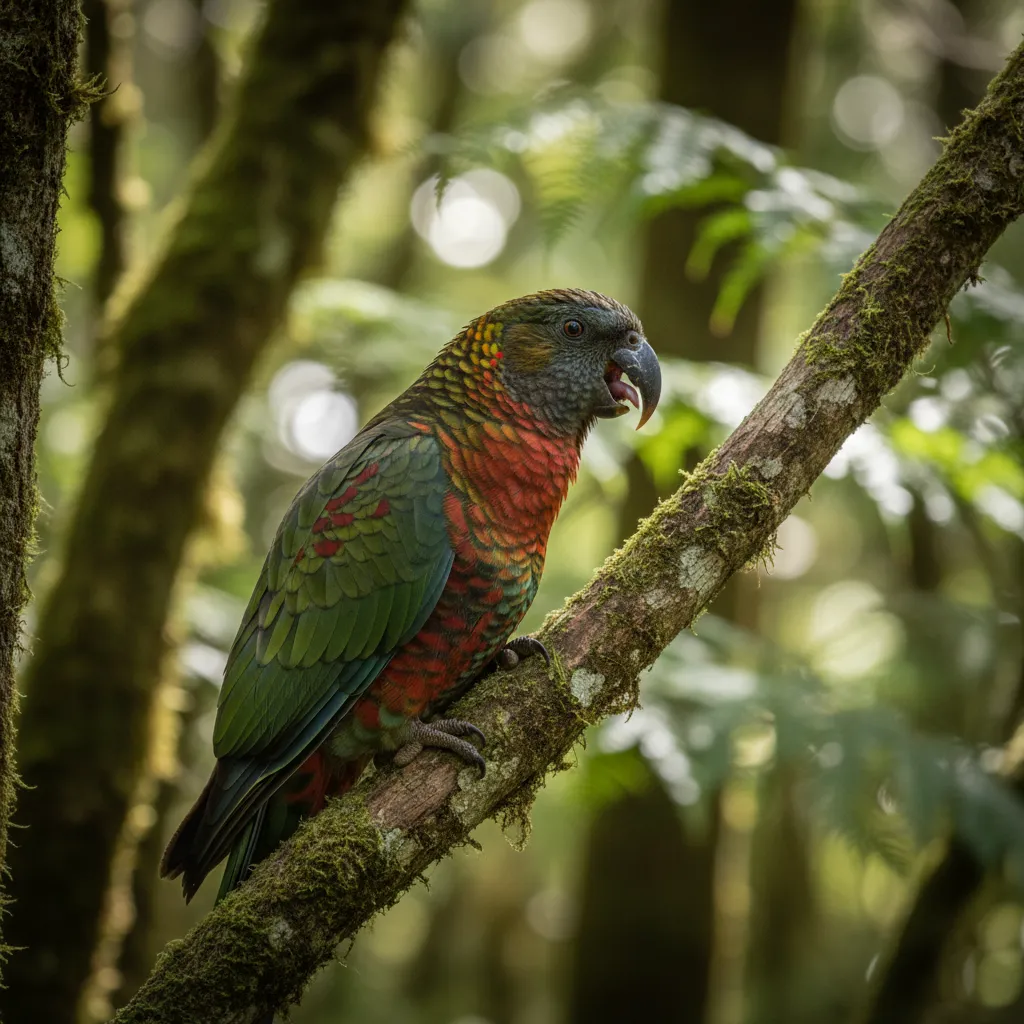
The Tieke, previously restricted to offshore islands due to their vulnerability to rats, were released and thrived immediately. Simultaneously, the Kākā (forest parrot) was reintroduced. The Kākā population has been so successful that the birds now spill over into the surrounding suburbs of Wellington, bringing native wildlife back into the backyards of city residents.
2005: Tuatara
In a historic move, 70 Tuatara were released into the sanctuary. This marked the first time these ancient reptiles, which date back to the age of the dinosaurs, had lived wild on the New Zealand mainland in over 200 years. Their successful breeding in the sanctuary demonstrated that the fence effectively excluded the rats that prey on Tuatara eggs.
2008: Maud Island Frog (Pepeketua)
The introduction of the Maud Island Frog highlighted the sanctuary’s role in protecting not just birds, but also sensitive amphibians and invertebrates. These primitive frogs do not have a tadpole stage and are incredibly susceptible to predation.
2010: Takahē
A pair of Takahē, a large flightless rail once thought to be extinct, were introduced. These birds serve as ambassadors for their species, grazing on the grassy banks of the sanctuary’s lakes and offering visitors a glimpse of New Zealand’s prehistoric past.
The 500-Year Vision: Restoring the Valley
The guiding philosophy of the Karori Sanctuary is not merely to protect what is there, but to restore the valley to the state it was in before human arrival. This is known as the “500-Year Vision.”
This long-term strategy acknowledges that forests take centuries to mature. The Rimu, Mataī, and Miro trees that once dominated the Wellington skyline were logged extensively in the 19th century. While the sanctuary has replanted thousands of these podocarps, it will take hundreds of years for them to reach full canopy height and for the ecosystem to fully regain its pre-human complexity.
This vision fundamentally shifts the concept of conservation from a quarterly or annual reporting cycle to an intergenerational commitment. It implies that the work done today—planting a seedling or maintaining a fence—is a gift to generations who will live centuries from now.
Evolution to Zealandia Te Māra a Tāne
In 2010, the Karori Sanctuary underwent a significant rebranding exercise, adopting the name Zealandia: The Karori Sanctuary Experience, and later incorporating the Māori name Te Māra a Tāne (The Garden of Tāne, the god of the forest). This change was driven by the need to attract international tourism and better communicate the national significance of the project.
The rebranding coincided with the opening of a world-class visitor center, which serves as an educational hub and a gateway to the sanctuary. This facility allows the trust to generate revenue through eco-tourism, reducing reliance on public funding and grants. Today, Zealandia is ranked as one of the top eco-tourism destinations in New Zealand and is credited with the “halo effect”—the increase of native birdlife across the entire Wellington region as birds fly beyond the fence to breed in local parks and gardens.
From a Victorian waterworks to a global conservation leader, the history of Karori Sanctuary is a powerful narrative of redemption. It proves that with vision, engineering, and community will, we can reverse environmental degradation and bring nature back into our cities.
People Also Ask (PAA)
Why was the Karori Sanctuary fence built?
The fence was built to create a mainland island free from introduced mammalian predators. New Zealand’s native wildlife evolved without land mammals and has no defense against them. The 8.6km fence excludes pests like stoats, possums, rats, and cats, allowing native species to thrive and breed safely within the valley.
When did Karori Sanctuary change its name to Zealandia?
The sanctuary rebranded to “Zealandia” in 2010. The name change was part of a strategy to raise its profile as a national treasure and a major tourist destination, while “Te Māra a Tāne” was added to honor the Māori cultural heritage and the domain of Tāne, the god of the forest.
What was the site used for before it became a sanctuary?
Before becoming a sanctuary, the valley was a water catchment area for Wellington city. The Lower Dam was built in 1878 and the Upper Dam in 1908. Public access was restricted for over a century to protect the water supply, which inadvertently helped preserve the regenerating forest.
Can you see Kiwi at Zealandia?
Yes, Zealandia is home to a healthy population of Little Spotted Kiwi. However, as they are nocturnal, they are rarely seen during the day. The best way to see them is by booking a guided night tour, where sightings are very common.
How big is the Karori Sanctuary?
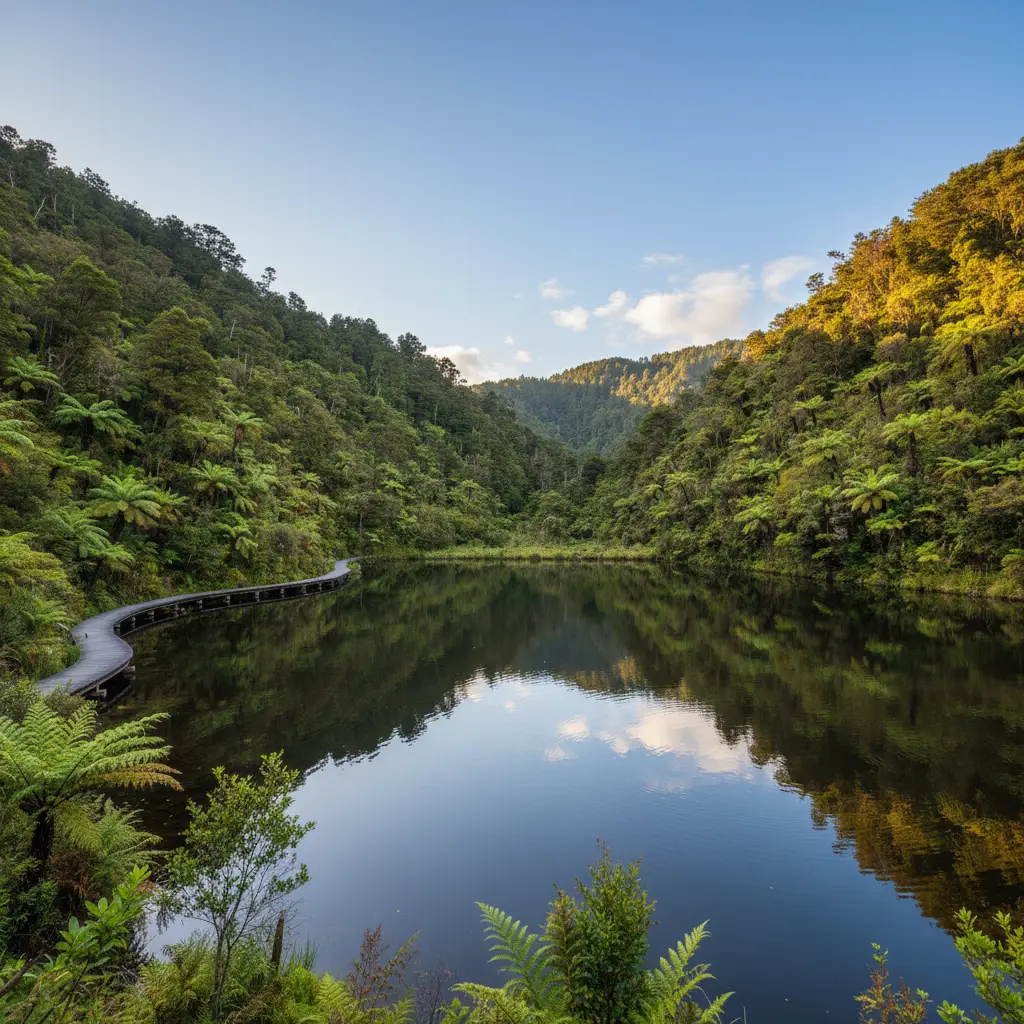
The sanctuary covers 225 hectares (approximately one square mile) of regenerating native forest, lakes, and wetlands. It is enclosed by an 8.6-kilometer predator-proof fence.
What is the 500-year vision?
The 500-year vision is the sanctuary’s long-term goal to restore the valley’s forest and ecosystem to the state it was in before humans arrived in New Zealand. This involves enabling the slow-growing canopy trees like Rimu and Rata to mature, a process that takes centuries.