Goat Island snorkeling offers a premier underwater experience in New Zealand’s Cape Rodney-Okakari Point Marine Reserve. Located near Leigh, this protected sanctuary allows swimmers to observe massive snapper, crayfish, and stingrays in their natural habitat. It provides accessible, crystal-clear waters perfect for beginners and advanced divers seeking a thriving, non-extractive marine ecosystem.
Introduction to Te Hāwere-a-Maki
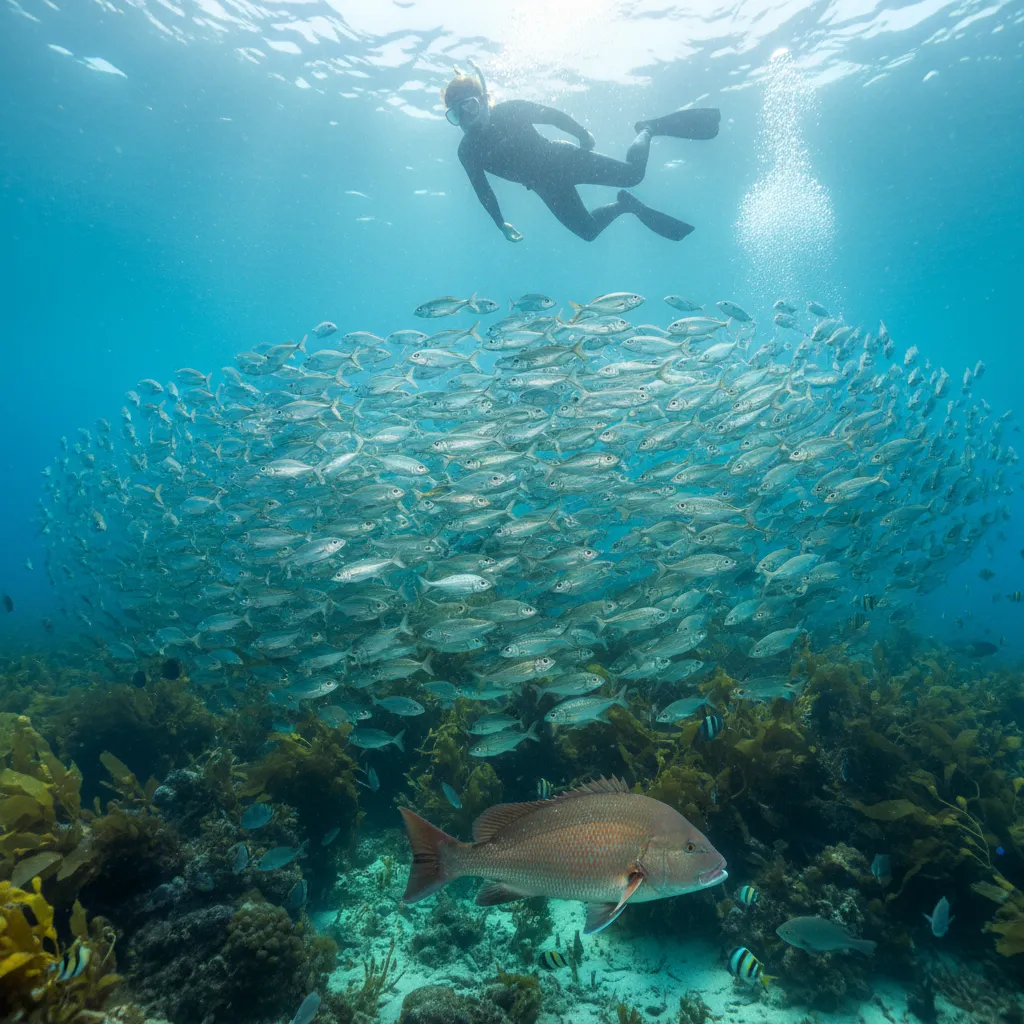
Goat Island, known traditionally as Te Hāwere-a-Maki, is not merely a snorkeling destination; it is the crown jewel of New Zealand’s marine conservation efforts. Located just over an hour north of Auckland near the township of Leigh, this site represents a radical shift in how humans interact with the ocean. Unlike other coastal spots where marine life flees from human presence, the residents of Goat Island—specifically the Australasian snapper and rock lobster—display a remarkable lack of fear, often approaching snorkelers with curiosity.
For eco-tourists and underwater enthusiasts, a Goat Island snorkeling guide is essential to navigating the reserve’s unique conditions. The reserve protects 547 hectares of shore and sea, creating a “no-take” zone that has allowed the ecosystem to regenerate to a state resembling pre-human habitation. Whether you are wading in the shallows or freediving the deeper channels, the density of marine life here is unrivaled in the region.
History of Cape Rodney-Okakari Point
To truly appreciate the snorkeling experience at Goat Island, one must understand the historical significance of the Cape Rodney-Okakari Point Marine Reserve. Established in 1975, it was New Zealand’s first marine reserve and one of the first of its kind in the world. The creation of this reserve was a hard-fought battle led by marine biologists, specifically those from the University of Auckland’s nearby marine laboratory, who noticed the rapid decline of coastal ecosystems due to overfishing.
Before 1975, the area was heavily fished, leaving the reefs barren—a phenomenon known as an “urchin barren.” Without large predators like snapper and crayfish to control the population of sea urchins (kina), the urchins decimated the kelp forests, which are the nursery grounds for marine biodiversity. The establishment of the reserve was a controversial experiment at the time, facing opposition from recreational and commercial fishers.
However, the results over the last five decades have been undeniable. The “reserve effect” has led to a trophic cascade restoration. The predators returned, the urchin populations were controlled, and the kelp forests flourished once again. Today, the biomass of snapper within the reserve is significantly higher than in surrounding non-protected areas. When you snorkel here, you are swimming through a living laboratory that proves the efficacy of strict marine conservation.
Goat Island Snorkeling Guide: Logistics & Best Practices
Planning a trip to Goat Island requires attention to tides, weather, and equipment. Because it is an open ocean environment facing the Hauraki Gulf, conditions can change rapidly.
When is the best time to snorkel Goat Island?
The optimal time to snorkel is during the New Zealand summer and early autumn (December through April). During these months, the water temperature ranges from 20°C to 22°C (68°F – 72°F). While brave souls snorkel in winter, the water drops to around 15°C, requiring thick wetsuits (7mm).
Wind and Visibility: The reserve is best enjoyed when the wind is blowing from the South or Southwest, as the land shelters the bay, resulting in flat, calm waters. Northerly or Easterly winds can bring swell and chop, reducing visibility and making entry difficult. Always check the “Leigh Marine Forecast” before departing.
Gear Rental and Facilities
You do not need to own gear to enjoy the reserve. Several operators in Leigh and on the hill approaching the reserve offer high-quality equipment rentals. It is highly recommended to wear a wetsuit, regardless of the season. A wetsuit provides three critical functions:
- Thermal Protection: Even in summer, 45 minutes in the water will lower your core temperature.
- Buoyancy: Saltwater provides lift, but a wetsuit makes floating effortless, allowing you to hover over the reef without exerting energy or risking touching the delicate ecosystem.
- Protection: It guards against stinging hydroids or accidental scrapes against rocks.

Abundance Below: Snapper, Crayfish, and Rays
The primary draw for the thousands of visitors who flock to Leigh annually is the wildlife. The interaction here is unique; the fish observe you as much as you observe them.
The Resident Snapper
The Australasian Snapper (Tāmure) is the star of the show. In the wild, these fish are skittish and elusive. At Goat Island, they have learned that humans are not a threat. You will likely encounter “old growth” snapper—fish that are decades old and can weigh upwards of 8-10kg. They often swim right up to the mask. It is imperative to remember the “no touch” rule. While they are friendly, touching them removes the protective slime on their scales, making them susceptible to infection.
Crayfish (Rock Lobster)
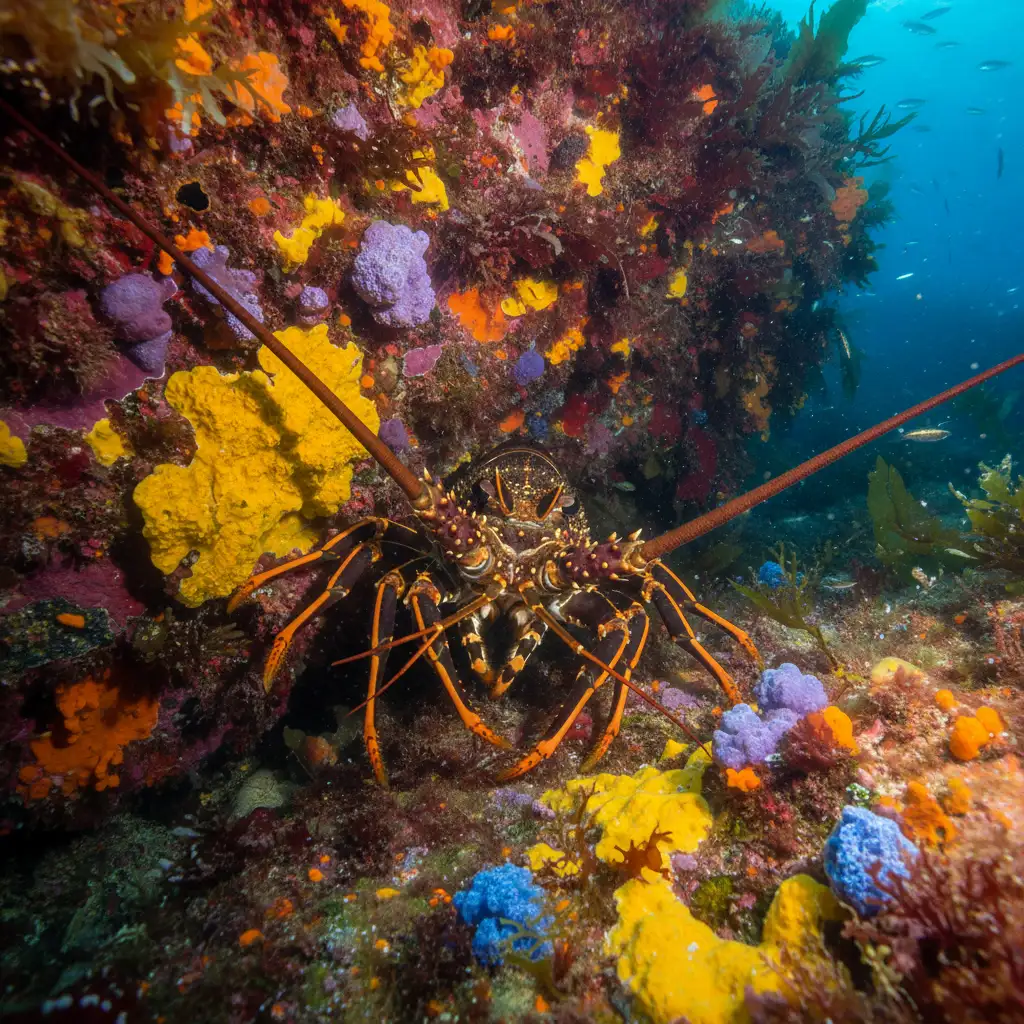
Seeing a crayfish in the wild is a rarity for many, but at Goat Island, they are abundant. You will typically find them hiding in crevices and under ledges in the rocky reef areas. Unlike the snapper, they are generally nocturnal but can often be seen waving their antennae from their dens during the day. The sheer size of the crayfish here, protected from harvesting, is a testament to the reserve’s success.
Stingrays and Eagle Rays
The sandy flats between the reefs are the domain of the rays. Short-tail stingrays and Eagle rays are common. They are majestic creatures, often gliding effortlessly along the bottom. If you see one, do not crowd it. Allow it a clear path to swim away. They are docile unless threatened or stepped on.
Glass Bottom Boats and Clear Kayaks
Not everyone is comfortable in the water, but the educational value of Goat Island should not be missed by non-swimmers. The reserve offers excellent “dry” alternatives that provide a window into the underwater world.
The Glass Bottom Boat Experience
The Goat Island Glass Bottom Boat is a popular option for families with young children or elderly visitors. The tour typically runs for 45 minutes and circumnavigates the island. The vessel is designed with large viewing portals in the hull. The skipper usually provides an educational commentary on the history of the reserve, the species being viewed, and the geography of the area. It is common to see schools of blue maomao, trevally, and the ubiquitous snapper from the comfort of the boat.
Clearyaks (Transparent Kayaks)
For a more active but dry experience, clear kayaks are available for hire. These vessels are made of transparent polycarbonate, effectively turning the entire kayak into a viewing window. This allows for a silent, intrusive-free way to glide over the kelp forests. It bridges the gap between snorkeling and boating, giving you the autonomy to explore the coastline at your own pace while remaining dry.
The Marine Discovery Center
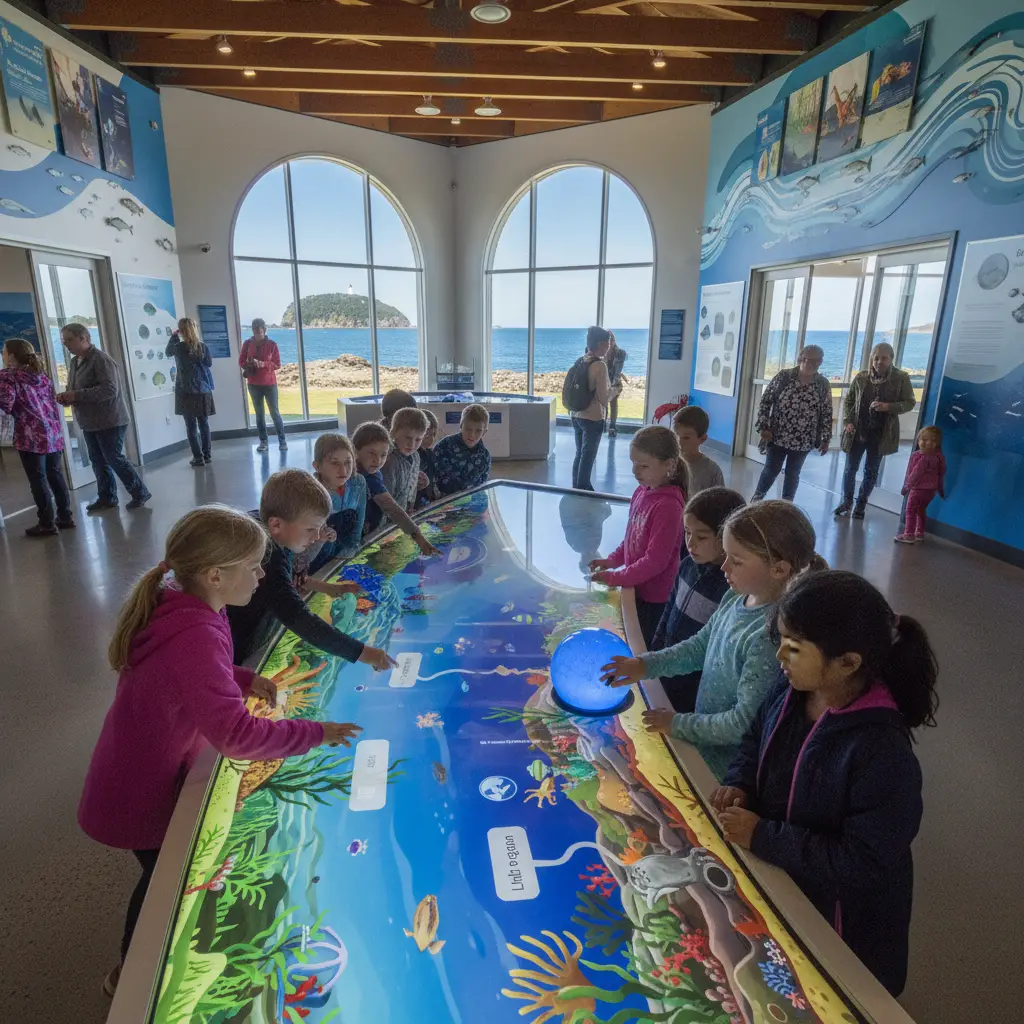
Located on the hill overlooking the reserve is the Goat Island Marine Discovery Centre. Operated by the University of Auckland, this facility is an crucial stop for anyone interested in marine science. It serves as an educational hub that contextualizes what you see in the water.
The Discovery Center features state-of-the-art interactive exhibits, a touch tank (managed carefully for animal welfare), and detailed information about the marine research conducted in the area. It is particularly valuable for understanding the microscopic life and the complex food webs that sustain the larger predators in the bay. A visit here before heading down to the beach can significantly enhance your snorkeling experience, as you will be better equipped to identify the species and behaviors you encounter.
Safety and Reserve Regulations
The Cape Rodney-Okakari Point Marine Reserve is a protected sanctuary under the Marine Reserves Act 1971. Strict rules apply to ensure the preservation of this ecosystem for future generations.
The “No Take” Rule
This is the golden rule. You cannot take anything natural from the reserve. This includes:
- Fish or shellfish (no fishing of any kind).
- Seaweed or kelp.
- Shells, rocks, or sand from the beach.
- Driftwood.
Failure to comply can result in confiscation of gear and significant fines. The Department of Conservation (DOC) patrols the area regularly.
Water Safety
While the bay is sheltered, it is still the ocean. Currents can move through the channel between the mainland and Goat Island (Te Hāwere-a-Maki). Snorkelers should avoid the middle of the channel unless they are strong swimmers with fins. Always snorkel with a buddy. If you are not a confident swimmer, stay in the shallow areas near the beach—you will still see plenty of fish in waist-deep water.
Frequently Asked Questions
Do you have to pay to go to Goat Island?
No, access to the Goat Island Marine Reserve beach and water is free for the public. However, parking can be limited during peak times, and there are fees for equipment rentals, the glass bottom boat, and entry to the Marine Discovery Centre.
Can you walk onto Goat Island?
No, you cannot walk onto the island itself. Goat Island (Te Hāwere-a-Maki) is a scientific reserve, and landing on the island is strictly prohibited to protect the terrestrial flora and fauna, including nesting seabirds. You may only swim or boat around it.
Are there sharks at Goat Island?
While shark sightings are possible in any ocean environment, they are rare at Goat Island. Small school sharks or bronze whalers may pass through, but they generally avoid snorkelers. The area is dominated by snapper, rays, and smaller reef fish.
Is Goat Island suitable for beginners?
Yes, Goat Island is excellent for beginners. The beach entry is gradual, and the water is often calm. However, beginners should stay close to the shore, wear a wetsuit for buoyancy, and avoid the channel where currents can be stronger.
Can you feed the fish at Goat Island?
No, feeding fish is strictly prohibited. Feeding alters the natural behavior of the fish, can make them aggressive, and introduces food types that may be harmful to their health. The fish are naturally curious and will approach you without food.
How far is Goat Island from Auckland?
Goat Island is approximately 80 kilometers (50 miles) north of Auckland City. The drive typically takes about 1 hour and 15 minutes to 1 hour and 30 minutes, depending on traffic, making it a popular day-trip destination.