The best hiking gear for New Zealand prioritizes a versatile layering system featuring merino wool base layers, insulating mid-layers, and a high-performance waterproof shell to handle unpredictable weather. Essential items include sturdy boots with gaiters for rugged terrain, a Personal Locator Beacon (PLB) for safety, and sandfly repellent. Opt for lightweight, sustainable equipment that withstands the unique “four seasons in one day” climate found on Aotearoa’s Great Walks.
Hiking in New Zealand is unlike anywhere else on Earth. The landscapes are prehistoric, the isolation is profound, and the weather is famously temperamental. Whether you are tackling the Milford Track or exploring the volcanic plateaus of Tongariro, your gear choices can mean the difference between a life-changing adventure and a dangerous ordeal. This guide focuses on the absolute best hiking gear for NZ, with a specific lens on eco-conscious choices and modern technology that enhances safety and sustainability.
Mastering the NZ Layering System
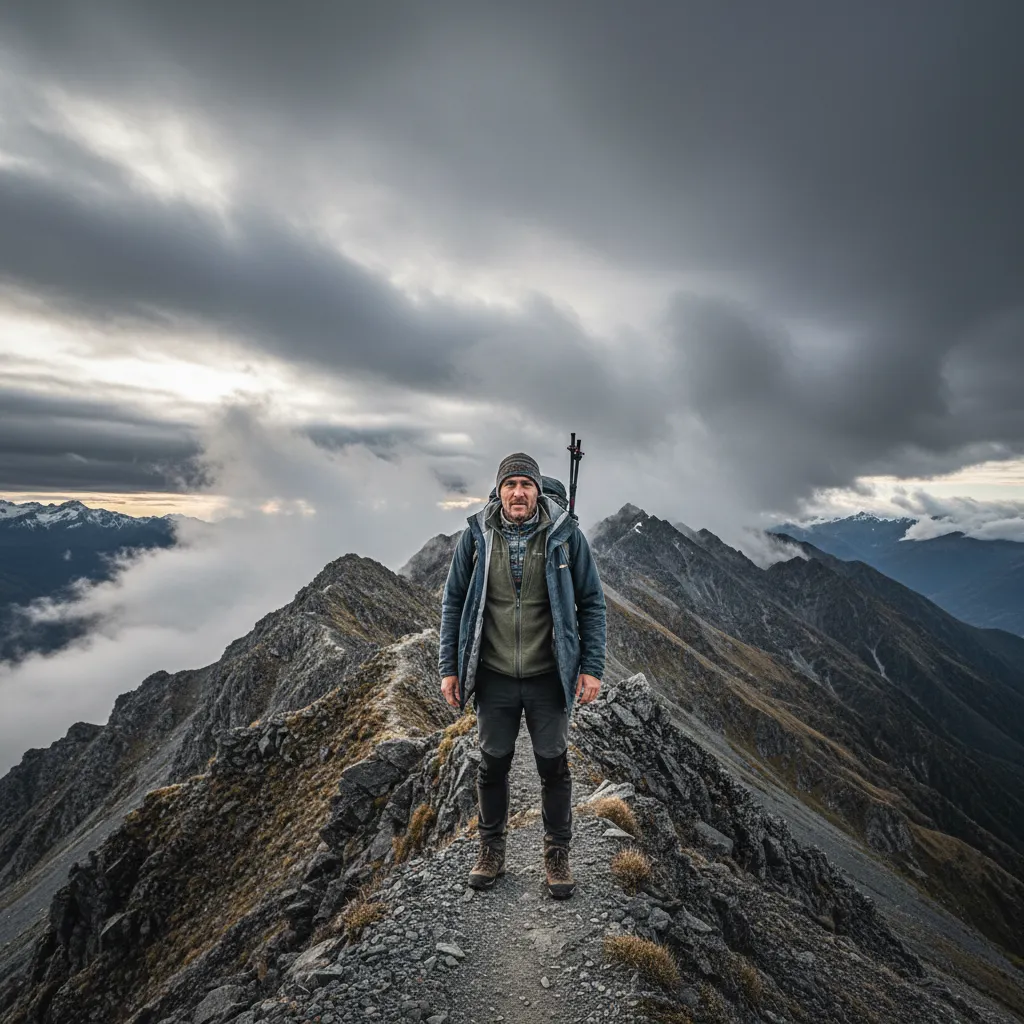
New Zealand meteorologists often joke that you can experience four seasons in a single day, but for hikers, this is a serious reality. A sunny morning in the Southern Alps can turn into a snowstorm by lunch. Therefore, the “best hiking gear nz” queries always point toward one solution: a flawless layering system.
The Base Layer: Merino Wool Dominance
In New Zealand, cotton is often referred to as “rotten cotton” because it kills. When wet, it loses insulation properties and saps body heat. The undisputed champion of base layers here is Merino wool. Sourced locally from high-country sheep, Merino is naturally antimicrobial (resisting odors on multi-day treks), moisture-wicking, and temperature-regulating. It keeps you cool when you sweat on the ascent and warm when you stop for a break.
Look for a weight between 150gsm (summer) and 200gsm (shoulder seasons). Synthetic blends are acceptable for durability, but a high percentage of wool is preferred for its eco-friendly biodegradability.
The Mid Layer: Insulation Without Bulk
Your mid-layer traps body heat. For the humid, wet conditions often found in Fiordland or the West Coast, synthetic fleece or active insulation (like Polartec Alpha) is often safer than down because it retains warmth even if it gets damp. However, for camp wear or dry, cold conditions in Central Otago, a high-quality, ethically sourced down jacket is unbeatable for its warmth-to-weight ratio.
The Outer Shell: Your Primary Defense
If you invest heavily in one item, make it your rain jacket. New Zealand rain is torrential and horizontal. A “water-resistant” windbreaker will not suffice. You require a 3-layer GORE-TEX or eVent jacket with a minimum hydrostatic head rating of 20,000mm.
Key features to look for:
- Pit Zips: Essential for ventilation during high-exertion climbs in humid rain forests.
- Adjustable Hood: Needs to cinch down tight against gale-force winds.
- Storm Flaps: Covers zippers to prevent water ingress.
Footwear: Boots, Trail Runners, and Gaiters
The debate between heavy boots and lightweight trail runners is alive and well in New Zealand, but the terrain often dictates the winner. The tracks here are often rooty, muddy, and rocky.
Boots vs. Trail Runners
For established Great Walks like the Routeburn or Kepler, sturdy trail runners are increasingly popular among ultralight hikers. They drain water quickly—a benefit when river crossings are frequent. However, for off-track routes or rougher tramps like the Dusky Track, full leather or synthetic boots offer necessary ankle support and protection against sharp rocks.
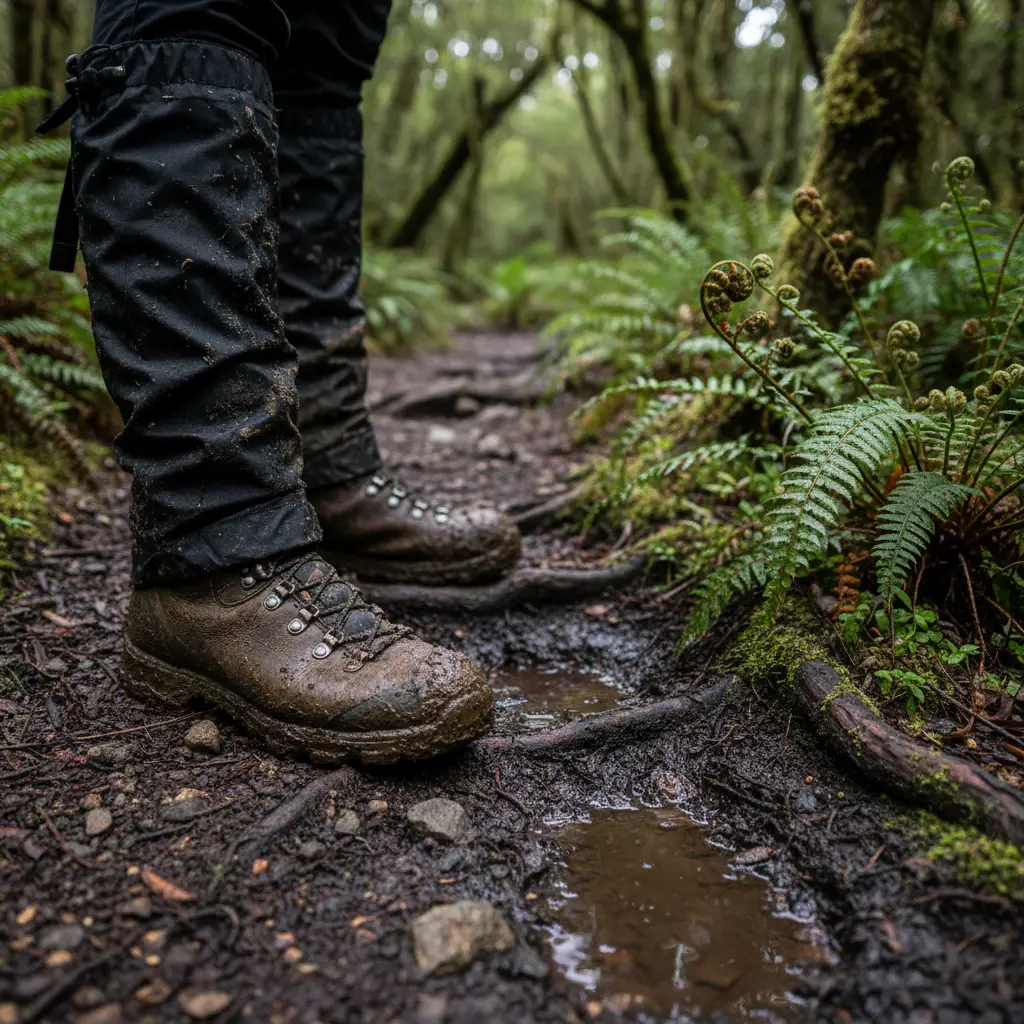
The Importance of Gaiters
What is the most underrated piece of hiking gear in NZ? The answer is Gaiters. They serve two critical purposes in the New Zealand bush:
- Mud Protection: They keep mud and scree out of your boots.
- Vegetation Defense: New Zealand has plants like “Cutty Grass” and “Spaniard Grass” which can slice skin and clothing. Knee-high gaiters provide armor for your lower legs.
Camping Tech and Safety Gadgets
While we advocate for disconnecting from the digital world, certain technologies are non-negotiable for safety in the NZ backcountry. The lack of cell reception in most national parks means you cannot rely on your smartphone for rescue.
Personal Locator Beacons (PLB)
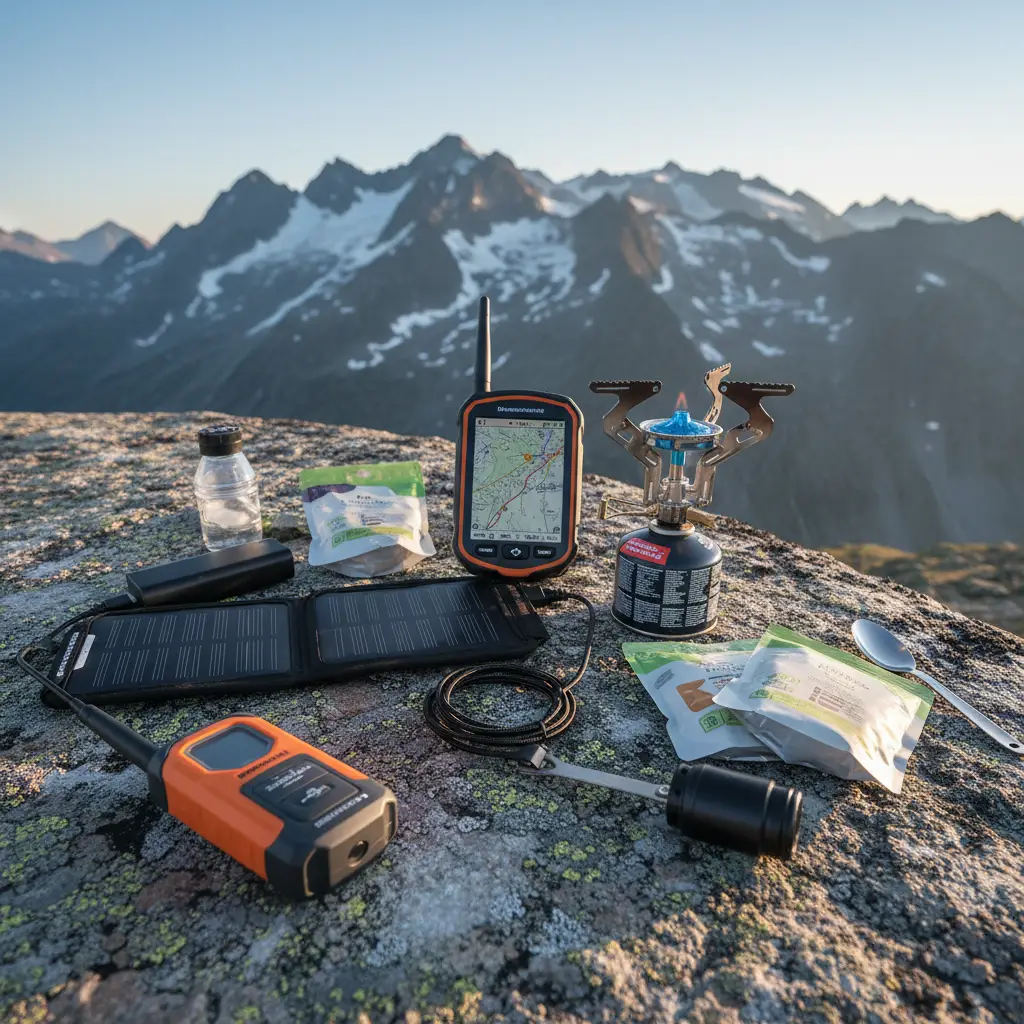
In New Zealand, a PLB is considered essential survival gear, not a luxury. Unlike satellite messengers (like Garmin inReach) which require a subscription, a PLB is a one-off purchase registered with the Rescue Coordination Centre NZ. When activated, it blasts a distress signal to satellites, pinpointing your location for a helicopter rescue. Given the changeable weather and rugged terrain, this device saves lives every season.
Navigation Tech
While physical topo maps (topographical maps) are mandatory backups, modern GPS units and smartphone apps like NZ Topo50 are excellent tools. Ensure your device is waterproof and shockproof. If using a phone, carry a robust power bank. Solar charging is a viable option in summer, but due to heavy cloud cover in regions like Fiordland, it should not be your primary power source.
Photography Gear Essentials for Landscapes
New Zealand is a photographer’s dream, requiring a balance between image quality and pack weight. The “best hiking gear nz” for photographers involves compromise.
Camera Bodies and Lenses
Mirrorless systems are the standard for eco-travelers due to their reduced size and weight. A weather-sealed body is crucial. Salt spray on coastal tracks and sudden downpours in the mountains will kill non-sealed electronics quickly.
For lenses, a wide-angle zoom (16-35mm equivalent) is indispensable for capturing the vast scale of landscapes like Aoraki/Mount Cook. A telephoto lens is useful for isolating mountain peaks or capturing native birds like the Kea or Kākā, but consider the weight penalty.
Drone Regulations
Using drones in New Zealand conservation land is strictly regulated. You generally require a permit from the Department of Conservation (DOC) to fly over national parks. Flying without a permit can result in hefty fines and confiscation of gear. Always check local rules and respect the peace of other hikers.
Sustainable and Eco-Friendly Gear Choices
As eco-tourism grows, the gear we choose impacts the environments we explore. New Zealand’s “Tiaki Promise” asks travelers to care for the land. Your gear choices reflect this commitment.
PFC-Free Waterproofing
Traditional Durable Water Repellent (DWR) coatings often contain Perfluorocarbons (PFCs), which are “forever chemicals” that accumulate in the environment. The best modern hiking gear utilizes PFC-free alternatives for waterproofing. While these may require more frequent re-proofing, they are significantly better for the pristine waterways of New Zealand.
Repair over Replace
Look for brands that offer lifetime warranties and repair services. NZ-based brands like Cactus Outdoor and Earth Sea Sky are legendary for producing bombproof gear designed to last decades, not seasons. Choosing gear that can be patched rather than discarded is the most sustainable choice a hiker can make.
Recycled Materials
From sleeping bags filled with recycled synthetic insulation to backpacks made from ocean plastics, the market is shifting. Verify certifications like Bluesign® or OEKO-TEX® to ensure the manufacturing processes are environmentally sound.
Frequently Asked Questions
Do I really need a sleeping bag in NZ huts?
Yes. While Department of Conservation (DOC) huts provide mattresses, they do not provide bedding. Even in summer, temperatures in alpine huts can drop near freezing at night. A 3-season sleeping bag rated to at least 0°C (32°F) is recommended for most Great Walks.
What is the best insect repellent for sandflies?
Sandflies are notorious in NZ, particularly in the South Island. Repellents containing DEET (20-40%) are the most effective, though natural alternatives with Oil of Lemon Eucalyptus can work for shorter durations. Covering up with long sleeves and pants is the only 100% effective method.
Are hiking poles necessary in New Zealand?
Highly recommended. The terrain is often steep with large steps and slippery roots. Trekking poles reduce the impact on your knees during long descents and provide crucial stability during river crossings.
Can I drink water from streams in NZ?
While NZ water looks pristine, Giardia is present in many waterways due to introduced mammals. It is always safer to filter, boil, or treat water, especially in lower-lying areas or near farmland. In high alpine headwaters, the risk is lower but still present.
What type of stove fuel is available in NZ?
The most common fuel is the screw-on canister type (isobutane/propane mix), widely available in outdoor stores, hardware stores, and even some supermarkets. White gas (Shellite) and methylated spirits are also available but less common for lightweight hiking.
Is camouflage gear appropriate for hiking in NZ?
In New Zealand, camouflage is primarily associated with hunters. If you are hiking, especially off-track, it is safer to wear bright, high-visibility colors (orange, red, yellow) so you are easily seen by hunters and, in an emergency, by rescue helicopters.