New Zealand stargazing road trips are specialized self-drive itineraries designed to connect travelers with the world’s most accessible Dark Sky Reserves. These routes prioritize low-light locations like Lake Tekapo and Aoraki/Mount Cook, offering optimal conditions for viewing the Southern Lights (Aurora Australis), the Magellanic Clouds, and the core of the Milky Way.
New Zealand is widely regarded as the premier destination for astrotourism, boasting some of the darkest, clearest skies on the planet. For travelers, this presents a unique opportunity to combine the freedom of the open road with world-class astronomical experiences. Whether you are navigating the rugged alpine passes of the South Island or exploring the remote sanctuaries of the North, a stargazing road trip requires careful planning, the right vehicle, and an understanding of the celestial calendar.
Why Choose a Stargazing Road Trip in New Zealand?
New Zealand has positioned itself as a global leader in the protection of the night sky. Unlike many developed nations where light pollution obscures the cosmos, New Zealand has aggressively pursued Dark Sky accreditation. This commitment makes it one of the few places on Earth where the Milky Way casts a shadow on the ground.
The Commercial Advantage of Astrotourism
Choosing a dedicated stargazing itinerary offers more than just pretty views; it provides access to a sophisticated infrastructure of observatories, educational tours, and photography workshops. The country is home to the Aoraki Mackenzie International Dark Sky Reserve, the largest of its kind in the Southern Hemisphere. By planning a road trip around these hubs, travelers maximize their chances of clear sightings and gain access to high-tech telescopes and expert astronomer guides.

South Island: The Aoraki Mackenzie Circuit
The South Island is the heavyweight champion of New Zealand stargazing road trips. The low population density and mountainous terrain create natural light barriers, resulting in pristine darkness. The following itinerary is the “Gold Standard” for astrotourists.
Leg 1: Christchurch to Lake Tekapo (3 Hours)
The Destination: Lake Tekapo is the heart of the International Dark Sky Reserve. The township has strict lighting ordinances (shielded, sodium-vapor lights) to protect the observatory on Mount John.
Commercial Highlight: Book a tour with the Dark Sky Project. Their summit experience at the University of Canterbury Mt John Observatory is world-renowned. You will use 16-inch telescopes to view globular clusters and nebulae.
Leg 2: Tekapo to Aoraki/Mount Cook (1 Hour 15 Minutes)
The Drive: Driving along the edge of Lake Pukaki towards New Zealand’s highest peak offers incredible daytime views, but the night drive is where the magic happens. The road is pitch black, offering multiple pull-off bays for astrophotography.
Where to Stay: The Hermitage Hotel offers “Big Sky Stargazing” tours. Alternatively, for campervans, the White Horse Hill Campground provides a rugged, immersive experience directly beneath the hanging glaciers.
Leg 3: Aoraki to Queenstown via Wanaka (3.5 Hours)
The Experience: While Queenstown is a bustling resort town, the surrounding mountains offer pockets of darkness. The Skyline Gondola runs stargazing tours high above the city lights, providing a comfortable, accessible option for families.
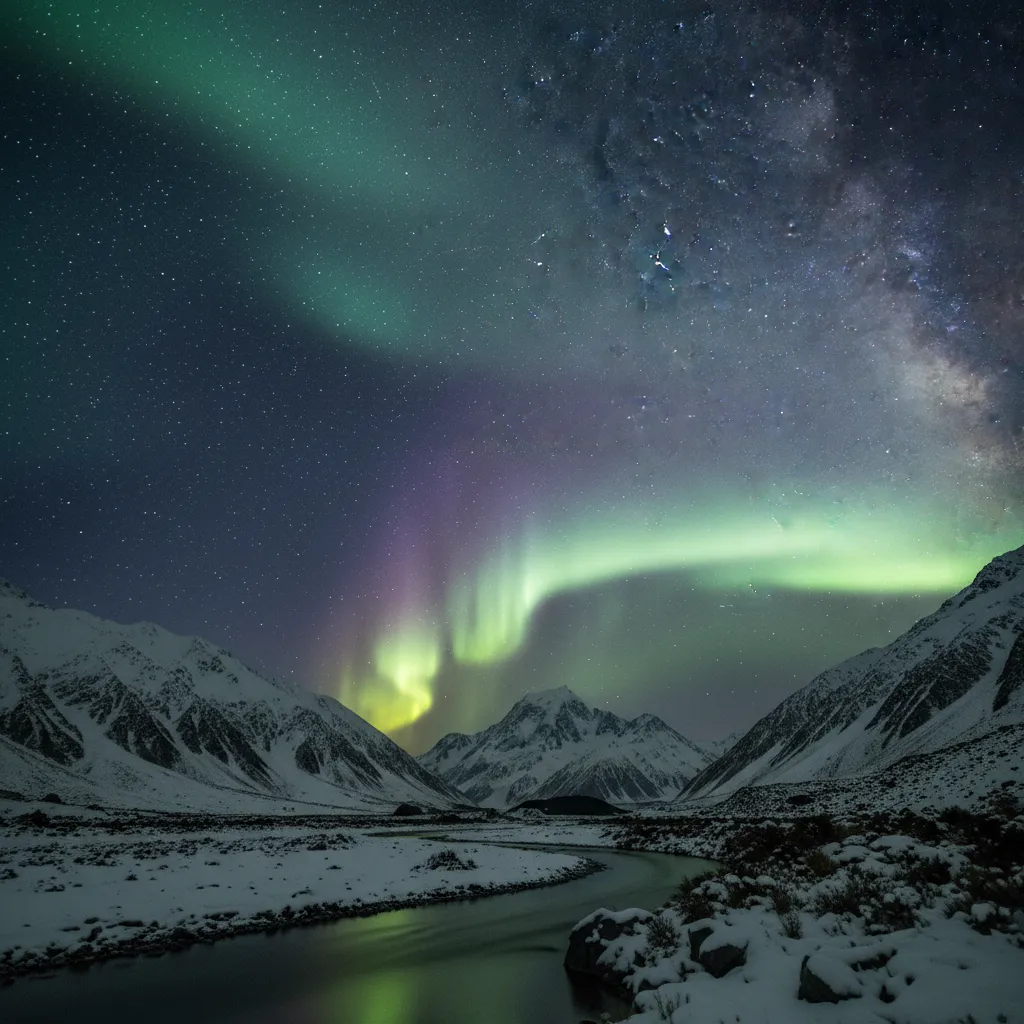
North Island: Sanctuaries and Reserves
While the South Island is famous for the Mackenzie Basin, the North Island offers unique “Dark Sky Sanctuaries”—a designation reserved for the most remote and fragile locations.
Great Barrier Island (Aotea)
Logistics: This requires a ferry from Auckland or a small flight. It is an island off the grid. There is no reticulated electricity on the island; residents use solar and generator power, resulting in virtually zero light pollution.
The Itinerary: Rent a car on the island (4WD recommended). Drive to Medlands Beach for an unobstructed horizon. The “Good Heavens” tour operators offer private dining and stargazing experiences on the dunes, blending gastronomy with astronomy.
Wairarapa Dark Sky Reserve
The Route: A short drive from Wellington over the Remutaka Ranges leads to the Wairarapa. This region recently gained Dark Sky Reserve status.
Key Stop: Stonehenge Aotearoa. This is a modern adaptation of Stonehenge, built specifically for the latitude of New Zealand. It is an open-air observatory that teaches visitors how Maori ancestors used the stars for navigation (Wayfinding).
Campervan vs. Car Rental Logistics
Selecting the right vehicle is the most critical commercial decision for your New Zealand stargazing road trips. The choice dictates your accommodation budget, your flexibility, and your access to remote photography spots.
Option A: The Self-Contained Campervan
Pros:
- Proximity: You can wake up already at your location. In designated freedom camping spots, you can step out of the vehicle at 3:00 AM to photograph the Galactic Core without driving.
- Cost Efficiency: Combines transport and accommodation costs.
- Flexibility: If the cloud cover is thick in Tekapo, you can drive to Omarama immediately without cancelling hotel bookings.
Cons:
- Cold: New Zealand nights, especially in the Mackenzie Basin, can drop below freezing even in summer. Ensure your rental has a diesel heater.
- Size: Navigating winding mountain roads in a 6-berth motorhome can be stressful for unaccustomed drivers.
Option B: 4WD Rental Car + Lodges
Pros:
- Comfort: After standing in -5°C temperatures stargazing, returning to a hotel with a fireplace and hot shower is a premium experience.
- Agility: A 4WD SUV is safer and easier to handle on icy roads or gravel tracks leading to remote observatories.
Cons:
- Logistics: You must drive from your accommodation to the dark sky spot and back, which increases fatigue and safety risks.

When to Go: Seasonal Considerations
Search intent for “New Zealand stargazing road trips” often overlooks the seasonal variance. The night sky changes drastically throughout the year.
Winter (June – August)
This is the peak season for serious astronomers. The Galactic Core of the Milky Way is directly overhead. The nights are long (sunset around 5:00 PM), allowing for hours of viewing before bedtime. However, road conditions can be treacherous due to black ice and snow.
Summer (December – February)
The weather is pleasant, but the nights are very short. It may not get fully dark until 11:00 PM. The core of the Milky Way is not as visible, but the Orion constellation and other features are prominent. This is better for casual tourists who prefer warmer temperatures.
Safety Tips for Night Driving
Driving at night in New Zealand is fundamentally different from driving on interstate highways in the US or motorways in Europe. To ensure your stargazing road trip remains safe, adhere to these critical rules.
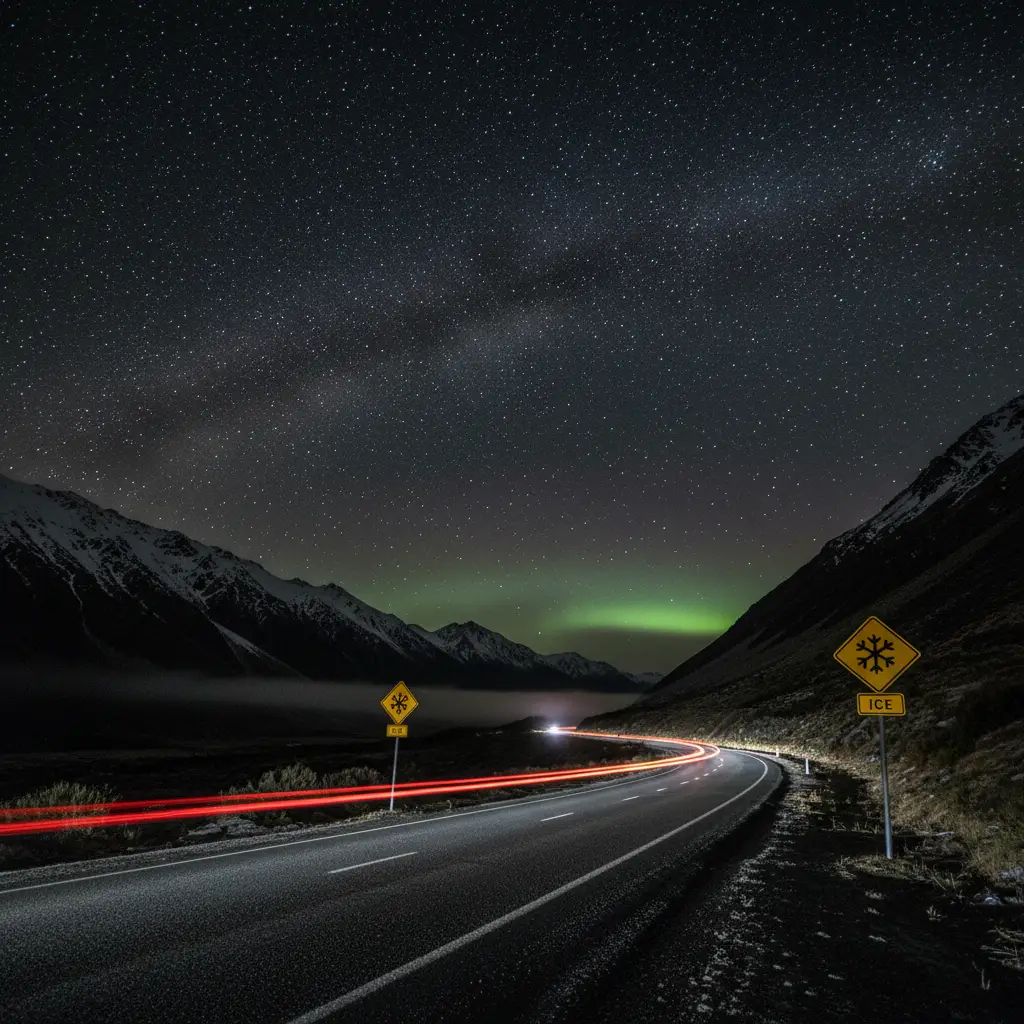
1. Beware of Black Ice
In the Dark Sky Reserves (Tekapo, Mt Cook), temperatures plummet rapidly after sunset. Invisible ice forms on shaded corners and bridges. If your vehicle thermometer reads 4°C or below, assume there is ice. Drive slowly and avoid sudden braking.
2. Wildlife Hazards
New Zealand has no large predators, but it has possums, rabbits, and wandering livestock. These animals are active at night. Swerving to avoid a possum is a leading cause of accidents for tourists. If a small animal runs out, the safest commercial advice is: do not swerve. Brake in a straight line if safe, but do not risk rolling the vehicle.
3. Light Discipline
When driving near observatories (especially Mt John), use low beams when possible to avoid interfering with scientific equipment. However, safety takes precedence; use high beams on open roads to spot hazards, dipping them immediately for oncoming traffic.
People Also Ask
What is the best month for stargazing in New Zealand?
The best time for stargazing is during the New Zealand winter (June to August). During these months, the nights are longest, the air is crisp and clear, and the Galactic Core of the Milky Way is most visible. However, be prepared for freezing temperatures.
Do I need a 4WD for a stargazing road trip?
While a 4WD is not strictly necessary for main highways, it is highly recommended for a stargazing itinerary. Accessing remote viewing spots, navigating gravel roads, and handling winter road conditions (ice/snow) is significantly safer and easier with an All-Wheel Drive or 4WD vehicle.
Can you see the Southern Lights from New Zealand?
Yes, the Aurora Australis can be seen from New Zealand, particularly from the lower South Island (Southland, Otago, and the Mackenzie Basin). However, unlike the Northern Lights, they are not guaranteed. Sightings depend on solar activity and clear skies.
Is freedom camping allowed in Dark Sky Reserves?
Freedom camping is heavily regulated in the Mackenzie District to protect the environment. You cannot just park anywhere. You must use designated freedom camping areas and your vehicle must be “Certified Self-Contained.” Fines are strictly enforced.
What gear do I need for astrophotography in NZ?
At a minimum, you need a DSLR or Mirrorless camera with manual mode capability, a wide-angle lens (f/2.8 or lower is ideal), and a sturdy tripod. A remote shutter release is also recommended to prevent camera shake during long exposures.
How much does a stargazing tour cost in New Zealand?
Commercial stargazing tours typically range from $80 NZD for basic guided walks to over $200 NZD for exclusive observatory experiences (like the Dark Sky Project summit tour). Private photography workshops can cost significantly more.