What are the best glow worm caves in the South Island?
The best glow worm caves in the South Island offer diverse experiences ranging from the commercially guided boat tours of Te Anau Glowworm Caves to the free, accessible natural wonder of the Hokitika Glow Worm Dell. For intrepid travelers seeking solitude, the Oparara Basin in Karamea and the Clifden Caves in Southland provide authentic, wild encounters with Arachnocampa luminosa away from large crowds.
While the Waitomo Caves in the North Island often dominate global travel brochures, New Zealand’s South Island hosts some of the most spectacular and authentic bioluminescent displays in the world. These sites, often hidden within the lush rainforests of the West Coast or deep inside the limestone geology of Fiordland, offer a darker, quieter, and more intimate connection with nature.
For the eco-conscious traveler and the night-sky enthusiast, the South Island provides a unique opportunity to witness these constellations of living light in their natural, unhurried habitat. Whether you are looking for a family-friendly roadside stop or a spelunking adventure, the mainland offers a sanctuary for these unique creatures.
The Biology of Arachnocampa luminosa
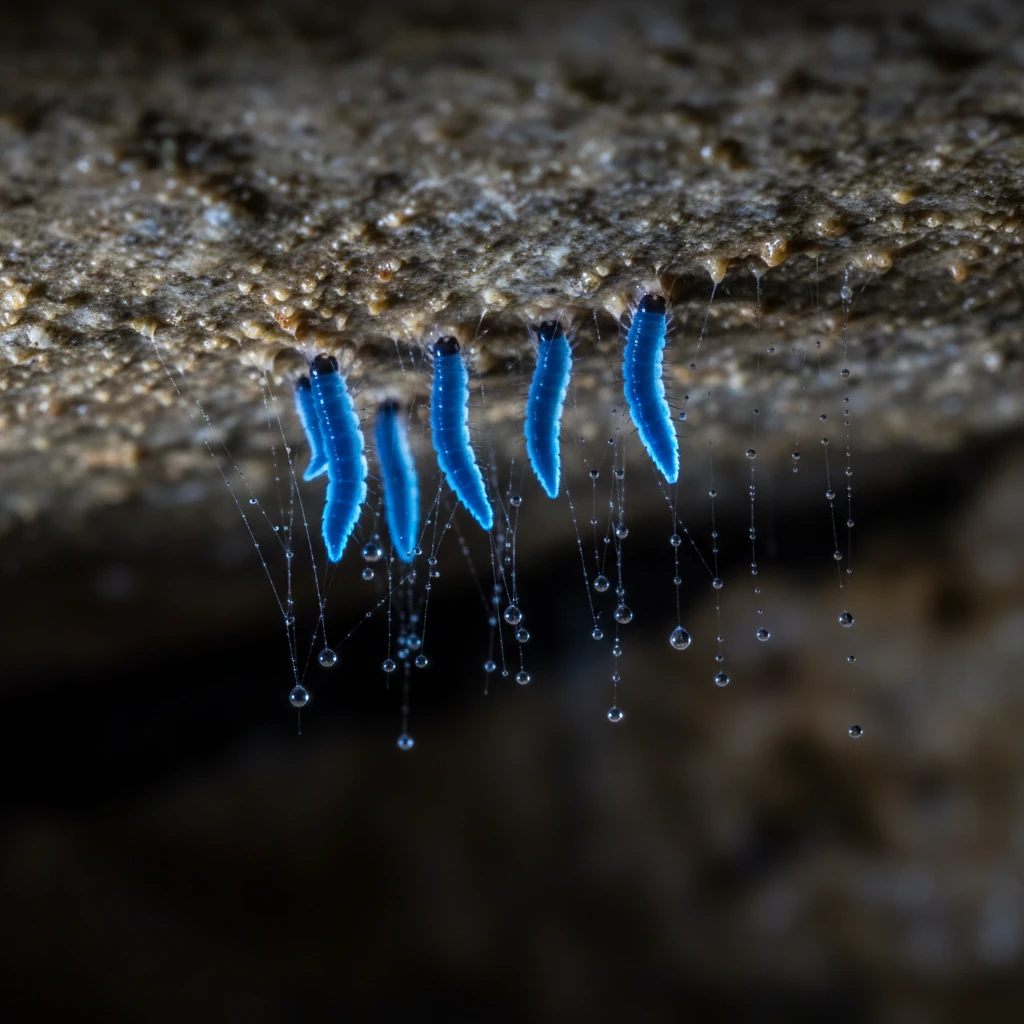
To truly appreciate the best glow worm caves South Island has to offer, one must first understand the creature responsible for the display. The New Zealand glow worm, Arachnocampa luminosa, is not actually a worm but the larval stage of a fungus gnat. This species is endemic to New Zealand, meaning it is found nowhere else on Earth.
Why do they glow?
The bioluminescence produced by these larvae is a predatory mechanism. The blue-green light is generated by a chemical reaction in the insect’s tail, involving an enzyme called luciferase acting upon a molecule called luciferin. In the pitch-black environment of a damp cave or a dense rainforest gully, this light mimics the appearance of stars in the night sky.
Small flying insects, such as midges and moths, are attracted to the light, mistaking it for an exit or a celestial navigation point. As they fly toward the “stars,” they become ensnared in sticky, silk threads—often called “fishing lines”—that the larva hangs from the ceiling. Once the prey is caught, the larva hoists the line up and consumes the insect.
The Life Cycle and Habitat
The glowing stage is the longest part of the insect’s life cycle, lasting up to nine months. During this time, they require high humidity and calm air to prevent their sticky lines from drying out or tangling. This is why caves and deep, sheltered ravines are their preferred habitats. Following the larval stage, they pupate and emerge as adult gnats, which do not have mouths and live only a few days—just long enough to breed and lay eggs.
Hokitika Glow Worm Dell: Accessibility and Best Viewing
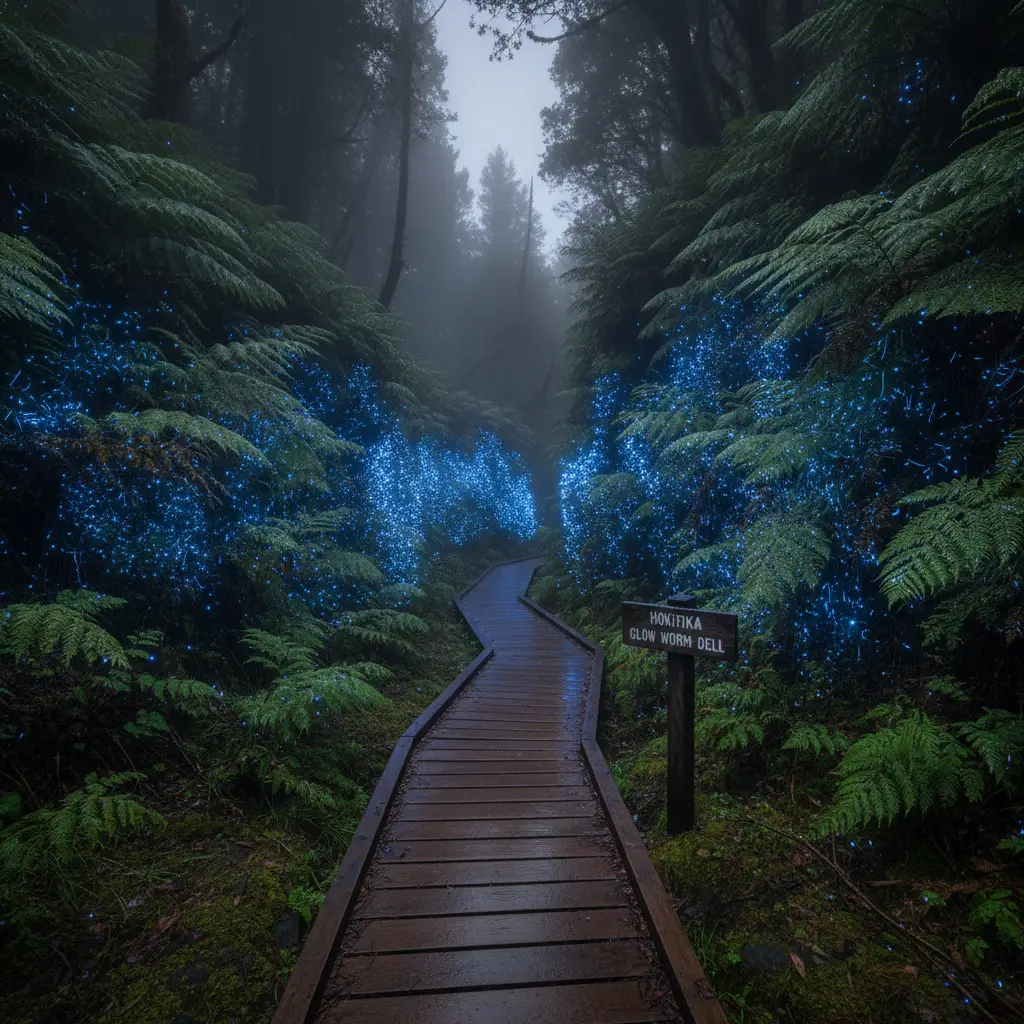
If you are searching for the best glow worm caves South Island provides for ease of access, the Hokitika Glow Worm Dell is unrivaled. Located right on the edge of Hokitika township on the West Coast, this site proves that you do not always need to hike for hours or pay admission fees to witness magic.
Accessibility and Location
The Dell is situated on State Highway 6 at the northern entrance to the town. It is remarkably user-friendly, featuring a flat, well-maintained track that is suitable for strollers and wheelchairs. The walk from the car park to the glowing banks takes less than two minutes, making it an excellent option for families with young children or travelers with limited mobility.
Best Viewing Times
Unlike deep subterranean caves where it is perpetually dark, the Hokitika Dell is an open-air site protected by dense canopy and high earth banks. Therefore, viewing is strictly a nocturnal activity. The best time to visit is at least one hour after sunset to ensure total darkness. Eyes take approximately 15 to 20 minutes to fully adjust to the dark; avoid using flashlights or cell phone screens once you are inside the Dell to maximize the visual impact of the glow.
Karamea and the Oparara Basin Caves
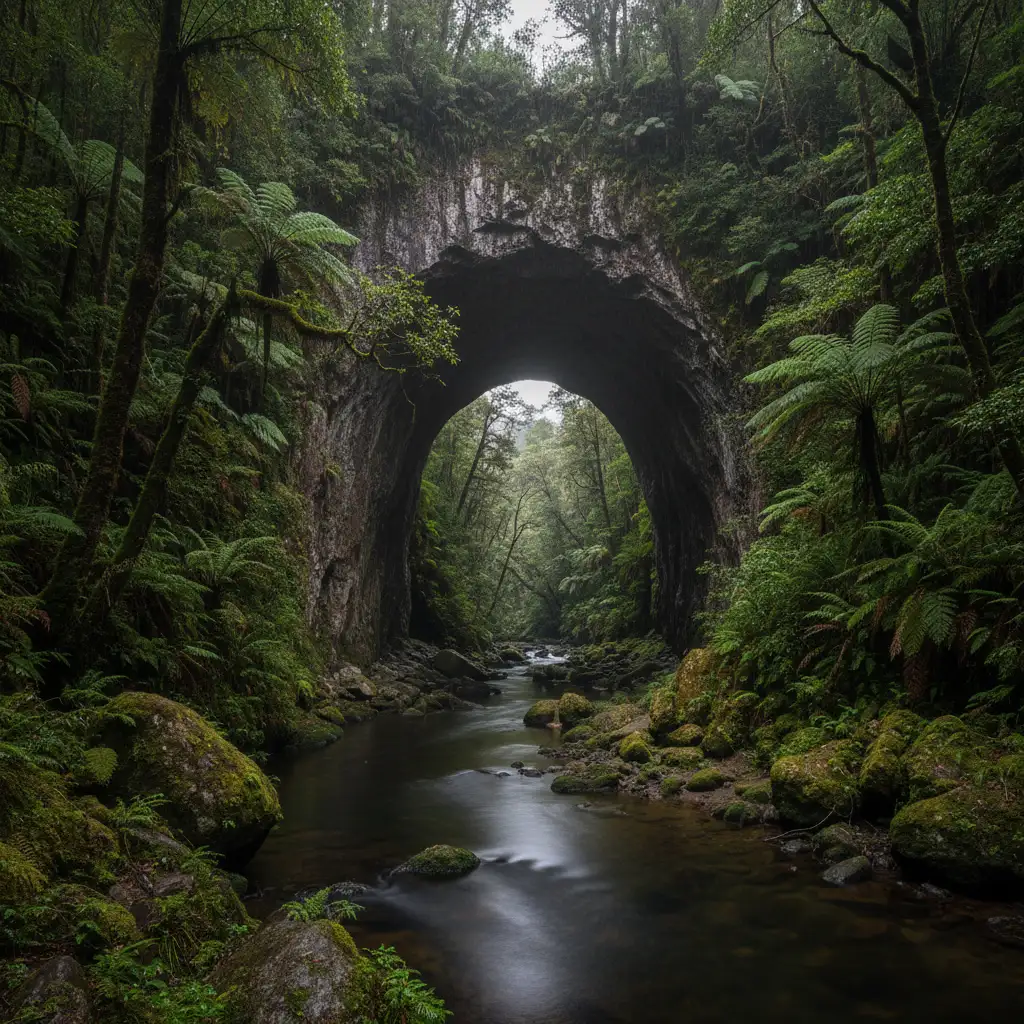
For those willing to venture further off the beaten path, the Oparara Basin near Karamea offers a prehistoric landscape that feels untouched by time. This area is home to some of the most spectacular limestone arches and caves in the Southern Hemisphere.
The Oparara Basin Experience
Located at the northern end of the West Coast, the Oparara Basin is a commitment to reach, requiring a drive up a long, gravel forestry road. However, the reward is an ecosystem dripping with moss, ancient Rimu trees, and tannic rivers that run the color of stout beer. The “Crazy Paving Cave” and “Box Canyon Cave” are accessible to the general public without a guide. These caves are vast and unlit, requiring visitors to bring their own high-quality torches. Once inside, if you extinguish your light, the ceilings come alive with thousands of glow worms.
Honeycomb Hill Caves
Within the Oparara Basin lies the Honeycomb Hill Caves system, a specially protected area accessible only via guided tours. This system is significant not only for its intense bioluminescence but also for its collection of Moa bones (extinct giant flightless birds). A tour here combines paleontology with glowing ecology, offering a depth of education that is hard to find elsewhere.
Avoiding Crowds: Alternatives to Commercial Tours
While Te Anau is the commercial hub for glow worm tours in the South Island, seeking out “hidden gems” can provide a more serene experience. The search for the best glow worm caves South Island often leads to free, public conservation land.
Minnehaha Walk (Fox Glacier)
Similar to the Hokitika Dell but often quieter, the Minnehaha Walk near Fox Glacier is a short rainforest loop. Following a small stream, this track is enveloped in mossy trees that host significant colonies of glow worms. It is a magical, fairy-tale setting that is completely free of charge.
Terrace Walk (Franz Josef)
In the neighboring township of Franz Josef, the Terrace Walk offers another free opportunity. As you walk through the forest at night, check under the fallen logs and along the earth banks. The glow worms here are often close to the ground, allowing for a very detailed inspection of their silk threads.
Clifden Caves (Southland)
For the adventurous spelunker, Clifden Caves in Southland offers a self-guided caving experience. This is a limestone cave system that requires climbing ladders and navigating narrow passages. It is not for the claustrophobic, but the glow worm displays in the upper chambers are pristine. Note: Always check safety warnings and water levels before entering unguided cave systems.
Photography Tips for Capturing Bioluminescence
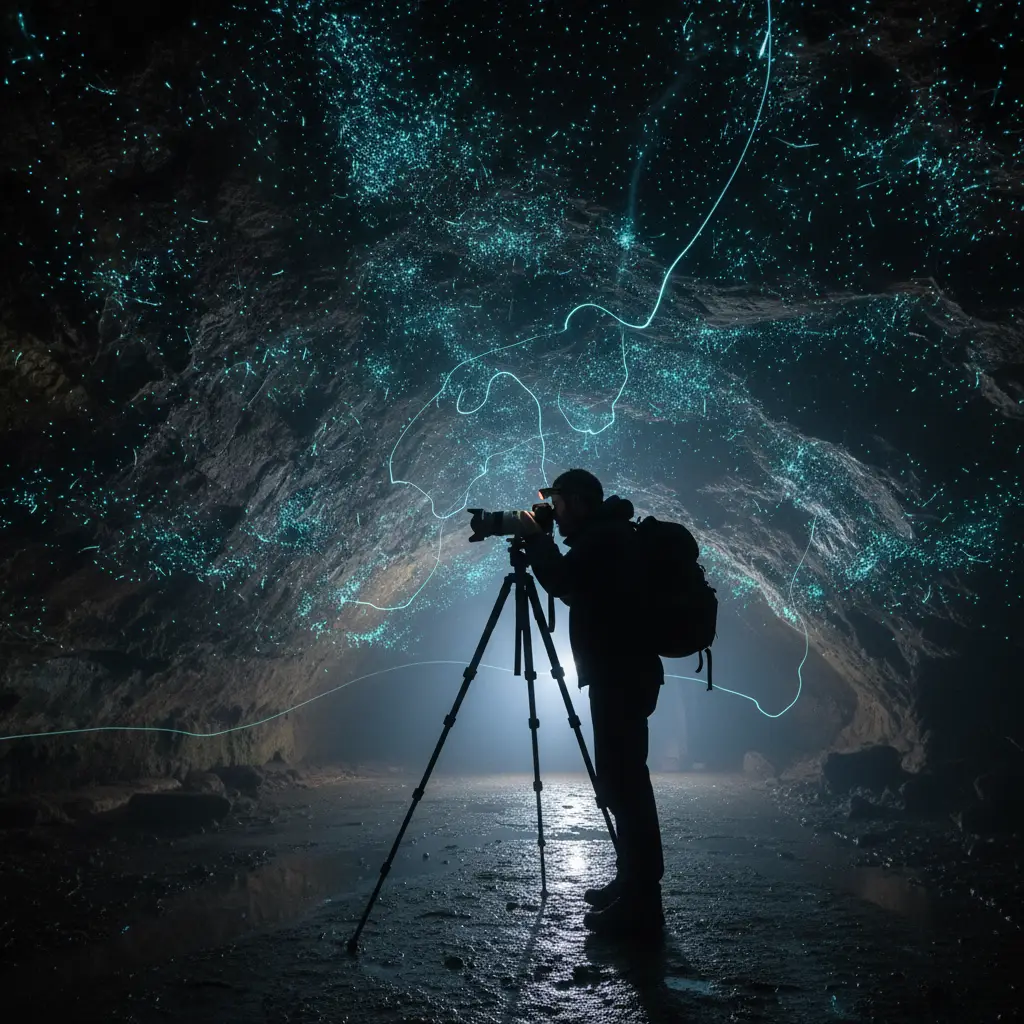
Capturing the faint light of a glow worm is one of the most challenging tasks for a photographer. Flash photography is strictly prohibited in almost all locations as it disturbs the creatures and ruins the experience for others. Here is how to capture the best glow worm caves South Island images without artificial light.
Essential Gear
- Tripod: Absolutely non-negotiable. Exposures will be long (30 seconds to several minutes), and no human hand can hold a camera steady for that long.
- Fast Lens: A lens with a wide aperture (f/2.8 or lower, ideally f/1.4 or f/1.8) is crucial to let in as much light as possible.
- Remote Shutter Release: To avoid shaking the camera when pressing the button.
Camera Settings
- Focus: Switch to Manual Focus. Auto-focus will fail in the dark. Use “Focus Peaking” if your camera has it, or focus on a flashlight beam directed at a fixed point, then lock the focus.
- ISO: Start high. ISO 1600, 3200, or even 6400 depending on your camera’s noise handling capabilities.
- Aperture: Open your lens as wide as it goes (lowest f-number).
- Shutter Speed: Start with 30 seconds. If the image is too dark, you may need to use “Bulb” mode for exposures of 2-5 minutes.
Eco-Tourism Etiquette: Protecting the Species
The sustainability of these sites relies heavily on visitor behavior. Glow worms are sensitive creatures. Loud noises, bright lights, and physical contact can cause them to stop glowing or, worse, die.
When visiting any of the best glow worm caves South Island has, adhere to the following rules:
- No Touching: Touching the silk threads destroys the trap, starving the larva. Touching the cave walls can transfer oils and fungi that damage the limestone and the ecosystem.
- No Flash Photography: It disrupts the worms’ feeding cycle and blinds other visitors.
- Keep Noise Down: While they don’t have ears, loud vibrations can disturb the colony.
- Red Light Only: If you must use a torch to navigate, cover it with red cellophane. Red light disturbs the insects (and human night vision) far less than white light.
People Also Ask
What is the best time of year to see glow worms in New Zealand?
Glow worms can be seen year-round in New Zealand caves because the cave environment maintains a relatively constant temperature and humidity. However, displays are often brighter and more active during the warmer months (December to March) when insect prey is more abundant.
Are glow worm caves free to visit in the South Island?
Yes, there are several free sites. The Hokitika Glow Worm Dell, Minnehaha Walk in Fox Glacier, and the Terrace Walk in Franz Josef are free public access sites. However, larger cave systems like Te Anau or Honeycomb Hill require paid guided tours.
Can you see glow worms without a boat tour?
Absolutely. While the Te Anau experience is boat-based, sites like Hokitika, the Oparara Basin, and various forest walks on the West Coast are walking tracks where you can view glow worms on foot.
How long does a glow worm live?
The glowing larval stage lasts roughly 6 to 9 months. The entire life cycle, including egg, larva, pupa, and adult fly, takes about 10 to 11 months. The adult fly lives for only a few days.
Why shouldn’t you use flash photography on glow worms?
Bright light causes the glow worms to “switch off” their bioluminescence as a defense mechanism or because they believe it is daylight. It ruins the viewing experience for others and disrupts the feeding patterns of the larvae.
Is Te Anau or Waitomo better for glow worms?
Waitomo (North Island) is more famous and has a higher volume of caves and tours, including black water rafting. Te Anau (South Island) offers a younger, geologically active cave system with a roaring waterfall inside. Te Anau is often considered more pristine and less crowded than the major Waitomo operations.