New Zealand nature sanctuaries are specialized conservation areas, often enclosed by predator-proof fencing or located on offshore islands, dedicated to the protection and recovery of indigenous flora and fauna. These biodiversity hotspots serve as arks for endangered species like the Kiwi, Kākāpō, and Tuatara, aiming to restore ecosystems to their pre-human state while offering educational eco-tourism experiences.
Introduction to Slow Tourism in New Zealand
In an era of fast-paced travel and bucket-list ticking, New Zealand—Aotearoa, the Land of the Long White Cloud—invites visitors to embrace a different rhythm. Slow tourism is not merely about the speed of movement; it is a philosophy of deep engagement with the environment, culture, and community. For the eco-conscious traveler, New Zealand offers a unique proposition: the chance to witness evolutionary history in real-time within its world-renowned New Zealand nature sanctuaries.
The concept of slow tourism aligns perfectly with the Māori value of Kaitiakitanga, which translates to guardianship and protection. Visitors are encouraged to view themselves not as consumers of a destination, but as temporary custodians. This shift in perspective transforms a hiking trip into a conservation journey. When you visit a sanctuary, you are often stepping into a ‘mainland island’—an area where the devastating impacts of introduced mammalian predators have been halted or reversed. These sanctuaries are the front lines of a biological war to save species that exist nowhere else on Earth.
By choosing to visit these sanctuaries, travelers contribute directly to the financial sustainability of conservation projects. Many of these reserves are run by charitable trusts that rely on entrance fees and donations to maintain predator-proof fences, fund scientific research, and manage species recovery programs. Thus, slow tourism in Aotearoa becomes a regenerative act, leaving the environment better than it was found.
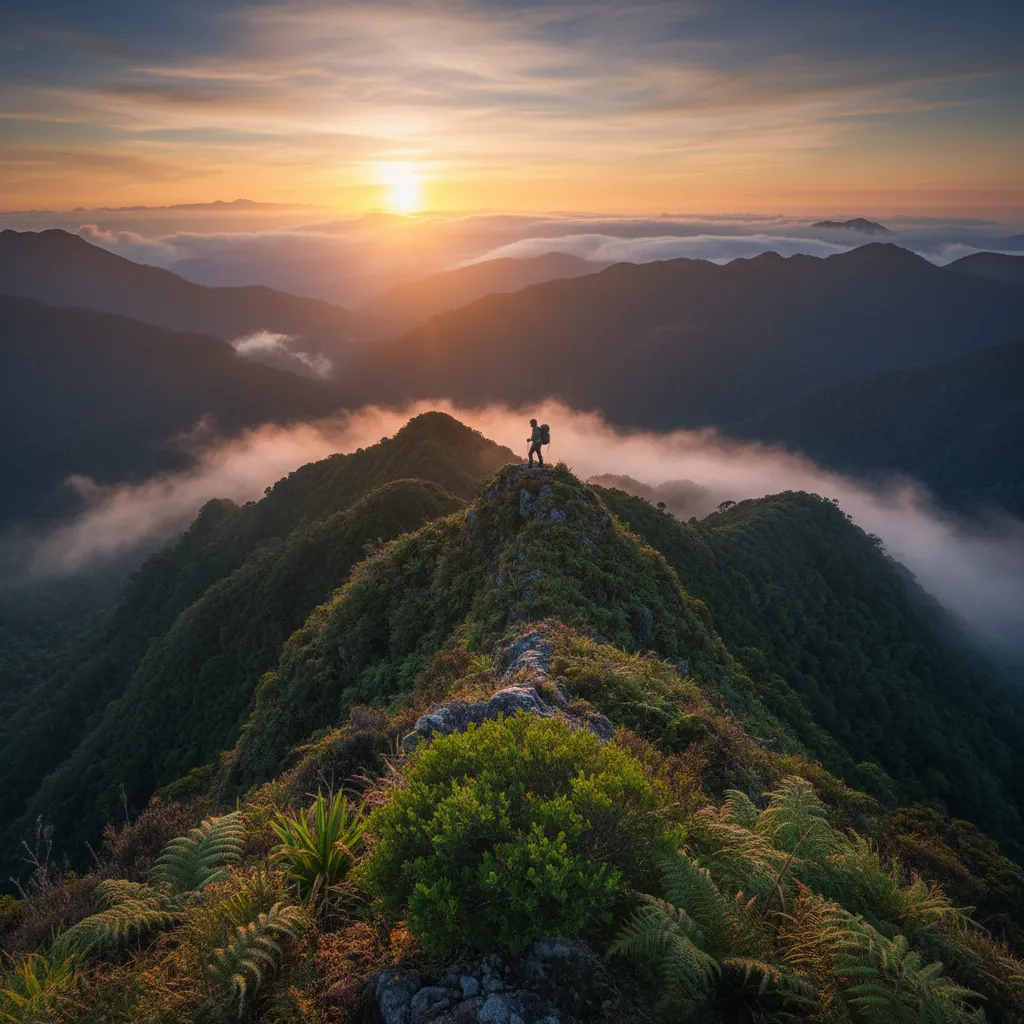
Map of Major Eco-Sanctuaries and Marine Reserves
New Zealand’s geography is dotted with safe havens for wildlife. While the Department of Conservation (DOC) manages vast tracts of national parks, the most intensive recovery work often happens in specific, intensively managed sanctuaries. Understanding the distinction between these locations is vital for planning an itinerary that maximizes wildlife encounters.
North Island Gems: Ancient Forests and Island Arks
The North Island is home to some of the most accessible and scientifically significant sanctuaries. Zealandia Te Māra a Tāne in Wellington is arguably the most famous example of a fence-sanctuary protecting an urban environment. As the world’s first fully-fenced urban ecosanctuary, it has successfully reintroduced 18 species of native wildlife back into the area, including the Little Spotted Kiwi and the prehistoric Tuatara. The vision here extends beyond the fence, aiming to restore the dawn chorus to the capital city.
Further north, Sanctuary Mountain Maungatautari boasts the longest predator-proof fence in the world, encircling 3,400 hectares of ancient forest. This sanctuary acts as a mainland island large enough to sustain viable populations of Kākā, Takahe, and Kiwi. It is a place where the forest floor remains lush and undisturbed by rooting pigs or browsing deer, allowing the understory to regenerate as it appeared centuries ago.
Off the coast of Auckland lies Tiritiri Matangi Island. This open sanctuary is a testament to the power of volunteerism. Once stripped of its forest for farming, it has been replanted with hundreds of thousands of native trees by volunteers. Today, it is one of the best places in the country to see the Takahe, a flightless bird once thought extinct, and the melodious Kokako.

South Island Havens: Cloud Forests and Coastal Refuges
The South Island offers rugged landscapes and sanctuaries that protect species adapted to cooler climates. Orokonui Ecosanctuary near Dunedin protects a cloud forest ecosystem. It is the only place on the South Island mainland where you can see Tuatara in the wild. The sanctuary also plays a critical role in the breeding of the Haast Tokoeka Kiwi.
Further south, off the coast of Stewart Island/Rakiura, lies Ulva Island. As a pest-free open sanctuary, it offers a glimpse of what the entirety of New Zealand might have looked like before human arrival. The birdlife here is fearless; South Island Robins often approach visitors, and the forest rings with the calls of Saddlebacks (Tieke) and Yellowheads (Mohua).
Marine Reserves: The Blue Sanctuaries
Conservation in Aotearoa extends beneath the waves. The Poor Knights Islands Marine Reserve is frequently rated as one of the top dive sites globally. Protected since 1981, the absence of fishing has allowed marine life to flourish, creating a subtropical ecosystem where stingrays, grouper, and vast schools of fish thrive. Goat Island (Cape Rodney-Okakari Point Marine Reserve) was New Zealand’s first marine reserve and serves as a living laboratory, proving the efficacy of ‘no-take’ zones in restoring snapper and crayfish populations.
Understanding Predator Free 2050
To truly appreciate New Zealand nature sanctuaries, one must understand the existential threat facing the country’s wildlife. New Zealand evolved for 80 million years in isolation, resulting in a fauna dominated by birds, many of which became flightless and ground-nesting due to the absence of land mammals (except for tiny bats). The introduction of rats, stoats, weasels, and possums by humans decimated these populations.
Predator Free 2050 is an ambitious government-led goal to eradicate the most damaging introduced predators—rats, stoats, and possums—from the entire country by the year 2050. This is not merely a control program; it is an eradication strategy. It is a world-first initiative in terms of scale and complexity.
The strategy relies on a mix of existing technology and new innovation. This includes:
- Landscape-scale fencing: Creating exclusion zones like those at Maungatautari.
- Trapping networks: Utilizing self-resetting traps and smart traps that notify rangers via satellite when triggered.
- Aerial baiting: The controlled use of biodegradable toxins like 1080 in rugged, inaccessible terrain where trapping is impossible.
- Genetic research: Exploring potential future technologies to inhibit predator reproduction.
Visitors will often see trap boxes along hiking trails. These are not signs of danger but signs of active care. They represent the community’s commitment to the Predator Free 2050 vision. When you visit a sanctuary, you are witnessing a pilot version of what the entire country hopes to achieve.

Seasonal Nature Calendar: When to Visit
Nature in New Zealand is dynamic, and the experience within New Zealand nature sanctuaries shifts with the seasons. Planning your trip around these natural rhythms ensures the best wildlife encounters.
Spring (September – November)
Spring is the season of new life. This is the peak breeding season for many native birds. In sanctuaries, the forest is noisy with territorial calls and the chirping of chicks. It is an excellent time to visit Tiritiri Matangi or Kapiti Island. You may see Takahe chicks or observe the courtship displays of the Hihi (Stitchbird). Marine life also awakens, with fur seal pups appearing on rocky coastlines.
Summer (December – February)
The warmest months allow for extended exploration. This is the prime time for visiting marine reserves like the Poor Knights, as water temperatures are highest and visibility is generally good. In the forests, the Rātā and Pōhutukawa trees bloom in brilliant reds, providing nectar for Tūī and Bellbirds. However, nocturnal tours (essential for spotting Kiwi) start later in the evening due to long daylight hours.
Autumn (March – May)
Autumn offers stable weather and fewer crowds. It is a critical time for marine enthusiasts, as Orca and various whale species are often sighted migrating along the coasts. In the sanctuaries, fungi begin to emerge, painting the forest floor in diverse colors, and birds begin flocking to feed on ripening berries.
Winter (June – August)
While cooler, winter is a fantastic time for birdwatching. As food sources in the high country diminish, many birds descend to lower altitudes, making them easier to spot in sanctuaries. It is also the best time for stargazing, as New Zealand celebrates Matariki (the Māori New Year). Visiting a sanctuary like Zealandia for a night tour in winter is magical, with the calls of the Kiwi piercing the crisp, cold air.
Ethical Travel Guidelines for Aotearoa
Visiting New Zealand nature sanctuaries comes with a responsibility to adhere to strict biosecurity and ethical standards. The isolation that makes NZ wildlife unique also makes it incredibly vulnerable to disease and disturbance.
Kauri Dieback and Biosecurity
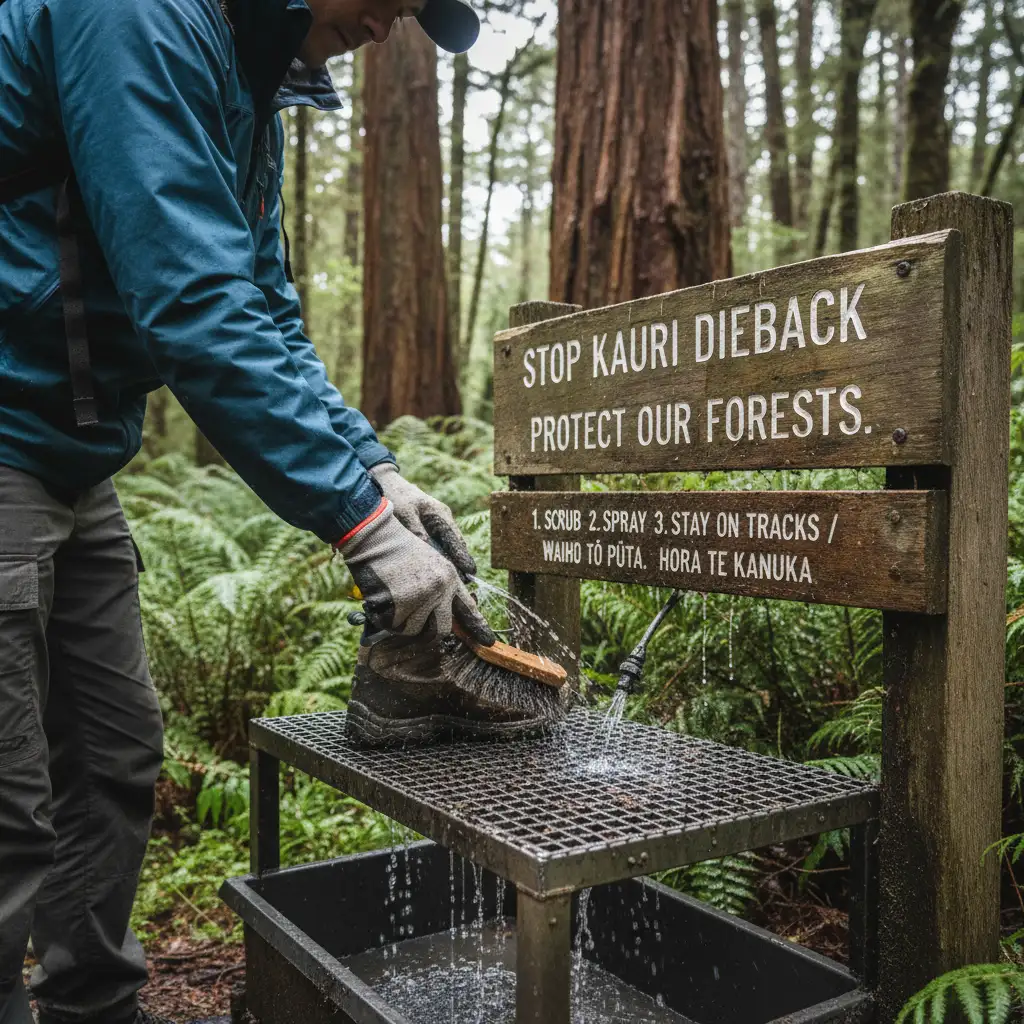
One of the most critical threats to New Zealand forests is Kauri Dieback disease, a microscopic soil-borne pathogen that kills the giant Kauri trees. There is no cure. To prevent its spread, you must:
- Scrub your shoes: Use the cleaning stations provided at the entrance and exit of all tracks. Ensure all soil is removed.
- Stay on the track: Stepping off the track can spread the pathogen to the roots of nearby trees.
- Check your gear: Ensure hiking poles and camping equipment are soil-free before arriving in New Zealand and before moving between regions.
Respecting Wildlife
In sanctuaries, animals may appear tame, but they are wild. The “Tiaki Promise” is a commitment to care for New Zealand. Key rules include:
- Keep your distance: Use a zoom lens rather than approaching animals.
- No feeding: Human food harms native birds and disrupts their natural foraging behaviors.
- No flash photography: nocturnal animals like Kiwi have sensitive eyes; flash can temporarily blind them and cause severe stress.
- Leave No Trace: Pack out everything you pack in, including biodegradable waste like apple cores, which can attract predators.
Frequently Asked Questions
What is the best New Zealand nature sanctuary to see Kiwi?
Stewart Island (Rakiura) is excellent for spotting Kiwi in the wild, often during the day. For guaranteed sightings, Zealandia in Wellington and Orokonui Ecosanctuary in Dunedin offer specialized nocturnal tours where sightings of Little Spotted Kiwi or Haast Tokoeka are highly likely.
Are nature sanctuaries in New Zealand free to enter?
Most fenced sanctuaries (like Zealandia, Maungatautari, and Orokonui) charge an admission fee. This fee is crucial for maintaining the predator-proof fences and funding conservation work. However, DOC-managed conservation parks and many marine reserves are free to the public.
Why are there fences around New Zealand sanctuaries?
The fences are designed to exclude introduced mammalian predators such as rats, stoats, possums, and feral cats. Since New Zealand’s native wildlife evolved without these predators, they have no natural defenses. The fences create safe “mainland islands” where these species can survive and breed.
Can I volunteer at New Zealand nature sanctuaries?
Yes, many sanctuaries rely heavily on volunteers for tasks ranging from tree planting and weed control to guiding visitors and monitoring trap lines. It is recommended to contact the specific sanctuary well in advance of your trip to inquire about short-term or long-term volunteer opportunities.
What is the Tiaki Promise?
The Tiaki Promise is a tourism initiative in New Zealand inviting all travelers to act as guardians of the land. It asks visitors to care for the land, sea, and nature, traveling safely and showing respect for the culture and local communities.
When is the best time to visit for bird watching?
Spring (September to November) is generally the best time for bird watching as it is the breeding season, meaning birds are more active, vocal, and visible. However, winter offers unique opportunities to see high-altitude birds descending to lower areas.