Ulva Island bird watching offers a premier eco-tourism experience within a predator-free open sanctuary in New Zealand’s Stewart Island archipelago. Visitors can observe rare avian species like the South Island Saddleback (Tieke), Yellowhead (Mohua), and Stewart Island Robin (Toutouwai) thriving in an ancient podocarp rainforest, accessible via a short water taxi ride from Oban.
Nestled within the pristine waters of Paterson Inlet (Whaka a Te Wera), Ulva Island (Te Wharawhara) stands as one of New Zealand’s most successful conservation triumphs. As an open sanctuary free from introduced mammalian predators, it provides a glimpse into a prehistoric world where birdsong dominates the acoustic landscape. For enthusiasts and casual observers alike, Ulva Island bird watching is not merely an activity; it is an immersion into an ecosystem that has remained largely unchanged for centuries.
Water Taxi Access from Oban
Accessing this ornithological paradise requires a short transit across Paterson Inlet. Unlike many remote eco-sanctuaries that require helicopter access or lengthy ferry rides, Ulva Island is remarkably accessible, making it a commercially viable day trip for travelers stationed in Oban, the main settlement of Stewart Island.

Scheduled Departures and Logistics
Water taxis depart regularly from Golden Moon Bay or the main wharf in Oban. The journey typically takes 7 to 10 minutes. Several commercial operators run scheduled services throughout the day, usually starting around 8:30 AM and concluding with final pickups around 4:00 PM or 5:00 PM during the summer season. It is critical to book your return time when you depart, as there are no accommodation facilities or shops on the island. If you miss the last boat, you are effectively stranded until the next morning, which is strictly prohibited under Department of Conservation (DOC) regulations.
Guided Tours vs. Independent Travel
For the commercially-minded traveler, the choice between a guided tour and independent exploration is pivotal. Independent travel (freedom walking) costs only the price of the water taxi ticket. However, investing in a guided tour significantly enhances the bird watching experience. Local guides possess intimate knowledge of territory boundaries for specific bird pairs, meaning they can locate cryptic species like the Mohua or Rifleman far more efficiently than a casual visitor.
Walking Track Maps and Navigation
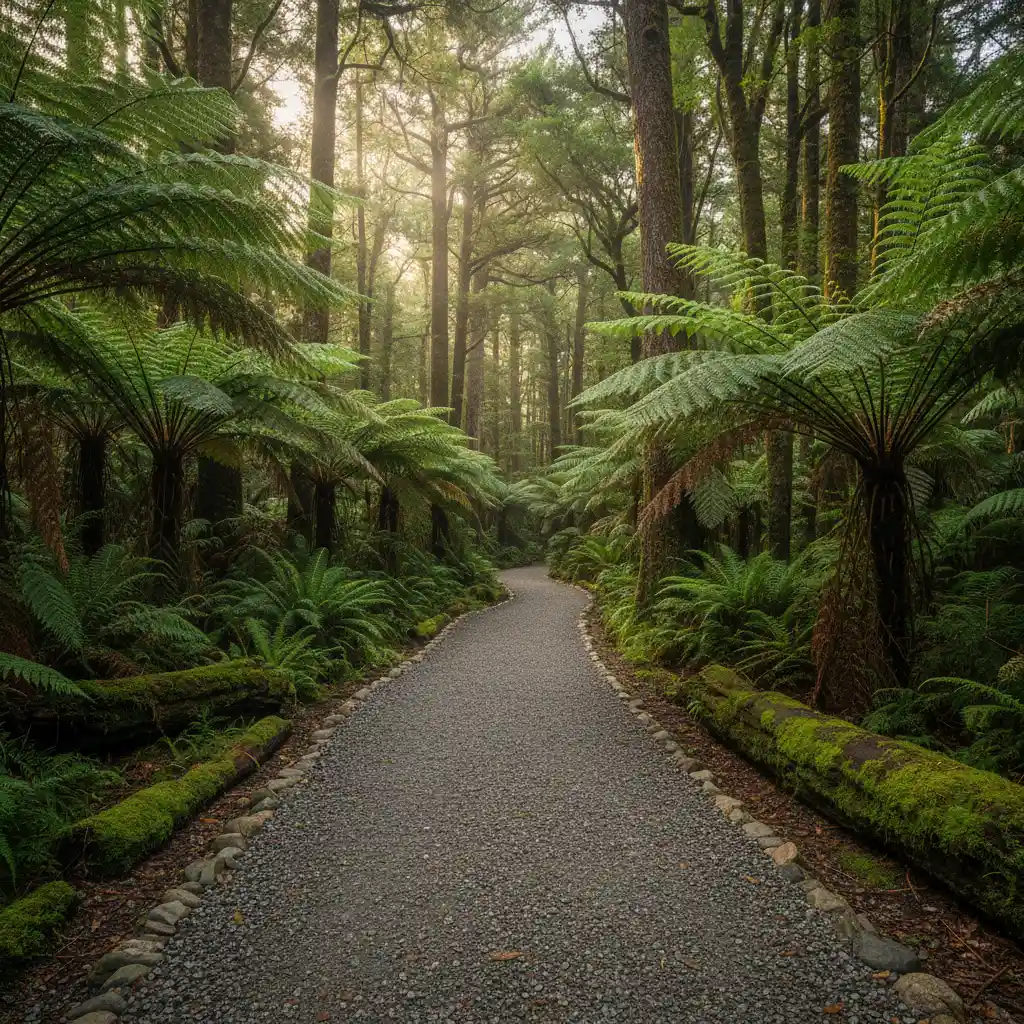
Ulva Island features a network of well-maintained gravel tracks that are generally flat and accessible for most fitness levels. The tracks are designed to minimize human impact while maximizing exposure to different habitat types, from coastal fringes to deep rainforest interiors.
The Boulder Beach Track
This is the most popular route for day-trippers. Starting from Post Office Bay (the main drop-off point), this track meanders through the island’s center to the western side. It takes approximately 1.5 to 2 hours return at a slow, bird-watching pace. This track offers the highest density of South Island Robins, who are known to approach visitors closely, often pecking at boots in search of insects disturbed by footsteps.
The West End Track
For those seeking solitude and the elusive Stewart Island Brown Kiwi (Tokoeka) during the day, the West End Track is superior. It extends further than the Boulder Beach loop and passes through dense fern groves where Kiwi are occasionally spotted foraging in the leaf litter, even in daylight—a behavior unique to the Stewart Island species.
Navigation Safety
While the island is small (approx. 270 hectares), getting disoriented in the dense foliage is possible if one strays from the path. DOC provides maps at the shelter in Post Office Bay. Visitors should stick strictly to marked trails to protect the fragile forest floor and ground-nesting birds.
Comprehensive Ulva Island Bird Watching Guide
The primary commercial draw of Ulva Island is its biodiversity. The absence of rats, stoats, and possums allows bird populations to reach densities rarely seen on the mainland. Below is a breakdown of the key species that drive tourism to this location.
South Island Saddleback (Tieke)
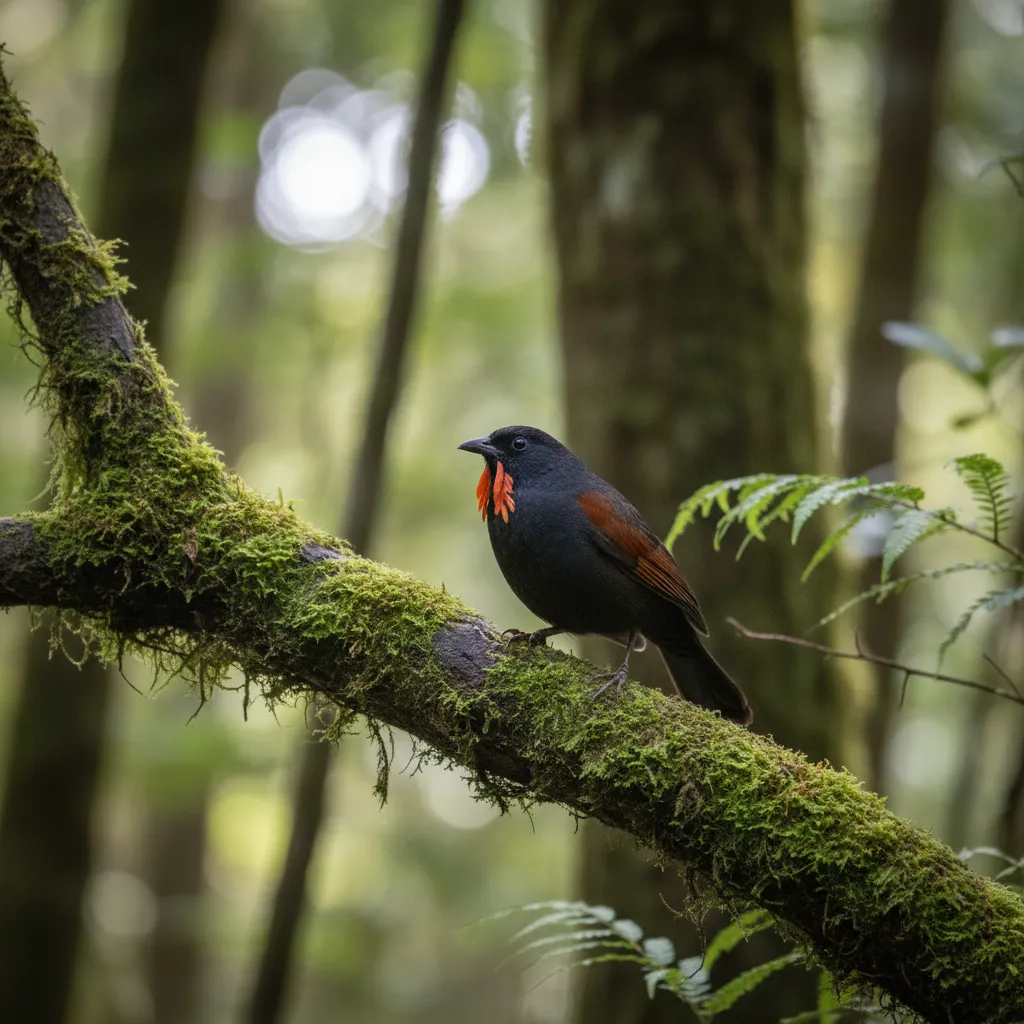
The Tieke is a star attraction. Recognized by the chestnut “saddle” across its black back and distinct orange wattles, this bird was once near extinction. On Ulva Island, they are abundant and vocal. They are poor fliers, often seen hopping branch to branch in the lower canopy. Their call is a loud, rhythmic chatter that often signals their presence before they are seen.
Yellowhead (Mohua)
The Mohua is a small, insectivorous bird featured on the New Zealand $100 note. They travel in flocks and are often found high in the canopy. Spotting them requires patience and often a pair of high-quality binoculars. Listen for a rapid, high-pitched staccato song.
Stewart Island Robin (Toutouwai)
These are arguably the most interactive birds on the island. Highly territorial and fearless, they will come within inches of patient observers. Photographers find them excellent subjects as they often pause on low branches or the ground, striking poses that allow for macro photography without specialized telephoto lenses.
Kākā (South Island Bush Parrot)
Large, raucous, and charismatic, the Kākā is a forest parrot that plays a vital role in the ecosystem. You will hear their harsh, grating calls echoing through the forest. They are often seen tearing strips of bark off trees to get to the sap or insects underneath. Unlike the alpine Kea, the Kākā is strictly a forest dweller.
Seasonal Viewing Calendar
Bird behavior changes drastically with the seasons, influencing the commercial viability of trips during different times of the year. Understanding these rhythms ensures visitors manage their expectations.
Spring (September – November)
The Peak Season. This is the breeding season for most species. Birdsong is at its loudest and most complex as males defend territories. It is the best time to see courtship feeding and nest building. However, birds may be more secretive while incubating eggs.
Summer (December – February)
The Fledgling Season. The forest is busy with parents feeding demanding chicks. This is an excellent time to see young birds, who are often less cautious than adults. The Rātā trees bloom bright red during this period, attracting Tūī and Bellbirds (Korimako) in large numbers.
Autumn (March – May)
The Fruit Season. As the forest fruits ripen, birds congregate around food sources. This is a great time to spot Kākā and New Zealand Pigeons (Kererū) gorging on berries. The weather is often more stable than in spring.
Winter (June – August)
The Quiet Season. While colder, winter offers unique opportunities. Flocking species like the Mohua gather in larger groups. The forest is quieter, but the solitude can provide a more intimate experience with the resident Robins and Weka.
Orchid and Fern Identification
While the fauna steals the spotlight, the flora of Ulva Island is equally ancient and significant. The island is a showcase of Gondwana-era vegetation.
Native Orchids
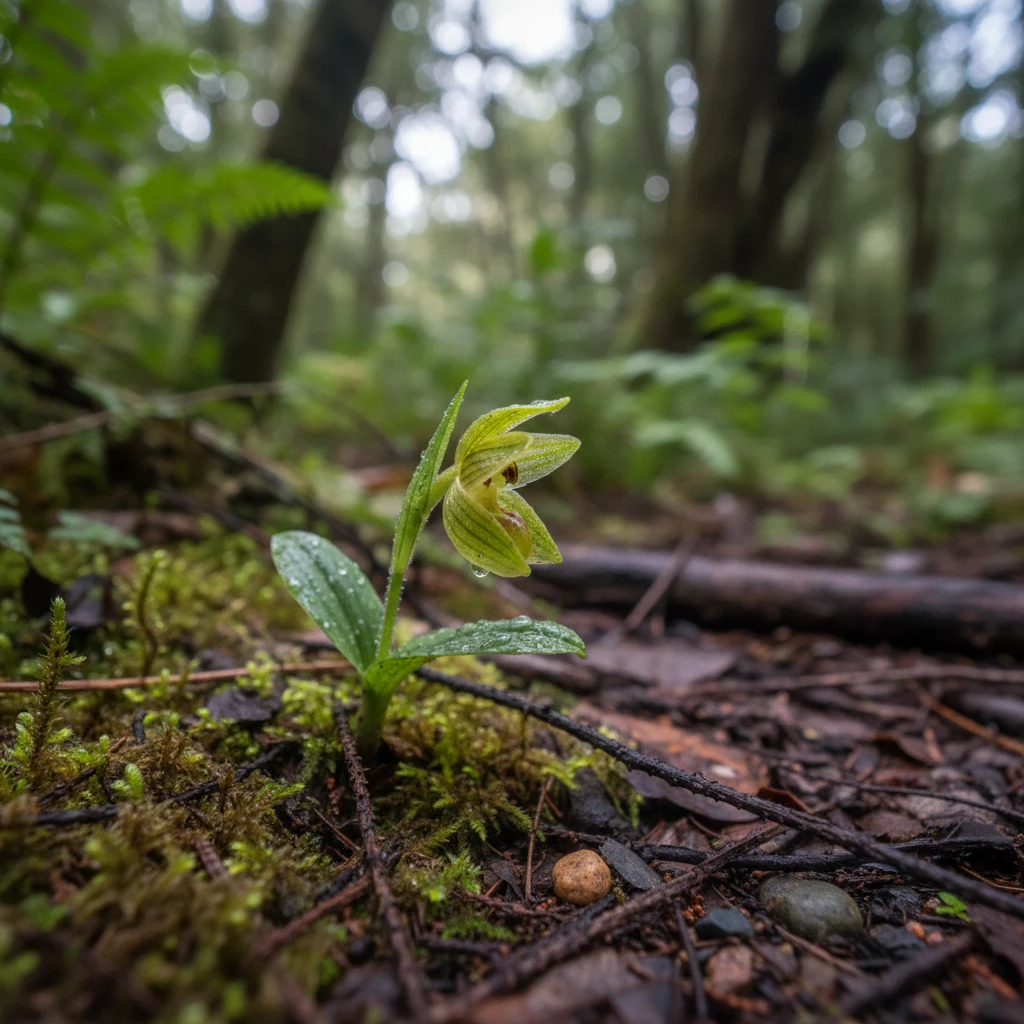
Ulva Island is home to several species of native orchids, many of which are ephemeral and easily missed. The Greenhood Orchids (Pterostylis) are commonly found along the track edges during spring and summer. Unlike tropical orchids, New Zealand natives are often small, green, and subtle. Photography of these species requires a macro lens and a steady hand (tripods are allowed but must be used carefully to avoid blocking paths).
Ferns and Podocarps
The “Crown Fern” (Blechnum discolor) dominates the understory, creating a vibrant green carpet that contrasts with the dark trunks of Rimu, Miro, and Totara trees. This dense vegetation structure is critical for the survival of the Kiwi, providing ample cover during the day. Visitors should look for the “Prince of Wales Feather” fern, a delicate species often found in damper, shaded gullies.
The Predator-Free Status and Etiquette
Ulva Island’s status as a predator-free sanctuary is hard-won and fragile. A single rat introduction could devastate the bird populations. Commercial operators and visitors alike share the responsibility of biosecurity.
Biosecurity Checks
Before boarding the water taxi, visitors must inspect their gear. All bags, pockets, and velcro fastenings must be checked for seeds, rodents, or insects. Footwear should be clean of soil to prevent the spread of Kauri Dieback (though not present on Stewart Island, hygiene is standard practice) and weed seeds.
Behavioral Guidelines
- Do not feed the birds: This alters their natural behavior and can introduce disease.
- Stay on the track: Stepping off-track damages delicate root systems and crushes burrows.
- Noise discipline: While talking is permitted, loud noises will drive birds away. Silent observation yields the best results.
- No drones: Drones are strictly prohibited as they distress the wildlife.
By adhering to these rules, visitors ensure that Ulva Island remains a premier destination for bird watching for generations to come. The commercial success of eco-tourism here is directly linked to the health of the ecosystem; conservation is not just an ideal, it is the business model.
People Also Ask
What is the best time of day to visit Ulva Island?
The best time to visit Ulva Island is early morning, specifically the first water taxi run (usually around 8:30 AM). Birds are most active and vocal just after dawn (the dawn chorus). Additionally, the winds are typically calmer in the morning, making the boat crossing smoother and bird spotting easier as foliage isn’t moving as much.
How much does the Ulva Island water taxi cost?
As of recent updates, a return water taxi fare from Oban to Ulva Island typically costs between $20 and $30 NZD per adult. Children often receive discounted rates. Prices can vary slightly between operators, so it is advisable to check current listings at the Stewart Island visitor center or online booking platforms.
Can you see Kiwi on Ulva Island during the day?
Yes, it is possible to see the Stewart Island Brown Kiwi (Tokoeka) during the day on Ulva Island, although it is rare. Unlike other Kiwi species, the Tokoeka is semi-diurnal. Sightings are largely a matter of luck, but staying quiet on the West End Track increases your chances.
Are there toilets on Ulva Island?
Yes, there are toilet facilities available on Ulva Island. They are located near the jetty at Post Office Bay where the water taxis drop off visitors. There are no other facilities or toilets further along the tracks, so visitors should use them upon arrival.
How long should I spend on Ulva Island?
Most visitors spend between 3 to 4 hours on Ulva Island. This allows enough time to walk the main tracks (Boulder Beach and West End) at a leisurely pace, take photographs, and observe bird behavior without rushing. Serious birders or photographers may wish to spend the entire day (approx. 6-7 hours).
Do I need a guide for Ulva Island?
You do not strictly need a guide, as the tracks are well-marked and easy to follow. However, hiring a guide is highly recommended for bird watching. Guides are experts at identifying bird calls and locating specific species that casual visitors often miss, providing a much richer educational experience.