To book an overnight cruise in Doubtful Sound, travelers must reserve well in advance through licensed operators like RealNZ or Fiordland Expeditions. These voyages, departing via Lake Manapouri and Wilmot Pass, function as exclusive floating wilderness lodges, offering immersive access to the fiord’s legendary silence, nocturnal wildlife, and world-class dark sky sanctuaries.
New Zealand’s remote wilderness offers an escape unlike any other. For the discerning traveler seeking solitude, the journey into the heart of Fiordland and the West Coast is not just a vacation; it is a pilgrimage into the prehistoric. While land-based lodges provide luxury on the edge of the wild, the decision to book an overnight cruise in Doubtful Sound transforms the water itself into your accommodation, offering a front-row seat to one of the darkest, quietest places on Earth.
The Ultimate Floating Lodge: Overnight in Doubtful Sound
When you look to book an overnight cruise in Doubtful Sound, you are securing more than a cabin; you are gaining access to a “floating lodge” experience that rivals the most exclusive land-based accommodation. Known by the Māori as Patea (the place of silence), Doubtful Sound is ten times larger than its famous neighbor, Milford Sound, and significantly more isolated. There is no direct road access, ensuring that once the day-trippers depart, the fiord belongs entirely to those staying overnight.

Why Choose an Overnight Cruise?
The primary allure is the transition from dusk to dawn. As night falls, the engines are cut, and the vessel drifts in a sheltered cove. This is the realm of true silence—a rarity in the modern world. Without the light pollution of towns or cities, the sky erupts into a canvas of stars, making it a prime destination for astrotourism. The sheer vertical cliffs, draped in moss and waterfalls, create a natural amphitheater where the only sounds are the call of the Morepork (native owl) or the splash of a Fiordland Crested Penguin.
Logistics: How to Get There
Booking this experience requires understanding the logistics, which adds to the sense of adventure:
- Departure Point: The journey begins at Manapouri.
- The Crossing: You first take a boat across Lake Manapouri.
- The Pass: A bus transports you over the Wilmot Pass, one of New Zealand’s most remote roads, descending through dense rainforest to Deep Cove.
- The Cruise: You board your vessel at Deep Cove to begin the overnight expedition.
What is the Best Time of Year to Book?
While summer (December to February) offers warmer temperatures, the shoulder seasons (spring and autumn) provide a moodier, more dramatic atmosphere often preferred by photographers. Winter offers the clearest skies for stargazing, essential for those interested in the nocturnal eco-tourism aspect of the region.
Fiordland Lodge: Luxury on the Wilderness Edge
For those who prefer their foundation on solid ground before or after they book an overnight cruise in Doubtful Sound, Fiordland Lodge offers the quintessential transition. Located near Te Anau, the gateway to the fiords, this lodge is an architectural masterpiece constructed from massive timber logs, designed to frame the panoramic views of Lake Te Anau and the Murchison Mountains.
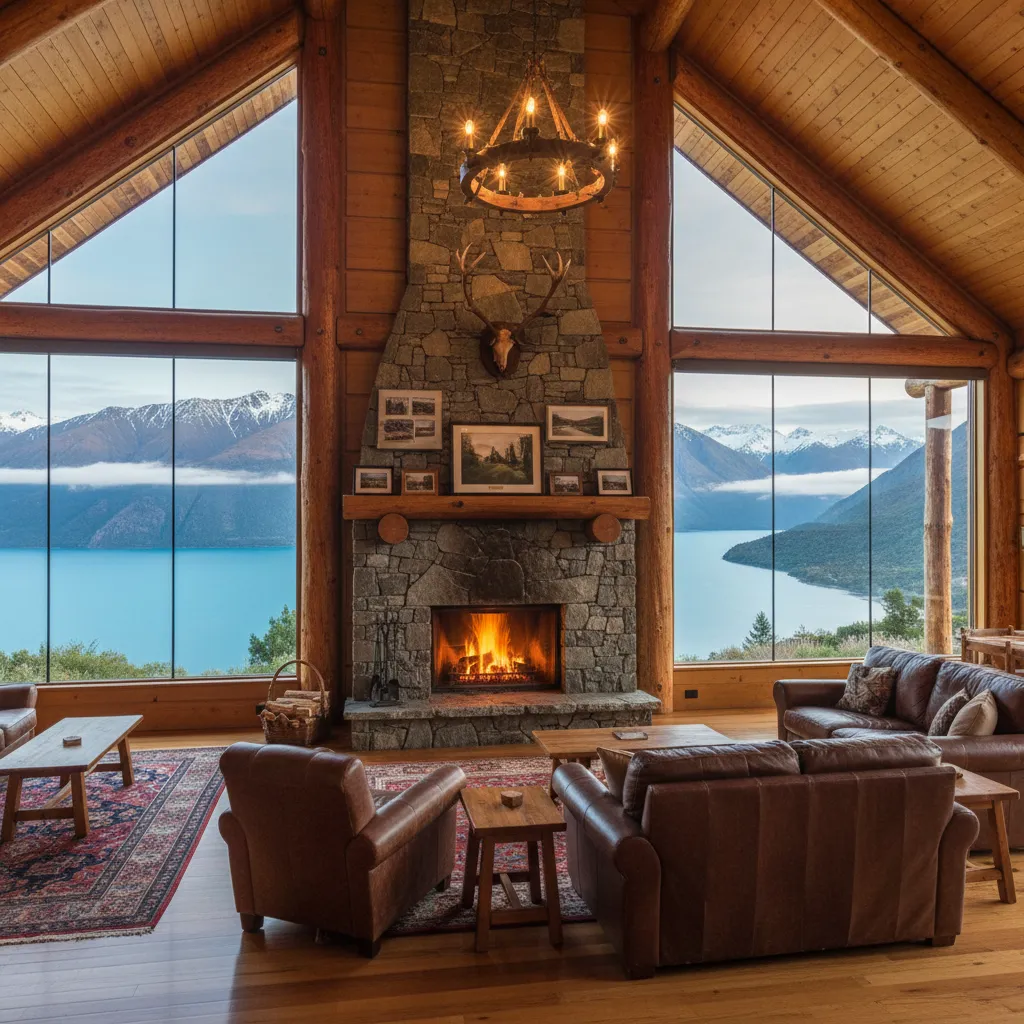
Gateway to the Dark Sky
Fiordland Lodge serves as a perfect base for nocturnal adventures. The lodge is situated away from the light pollution of the Te Anau township, allowing guests to engage in private stargazing sessions from the lawn or their balconies. The area is on the edge of the proposed Fiordland Dark Sky Park, meaning the visibility of the Milky Way and the Aurora Australis (Southern Lights) can be spectacular.
Exclusive Activities
Beyond the views, the lodge specializes in bespoke experiences. Guests can arrange helicopter transfers directly from the lodge lawn to remote parts of the national park, or engage in guided night walks to spot kiwi birds, blending luxury accommodation with raw wildlife encounters.
Wilderness Lodge Lake Moeraki: Rainforest Immersion
Moving north from Fiordland to the West Coast, Wilderness Lodge Lake Moeraki presents a different style of remote luxury. Nestled within the heart of the Te Wahipounamu World Heritage Area, this lodge focuses heavily on conservation and education. It is a vital stop for eco-tourists traversing the South Island.
The Tawaki and Glow Worms
The lodge is world-renowned for its guided nature activities. During the season (August to December), guests have exclusive access to view the Tawaki (Fiordland Crested Penguin) along the rugged coastline at Monro Beach. However, the nocturnal experiences define the stay here.
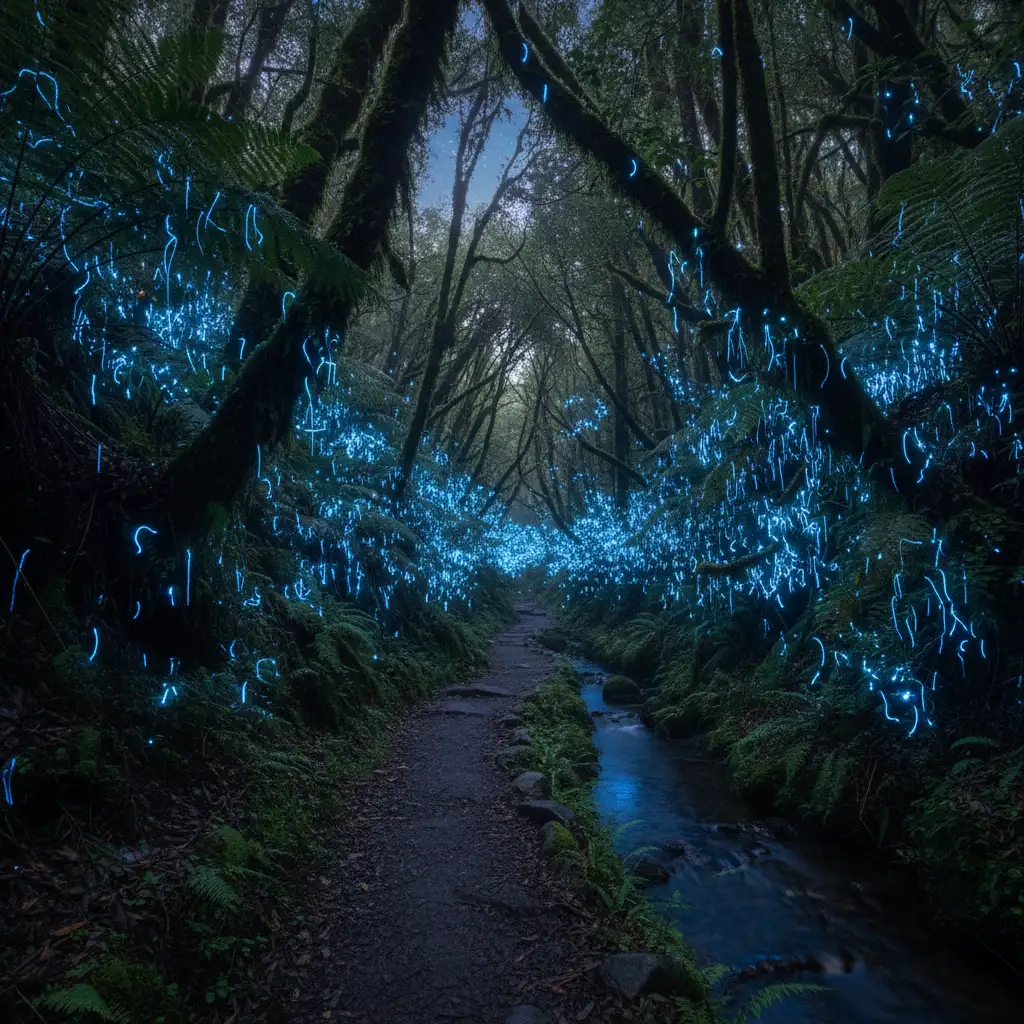
After dinner, guides lead guests into the dense temperate rainforest to view glow worms. Unlike crowded commercial caves, these walks take place in the open forest, where the bioluminescent larvae create a starry sky effect amidst the ancient rimu and kahikatea trees. This connects directly to the “Dark Sky” ethos—preserving natural darkness to protect the lifecycle of these light-sensitive creatures.
Nocturnal Wonders & Dark Sky Eco-Tourism
New Zealand is rapidly becoming a world leader in dark sky tourism, and the remote lodges of the South Island are the custodians of this resource. When you book an overnight cruise in Doubtful Sound or stay at a wilderness lodge, you are participating in a movement that values darkness as a natural resource.
The Sound of Silence and Light
On an overnight cruise, the experience of “darkness” is total. Once the vessel’s generator is quieted or switched to battery power (on eco-vessels), the isolation is absolute. This allows for:
- Naked-eye Astronomy: Viewing the Magellanic Clouds and the Southern Cross without telescopic aid.
- Bioluminescence: In the water, disturbing the surface can sometimes trigger “sea sparkle” (plankton bioluminescence), mirroring the stars above.
- Circadian Reset: The absence of artificial light aids in deep physiological relaxation, a key selling point for wellness-focused travelers.

Sustainable Practices and Conservation Contributions
Transactional decisions in this niche carry weight. Booking with high-end remote operators usually ensures a contribution to local conservation. The Department of Conservation (DOC) works closely with concessionaires in Fiordland and Westland.
Your Booking Supports Nature
When you choose these remote experiences, a portion of your fee often goes toward:
- Predator Control: Trapping stoats and rats to protect native birdlife like the Kiwi and Whio (Blue Duck).
- Carbon Offsetting: Many operators, particularly in the cruise sector, are moving toward carbon-zero certification.
- Research: Lodges like Lake Moeraki are actively involved in scientific research regarding penguin populations and forest ecology.
For the eco-conscious traveler, the verification of these practices is often the tipping point in the decision to book. Operators in Doubtful Sound adhere to strict environmental codes to minimize wake effects on shorelines and prevent marine pest introduction.
Frequently Asked Questions
How far in advance should I book an overnight cruise in Doubtful Sound?
Due to the limited capacity of vessels (often accommodating only 10-70 passengers) and the high demand for remote wilderness experiences, it is recommended to book at least 3 to 6 months in advance, especially for travel during the peak summer season (December – February).
Are overnight cruises in Doubtful Sound suitable for children?
Yes, many operators welcome children, though some may have age restrictions or specific family-friendly departures. It is an educational experience, but parents should be aware that the environment is remote with strict safety protocols on deck.
What wildlife can I see on a Doubtful Sound overnight cruise?
Visitors frequently spot Bottlenose dolphins (one of the southernmost populations), New Zealand fur seals, and Fiordland Crested Penguins (in season). The overnight stay also increases the chance of hearing or seeing nocturnal birdlife.
Is there Wi-Fi or cell reception on the cruise?
No. Doubtful Sound is a “blackout” zone for cellular signals. This digital detox is considered a primary feature of the luxury wilderness experience, allowing guests to fully disconnect and immerse themselves in nature.
What happens if it rains during the cruise?
Rain is celebrated in Fiordland. The region receives high rainfall, which fuels the hundreds of temporary waterfalls that cascade down the cliffs. The scenery is often considered more mystical and dramatic during and after rainfall.
Can I drive to Doubtful Sound myself?
No, there is no public road access to Doubtful Sound. Access is exclusively via a boat across Lake Manapouri followed by a bus over Wilmot Pass, which is arranged as part of your cruise booking.