Mental fatigue relief through nature is scientifically linked to the restorative power of natural soundscapes, such as Aotearoa’s dawn chorus. Immersion in these acoustic environments lowers cortisol levels, improves cognitive function, and alleviates stress by engaging “soft fascination,” allowing the brain to recover from the sensory overload of modern urban living.
In an era defined by digital hyper-connectivity and urban noise, the quest for silence and organic sound has become a medical necessity rather than a luxury. New Zealand, or Aotearoa, offers some of the most pristine acoustic ecologies on the planet. From the thunderous dawn chorus of predator-free islands to the profound silence of the deep south, these soundscapes provide a potent antidote to burnout.
How does nature provide mental fatigue relief?
The connection between auditory environments and mental health is grounded in Attention Restoration Theory (ART). Modern life demands “directed attention”—the intense focus required for work, driving, and screen time—which eventually depletes our cognitive resources, leading to mental fatigue. Nature sounds, particularly bird song, wind in trees, and moving water, provide what psychologists call “soft fascination.”
This state allows the brain’s executive functions to rest and recharge. In Aotearoa, the soundscape is unique because it evolved in the absence of mammals. The acoustic frequency of New Zealand’s native bush is dominated by the complex melodies of passerines (perching birds), creating a high-fidelity soundscape that is particularly stimulating yet relaxing for the human brain.

Acoustic Ecology and Cortisol Levels
Recent studies in eco-psychology suggest that it is not just the visual presence of green space that lowers stress, but the acoustic quality. High-fidelity nature sounds have been shown to lower heart rate and reduce cortisol production more effectively than silence alone in a clinical setting. The complexity of Aotearoa’s bird calls—from the bell-like toll of the Korimako to the guttural clicks of the Tūī—engages the auditory cortex in a way that distracts from rumination, a key component of anxiety and depression.
Where is the best place to hear the Dawn Chorus?
The “Dawn Chorus” (Te Waha o Tāne) is the morning symphony of birdsong that occurs just before sunrise. In mainland New Zealand, introduced predators have dampened this sound, but in dedicated sanctuaries, the volume can still be deafening—in the best possible way.
Tiritiri Matangi: The Wall of Sound
Located in the Hauraki Gulf, Tiritiri Matangi is an open scientific reserve and one of the most successful conservation projects in the world. Because the island is free of mammalian predators, the density of birdlife is extraordinary. Visitors seeking mental fatigue relief through nature should stay overnight (booking required well in advance) to experience the morning crescendo.
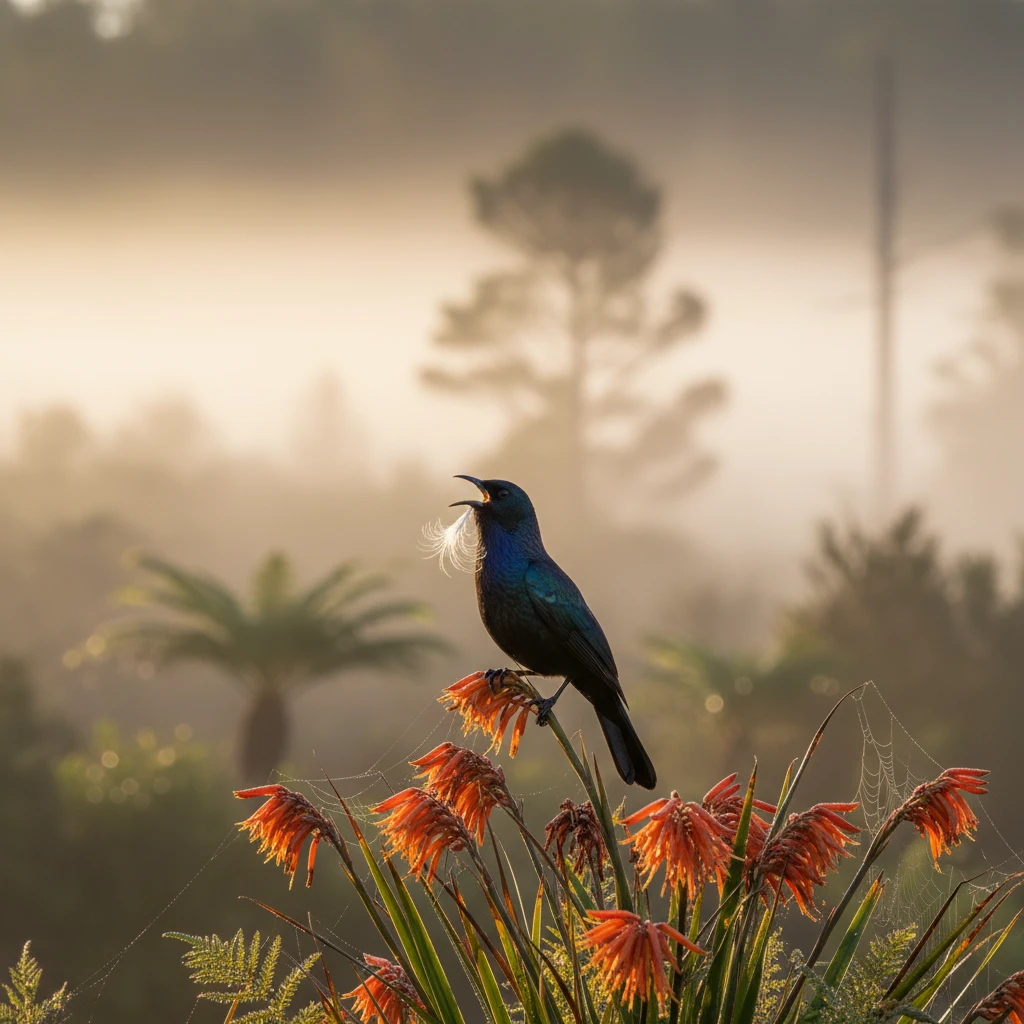
As light begins to bleed into the sky, the soundscape transforms from the nocturnal calls of the Little Spotted Kiwi to a roar of melody. The Bellbird (Korimako) and Tūī lead the charge, creating a wall of sound that vibrates through the air. This immersion is a somatic experience; you feel the sound as much as you hear it.
Kapiti Island and Zealandia
For those further south, Kapiti Island (near Wellington) offers a similar experience. It is a stronghold for the Kākā, a native parrot whose raucous calls add a prehistoric layer to the soundscape. Meanwhile, Zealandia Ecosanctuary in Wellington offers a rare urban oasis. Despite being minutes from the city center, the predator-proof fence allows for a dawn chorus that rivals remote locations, providing accessible mental fatigue relief for city dwellers.
What are the best spots for pure silence in New Zealand?
While the dawn chorus is about abundance, some forms of mental fatigue relief require the absence of noise. True silence—the complete lack of anthropogenic (human-made) sound—is becoming an endangered resource. Aotearoa offers “Dark Quiet Parks” where the natural quiet is preserved as fiercely as the visual landscape.
Rakiura (Stewart Island)
Rakiura, meaning “The Land of Glowing Skies,” is also a land of profound quiet. With 85% of the island designated as a national park and a tiny population, the background noise floor is incredibly low. On the Ulva Island sanctuary within Paterson Inlet, the silence between bird calls is heavy and grounding. Here, the sound of one’s own breathing or the crunch of footsteps becomes the primary focus, forcing a mindfulness that is difficult to achieve in populated areas.

Doubtful Sound (Patea)
Often called the “Sound of Silence,” Doubtful Sound in Fiordland is geographically isolated. Unlike the busier Milford Sound, Doubtful Sound has no direct road access, limiting traffic noise. When boat engines are cut in the main channel, the silence is absolute, broken only by the distant sound of waterfalls cascading hundreds of meters into the fjord. This specific type of silence, vast and encompassing, creates a sense of awe that puts personal stressors into perspective.
How does noise pollution impact nature and humans?
Noise pollution is an invisible threat to biodiversity and human wellness. In the context of eco-tourism, preserving the soundscape is as critical as preserving the landscape.
The Masking Effect
For New Zealand’s birds, communication is survival. Noise from drones, boats, and cars creates a “masking effect,” drowning out mating calls and territorial warnings. For the human visitor seeking mental fatigue relief, this intrusion breaks the immersive spell of nature. The brain immediately shifts back to alert mode when it processes mechanical sounds, halting the restorative process.
Conservation efforts in New Zealand now frequently include “acoustic buffers” around sanctuaries. For example, flight paths are often restricted over sensitive wildlife areas. Recognizing the value of natural quiet is a growing trend in the tourism sector, with operators increasingly offering “silent tours” where talking is discouraged to maximize the connection with the environment.
How to record nature sounds ethically?
Field recording is a growing hobby for those wishing to take a piece of the tranquility home with them. However, the pursuit of the perfect capture must not come at the expense of the environment.

Principles of Ethical Field Recording
- Passive Presence: The goal is to record the environment as it exists without you. Set up your equipment and move away. Your breathing, clothing rustle, and footsteps are noise pollution in a recording.
- Do Not Use Playback: Never play bird calls back to birds to elicit a response. This causes significant stress, distracting birds from feeding or defending territory, and can expend vital energy reserves.
- Respect Restricted Areas: Many of the best soundscapes are in strict reserves. Always stay on marked tracks unless you have a specific concession to go off-trail. Delicate root systems and nesting grounds are easily damaged.
- Leave No Trace (Acoustic): Just as you pack out your trash, keep your volume down. Loud talking or music disturbs both wildlife and other visitors seeking solace.
By recording ethically, you create a personal library of “sonic vitamins”—high-fidelity recordings that can be listened to at home or in the office to trigger the relaxation response when a return to nature isn’t immediately possible.
People Also Ask
What is the most relaxing sound in nature?
While subjective, research indicates that water sounds (rain, streams, ocean waves) and bird songs are the most universally relaxing. In New Zealand, the Bellbird (Korimako) song is frequently cited as particularly soothing due to its bell-like clarity and melodic complexity.
How long do you need to spend in nature to reduce stress?
Studies suggest that as little as 20 minutes of immersion in a nature setting—specifically listening and observing—can significantly lower cortisol levels. This is often referred to as the “nature pill” prescription for mental fatigue.
Why are New Zealand bird sounds unique?
New Zealand evolved for millions of years without mammals, meaning birds filled every ecological niche. This resulted in an unusually high density of vocal species. The dawn chorus in NZ is louder and more complex than in many other parts of the world due to this evolutionary history.
Can listening to nature sounds help with burnout?
Yes. Listening to nature sounds facilitates recovery from sympathetic nervous system arousal (fight or flight). It helps restore attention span and cognitive flexibility, which are often depleted during burnout.
What is a soundscape in eco-tourism?
A soundscape refers to the complete acoustic environment of a location. In eco-tourism, this includes the biological sounds (animals), geophysical sounds (wind, water), and the absence of anthropogenic noise. It is considered a natural resource to be conserved.
Where can I go for a silent retreat in New Zealand?
Beyond the national parks, there are dedicated retreat centers in the Coromandel, Nelson Lakes, and Banks Peninsula that focus on silence. However, for a self-guided experience, the remote tracks of Rakiura (Stewart Island) or the Whanganui River Journey offer profound quiet.