Regenerative travel is a holistic tourism paradigm that aims to leave a destination better than it was found. Unlike sustainable tourism, which seeks to minimize harm or maintain the status quo, the regenerative travel meaning focuses on net-positive impacts: actively restoring ecosystems, revitalizing local cultures, and injecting capital directly into community-led conservation economies.
For decades, the gold standard in responsible tourism was sustainability. The goal was simple: do no harm. Travelers were encouraged to take only photos and leave only footprints. However, as global climate challenges accelerate and over-tourism strains sensitive environments, the conversation has shifted. Mere sustainability is no longer sufficient; the planet requires restoration. This is where regenerative travel emerges as the necessary evolution of eco-tourism, particularly within the pristine, yet fragile, landscapes of New Zealand.
What is the Meaning of Regenerative Travel?
To understand the true regenerative travel meaning, one must view tourism not as a linear consumption product, but as a circular, living system. Traditional tourism often operates on an extractive model: visitors arrive, consume resources (water, food, energy), crowd infrastructure, and leave behind waste and carbon emissions, offering money as the sole compensation.
Regenerative travel flips this dynamic. It asks a fundamental question: How can the presence of a visitor aid the recovery of the land and the community?
It is rooted in the biological concept of regeneration—the ability of a living system to renew and restore itself. Applied to travel, this means designing itineraries and experiences that contribute to the healing of the planet. In New Zealand, this concept aligns closely with Indigenous Māori worldviews, specifically Kaitiakitanga, which refers to guardianship and protection. It implies a deep relationship between people and the natural world, where humans are not masters of the land, but part of it.
Sustainability vs. Regeneration: What is the Difference?
While the terms are often used interchangeably, the distinction is critical for the conscientious traveler.
- Sustainable Tourism: Focuses on reaching a neutral point. It aims to not deplete resources faster than they can be replenished. It is about “sustaining” what currently exists. Example: A hotel reducing water usage or eliminating single-use plastics.
- Regenerative Tourism: Focuses on net-positive improvement. It aims to restore what has been lost. Example: A hotel that uses its revenue to purchase degraded farmland and reforest it with native species, effectively sequestering more carbon than the hotel emits.
Leaving a Place Better Than You Found It
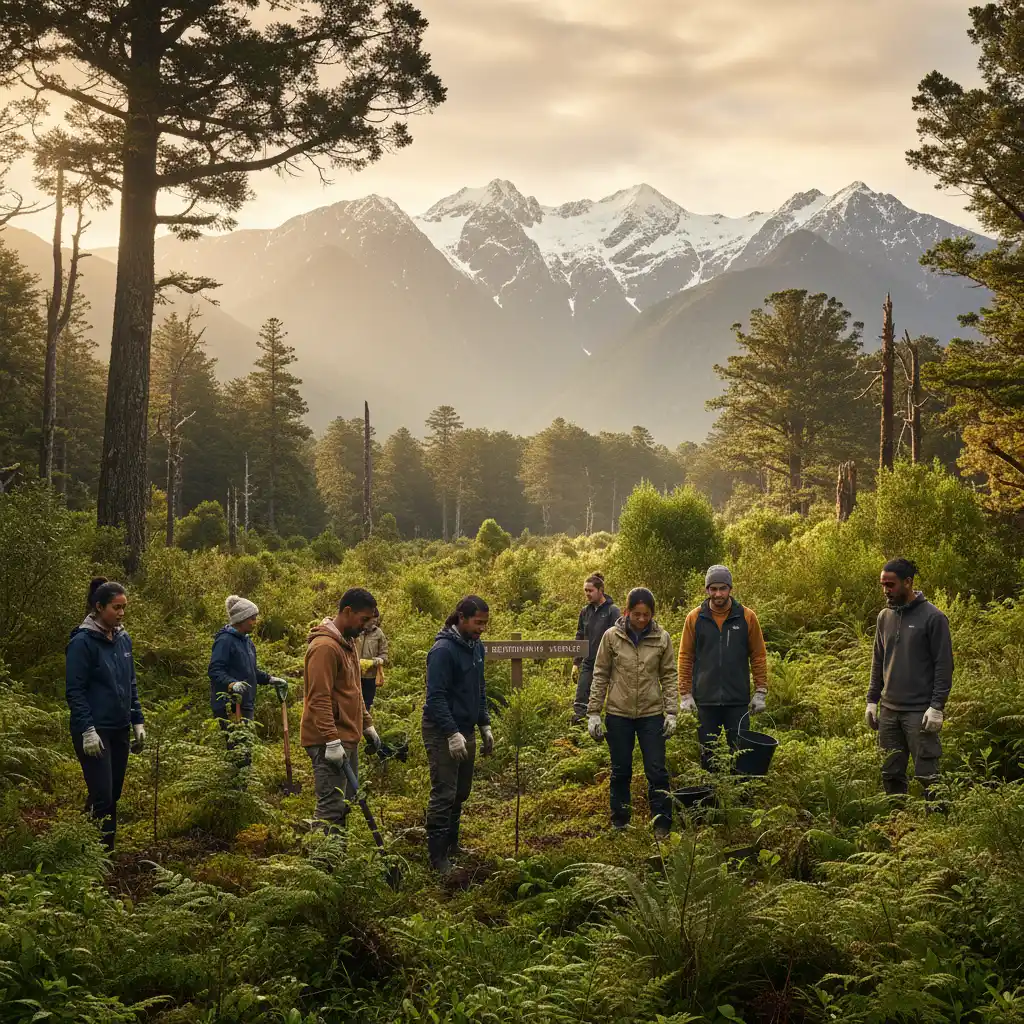
The core ethos of regenerative travel is the commitment to leave a destination in a superior condition to how it was encountered. This goes beyond the passive act of not littering. It requires active participation in restoration projects. In the context of New Zealand eco-tourism, this often manifests through direct interaction with biodiversity projects.
New Zealand has set an ambitious goal of becoming predator-free by 2050. Introduced pests like stoats, rats, and possums have devastated native bird populations. A regenerative traveler might choose tour operators that dedicate a portion of ticket sales to trapping lines or habitat restoration. Some experiences even invite travelers to participate in checking traps or planting native flora.
This active engagement transforms the traveler from a passive observer into an active participant in the destination’s survival. It fosters a deeper emotional connection to the place. When you have planted a tree that will stand for 100 years, or helped clear a beach of microplastics, you leave a piece of your positive intent behind. This is the practical application of the regenerative travel meaning: tourism as a force for good.
Carbon Offsetting vs. Reduction
A significant component of regenerative travel involves how we handle the carbon footprint of our journey. Aviation is a major contributor to global greenhouse gas emissions, and for a remote destination like New Zealand, long-haul flights are often unavoidable for international visitors. Here, the distinction between offsetting and reduction becomes paramount.

Carbon Offsetting is a mechanism where travelers pay for carbon savings elsewhere—planting trees or investing in renewable energy projects—to compensate for their own emissions. While better than nothing, offsetting is often criticized as a “license to pollute.” It does not remove the carbon immediately, and the sequestration benefits of tree planting can take decades to materialize.
Carbon Reduction, the regenerative approach, focuses on eliminating emissions at the source. A regenerative itinerary prioritizes:
- Slow Travel: Staying in one region for longer periods rather than flying between multiple cities.
- Low-Carbon Transport: Utilizing electric vehicles (EVs), cycling, or public transport once in the destination.
- Local Supply Chains: Consuming food grown within a small radius to minimize food miles.
In New Zealand, operators are increasingly moving toward “climate positive” certifications, where they not only reduce their operational carbon to near zero but also sequester more carbon than they produce through on-site land management. Choosing these operators ensures your travel dollars fund the solution, not just the compensation.
Supporting Local Conservation Economies
Regenerative travel is as much about people as it is about nature. A critical flaw in mass tourism is “economic leakage,” where a significant percentage of tourism revenue flows out of the country to foreign-owned hotel chains and tour aggregators. Regenerative tourism seeks to plug these leaks, ensuring money circulates within the local community.
In New Zealand, this often means engaging with Māori-owned tourism businesses. These enterprises frequently operate with a triple bottom line: prioritizing social and environmental goals alongside financial profit. By supporting these businesses, travelers contribute to a “conservation economy.”

For example, a regenerative tour might involve a guided walk through a protected forest led by local Iwi (tribe) members. The fee for this tour supports the guides’ families and funds the ongoing protection of that forest. The economic value of the forest is thus tied to its preservation rather than its exploitation (such as logging). When local communities see direct economic benefit from preserving their environment, the conservation efforts become self-sustaining and robust.
The Tiaki Promise: New Zealand’s Model
New Zealand is a world leader in codifying the regenerative travel meaning into a national philosophy known as the Tiaki Promise. Tiaki is a Te Reo Māori word that means to care for people and place.
The Tiaki Promise is an invitation to all travelers to act as guardians of Aotearoa (New Zealand). It is not merely a marketing slogan; it is a commitment to a set of behaviors that align with regenerative principles. The promise asks travelers to:
- Care for land, sea, and nature: Treading lightly and leaving no trace.
- Travel safely: Showing respect for the unpredictable nature of the environment.
- Respect culture: Traveling with an open heart and mind to local customs and traditions.

By adhering to the Tiaki Promise, visitors acknowledge that they are guests. This shift in mindset—from consumer to guest/guardian—is central to the regenerative movement. It encourages a level of mindfulness that transforms a vacation into a meaningful exchange. It empowers the traveler to protect the very beauty they came to witness, ensuring it remains for future generations (mo ngā uri whakatipu).
How to Participate in Regenerative Tourism
Understanding the regenerative travel meaning is the first step; action is the second. Here is how you can practically apply these principles on your next trip to New Zealand or elsewhere:
- Research Your Operators: Look for certifications like Qualmark Gold (New Zealand’s official quality assurance) or B-Corp certification. Ask operators specifically: “How does your business give back to the local ecosystem?”
- Engage in Voluntourism Wisely: Avoid tokenistic gestures. Seek out established conservation groups like the Department of Conservation (DOC) for legitimate volunteer opportunities, such as tree planting days or beach clean-ups.
- Respect Cultural Protocols: In New Zealand, this might mean asking permission before entering sacred sites, not eating in prohibited areas, and learning basic Te Reo Māori greetings.
- Buy Local: Purchase souvenirs from local artisans and eat at locally-owned restaurants. This ensures your spending supports the families who live there.
- Travel Off-Peak and Off-Path: Overtourism degrades environments. visiting shoulder seasons (Spring/Autumn) and exploring lesser-known regions spreads the economic benefit and reduces pressure on hotspots.
Regenerative travel is not about perfection; it is about intention. It is a journey toward a more symbiotic relationship with our planet. By choosing to travel regeneratively, you become part of the solution, helping to heal the world one destination at a time.
People Also Ask
What is the difference between sustainable and regenerative travel?
Sustainable travel aims to maintain the status quo and minimize harm (net neutral), whereas regenerative travel aims to improve the destination, restoring ecosystems and communities (net positive).
What are examples of regenerative tourism?
Examples include staying at eco-lodges that fund reforestation, participating in coral reef restoration projects, or booking tours where proceeds directly support local wildlife sanctuaries.
Why is regenerative tourism important?
It is important because it addresses the urgent need to repair environmental damage and support local economies, ensuring that tourism becomes a tool for healing rather than exploitation.
What is the Tiaki Promise?
The Tiaki Promise is a New Zealand tourism initiative inviting visitors to act as guardians (kaitiaki) of the country, pledging to care for the land, sea, and culture during their stay.
How can I be a regenerative traveler?
You can be a regenerative traveler by choosing eco-conscious operators, offsetting and reducing carbon emissions, respecting local cultures, and actively participating in conservation efforts.
Is regenerative travel more expensive?
Not necessarily. While some luxury eco-lodges are expensive, regenerative travel also includes low-cost activities like volunteering, hiking, and supporting small, local businesses.