Zealandia Te Māra a Tāne is the world’s first fully-fenced urban ecosanctuary, located minutes from Wellington CBD. Spanning 225 hectares, it utilizes a predator-proof fence to protect native wildlife, offering visitors a unique opportunity to witness New Zealand’s biodiversity, including Tuatara and Little Spotted Kiwi, regenerating in a protected wild environment.
For eco-tourists and conservation enthusiasts traveling through New Zealand, the choice between visiting Zealandia vs Orokonui often dictates the itinerary of a North Island versus South Island adventure. While both sanctuaries represent the pinnacle of predator-free conservation, Zealandia offers an accessible urban rainforest experience in the capital, whereas Orokonui provides a rugged coastal forest encounter near Dunedin. This comprehensive guide explores the depths of Zealandia, compares it directly with its southern counterpart, and provides essential details for planning your visit.
Zealandia vs Orokonui: Which Ecosanctuary is Right for You?
When planning a New Zealand eco-tourism itinerary, travelers frequently weigh Zealandia vs Orokonui. Both are titans of conservation, utilizing Xcluder™ predator-proof fencing to exclude pests like stoats, possums, and rats. However, the visitor experience differs significantly based on location, terrain, and target species.
Location and Accessibility
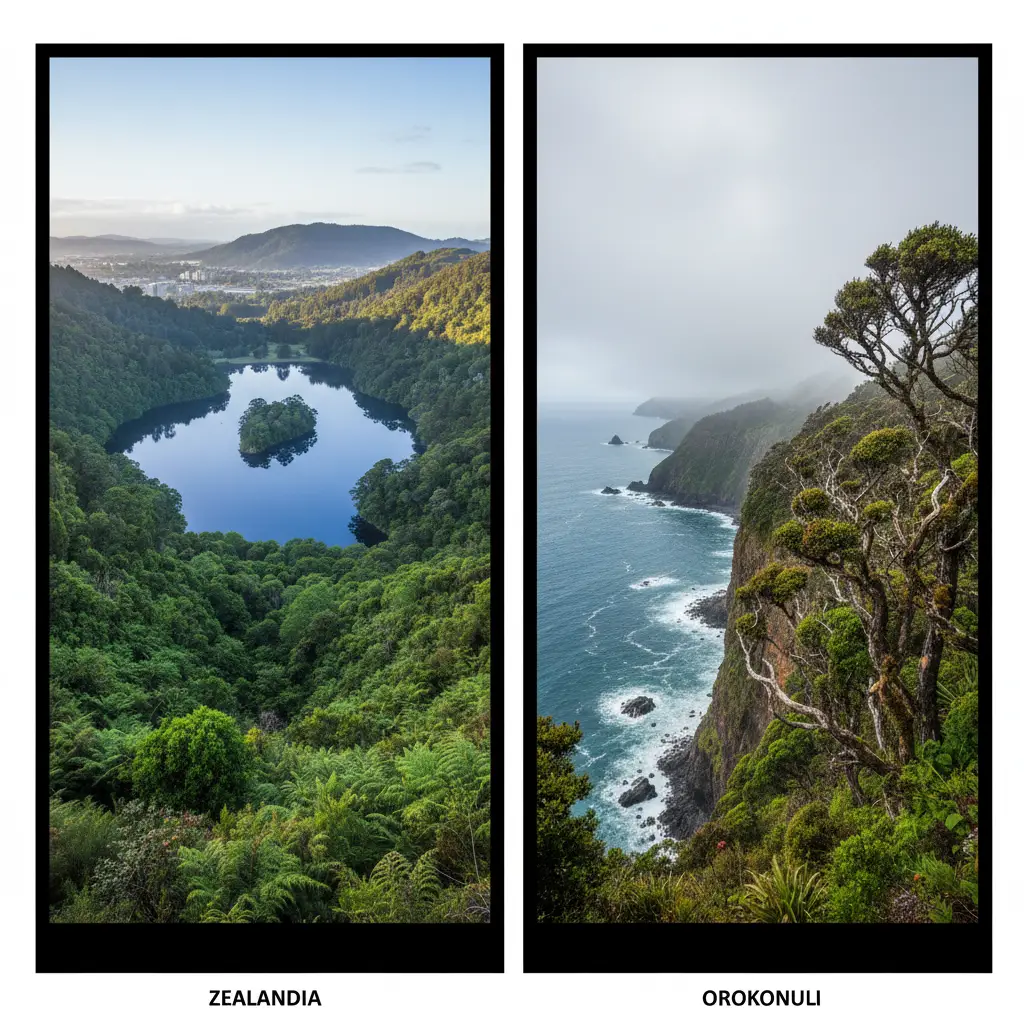
Zealandia is an urban miracle. Located in the suburb of Karori, it is less than a 10-minute drive from the Wellington CBD. This makes it incredibly accessible for cruise ship passengers, weekend travelers, and those without a rental car. The sanctuary surrounds two historic reservoirs, creating a valley ecosystem that is relatively sheltered.
Orokonui, conversely, is situated near Dunedin on the South Island. It sits at a higher altitude atop a hill overlooking the Otago coastline. It is a more rugged, exposed environment often shrouded in mist (giving it the nickname “Cloud Forest”). It requires a 25-minute drive from Dunedin city center, making it a destination that requires more deliberate planning.
Kiwi Species Differences
For many international visitors, the primary goal is spotting a Kiwi in the wild. This is a critical differentiator:
- Zealandia: Home to over 150 Little Spotted Kiwi (Kiwi Pukupuku). These are the smallest kiwi species and are extinct on the mainland outside of sanctuaries. They are strictly nocturnal, making the Zealandia Night Tour essential for sightings.
- Orokonui: Home to the Haast Tokoeka Kiwi. These are larger and rarer than the Little Spotted Kiwi. While also nocturnal, the environment at Orokonui allows for different viewing opportunities, though sightings can be more challenging due to the dense, rugged terrain.
Flora and Terrain
Zealandia focuses on regenerating lowland broadleaf forest. The paths are well-graded, with many being wheelchair accessible, particularly along the reservoir floor. Orokonui features montane podocarp forest with steeper tracks and a wilder, more remote feeling. If you seek an easy, paved walk with high wildlife density, Zealandia wins. If you prefer a backcountry hiking feel, Orokonui is superior.
From Reservoir to Sanctuary: The History of Karori
To understand the significance of Zealandia, one must look back at the history of the Karori Sanctuary. Before it was a haven for endangered birds, this valley was an essential piece of civil infrastructure.
The Waterworks Era
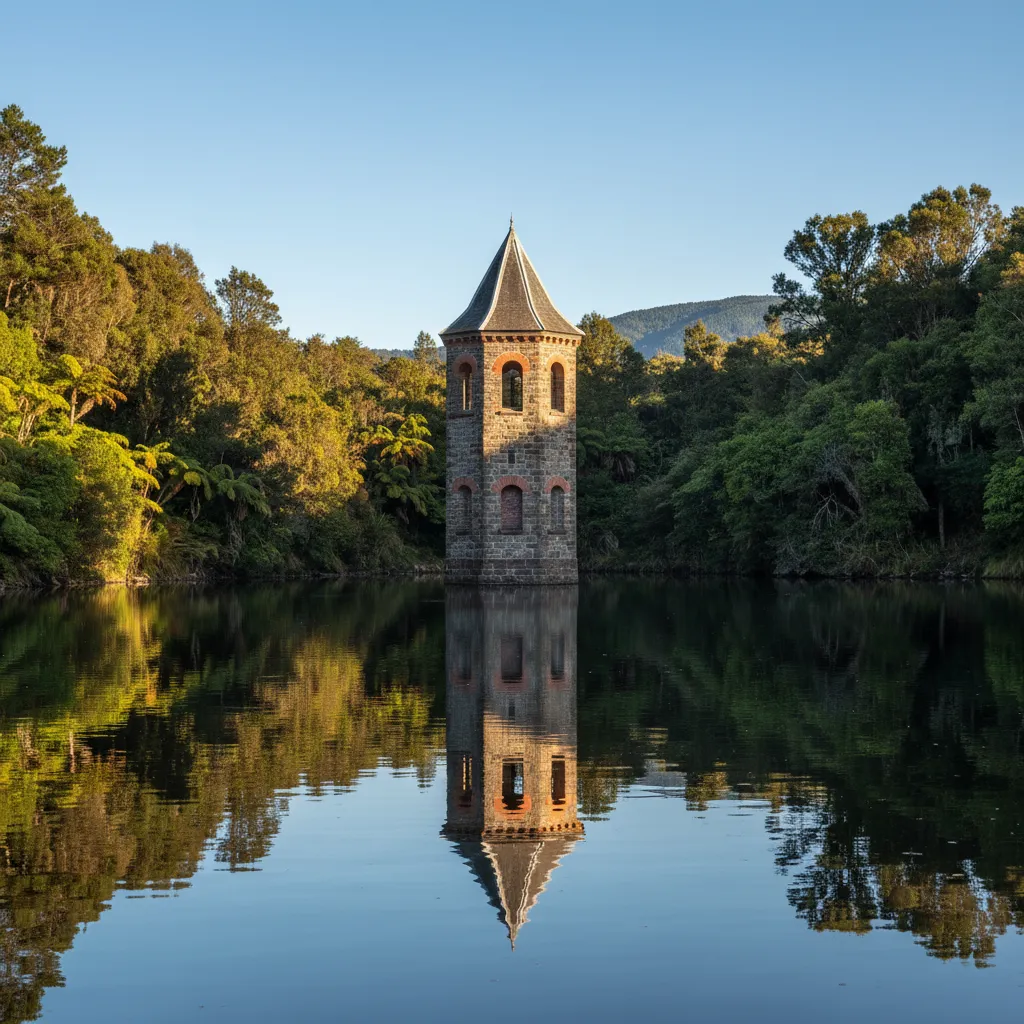
In the late 19th century, Wellington’s growing population faced a water crisis. The Karori upper dam was completed in 1878, followed by the lower dam in 1910. For decades, this valley was off-limits to the public, serving strictly as a water catchment area. This accidental isolation allowed a remnant of the original native forest to survive while surrounding areas were cleared for farming and housing.
The Vision of a Fenced Sanctuary
By the 1990s, the reservoirs were decommissioned. Visionaries realized that the valley’s natural amphitheater shape was perfect for a radical conservation experiment. In 1999, the groundbreaking predator-proof fence was completed. It stretches 8.6 kilometers, stands 2.2 meters high, and includes a subterranean skirt to prevent burrowing. This engineering marvel turned the valley into an island on the mainland, allowing species absent from the region for over a century to be reintroduced.
Wildlife Guide: Species to Spot in the Valley
Zealandia is not a zoo; the animals are wild and free to roam. However, because the sanctuary is free of mammalian predators, the density of wildlife is exceptionally high. Here are the key species you should look for.
Tuatara: The Living Fossil
Zealandia is one of the few places on the mainland where you can see Tuatara basking in the wild. Not a lizard, but the sole survivor of the order Sphenodontia (which roamed the earth with dinosaurs 200 million years ago), the Tuatara is a biological marvel.
Where to spot them: Look for them sunbathing on the banks near the research tracks or just off the main walking paths on sunny afternoons. They are cold-blooded and rely on the sun to mobilize.
Kākā: The Bush Parrot
The recovery of the Kākā population in Wellington is Zealandia’s most visible success story. These large, boisterous forest parrots were once extinct in the city. Now, thanks to the sanctuary, they spill out into the surrounding suburbs.
Behavior to watch for: Listen for their screeching calls and look for them stripping bark from trees to access sap. They are highly social and often seen flying in groups across the valley.
Takahē: The Bird Returned from the Dead
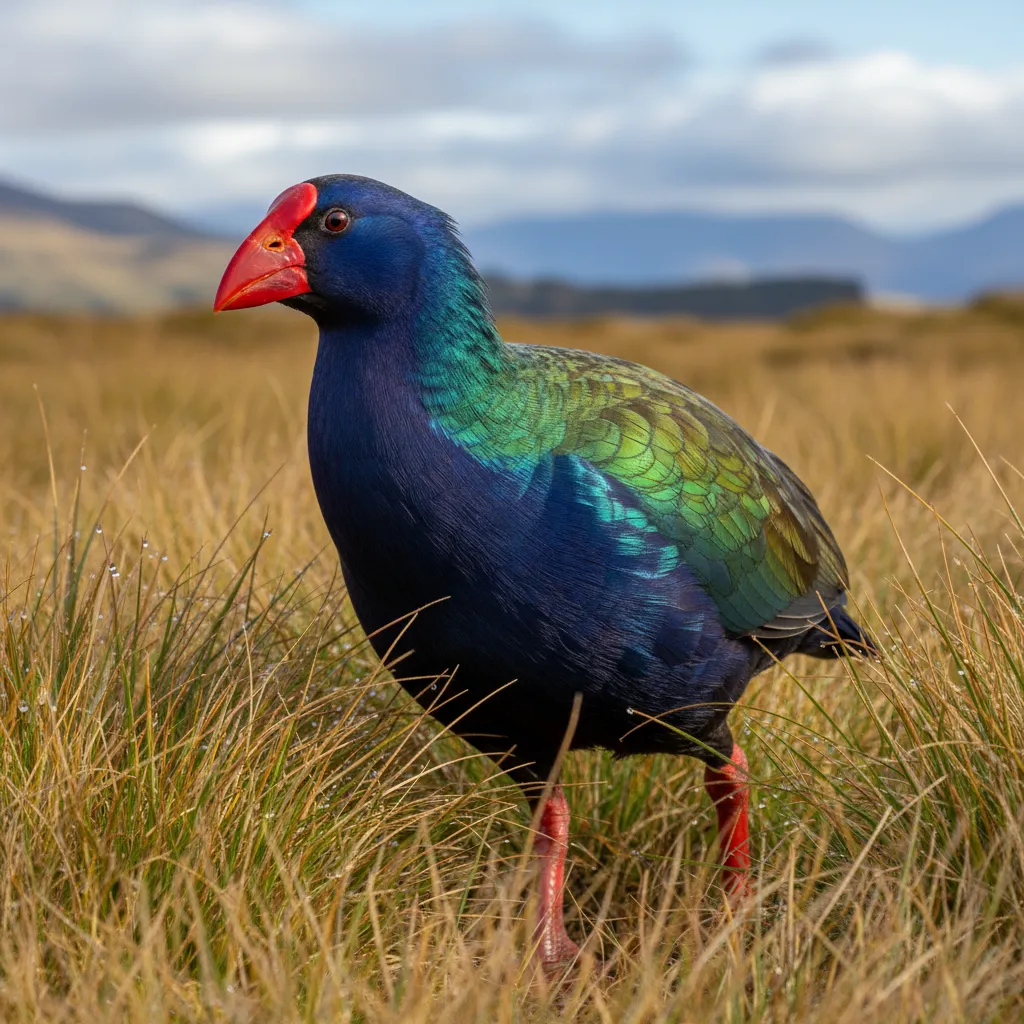
Once thought to be extinct for 50 years, the Takahē was rediscovered in 1948. These large, flightless rails look like giant, colorful pukeko. Zealandia is home to a pair of these rare birds.
Spotting tip: They are often found grazing on the grassy areas near the wetlands. They are territorial and slow-moving, making them excellent subjects for photography if you maintain a respectful distance.
Experience Guide: Night Tours vs. Day Walks
Visitors often ask whether the premium price of a night tour is justified compared to a general admission day walk. The answer depends entirely on which species you wish to prioritize.
The Day Walk Experience
Best for: Birdwatchers, photographers, families, and botany enthusiasts.
During the day, the valley is alive with the song of Tūī, Bellbirds (Korimako), and Kākā. The sunlight filtering through the canopy highlights the lush ponga ferns and towering Rimu trees. You have the freedom to explore over 32 kilometers of tracks at your own pace. The day walk is essential for spotting Tuatara (who need the sun) and appreciating the scale of the reservoirs.
The Night Tour Experience
Best for: Kiwi spotting, glow worms, and hearing the ‘sound of silence’.
The Zealandia Night Tour is a guided experience that begins just before dusk. As darkness falls, the sanctuary transforms. The primary objective is spotting the Little Spotted Kiwi. Zealandia boasts a very high success rate for sightings—often exceeding 80% on tours.
Beyond Kiwi, you will see:
- Glow Worms (Titiwai): Bioluminescent larvae illuminating the damp banks along the tracks.
- Wētā: Giant, flightless insects that emerge at night to feed.
- Morepork (Ruru): New Zealand’s native owl, often heard calling “more-pork” from the trees.
Verdict: If you have never seen a Kiwi in the wild, the Night Tour is a non-negotiable investment. It offers a sensory experience that cannot be replicated during daylight hours.

Logistics: Getting There from Wellington CBD
Zealandia’s proximity to the city center is one of its greatest assets. Located at the end of Waiapu Road in Karori, getting there is straightforward.
By Free Shuttle
Zealandia operates a free electric shuttle service for visitors. It typically departs from the Wellington i-SITE visitor center and the top of the Cable Car (near the Botanic Garden). This is the most eco-friendly and convenient option for tourists. Note: Check the official website for current timetables as they change seasonally.
By Public Bus
The Metlink public transport system is efficient. Take the Number 2 bus (Karori direction) from Lambton Quay or Willis Street. You will need to get off at the stop nearest to Waiapu Road (often Stop 4315 or similar). From the bus stop, it is a moderate 10-15 minute walk uphill to the sanctuary entrance.
By Cable Car and Walk
For the adventurous, take the iconic Wellington Cable Car to the top terminal. From there, you can walk through the Botanic Gardens and catch the shuttle, or walk approximately 20-30 minutes through the suburbs to reach the sanctuary.
The Global Impact of Predator-Proof Fencing
Zealandia is not just a tourist attraction; it is a successful scientific experiment that has changed global conservation. The concept of “mainland islands”—areas fenced off to exclude predators—was pioneered here.
Before Zealandia, conservation of New Zealand’s flightless birds was largely restricted to offshore islands like Kapiti or Little Barrier Island. Zealandia proved that with a sufficiently robust fence (the Xcluder design), sensitive species could thrive next to a major city. This success has inspired similar projects nationwide, including the comparison site, Orokonui, as well as Maungatautari and Brook Waimarama.
By visiting Zealandia, your admission fee directly contributes to the maintenance of the fence, the monitoring of species, and the ongoing restoration of the valley. It is commerce driving conservation in the most literal sense.
What is the best time of year to visit Zealandia?
Zealandia is a year-round destination, but spring (September to November) is particularly vibrant as birds are breeding and tūī are active. Summer offers the best weather for walking, while winter nights are longer, allowing for earlier starts to the Night Tours for kiwi spotting.
Can you see Kiwi during the day at Zealandia?
No, you cannot see Kiwi during the day at Zealandia. The Little Spotted Kiwi is strictly nocturnal and sleeps in burrows during daylight hours. To see them, you must book a guided Night Tour.
How long does it take to walk around Zealandia?
Most visitors spend between 2 to 4 hours at the sanctuary. A general loop taking in the lower reservoir and the Tuatara habitat takes about 2 hours. If you plan to hike to the upper dam or explore the perimeter tracks, allow for 4 hours or more.
Is Zealandia suitable for children?
Yes, Zealandia is excellent for children. The paths around the lower valley are stroller-friendly, and the visitor center offers educational displays. Seeing wild parrots and ancient reptiles is usually a highlight for young visitors.
Is there a cafe at Zealandia?
Yes, the Rātā Cafe is located within the Visitor Centre building. It offers a range of sustainable food options, coffee, and views over the sanctuary lake. It is accessible without paying the sanctuary entry fee.
Do I need to book in advance?
For general day admission, booking in advance is recommended but not always strictly necessary. However, for Night Tours, booking well in advance is essential as spaces are limited and they frequently sell out, especially during the summer tourist season.