The Kaikoura whale watching season is distinct globally because it operates year-round, anchored by a resident population of Giant Sperm Whales. While these deep-diving mammals are present 365 days a year, the ecosystem also hosts migratory Humpback Whales in winter (June-August) and Orca pods during summer (December-March), ensuring a diverse marine encounter regardless of when you visit.
Kaikoura, a small coastal town on the South Island of New Zealand, is one of the few places on Earth where the continental shelf drops vertically into a deep ocean canyon just hundreds of meters from the shore. This geological phenomenon creates a marine Serengeti, attracting wildlife enthusiasts from every corner of the globe. Whether you are planning a luxury eco-tour or a family holiday, understanding the nuances of the Kaikoura whale watching season is essential for maximizing your experience.
The Kaikoura Whale Watching Season: Month by Month
Unlike many other whale-watching destinations that rely on narrow migration windows, the Kaikoura whale watching season is effectively permanent. However, the specific species you encounter and the sea conditions vary significantly depending on the time of year. Understanding these seasonal shifts allows you to align your travel dates with your specific wildlife interests.
Summer (December to February)
Summer offers the warmest temperatures and generally calmer seas, making it the most popular time for tourists. During these months, the nutrient-rich waters warm slightly, attracting pods of Orca (Killer Whales). These apex predators often come close to shore to hunt stingrays. While the resident Sperm Whales are always present, summer is also the prime time to see huge pods of Dusky Dolphins performing acrobatics. The trade-off is that this is peak tourist season, meaning bookings must be made weeks, if not months, in advance.
Autumn (March to May)
Autumn is a photographer’s dream. The lighting becomes softer, and the rush of summer tourists begins to fade. The sea conditions can be variable, but this season often provides some of the clearest visibility underwater for those brave enough to swim with dolphins. The Sperm Whales continue their feeding cycles, and you may spot pilot whales passing through deeper waters.
Winter (June to August)
For the dedicated enthusiast, winter is arguably the most dramatic time for the Kaikoura whale watching season. The Kaikoura Ranges are draped in heavy snow, providing a stunning white backdrop against the dark blue ocean. Biologically, this is a thrilling period because migratory Humpback Whales travel north from the Antarctic to the warm waters of the Pacific Islands (like Tonga) to breed. They hug the New Zealand coastline, often performing spectacular breaches. Southern Right Whales and occasionally Blue Whales can also be sighted during this migration corridor.
Spring (September to November)
Spring signals the return of the Humpback Whales traveling south back to their feeding grounds. It is a time of renewal in the marine environment. The weather can be the most volatile during spring, with strong winds occasionally cancelling tours, but the wildlife activity is frenetic as marine life capitalizes on the spring plankton blooms.
The Science: The Hikurangi Trench Ecosystem
To truly appreciate why the Kaikoura whale watching season never ends, one must look below the surface. Kaikoura sits at the head of the Kaikoura Canyon, a U-shaped submarine canyon that is part of the larger Hikurangi Trench system. This canyon stretches for over 60 kilometers and plunges to depths of 1,000 meters very close to the coast.
This geology drives a process known as upwelling. The prevailing currents hit the steep canyon walls and are forced upward, carrying cold, nutrient-rich water from the deep ocean to the surface. When these nutrients hit the sunlight zone, they trigger an explosion of phytoplankton.
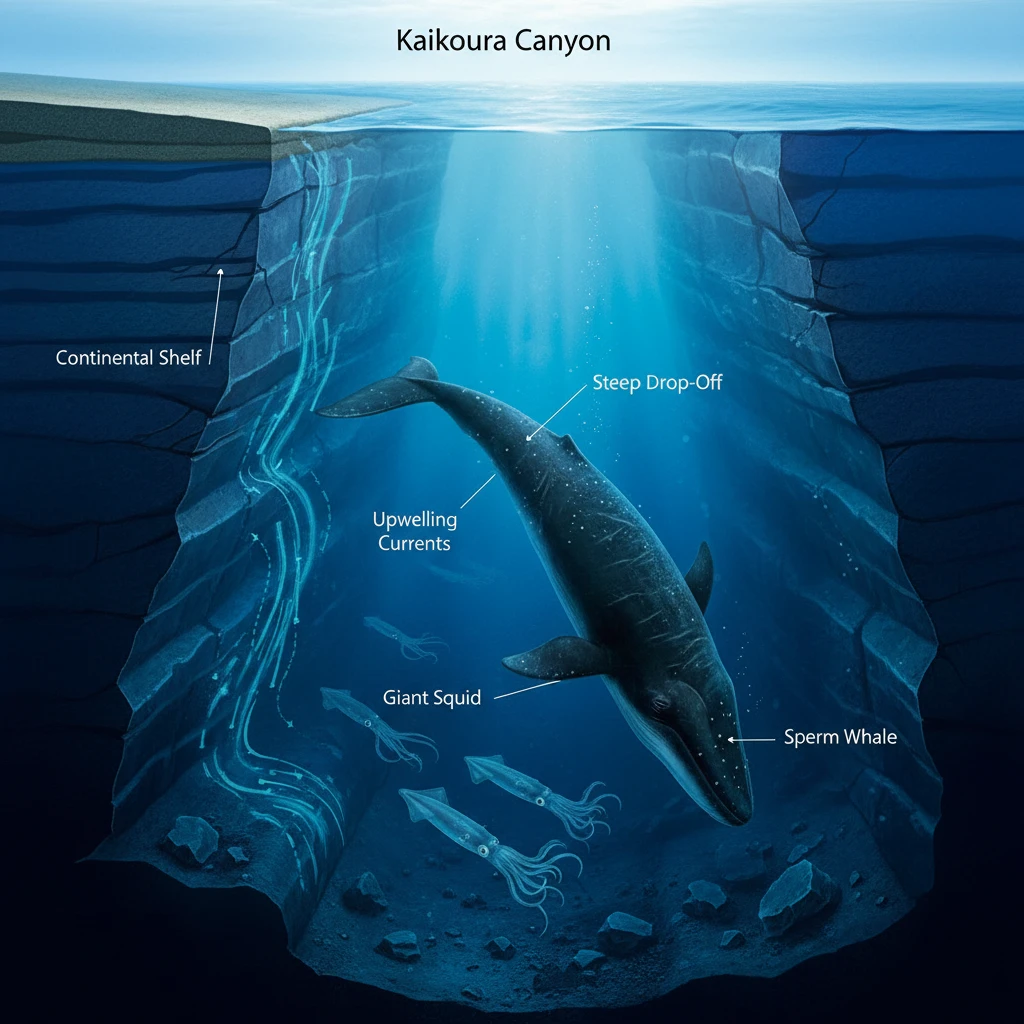
This plankton feeds krill and small fish, which in turn feed squid—specifically, the Giant Squid. The abundance of deep-sea squid in the trench is what keeps the Sperm Whales in Kaikoura. They do not need to migrate to feed because the “supermarket” is always open. This food chain is remarkably short and incredibly productive, supporting one of the most diverse marine assemblages in the world.
Resident Giants: The Sperm Whale Experience
The star of the show in Kaikoura is the Sperm Whale (Physeter macrocephalus). It is the largest of the toothed whales and the world’s largest predator. The population off Kaikoura consists almost entirely of semi-resident bachelors. Female Sperm Whales generally remain in tropical waters, while the males migrate to high latitudes to feed and grow before returning to the tropics to breed.
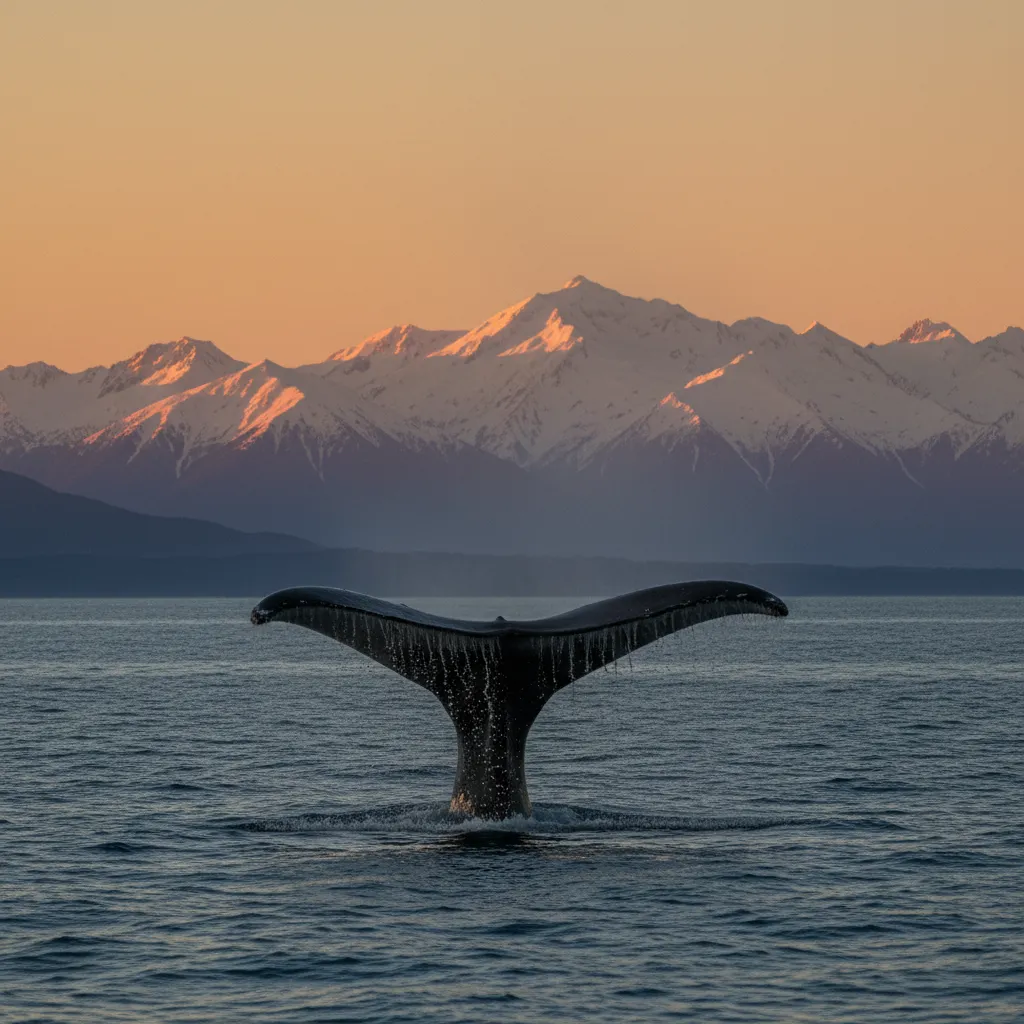
A typical encounter involves watching a whale “log” on the surface. Because they dive to depths of up to 3,000 meters for up to two hours, they must spend significant time at the surface re-oxygenating their blood. During this surface interval, which lasts about 10 minutes, you can see the distinctive blow, which angles forward and to the left. The climax of the encounter is the “fluking,” where the whale arches its back and lifts its massive tail fluke high into the air before diving vertically into the abyss.
Migratory Visitors: Humpbacks, Orcas, and Blue Whales
While the Sperm Whales provide consistency, the migratory species provide the surprise factor. The commercial value of the Kaikoura whale watching season is enhanced by these seasonal visitors.
Humpback Whales
Sightings of Humpbacks are becoming more frequent as their populations recover from the whaling era. These whales are the acrobats of the sea. If you are visiting in June or July, keep your eyes peeled for surface activity. They are often seen slapping their pectoral fins or breaching entirely out of the water, behavior believed to be a form of communication or parasite removal.
Orca (Killer Whales)
New Zealand Orca are unique in their dietary preferences, favoring rays and sharks over marine mammals. In summer, pods can be seen patrolling the shallow surf breaks hunting for eagle rays. Seeing an Orca dorsal fin cut through the water against the backdrop of the rocky Kaikoura shoreline is a bucket-list experience.
Beyond Whales: Albatross and Dusky Dolphins
The nutrient-rich waters do not just support whales. Kaikoura is arguably the seabird capital of the world. The interactions between the marine mammals and the pelagic birds create a multi-layered ecosystem experience.
The Albatross Encounter
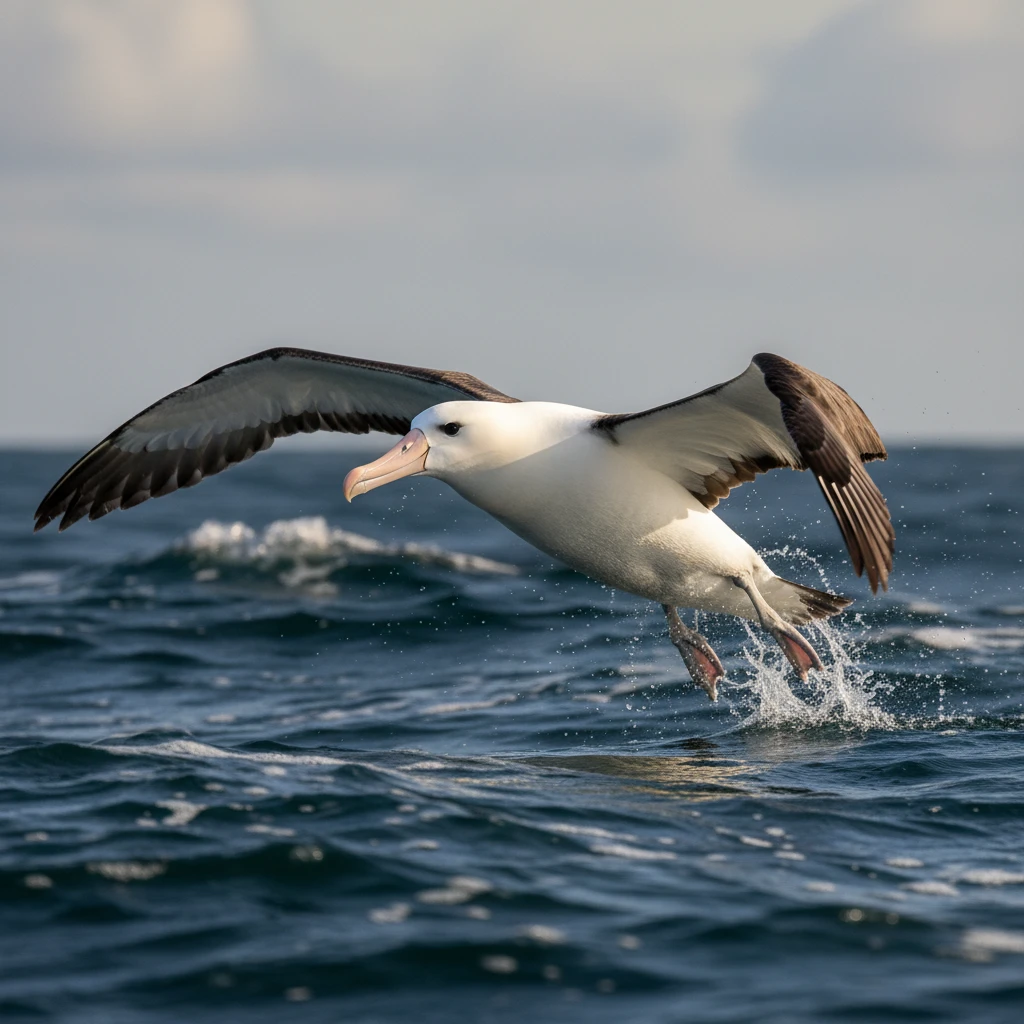
While looking for whales, you will inevitably encounter the Wandering Albatross and the Royal Albatross. With wingspans reaching up to 3.5 meters, these are the largest flying birds on Earth. They are pelagic wanderers, spending years at sea without touching land. The upwelling at Kaikoura brings squid and fish to the surface, providing an easy meal. Many tours offer specific “Albatross Encounters” where chum is used to attract these majestic birds close to the boat, offering unparalleled photographic opportunities.
Dusky Dolphins
Kaikoura is home to resident pods of Dusky Dolphins, often numbering in the hundreds. These are among the most acrobatic of all dolphin species. They are highly social and often approach boats to ride the bow wave. Swimming with the dolphins is a regulated activity in Kaikoura and is rated as one of the best interactive wildlife experiences in New Zealand.
Choosing Sustainable Operators
New Zealand operates under strict Department of Conservation (DOC) regulations regarding marine mammal interactions. When booking your trip during the Kaikoura whale watching season, it is vital to choose operators who adhere to these sustainability practices. The primary goal is to observe without disturbing.
Vessel-Based Tours
Whale Watch Kaikoura is the primary vessel operator and is owned by the indigenous Ngāti Kurī people of Kaikoura. Their modern catamarans are designed with muffled engines to minimize underwater noise pollution, which is critical for the acoustic-sensitive Sperm Whales. Their success rate is exceptionally high (over 95%), and they offer an 80% refund if no whales are seen.
Aerial Tours
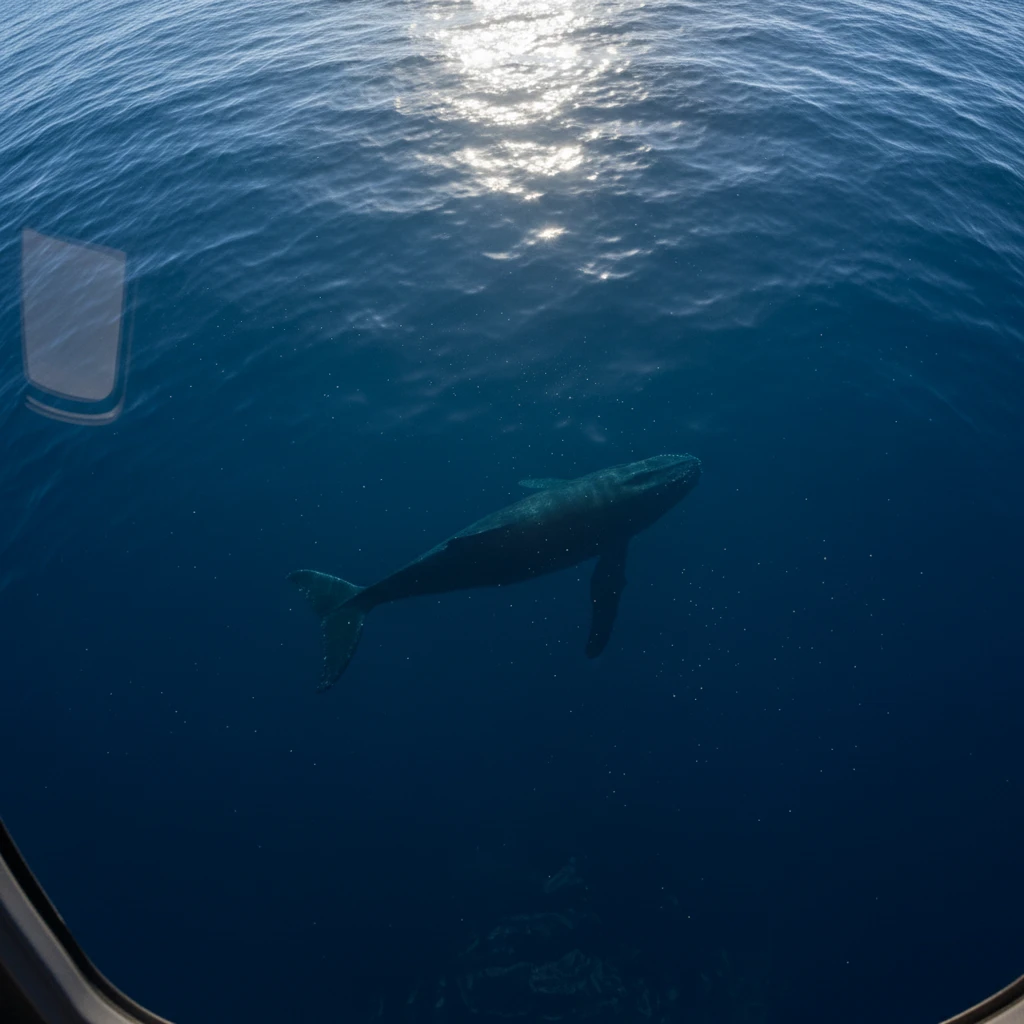
For those prone to sea sickness or wanting a different perspective, aerial tours are an excellent alternative. Operators like Wings Over Whales (fixed-wing aircraft) and South Pacific Helicopters offer flights that allow you to see the entire whale from tip to tail. From the air, you can truly appreciate the size of the animals relative to the boat and see the underwater topography of the canyon.
Logistics: Weather, Gear, and Photography
To ensure your commercial investment in this trip yields the best return in terms of experience, preparation is key.
- Sea Sickness: The Kaikoura coast is exposed to the open Pacific Ocean. Swells can be significant. If you are prone to motion sickness, take medication prior to the trip or opt for a flight.
- Photography: A telephoto lens (at least 200mm) is recommended for boat tours. For aerial tours, a polarizing filter is essential to cut the glare off the water and see the whale beneath the surface.
- Clothing: Even in summer, the wind chill on the water can be cold. Wear layers and a windproof jacket. In winter, gloves and beanies are mandatory for comfort on the observation decks.
The Kaikoura whale watching season is a testament to the power of nature’s geology. Whether you visit in the heat of summer for Orcas or the crisp cold of winter for Humpbacks, the constant presence of the Sperm Whales ensures that Kaikoura remains a premier global destination for eco-tourism.
People Also Ask
What is the best month for whale watching in Kaikoura?
While Sperm Whales are present year-round, June to August (winter) is often considered the best time for variety, as you can see migratory Humpback Whales in addition to the residents. However, for warmer weather and Orca sightings, December to February is ideal.
How much does a whale watching tour cost in Kaikoura?
As of 2024, a standard adult ticket for a boat tour with Whale Watch Kaikoura is approximately NZD $165. Helicopter and fixed-wing airplane flights are more expensive, typically ranging from NZD $200 to $400 depending on flight duration.
Is whale watching in Kaikoura guaranteed?
While nature is never 100% predictable, Kaikoura has an exceptionally high success rate (over 95%) due to the resident population. Most operators offer a partial refund (usually 80%) if no whales are sighted on your tour.
Do I need to book in advance for whale watching?
Yes, absolutely. Kaikoura is a major tourist destination, and tours frequently sell out, especially during the summer season (December-March) and school holidays. It is recommended to book at least 2-3 weeks in advance.
Can you get seasick whale watching in Kaikoura?
Yes, the ocean off Kaikoura is open and can be rough with significant swells. If you are prone to motion sickness, it is highly recommended to take medication before the tour or choose a flight option instead.
How close do the boats get to the whales?
New Zealand has strict marine mammal protection laws. Boats must maintain a respectful distance (usually 50 meters) and approach slowly from a specific angle to avoid disturbing the whales. The whales often choose to come closer, but the captains will not pursue them aggressively.