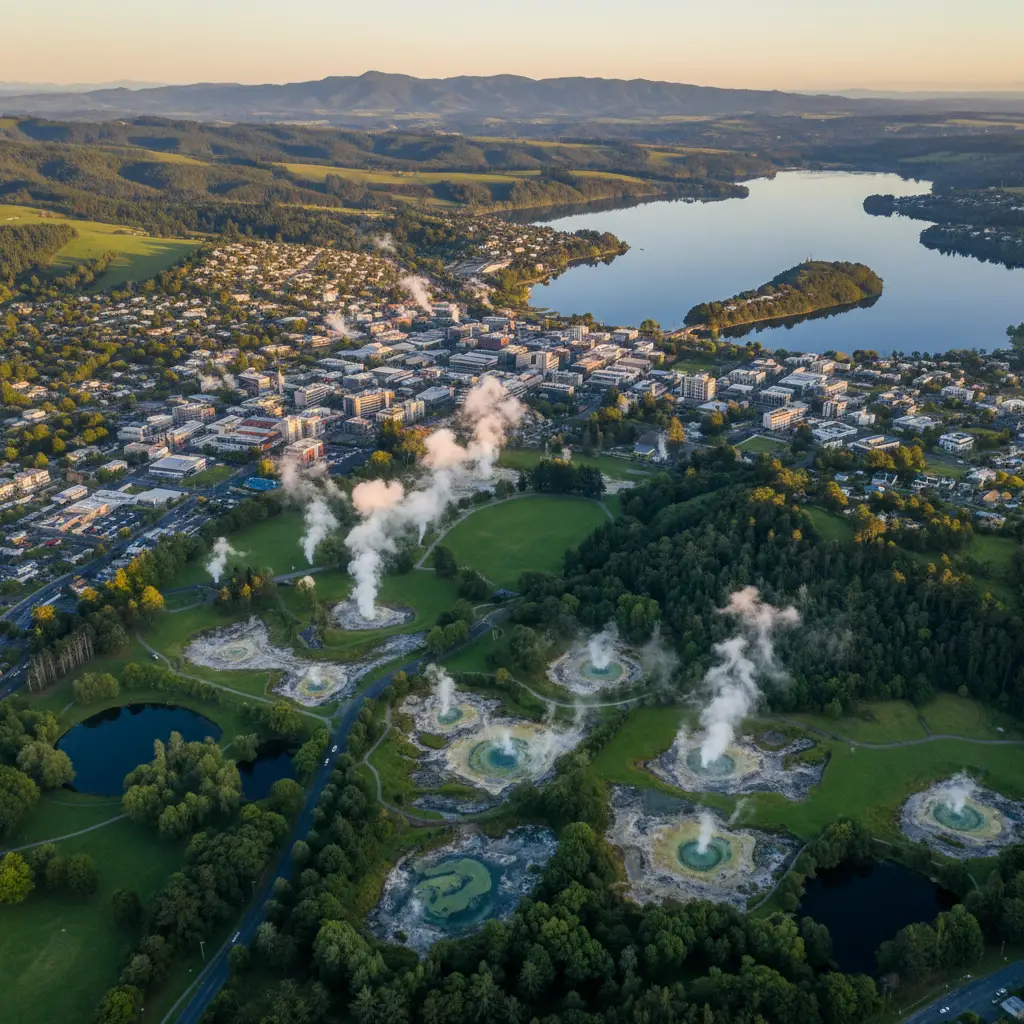
A Rotorua geothermal walkways map encompasses a diverse network of trails ranging from the free, accessible boardwalks of Kuirau Park in the city center to paid eco-tourism reserves like Wai-O-Tapu and Te Puia on the city’s outskirts. These walkways guide visitors safely through active volcanic landscapes featuring bubbling mud pools, silica terraces, and erupting geysers.
Introduction to Rotorua’s Volcanic Landscape
Rotorua is not merely a tourist destination; it is a geological marvel situated squarely on the Pacific Ring of Fire. For eco-tourists and regenerative travelers, the region offers an unparalleled opportunity to witness the earth breathing. The geothermal activity here is a result of the Taupō Volcanic Zone, where the earth’s crust is thin, allowing magma to heat groundwater to boiling point. This creates the steam, mud, and geysers that define the region.
Navigating these areas requires more than just enthusiasm; it requires a strategic understanding of the geography. While a physical paper map is useful, understanding the distinct characteristics of each walkway—whether it is the cultural immersion of Te Puia or the surreal colors of Wai-O-Tapu—is crucial for planning an itinerary that respects both the environment and your time. This guide serves as a comprehensive descriptive map, detailing the logistics, safety protocols, and ecological significance of Rotorua’s premier geothermal walking tracks.
Navigating the Landscape: Paid vs. Free Options
When plotting your Rotorua geothermal walkways map, the first distinction to make is between public reserves and commercial eco-parks. This distinction dictates not only the cost but also the level of infrastructure and the intensity of the geothermal features.
Free Public Walkways: These are generally located closer to the Rotorua CBD (Central Business District). They offer a fantastic introduction to geothermal activity without an admission fee. The paths are well-maintained, usually flat, and suitable for a casual stroll. The primary locations are Kuirau Park and the walkway along the lakefront near Sulphur Point.
Paid Geothermal Parks: Located largely to the south of the city along State Highway 5 (Thermal Explorer Highway), these parks offer the “superstars” of the geothermal world. Fees contribute to the conservation of these fragile environments (Kaitiakitanga) and the maintenance of extensive boardwalk networks that allow you to hover safely over active craters.
Kuirau Park: The Accessible Urban Walkway
What makes Kuirau Park unique?
Kuirau Park is the only free public geothermal park in New Zealand located within walking distance of a city center. It serves as the perfect starting point for any geothermal itinerary.
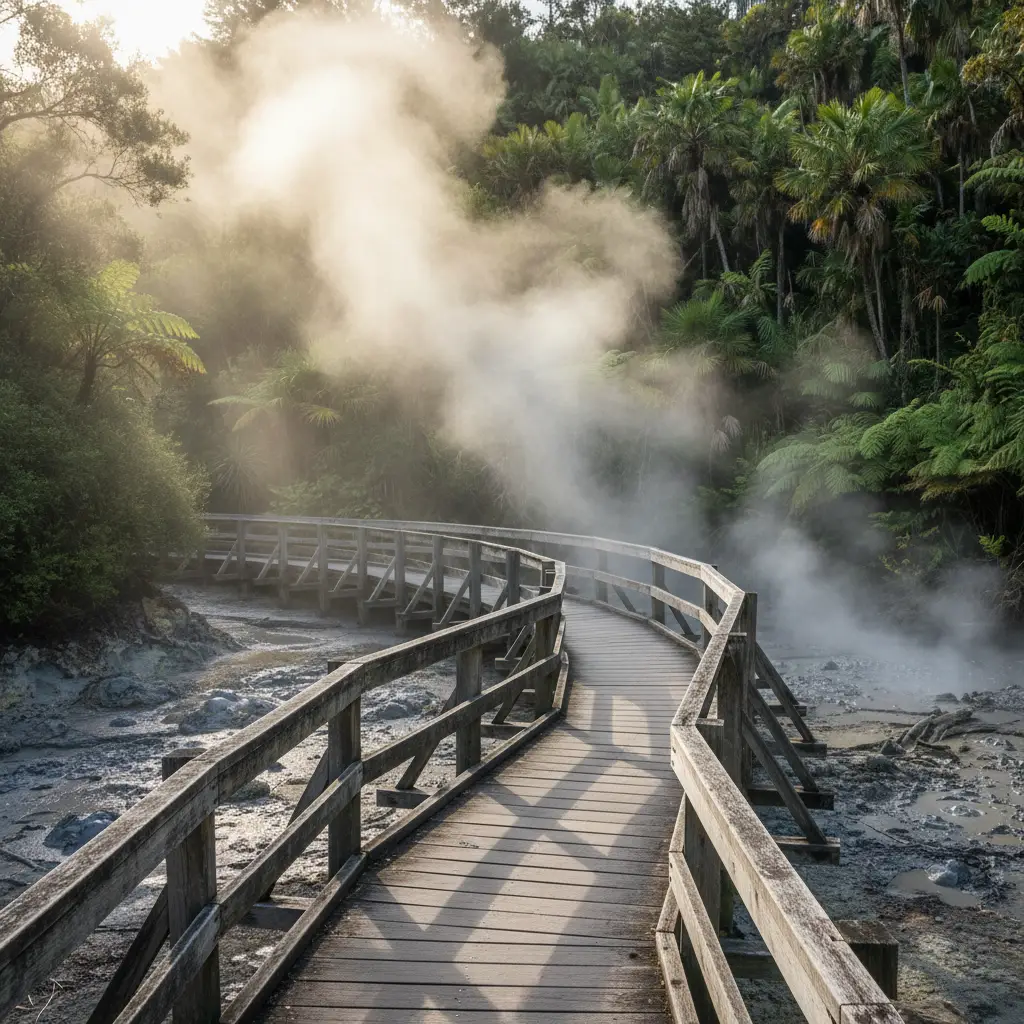
The park features a network of sealed tracks and wooden boardwalks that weave through hissing vents and bubbling mud pools. The landscape here changes frequently; new vents can appear, and old ones can go dormant. The walkways are designed to keep visitors safe while offering an intimate view of the activity. A highlight of the Kuirau Park map is the foot bath area, where visitors can soak their feet in naturally heated geothermal water—a welcome relief after a day of hiking.
Key Features:
- The Crater Lake: A large, steaming lake that is often shrouded in mist, creating an eerie, atmospheric photo opportunity.
- Mud Pools: Thick, boiling mud that bubbles aggressively. The viscosity of the mud varies depending on recent rainfall.
- Accessibility: The terrain is flat and wheelchair accessible, making it the most inclusive geothermal walkway in the region.
Te Puia: Geysers, Culture, and Conservation
Where is the Pōhutu Geyser located?
Te Puia, located in the Whakarewarewa Geothermal Valley, is home to the Southern Hemisphere’s largest active geyser, Pōhutu. This is a paid attraction, but the value provided extends beyond geology into cultural preservation.
The walkways at Te Puia are extensive. They guide visitors through a landscape that feels prehistoric. The star attraction, Pōhutu Geyser, erupts up to 20 times a day, shooting water up to 30 meters (100 feet) into the air. The boardwalks are positioned to offer safe viewing platforms without obstructing the natural sightlines.
The Kiwi Conservation Centre:
Included in the Te Puia experience is the Kiwi House. This is a critical component of New Zealand’s regenerative travel efforts. Visitors can see the elusive Kiwi bird in a nocturnal enclosure. The entry fees support breeding programs that are essential for the survival of this endangered national icon.
NZ Māori Arts and Crafts Institute:
Te Puia also houses the national schools for wood carving, weaving, and stone and bone carving. Walking through the complex, you are witnessing the living heritage of the Māori people. This integration of culture and geology makes Te Puia a holistic destination.
Wai-O-Tapu: The Technicolor Experience
Why is Wai-O-Tapu famous?
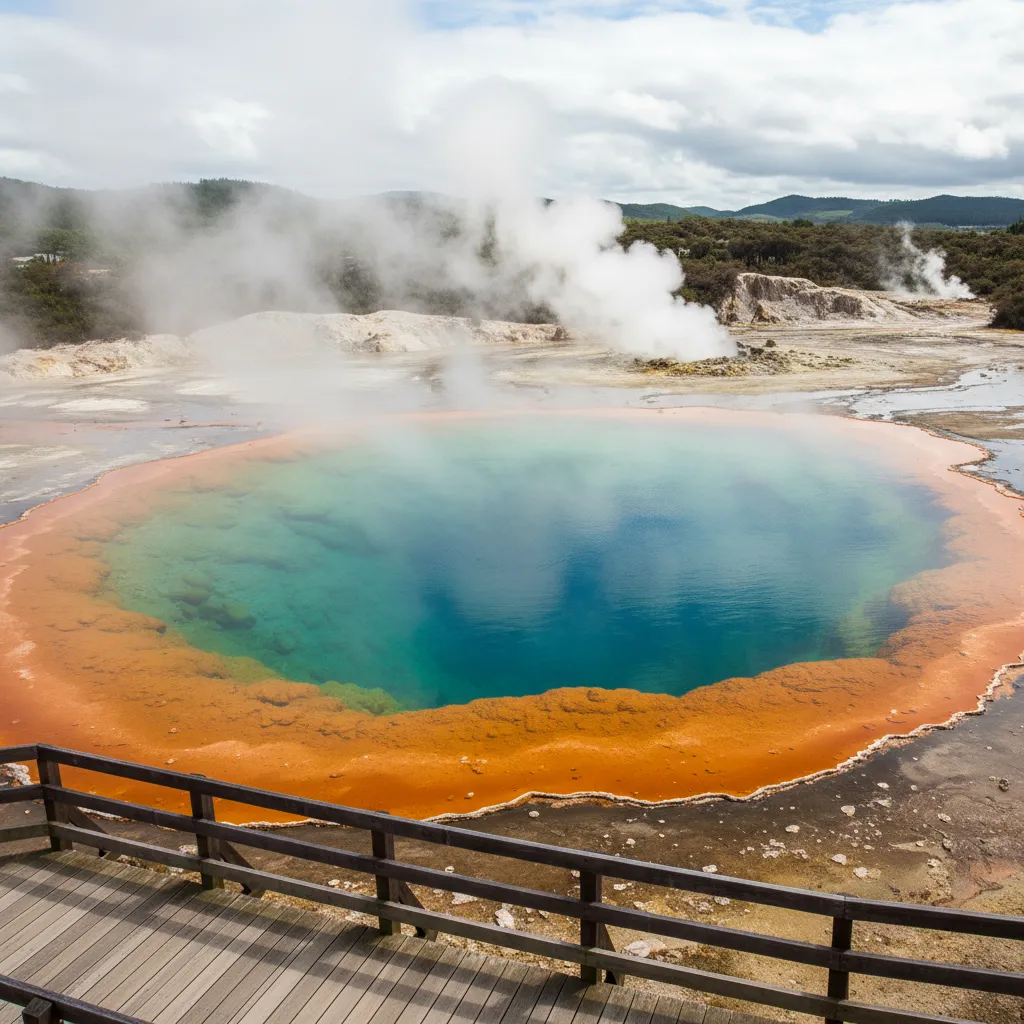
Located about 27km south of Rotorua, Wai-O-Tapu Thermal Wonderland offers the most visually striking geothermal walkways. If you are looking for the “Champagne Pool” on your Rotorua geothermal walkways map, this is where you will find it.
The park is divided into three distinct walking circuits, ranging from 30 minutes to 75 minutes. The paths are well-marked but can include some stairs and inclines, making them slightly more physically demanding than Kuirau Park.
Highlights of the Walkway:
- The Champagne Pool: A massive spring measuring 65 meters in diameter. The name comes from the constant efflux of carbon dioxide gas, which bubbles like champagne. The brilliant orange rim is formed by antimony and arsenic deposits, contrasting sharply with the deep green water.
- Lady Knox Geyser: This geyser is induced to erupt daily at 10:15 AM. It provides a reliable spectacle, though it is slightly removed from the main walking circuits.
- Devil’s Bath: A crater lake that appears neon green due to colloidal sulphur floating on the surface. The intensity of the color relies on the sunlight and cloud cover.
Sulphur Point & The Government Gardens
For those seeking a stark, almost lunar landscape, the walkway from the Government Gardens out to Sulphur Point is essential. This area sits on the edge of Lake Rotorua and is a nesting ground for many bird species, despite the harsh, acidic environment.
The walkway here takes you past silica flats and milky-white water. The water is rich in sulphur and other minerals, rendering it uninhabitable for most fish but creating a unique visual palette of whites, greys, and yellows. This is a “regenerative” zone where nature is reclaiming the land; the hardy vegetation that grows here is specifically adapted to the high-sulphur soil.
Sulphur Safety & Air Quality Protocols
Is the sulphur smell dangerous?
The distinctive “rotten egg” smell of Rotorua is caused by Hydrogen Sulphide (H2S). While generally safe for short-term exposure in open areas, visitors need to be aware of safety protocols when traversing these walkways.
1. Stay on the Path:
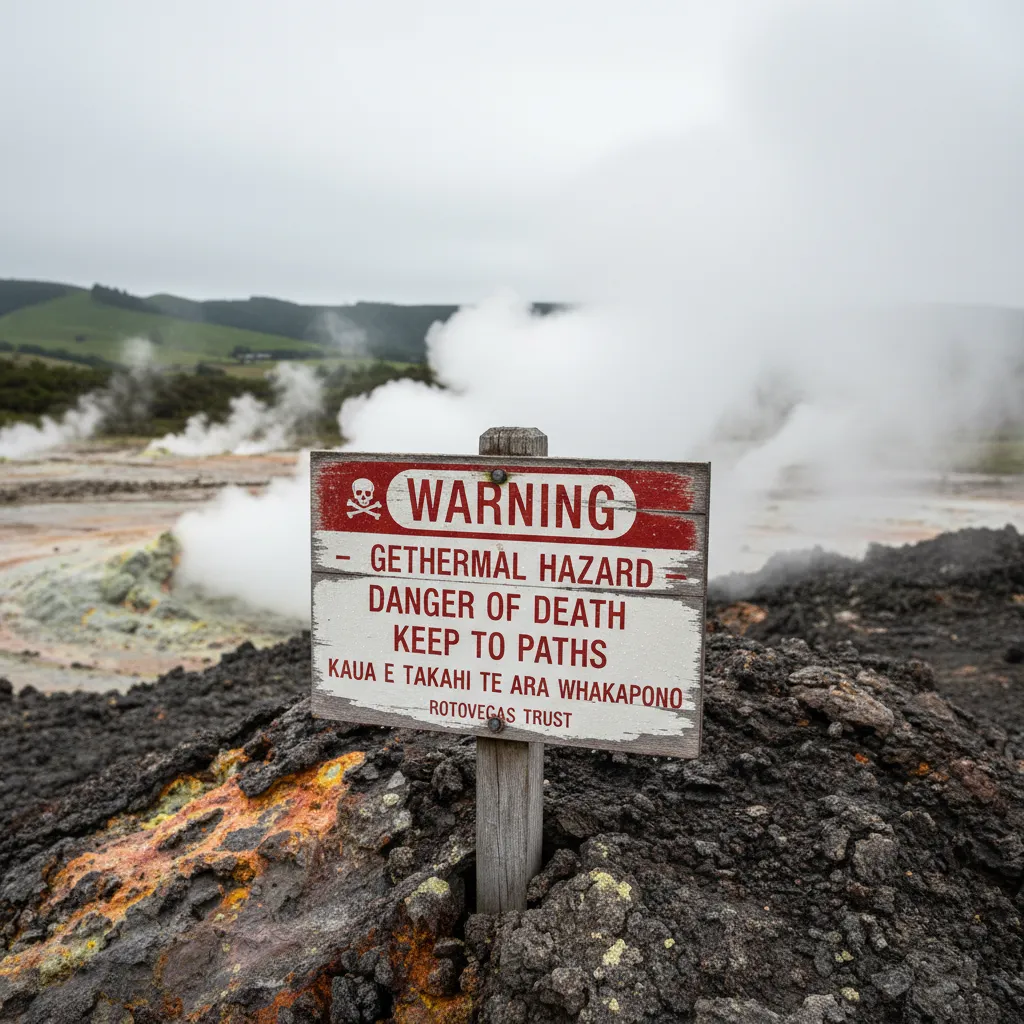
This is the golden rule of geothermal safety. The ground in geothermal areas can be thin and unstable. Stepping off the boardwalk could result in breaking through the crust into boiling mud or superheated steam. This can cause severe, life-threatening burns.
2. Air Quality Awareness:
Hydrogen Sulphide is heavier than air. It can accumulate in low-lying areas or enclosed spaces. If you have asthma or other respiratory conditions, carry your inhaler. If you feel dizzy or nauseous, move to higher ground or a well-ventilated area immediately. Most maintained walkways are designed to avoid high-concentration zones, but wind shifts can change conditions rapidly.
3. Corrosion:
The geothermal atmosphere is corrosive to electronic equipment. Cameras and phones can be damaged by prolonged exposure to the steam, which often carries mineral particles. Wipe down your lenses frequently and keep equipment in bags when not in use.
Regenerative Travel: The Tiaki Promise
As visitors to Aotearoa (New Zealand), engaging with the Rotorua geothermal walkways map comes with a responsibility. The concept of Tiaki means to care for people and place. These geothermal features are taonga (treasures) to the Māori people.
How to walk responsibly:
- Leave no trace: Take all rubbish with you. The wind can easily blow plastic into thermal pools, which blocks vents and can destroy the formation or kill the wildlife.
- Do not throw coins: Throwing coins into pools is not a wish-granting exercise here; it is an act of vandalism. The metal reacts with the water chemistry, altering the color and clarity of the pools permanently.
- Respect barriers: Barriers are there to protect you from the heat, but also to protect delicate silica terraces from your footprints. Silica takes hundreds of years to form and can be crushed in seconds.
People Also Ask
Which is better Te Puia or Wai-O-Tapu?
It depends on your interests. Te Puia offers a combination of geothermal activity (Pōhutu Geyser) and Māori culture (arts, crafts, kiwi birds). Wai-O-Tapu is strictly a geological park focused on surreal colors and unique formations like the Champagne Pool. For culture, choose Te Puia; for photography and geology, choose Wai-O-Tapu.
Are the Rotorua geothermal walkways free?
Some are free, while others are paid. Kuirau Park, located in the city center, is free and features mud pools and foot baths. The Sulphur Point walkway is also free. Major attractions like Te Puia, Wai-O-Tapu, and Hell’s Gate require an entry fee to maintain the facilities and conservation efforts.
How long is the walk at Wai-O-Tapu?
Wai-O-Tapu has three interconnected walks. The shortest takes about 30 minutes, while completing all three loops takes approximately 75 to 90 minutes. The walks cover about 3 kilometers (1.8 miles) of terrain.
Is it safe to visit Rotorua with asthma?
generally yes, but caution is advised. The sulphur in the air can trigger respiratory issues for some people. It is recommended to avoid spending long periods in areas with heavy steam or strong odors, stay on well-ventilated paths, and always carry your inhaler.
Can you swim in the geothermal pools in Rotorua?
You cannot swim in the natural geothermal vents or mud pools seen on the walkways as they are boiling hot and dangerous. However, Rotorua has many designated thermal spas (like the Polynesian Spa) and free foot baths (in Kuirau Park) where the water is cooled to a safe temperature for bathing.
What is the best time of year to visit Rotorua geothermal parks?
Rotorua is a year-round destination, but the geothermal steam is often most impressive in the cooler months (winter/spring) or early in the morning when the temperature difference between the air and the water creates voluminous steam clouds.