When comparing Icebreaker vs Macpac merino for New Zealand travel, the primary difference lies in fit and fabric technology. Icebreaker typically offers a more anatomical, athletic fit with softer, premium fibers ideal for high-output activities. Macpac focuses on rugged durability and value, offering a relaxed fit better suited for general tramping and multi-day hiking.
The Titans of Wool: Brand Overviews
For independent travelers and eco-tourists heading to New Zealand, the debate between Icebreaker vs Macpac merino is as classic as the rivalry between Australia and New Zealand in rugby. Both brands are deeply rooted in the Kiwi outdoor psyche, and both utilize the unique properties of New Zealand alpine merino wool to create high-performance base layers.
Icebreaker, founded in 1995, revolutionized the outdoor industry by positioning merino wool not just as a functional fabric, but as a complete layering system. They are often viewed as the premium option, focusing heavily on design aesthetics, anatomical shaping, and proprietary fabric blends like Cool-Lite™. Their gear is designed to transition seamlessly from a mountain ridge to a café in Queenstown.
Macpac, with a heritage dating back to 1973, is synonymous with rugged New Zealand tramping (hiking). While they are famous for their canvas packs, their merino line has evolved significantly. Macpac tends to prioritize pragmatism and value. Their gear is often perceived as more utilitarian—built to withstand the abrasive nature of New Zealand native bush while keeping the price point accessible for the average camper.
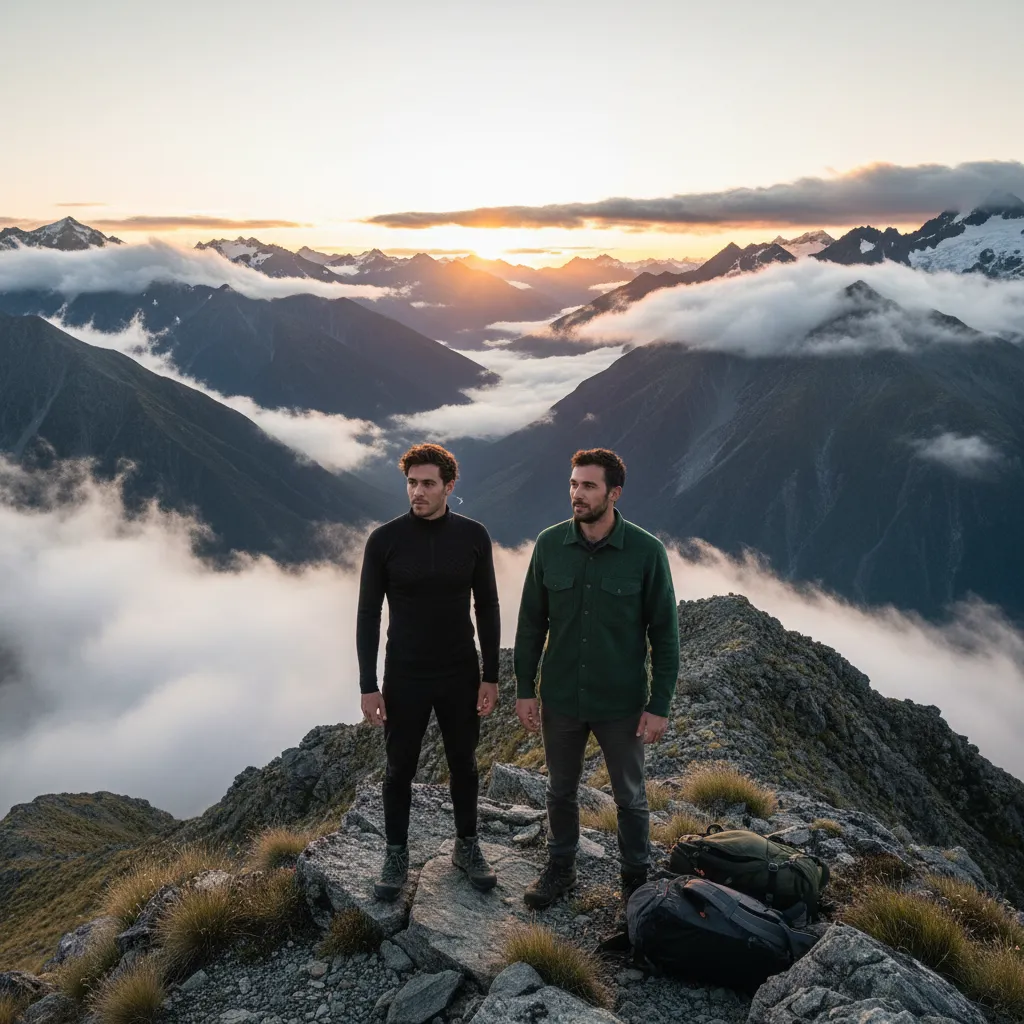
Why Merino is Non-Negotiable for NZ Eco-Tourism
New Zealand is famous for experiencing “four seasons in one day.” You might start a hike on the Kepler Track in brilliant sunshine, only to encounter sleet and high winds at the Luxmore Hut three hours later. This volatility makes cotton dangerous (as it kills when wet) and synthetics uncomfortable (due to sweat clamminess).
Merino wool is the gold standard for this environment because it is an active fiber that reacts to changes in body temperature. It traps heat when the weather is cold and evaporates moisture when it is hot. For the eco-tourist, merino aligns with the “Leave No Trace” philosophy. It is a natural, biodegradable fiber that requires less washing than synthetics, reducing microplastic pollution in New Zealand’s pristine waterways.
GSM Weights Explained: 150 vs 260
Understanding GSM (Grams per Square Meter) is critical when choosing between Icebreaker and Macpac. This number indicates the weight and density of the fabric, directly correlating to warmth.
What is the best merino weight for summer?
For New Zealand summers (December to February), you want a 120 to 150 GSM base layer. Icebreaker excels in this category with their “Anatomica” and “Sphere” lines. These are ultralight, highly breathable, and often blended with TENCEL™ for better moisture wicking in humidity. Macpac’s “Lightwing” series competes here, offering lightweight options that are perfect for sun protection without overheating.
What is the best merino weight for winter?
For winter travel or alpine hiking, look for 200 to 260 GSM. A 200 GSM top is the ultimate all-rounder—versatile enough for a cool autumn day or as a base layer under a puffer jacket in winter. The 260 GSM weight is “thermal” grade. Macpac’s Geothermals are legendary in NZ for being incredibly warm and cost-effective. Icebreaker’s 260 Tech Top is a staple, offering a close fit that maximizes thermal efficiency by trapping a layer of warm air against the skin.
Comfort and Fit: The Itch Factor
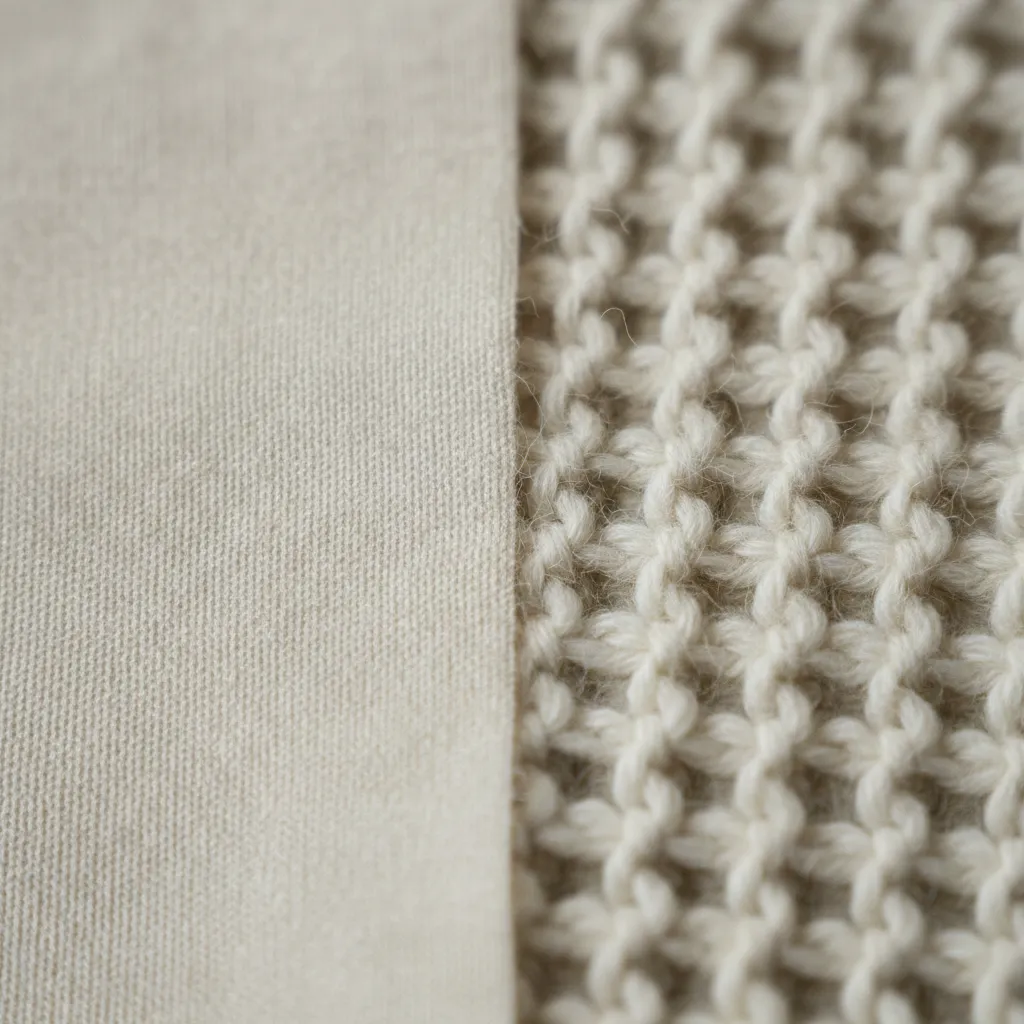
The “itch factor” is a common concern for first-time merino buyers. This is determined by the micron of the wool fiber. A lower micron count means a finer, softer fiber.
Icebreaker generally uses superfine merino fibers, typically ranging from 17.5 to 18.9 microns. This results in a silky feel that is almost indistinguishable from high-end cotton. Their fit is usually “slim” or “athletic,” designed to hug the body contours. This is excellent for performance as it wicks sweat more efficiently, but some travelers may find it too tight for casual wear.
Macpac utilizes high-quality merino as well, usually around the 18.5 to 19.5-micron mark. While still very soft, sensitive skin types might notice a slight difference compared to Icebreaker’s premium tiers. However, Macpac’s fit is generally more “regular” or “relaxed.” If you prefer a base layer that doesn’t cling to your midsection and can be worn as a standalone t-shirt at the pub, Macpac is often the preferred choice.
Durability: Corespun vs. Pure Wool
Merino wool is naturally fragile. If you catch a pure wool shirt on a branch of Manuka bush, it will likely tear. To combat this, both brands have introduced technology to enhance durability.
Icebreaker uses Corespun technology in many of their garments. This involves wrapping merino wool fibers around a high-strength nylon core. The result is a fabric that retains the feel and performance of wool but has the structural integrity of a synthetic. This is a game-changer for backpackers, as strap friction is the number one killer of merino shirts.
Macpac also offers blended options, often mixing merino with polyester for their “active” ranges. While these blends are incredibly durable and dry faster than pure wool, they can sometimes retain slightly more odor than 100% merino. However, for bush-bashing and off-track navigation in NZ, Macpac’s slightly thicker weaves often hold up better against abrasion over time.

Odor Resistance for Campers
For the independent traveler living out of a campervan or tent, laundry facilities are a luxury. This is where the Icebreaker vs Macpac merino battle becomes a tie—both are exceptional.
Merino wool contains lanolin and has a unique chemical structure that locks away odor-causing bacteria, releasing them only upon washing. You can wear a merino base layer for 3 to 5 days of active hiking without it smelling offensive. This allows you to pack lighter—two shirts can last you a two-week trip.
However, be wary of high-percentage synthetic blends. If you choose a Macpac top with 50% polyester, it will smell faster than an Icebreaker top with 87% merino and 13% nylon. Always check the tag for the wool percentage if odor control is your priority.
Sustainability and Ethical Sourcing
New Zealand’s eco-tourism market demands high ethical standards. Both brands are leaders in this space, but they approach it differently.
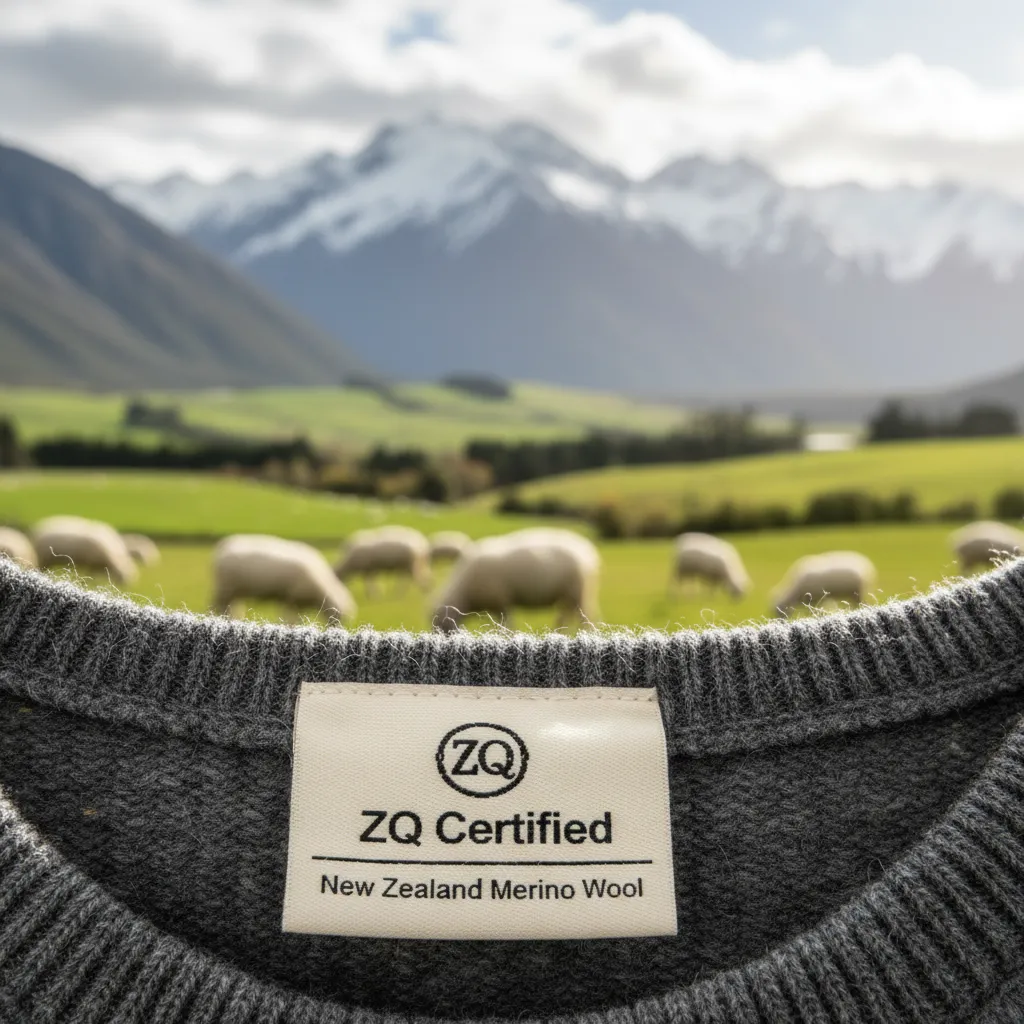
Icebreaker is a pioneer in transparency. They have eliminated almost all acrylic from their supply chain and aim to be plastic-free. They work with ZQ Merino, an accreditation that ensures sheep are treated humanely (no mulesing), and growers are paid fairly. You can often trace the wool in your garment back to the specific station (farm) in the Southern Alps.
Macpac is also committed to the ZQ Merino standard for their wool products. As a massive entity in the NZ market, they also focus heavily on the “Refair” program, repairing gear to keep it out of landfills. If you rip your Macpac gear in NZ, you can often get it repaired at their Christchurch hub.
Final Verdict: Which Should You Buy?
The choice between Icebreaker and Macpac ultimately comes down to your budget and your fit preference.
Choose Icebreaker if:
- You want the absolute softest feel next to your skin.
- You prefer an athletic, body-hugging fit for high-performance sports.
- Style is a priority, and you want gear that looks good in urban settings.
- You are willing to pay a premium for Corespun durability and finer microns.
Choose Macpac if:
- You are looking for better value for money (Macpac sales are frequent and deep).
- You prefer a relaxed fit that doesn’t cling.
- You need rugged gear for abrasive environments.
- You are already in New Zealand (their retail presence is ubiquitous).
For the ultimate New Zealand setup, many seasoned travelers mix and match: an Icebreaker 200 Oasis crew for the skin-tight base layer, and a Macpac merino mid-layer for warmth and durability.
Is Icebreaker merino worth the money?
Yes, Icebreaker is generally worth the investment due to its high-quality fiber selection (fewer itch issues), Corespun technology which increases lifespan, and superior shape retention compared to cheaper merino brands. It is an investment in longevity and comfort.
Does Macpac merino shrink in the wash?
Like all wool products, Macpac merino can shrink if exposed to high heat. However, most Macpac base layers are treated to be machine washable. To prevent shrinking, always wash on a cool, gentle cycle and line dry in the shade. Never tumble dry merino wool.
Which is warmer, Icebreaker or Macpac?
Warmth is determined by the GSM (weight), not the brand. An Icebreaker 260 top will be just as warm as a Macpac 260 top. However, Icebreaker’s tighter, anatomical fit often traps body heat more efficiently than Macpac’s looser cuts.
How often should you wash merino wool base layers?
You should wash merino wool as infrequently as possible to extend its life. For heavy activity, wash every 3-4 wears. For casual use, you can often go 10+ wears. Airing the garment out overnight is usually sufficient to refresh it.
Is merino wool itchy?
High-quality merino wool used by brands like Icebreaker and Macpac is not itchy for most people. The fibers are ultrafine (unlike traditional wool) and bend when they contact the skin. However, those with extreme wool sensitivity should look for 17.5 micron ratings or lower.
Can I wear merino wool in the summer in NZ?
Absolutely. Lightweight merino (120-150 GSM) is excellent for NZ summers. It wicks moisture away from the skin to keep you cool and provides natural UPF protection against the harsh New Zealand sun.