In New Zealand, the purchase price for a Personal Locator Beacon (PLB) typically ranges from $480 to $650 NZD for top-rated models like the ACR ResQLink or Ocean Signal PLB1. For short-term adventurers, hiring a PLB is a cost-effective alternative, with rental rates averaging between $15 and $30 NZD per trip or week from outdoor retailers and DOC visitor centres.
Why New Zealand’s Terrain Demands a PLB
New Zealand offers some of the most spectacular, rugged, and isolated wilderness experiences on the planet. From the dense rainforests of Fiordland to the exposed alpine ridges of the Tongariro Crossing, the landscape is as unforgiving as it is beautiful. For independent travelers and eco-tourists, carrying a Personal Locator Beacon (PLB) is not just a precaution; it is an essential lifeline.
Unlike many other countries where cellular coverage blankets rural areas, New Zealand’s topography creates vast “dead zones.” The Department of Conservation (DOC) manages nearly one-third of the country’s landmass, and the majority of these tracks, huts, and parks have absolutely no mobile phone reception. Relying solely on a smartphone for emergency communication is a dangerous gamble.
When a PLB is activated, it transmits a 406 MHz distress signal via the Cospas-Sarsat satellite system directly to the Rescue Coordination Centre New Zealand (RCCNZ). This signal works independently of phone towers, relying on a clear view of the sky to triangulate your position and dispatch a helicopter or ground search team. In the unpredictable weather of the Southern Alps, where hypothermia can set in within hours, the speed of a PLB rescue can literally be the difference between life and death.

Personal Locator Beacon NZ Price Breakdown: Buy vs. Hire
Understanding the personal locator beacon NZ price landscape is crucial for budgeting your trip. The decision to buy or hire largely depends on the frequency of your outdoor activities.
Current Market Prices for Purchasing
If you plan to hike, hunt, or tramp regularly (more than 2-3 times a year), purchasing a unit is the most economical long-term choice. Modern PLBs have a battery life of 5 to 7 years, meaning the cost per year is relatively low.
- Entry Level (Non-GPS): Historically around $350 NZD, though these are becoming rare. Most experts recommend spending the extra for GPS capability.
- Standard GPS Models (e.g., Ocean Signal PLB1): $480 – $550 NZD. These units send your coordinates to the satellite, drastically reducing the search area from 5km to roughly 100 meters.
- Advanced Models (e.g., ACR ResQLink View RLS): $600 – $750 NZD. These include features like Return Link Service (RLS), which flashes a light to confirm your distress signal has been received, and digital displays showing GPS coordinates.
Cost of Hiring a PLB in NZ
For one-off visitors, international tourists, or those tackling a single Great Walk, hiring is the superior option.
- Daily Rate: Typically $5 – $10 NZD (often with a minimum hire period).
- Weekly Rate: $30 – $50 NZD.
- Great Walk Packages: Many providers offer set rates for the duration of specific walks (e.g., a 4-day Milford Track hire might cost $40 NZD flat).
When calculating the personal locator beacon NZ price, remember that unlike Satellite Messengers (like Garmin inReach or SPOT), a PLB requires no monthly subscription fee. Once you buy it, the service is free for the life of the battery.
Top Models Reviewed: ACR, Ocean Signal, and KTI Legacy
When shopping for a beacon, you will encounter a few dominant brands. Here is a breakdown of the hardware you are likely to find in New Zealand outdoor stores.
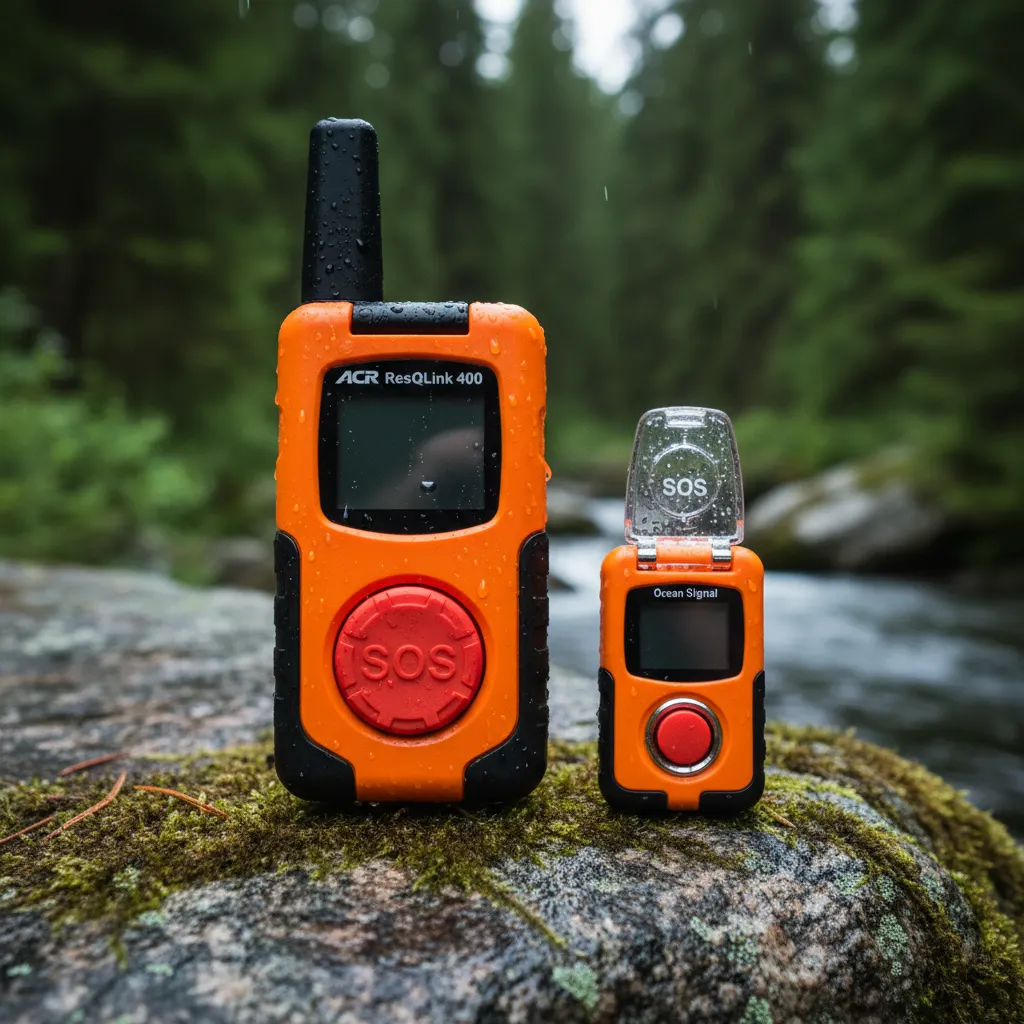
ACR ResQLink 400 & View RLS
ACR Electronics is a market leader in marine and outdoor safety. The ResQLink 400 is widely considered the gold standard for recreational PLBs in New Zealand.
- Pros: incredibly rugged, floats without a pouch, high-performance GPS, and includes a strobe light (crucial for night rescues).
- Cons: Slightly bulkier than the Ocean Signal competitor.
- Verdict: The best all-rounder for those who want maximum durability and features.
Ocean Signal RescueME PLB1
Claiming the title of the “world’s smallest PLB,” the Ocean Signal PLB1 is a favorite among ultralight hikers and trail runners.
- Pros: Extremely compact (fits in a pocket easily), 7-year battery life, simple one-handed operation.
- Cons: Requires a flotation pouch to float (included in the box).
- Verdict: Ideal for weight-conscious trampers.
The KTI Safety Alert (Legacy Review)
You may see references to the KTI Safety Alert SA2G in older forums or reviews. For years, this Australian-made beacon was the best-value PLB in New Zealand, famous for its 10-year battery life and low price point.
Important Note: KTI ceased manufacturing PLBs several years ago. While existing units are still functional and supported until their battery expiry, you can no longer buy them new. If you are looking for a KTI replacement, the Ocean Signal PLB1 is the closest equivalent in terms of size and reliability.
Where to Hire PLBs in New Zealand
If the purchase price is outside your budget, New Zealand has an extensive network of hire outlets. This network is supported by the Southland Locator Beacon Charitable Trust and various private retailers.
1. Department of Conservation (DOC) Visitor Centres
Many key DOC visitor centres, particularly those near Great Walks (like Fiordland National Park Visitor Centre or Tongariro National Park Visitor Centre), keep a fleet of beacons for hire. However, stock can run out during peak season (December to February), so booking ahead is impossible at some walk-in centres.
2. Macpac and Bivouac Outdoor
Major outdoor retail chains like Macpac and Bivouac Outdoor offer rental services. This is often convenient as you can pick up a beacon in a major city (Auckland, Christchurch, Queenstown) before heading into the wild.
3. Locator Beacons New Zealand
This is a specialized service allowing you to hire beacons from outlets across the country, including gas stations and i-SITEs in remote towns. They use a standardized pricing model and reliable equipment.
4. Online Hire Services
Several companies allow you to book a PLB online, which is then couriered to your accommodation or picked up at a designated spot. This ensures you secure a device before you arrive.

Critical Step: Registration Requirements
Buying the beacon is only half the job. In New Zealand, you MUST register your 406 MHz beacon with the Rescue Coordination Centre New Zealand (RCCNZ). This service is entirely free.
Why Registration Matters
When you trigger your beacon, RCCNZ receives the signal. If the beacon is registered, they immediately pull up your file, which includes:
- Your name and physical description.
- Emergency contacts (who can confirm if you are indeed on a trip).
- Medical conditions.
- Vehicle or vessel details.
This information allows rescuers to launch a search immediately rather than waiting for further confirmation. It also helps them prepare the right medical equipment.
How to Register
Registration is done online at www.beacons.org.nz. If you are hiring a beacon, the rental company handles the registration of the device, but you will need to provide them with your trip intentions and emergency contact details at the time of hire.
Satellite Messengers vs. PLBs: Understanding the Cost Difference
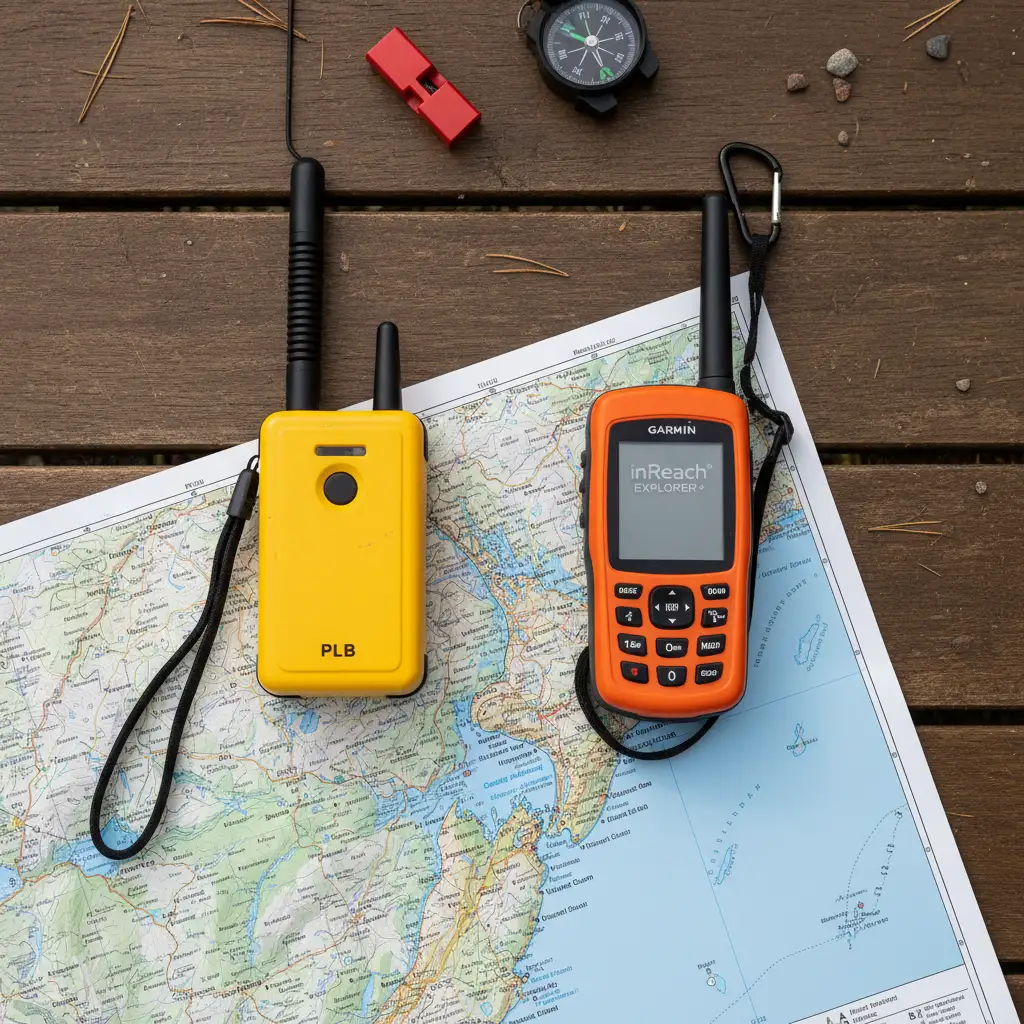
A common source of confusion for buyers is the difference between a PLB and a Satellite Messenger (like the Garmin inReach Mini 2 or ZOLEO). While both can save your life, they serve different purposes and have vastly different cost structures.
Personal Locator Beacons (PLB)
- Function: One-way distress signal only. Used strictly for life-threatening emergencies.
- Upfront Cost: $480 – $650 NZD.
- Ongoing Cost: $0. No subscription required.
- Battery Life: 5-7 years (standby).
- Best For: Pure safety, budget-conscious travelers, those who want “set and forget” gear.
Satellite Messengers (e.g., Garmin inReach)
- Function: Two-way texting, GPS tracking, weather updates, and SOS capability.
- Upfront Cost: $600 – $800 NZD.
- Ongoing Cost: Requires a monthly subscription (approx. $25 – $100 NZD/month).
- Battery Life: Days or weeks (rechargeable).
- Best For: Those who want to communicate with family (“I’m safe”), check weather, or need 2-way communication with rescuers.
If your primary intent is simply “personal locator beacon nz price” to satisfy safety requirements without monthly bills, the dedicated PLB is the superior financial choice.
Maintenance and Battery Life
A PLB is a low-maintenance device, but it is not “no-maintenance.” To ensure it works when you need it most, follow these guidelines:
Self-Tests
All modern PLBs feature a “Self-Test” button. Manufacturers recommend performing this test once a month or before a major trip. This test checks the internal circuitry, battery voltage, and transmission power without sending a distress signal to the satellites. Do not activate the main SOS button for testing.
Battery Replacement
PLB batteries typically last 5 to 7 years. Unlike a TV remote, you cannot just swap these batteries yourself. The unit must be sent to an authorized service center in New Zealand to have the battery replaced and the seals pressure-tested to ensure waterproof integrity. The cost for a battery replacement usually ranges from $150 to $200 NZD. Given this cost, some users prefer to sell their old unit (disclosing the battery status) and buy a brand new one to get the latest technology.
Frequently Asked Questions
Do you pay a subscription for a PLB in NZ?
No, there are no subscription fees for Personal Locator Beacons (PLBs) in New Zealand. Once you purchase the unit, the registration with RCCNZ and the use of the satellite rescue network are entirely free. This differs from satellite messengers like Garmin inReach, which do require a monthly fee.
How long does a PLB battery last?
Most modern PLBs come with a battery life of 5 to 7 years in standby mode. However, once activated in an emergency, the battery is designed to transmit a signal continuously for at least 24 hours (often up to 35+ hours depending on the model and temperature).
Can I use an overseas PLB in New Zealand?
Yes, foreign PLBs work in New Zealand because the Cospas-Sarsat satellite system is global. However, it is highly recommended that you register the beacon in its country of origin. If you move to NZ permanently, you should have the beacon recoded for New Zealand so it can be registered with RCCNZ for faster local response.
What is the difference between InReach and a PLB?
A PLB is a dedicated emergency device with no subscription fees and a long-life non-rechargeable battery, designed solely for SOS. An inReach is a satellite communicator that allows two-way texting and tracking but requires a paid subscription and regular charging.
Is there a fine for setting off a PLB accidentally?
You will generally not be fined for a genuine accidental activation if you notify authorities immediately. However, if you activate it accidentally, you must contact RCCNZ as soon as possible to stand down the search. Malicious or prank activations can result in prosecution and heavy fines.
Does a PLB work under trees?
PLBs require a line of sight to the sky to connect with satellites. While they can sometimes punch through light canopy, heavy native New Zealand bush can block the signal. In an emergency, you should attempt to move to a clearing, a riverbed, or a high point to ensure the signal is transmitted successfully.