Chatham Islands birds are a unique collection of endemic avian species found 800 kilometers east of New Zealand. This remote archipelago hosts some of the world’s rarest birds, including the Black Robin and the Parea. Evolution in isolation has produced distinct biological traits, making the islands a global priority for conservation and eco-tourism.
The Black Robin Recovery Miracle
The story of the Chatham Island Black Robin (Petroica traversi) is perhaps the most celebrated recovery narrative in the history of international conservation. By 1980, the global population of this species had dwindled to just five individuals, with only a single fertile female remaining, affectionately known as “Old Blue.” The species was on the very precipice of extinction, a victim of habitat loss and the introduction of mammalian predators like rats and cats.
The recovery effort, led by the late Don Merton and the New Zealand Department of Conservation (DOC), employed radical and innovative techniques. The core strategy involved “cross-fostering,” where Black Robin eggs were placed in the nests of Chatham Island Warblers. This encouraged the Black Robins to relay eggs, effectively doubling or tripling their annual reproductive output. The warblers acted as surrogate parents, successfully raising the robin chicks until they were old enough to be returned to their own kind.

Today, the population has rebounded to over 300 individuals, spread across predator-free islands like Rangatira (South East Island) and Mangere Island. While the species remains vulnerable due to its extremely narrow genetic base—every living Black Robin is a descendant of Old Blue—it serves as a beacon of hope for conservationists worldwide. The miracle of the Black Robin demonstrates that with intensive management and scientific innovation, even species on the absolute brink can be saved.
The Chatham Island Pigeon (Parea)
The Chatham Island Pigeon, or Parea (Hemiphaga chathamensis), is a heavyweight of the avian world. While closely related to the New Zealand Kereru, the Parea is significantly larger and heavier, often weighing up to 800 grams. This makes it one of the heaviest pigeons in the world. Its plumage is a striking combination of iridescent greens and purples on the back, with a clean white breast and a bright red beak and feet.
Like many Chatham Islands birds, the Parea suffered immensely following human settlement. By the 1980s, the population had crashed to roughly 40 individuals. The primary threats were habitat clearance and predation by feral cats and possums. Unlike the Black Robin, which required intensive relocation, the Parea’s recovery has been largely driven by habitat protection and large-scale predator control on the main Chatham Island.
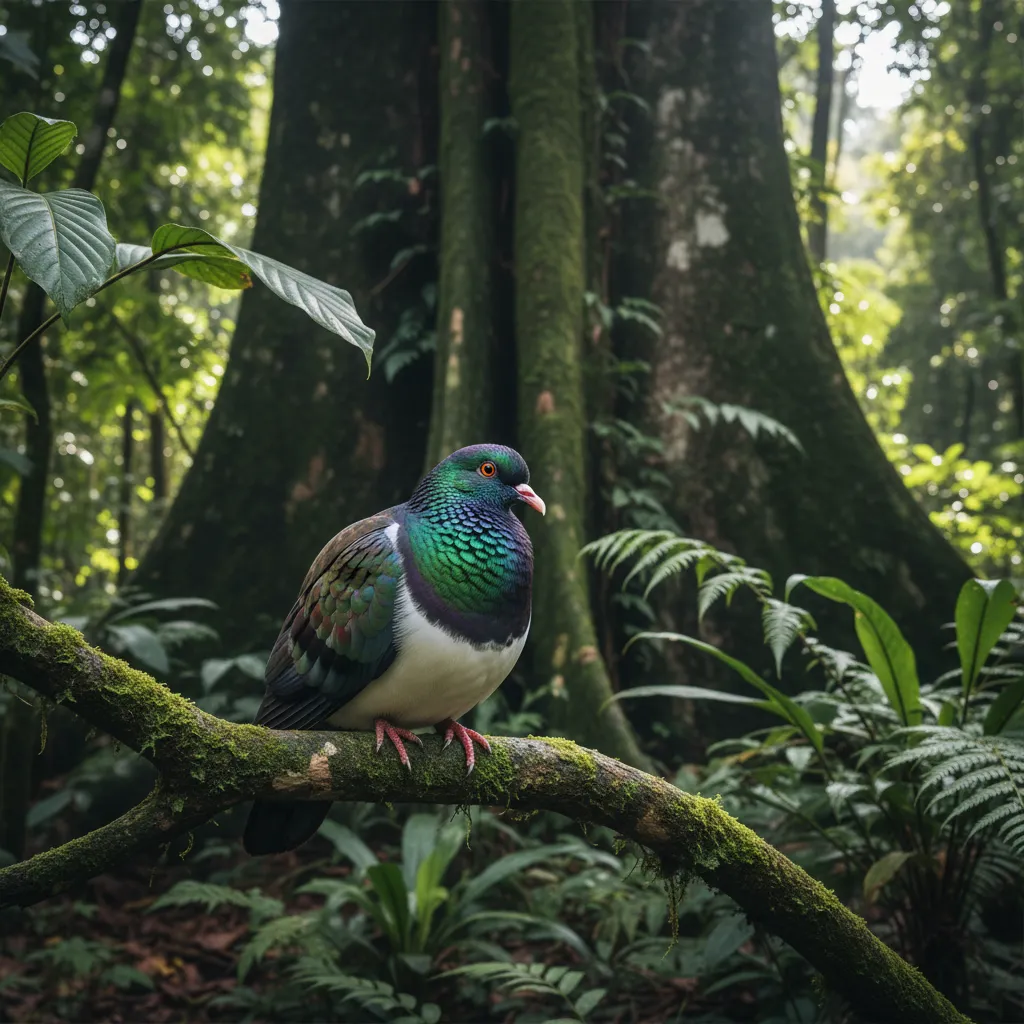
The Parea is a vital “ecosystem engineer.” Because of its large size, it is the only remaining bird on the islands capable of swallowing the large fruits of native trees like the Karaka. By dispersing these seeds across the forest floor, the Parea ensures the continued regeneration of the islands’ unique forest ecosystems. Recent surveys suggest the population has grown to over 600 birds, and they are increasingly being sighted in areas where they had been absent for decades.
Geography and the Effects of Isolation
The Chatham Islands (Rekohu in Moriori) comprise an archipelago of about ten islands within a 40km radius. Their location, roughly 800km east of Christchurch, places them in a unique climatic zone where the warm subtropical waters from the north meet the cold subantarctic currents from the south. This confluence creates a nutrient-rich marine environment that supports vast seabird colonies, while the terrestrial isolation has fostered a laboratory for evolution.
Isolation has led to several distinct evolutionary trends among Chatham Islands birds, most notably “island gigantism” and “melanism.” The Parea is a prime example of gigantism, evolving a larger body mass than its mainland relatives to better survive the cooler, wind-swept environment. Melanism—a darkening of plumage—is seen in the Black Robin and the Chatham Island Snipe. These adaptations allow birds to absorb more solar radiation and better camouflage within the dense, dark undergrowth of the islands’ remnant forests.
The islands were never connected to the New Zealand mainland, meaning every terrestrial species arrived via long-distance dispersal over the ocean. This filter meant that only certain types of birds reached the islands, where they then filled ecological niches that are occupied by mammals elsewhere in the world. This lack of mammalian predators for millions of years left the birds defenseless when humans eventually introduced rats, cats, and pigs.
Other Critical Endemic Species
While the Black Robin and Parea take the spotlight, the archipelago is home to several other critically endangered endemics that are just as vital to the region’s biodiversity. The Chatham Island Oystercatcher, with its distinctive orange beak and sturdy black-and-white body, is a common sight on the rocky shorelines. Intensive nest protection programs have seen their numbers rise from 50 to over 300.
The Chatham Island Taiko (Magenta Petrel) is another extraordinary story. Presumed extinct for nearly a century, it was rediscovered in 1978 by David Crockett. This elusive seabird nests in burrows deep within the forest of the Tuku Nature Reserve. The construction of a predator-proof fence (the Sweetwater Secure Breeding Site) has been instrumental in protecting these birds from feral cats and pigs during their vulnerable nesting phase.
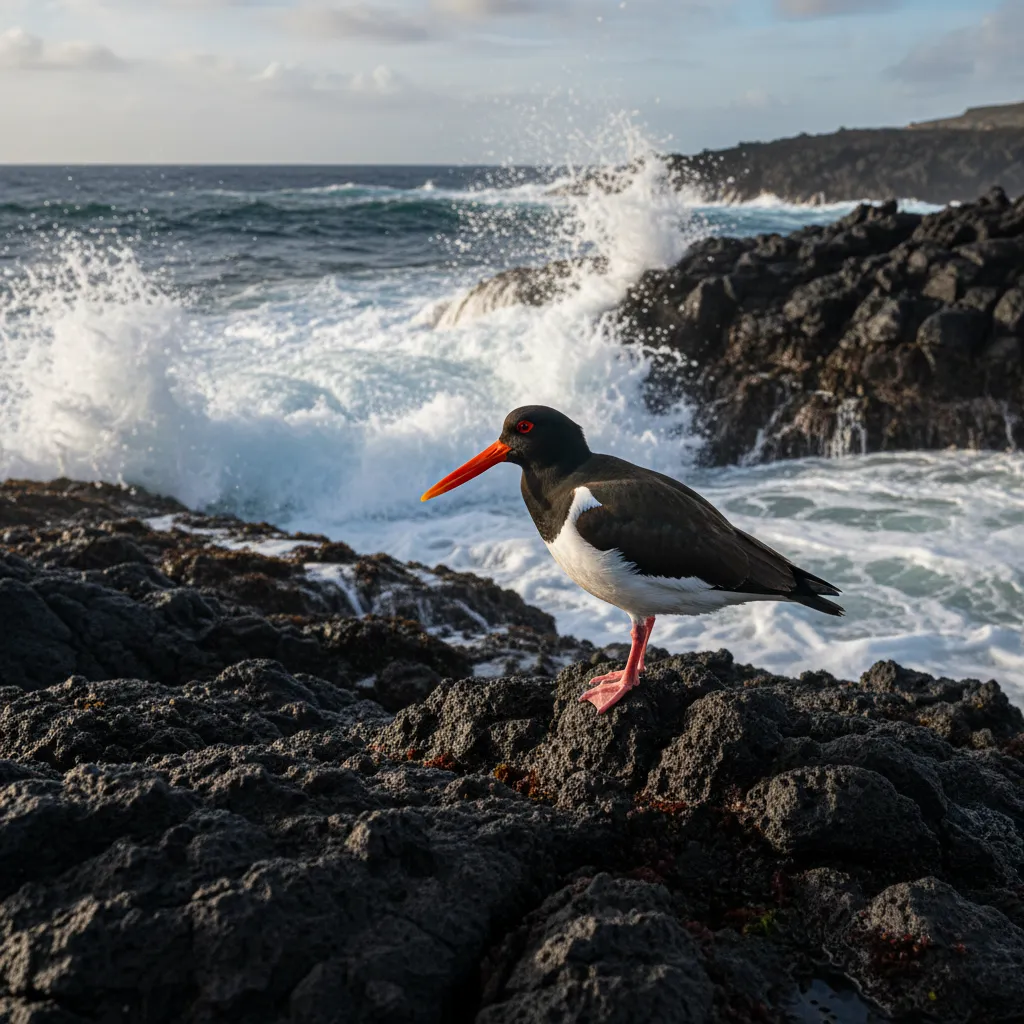
The Chatham Island Snipe and the Shore Plover also represent significant conservation successes. The Shore Plover is one of the world’s rarest shorebirds. Because they nest on open ground, they are incredibly susceptible to predation. Conservation efforts now focus on maintaining populations on predator-free islands like Rangatira and translocating birds to other safe havens around New Zealand to ensure the species’ survival.
Conservation Challenges and Strategies
The primary challenge for Chatham Islands birds remains the presence of invasive species. While several smaller islands have been successfully cleared of predators, the main Chatham Island and Pitt Island still grapple with feral cats, weasels, rats, and possums. Habitat fragmentation is also a concern, as much of the original forest was cleared for farming during the 19th and 20th centuries.
Modern conservation strategies in the Chathams are increasingly community-led. Organizations like the Chatham Islands Conservation Trust work alongside the Department of Conservation and private landowners to create “mainland islands”—areas of habitat that are intensively managed to keep predator numbers near zero. These efforts are complemented by extensive replanting programs aimed at connecting isolated forest fragments, allowing birds like the Parea and the Chatham Island Warbler to move safely across the landscape.
Climate change also poses a burgeoning threat. Rising sea levels and increased storm intensity can devastate the low-lying nesting sites of the Shore Plover and Oystercatcher. Furthermore, changes in ocean temperatures affect the availability of fish and squid, which are the primary food sources for the islands’ vast populations of Albatrosses and Petrels.
Visiting and Respecting Private Land Access
For birdwatchers and eco-tourists, the Chatham Islands offer a bucket-list experience. However, visiting this remote destination requires careful planning and a deep respect for local customs and property. Unlike many parts of mainland New Zealand, much of the best bird-watching habitat in the Chathams is located on private land. The local community is welcoming, but they value their privacy and the integrity of their farms.

Access to many key sites, such as the Tuku Nature Reserve or specific coastal colonies, often requires prior permission from landowners or the engagement of a local guide. Using a guide is highly recommended, as they provide not only the necessary access but also invaluable local knowledge regarding bird behavior and the islands’ complex history. Many landowners are active participants in conservation, and their stewardship is the reason many of these species still exist today.
When visiting, it is essential to follow “Leave No Trace” principles. The islands are free from many pests and diseases found elsewhere; therefore, visitors must ensure their footwear and gear are meticulously cleaned before arrival to prevent the introduction of invasive weeds or soil-borne pathogens. By respecting these rules and supporting the local economy, tourists contribute directly to the ongoing protection of these extraordinary endemic birds. For birdwatchers and eco-tourists, maintaining the pristine nature of these sites is paramount.
What is the rarest bird in the Chatham Islands?
The Chatham Island Taiko (Magenta Petrel) is arguably the rarest, with an estimated population of fewer than 200 individuals. The Black Robin and Shore Plover also remain critically endangered.
How many endemic birds are in the Chatham Islands?
There are approximately 18 endemic bird species and sub-species currently recognized in the Chatham Islands, including both terrestrial birds and seabirds.
Can you visit the Chatham Islands to see birds?
Yes, but it requires planning. Flights are available from mainland New Zealand, and it is highly recommended to book local tours to gain access to private land where many birds reside.
What is the difference between the Parea and the Kereru?
The Parea is a distinct species endemic to the Chathams. It is significantly larger and heavier than the New Zealand Kereru, with subtle differences in plumage color and beak size.
How did the Black Robin survive extinction?
The species was saved through an intensive cross-fostering program where eggs were raised by Chatham Island Warblers, combined with the protection of the last fertile female, Old Blue.
Why are Chatham Islands birds so unique?
Millions of years of isolation from the mainland allowed these birds to evolve without mammalian predators, leading to unique traits like island gigantism, flightlessness in some extinct species, and distinct plumage.