Tuatara are the last survivors of an ancient order of reptiles that lived alongside dinosaurs more than 200 million years ago. Wild populations are now only found on islands off the northern east coast of the North Island and some islands in the Marlborough Sounds, but conservation work has returned them to several mainland sanctuaries where visitors can see them. Most days (unless it’s bitterly cold) tuatara are seen at key sites, though sightings require patience as these reptiles are often nocturnal and can be hard to spot.
Zealandia Te Māra a Tāne, Wellington
Zealandia was the first site to establish a wild population of tuatara on the mainland. In 2005, 70 adult tuatara from Stephens Island (Takapourewa) were moved to Karori Wildlife Sanctuary in Wellington, and tuatara have been breeding successfully as nests have been found every year since 2007.
Tuatara are most often seen along Lake Road and the Turbine Track, where Zealandia guides will help you spot them. Tuatara are most commonly found at the research area behind the fences. Magnetic tuatara stickers are stuck on the fences and whiteboards to indicate where people have seen tuatara. The sanctuary opens daily except Christmas Day, from 9am to 5pm.
Zealandia offers both day visits and night tours. For more on the Wellington region, see the Wellington guide.
Matiu / Somes Island, Wellington Harbour
Eight species of reptiles found only in New Zealand, occur on Matiu/Somes – common skink, spotted skink, copper skink, ornate skink, common gecko, forest gecko, Wellington green gecko and Brothers Island tuatara. The nocturnal geckos and tuatara are less frequently seen, but sightings do occur, so keep your eyes peeled.
Matiu / Somes Island’s original tuatara population was wiped out by the mid-1800s. However, in 1998, more than 50 Brothers Island tuatara were successfully introduced. The best place to see them is probably on the western tracks, particularly during sunny days.
The island is reached by ferry from Wellington. Check with the ferry operator for current schedules and fares before you travel.
Orokonui Ecosanctuary, Dunedin
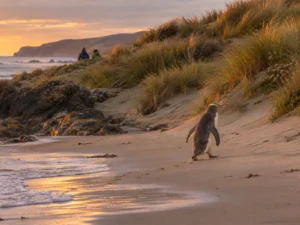
Orokonui is home to a population of Tuatara. Sixty wild tuatara from the Marlborough Sounds will soon make their home at Orokonui Ecosanctuary but only two captive-bred reptiles will be able to be seen by visitors until they have settled into their new environment. Orokonui Ecosanctuary in Dunedin celebrated a big milestone this week: discovering their first tuatara hatchlings. The hatchlings are the first to be seen since adult tuatara were released in the sanctuary in 2012.
The sanctuary is located 20 kilometres north of central Dunedin at 600 Blueskin Road. Open Thursday – Monday (Closed Tuesday & Wednesday), 9.30am to 4.30pm. Adult entry is $26, children $13. Transport options are detailed in the Orokonui Ecosanctuary Transport guide. See also the Otago region guide.
Tiritiri Matangi Island, Auckland
Tiritiri Matangi Island holds precious populations of kōkako, tīeke/saddleback, and tuatara that can’t easily be seen anywhere else around the Auckland region. Locals led by Auckland University scientist John Craig began restoring the island in the 1980s, and now it’s a spectacular haven for a number of rare native birds and reptiles, including tuatara.
The island is reached by ferry from Auckland or Gulf Harbour. Visitors have around five hours on the island to explore walking tracks. Guided tours are available, or you can walk independently. Check with ferry operators for current timetables and prices. For more on the Auckland region, see the Auckland guide.
Sanctuary Mountain Maungatautari, Waikato
Sanctuary Mountain Maungatautari (Waikato): A massive pest-proof fenced sanctuary where tuatara have been reintroduced. The sanctuary covers 3,400 hectares of native forest and is surrounded by a predator-proof fence. Guided tours are available that focus on wildlife viewing including tuatara.
The sanctuary is located at Tari Road, Pukeatua in the Waikato. Check with the sanctuary for opening hours and tour availability before visiting. See the Waikato guide for more eco-tourism options in the region.
Other viewing locations
There are very few places where you can see tuatara in the wild with the majority of the populations residing on protected offshore islands, off limits to the public. To see tuatara, visit one of the many captive facilities we list on the website, or one of the publicly accessible sanctuaries (e.g. Tiritiri Matangi Island, Motuihe Island, Matiu/Somes Island, Zealandia, Orokonui).
Crystal clear swimming, white sandy beaches, and a variety of native bush walks with the opportunity to see tuatara in the wild – this pest-free island has something for everyone at Motuihe Island in the Hauraki Gulf.
Some wildlife centres and museums hold captive tuatara for education and breeding programmes. The Southland Museum in Invercargill The tuatara were relocated in February 2023 in preparation for the demolition of the building, and official opening planned for 2027 for the new Te Unua Museum. Check with individual facilities for current display status.
Tips for spotting tuatara
Tuatara are cold-blooded reptiles that need to warm themselves in the sun. Look for them basking on sunny banks, near burrows, or alongside walking tracks during the day, particularly in warm weather. They are most active at temperatures around 16-21 degrees Celsius.
At sanctuaries like Zealandia and Orokonui, staff and volunteers often place markers or signs where tuatara have been recently spotted. Ask at visitor centres for advice on the best viewing spots and times.
Remember that tuatara are protected wildlife. Never touch or disturb them, and keep a respectful distance. Photography is allowed but use natural light rather than flash. Follow biosecurity protocols at all sanctuaries to protect these precious populations.
Understanding tuatara
They are the last survivors of an order of reptiles that thrived in the age of the dinosaurs. The lifespan of tuatara probably exceeds 100 years.
The largest population is on Stephens Island (Takapourewa), where there are estimated to be as high as 2,500 per square hectare in some places, and a total of at least 30,000. Stephens Island in the Marlborough Sounds is not open to public access, but conservation translocations from this island have established populations at the mainland sanctuaries and islands where visitors can see them.
Tuatara once lived throughout mainland New Zealand but now only survive in the wild on 32 islands, along with the growing populations at fenced mainland sanctuaries.
Sources
- Department of Conservation: Tuatara
- Zealandia Te Māra a Tāne: Tuatara
- Te Ara: The Encyclopedia of New Zealand – Tuatara
- Tourism New Zealand: Orokonui Ecosanctuary

Independent New Zealand nature guides from 0 Digital, Aotearoa New Zealand. Details change, so check with the operator or the official source before you go. Spotted something out of date? Tell us.
 Wildlife
 Wildlife
 Wildlife
